Turning Excavated Soil into Green Infrastructure Assets
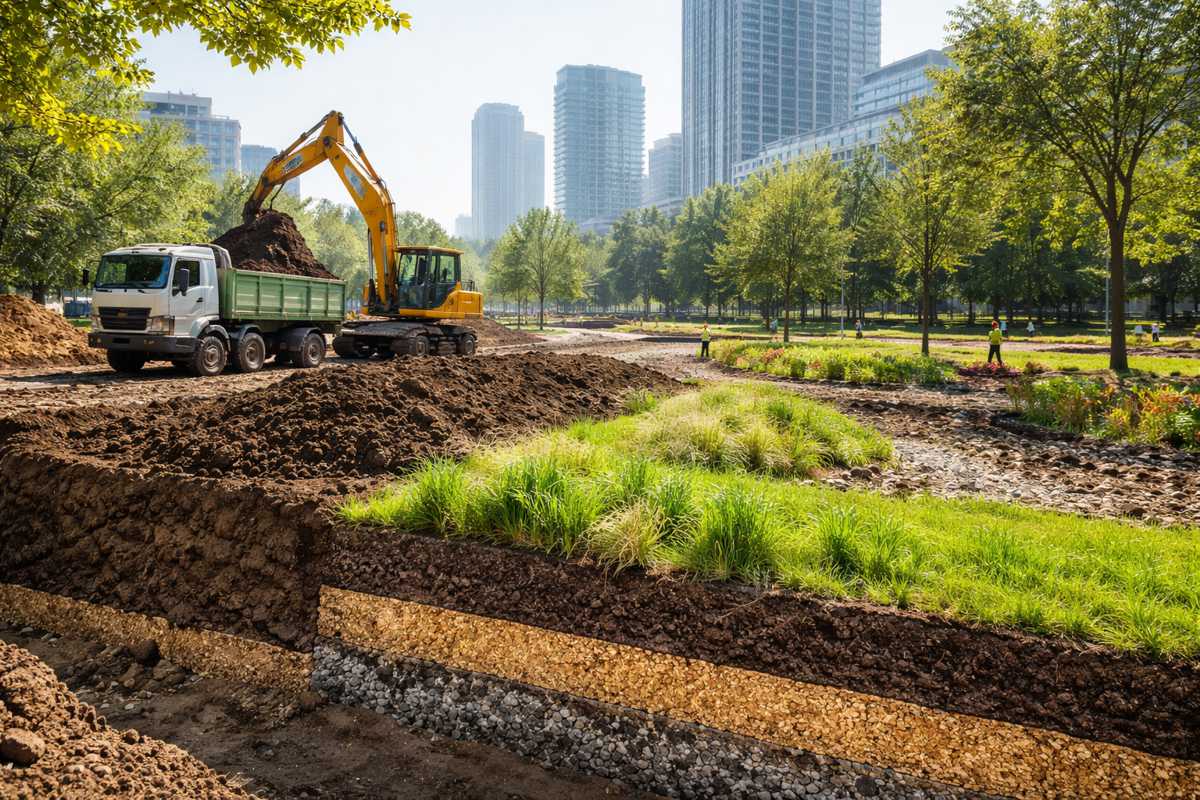
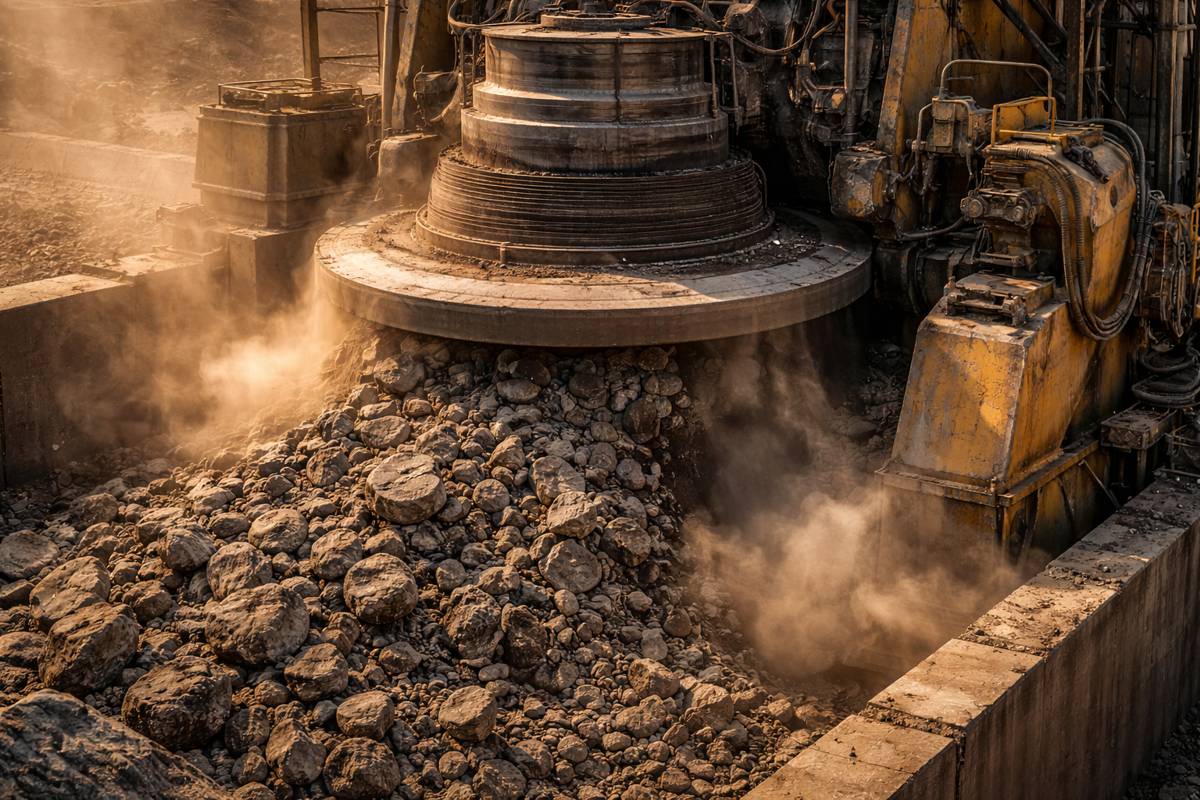
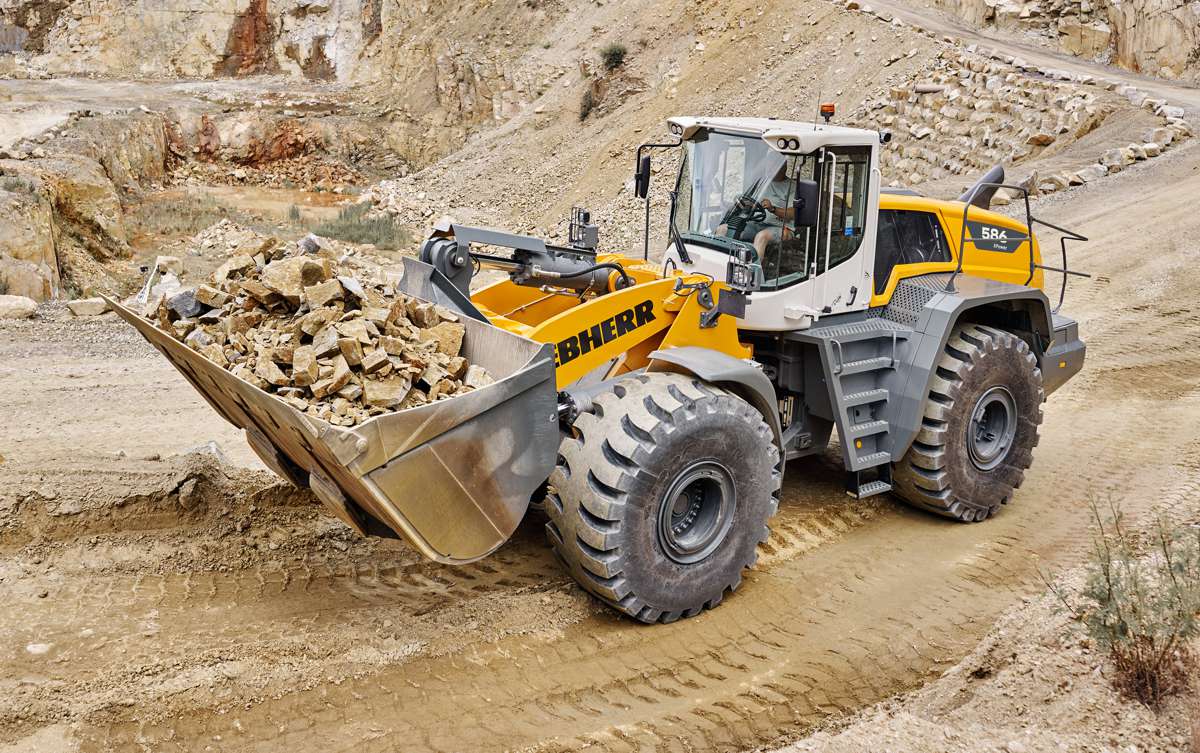
Across Europe’s cities, soil has quietly become one of the most overlooked resources in the construction and infrastructure ecosystem. Vast quantities are excavated every year to make way for housing, transport corridors, utilities and regeneration schemes. Much of that material, often perfectly serviceable but classified as surplus, is transported out of urban areas and disposed of in landfills. At the same time, cities import fresh soil from surrounding rural land to support parks, green corridors and urban landscaping. The result is a paradoxical, carbon intensive cycle that treats soil as waste in one context and as a scarce commodity in another.
According to EU data, soil and excavation materials account for roughly a quarter of all waste generated across the bloc. That statistic alone places soil firmly within the strategic sights of policymakers, planners and infrastructure owners. The European Union’s Soil Strategy, which aims to reduce so called land take to net zero by 2050, reflects growing concern about the environmental and economic costs of continually stripping land around cities to support urban growth. Against this backdrop, a research initiative in Germany is offering a practical, science led alternative that reframes excavated soil as a valuable urban resource rather than a disposal problem.
Researchers at the Technical University of Munich have been investigating how “constructed soils” can be engineered from excavated urban material and organic waste streams, creating tailored growing media that support greener, more resilient cities while closing material loops within the construction sector.
Why Urban Soil Has Become a Strategic Infrastructure Issue
Soil rarely features in infrastructure debates with the same prominence as concrete, steel or asphalt, yet it underpins a wide range of urban functions. From stabilising embankments and supporting roadside vegetation to enabling urban cooling and stormwater management, soil quality has a direct impact on asset performance and long term maintenance costs. Poor quality or imported soils often degrade quickly, leading to plant failure, erosion or runoff issues that require repeated intervention.
The challenge is exacerbated by densification. As cities build upwards and inwards, opportunities to reuse excavated material on site diminish. Construction programmes become fragmented, with soil leaving one project boundary only to be replaced by material hauled in from elsewhere. This linear approach sits uneasily with Europe’s broader push towards circular construction practices, where materials are expected to remain in productive use for as long as possible.
Constructed soils address this gap by transforming excavated, often degraded soils into functional substrates that can be redeployed within the urban environment. Rather than relying on generic imported topsoil, planners gain access to engineered materials designed around specific performance requirements, whether that is pollutant retention, plant growth or resilience to extreme weather.
Turning Excavated Soil and Organic Waste into a Resource
The research team examined excavated soils sourced from construction sites in Munich and Augsburg, two cities with active development pipelines and diverse soil conditions. These soils were blended with green waste compost and biochar, a carbon rich material derived from organic residues such as by products of biogas production. Both additives are commonly available within urban waste management systems, yet are often underused or downcycled.
Biochar, in particular, has attracted growing interest across agriculture and environmental engineering due to its porous structure and high surface area. When incorporated into soil, it can improve nutrient retention, water holding capacity and contaminant binding. Compost contributes organic matter and nutrients, helping to rebuild biological activity in soils that have been compacted or stripped of structure during excavation.
By combining these components in varying proportions, the researchers were able to create constructed soils with markedly improved functional properties compared with untreated excavated material. Crucially, this approach does not rely on exotic inputs or complex processing. It builds on materials already moving through municipal waste and construction systems, aligning well with existing logistics and regulatory frameworks.
Measurable Gains in Fertility and Environmental Protection
Laboratory and field characterisation revealed substantial improvements in soil performance. Nitrogen content, a key indicator of fertility, increased by up to four times compared with the original excavated soils. Carbon accumulation also improved significantly, supporting better soil structure and long term stability. These factors are critical for sustaining vegetation in challenging urban settings, where soils are often shallow, compacted and exposed to heat and drought.
Beyond fertility, the constructed soils demonstrated a strong capacity to immobilise pollutants. Tests showed that up to 90 percent of certain contaminants, including heavy metals commonly found in urban environments, could be bound within the soil matrix. This has direct implications for groundwater protection, particularly along roadsides and brownfield redevelopment sites where runoff and leaching pose ongoing risks.
Lauren Porter, first author of the study and a researcher at TUM’s Chair of Urban Productive Ecosystems, highlighted the broader significance of these findings: “Repurposing both the soil and the waste products is a win win situation: we keep waste out of landfills and can create soil as a basis for diverse purposes in urban spaces.” Her point speaks to the growing recognition that environmental performance and resource efficiency are no longer separate goals, but increasingly interdependent.
Proven Performance in Real World Growing Conditions
Laboratory indicators are only part of the story. To assess how constructed soils perform as living substrates, Nadja Berger, a doctoral candidate at the Chair of Restoration Ecology, tested the materials in greenhouse trials. Plants typically associated with wetlands were grown in the engineered soils and exposed to a range of stress factors, including elevated temperatures, flooding and pollutant presence.
The results were encouraging. The plants not only survived but thrived, demonstrating resilience under conditions that mirror those found in urban green infrastructure such as rain gardens, bioswales and retention basins. This suggests that constructed soils could play a meaningful role in climate adaptation strategies, supporting vegetation that mitigates heat, manages water and improves urban biodiversity.
For infrastructure owners and municipalities, this translates into green assets that are more robust and less reliant on intensive maintenance. In an era of constrained budgets and increasing climate volatility, the ability to specify soils that actively support asset performance is an attractive proposition.
Designing Soils for Specific Urban Applications
One of the most compelling aspects of constructed soils is their adaptability. Unlike imported topsoil, which offers limited scope for modification, engineered substrates can be tailored to suit specific locations and functions. Roadside verges, for example, place very different demands on soil than public parks or residential green spaces.
In high traffic corridors, the priority may be pollutant binding and resistance to compaction. Increasing the proportion of biochar can enhance these properties, helping soils capture contaminants before they reach drainage systems. In contrast, soils intended for recreational areas or planting beds can be formulated with higher compost content to maximise fertility and support diverse vegetation.
By systematically characterising how different blends perform, the TUM researchers have created a knowledge base that practitioners can draw upon when designing urban landscapes. As Lauren Porter noted, “The better they know the respective soils, the more successful they can be tailored to each use and aid in closing the resource cycle for soils.” This shift towards performance based soil specification mirrors trends already well established in other construction materials.
Implications for Construction, Planning and Policy
The relevance of this research extends well beyond academic interest. For the construction industry, constructed soils offer a pathway to reduce disposal costs, lower transport emissions and demonstrate tangible progress towards circular economy objectives. Excavated material that would otherwise be classified as waste becomes a resource with defined value and application.
For planners and policymakers, the findings support more ambitious approaches to urban land management. Meeting the EU’s net zero land take target will require practical tools that allow cities to grow without continually drawing on surrounding landscapes. Constructed soils provide a mechanism to regenerate urban ground from within, reducing pressure on peri urban land while enhancing environmental performance.
The work also aligns with broader investment trends in green infrastructure. As cities seek funding for climate resilient projects, the ability to demonstrate closed loop material use and long term ecosystem benefits strengthens the business case. Soil, once an afterthought, becomes a strategic asset in the delivery of sustainable urban development.
Advancing Urban Green Infrastructure through Science
The research was carried out within the TUM School of Life Sciences, involving the Professorship of Urban Productive Ecosystems and the Chair of Soil Science, both part of the World Agricultural Systems Center Hans Eisenmann Forum. Funding was provided by the Research Training Group 2679 Urban Green Infrastructure, reflecting growing institutional support for interdisciplinary work that bridges construction, ecology and urban planning.
While further field trials and long term monitoring will be needed to refine specifications and standards, the direction of travel is clear. Constructed soils offer a credible, scalable response to one of urban construction’s quiet inefficiencies. By treating soil as an engineered material rather than a disposable by product, cities can reduce waste, protect natural land and build greener, more resilient environments from the ground up.