Liebherr Power Deals Deliver Momentum To Fleet Upgrades In 2026
The construction equipment market doesn’t usually do sentimentality. Fleet owners make decisions with spreadsheets, utilisation charts, and workshop schedules, not wish lists. Still, there’s something fitting about starting a new year with a little commercial clarity, and Liebherr’s early-2026 Power Deals land right in that space where ambition meets real-world constraints.
Across infrastructure delivery, quarrying and material handling, the pressures are familiar. Contractors are being asked to do more with less, keep machines productive for longer, and hit programme milestones even when labour, fuel, logistics, and capital costs refuse to behave. In that environment, “new equipment” isn’t always about shiny paint and brochures. It’s about reducing exposure to downtime, improving site productivity, and keeping operations safe and predictable.
Liebherr’s new Power Deals package for 2026 is essentially a set of limited-time offers aimed at making those decisions easier to justify. The company has launched three promotions covering finance support for selected machines, an anniversary incentive marking 10 years of XPower wheel loaders, and a seasonal tyre offer for wheeled excavators. Individually they’re straightforward. Taken together, they reflect something more interesting: the way manufacturers are increasingly trying to support the whole equipment lifecycle, not just the moment of purchase.
Why Equipment Incentives Matter More Than Ever
In a stable economy, construction equipment purchasing is often planned years ahead, with predictable replacement cycles and well-established financing relationships. But in recent years, that stability has been in short supply. The construction sector has had to navigate an uncomfortable mix of high interest rates in many markets, volatile supply chains, and a growing demand for modernisation, from lower-emission fleets to more digital workflows.
For contractors and plant hire businesses, the financial equation isn’t simply “can we buy it?” It’s “can we keep it earning?” A machine that spends too much time idle or in the workshop quickly becomes an expensive ornament. And on major infrastructure schemes, even small delays can ripple across subcontractors, delivery windows, and site safety conditions.
This is where manufacturer-backed programmes become commercially meaningful. Not because they change the fundamentals of the market overnight, but because they can reduce friction at decision points. An interest subsidy can help bring forward a replacement. A discount on attachments can shift a purchase from “maybe” to “signed.” A targeted tyre promotion can help a contractor refresh safety-critical components before the season ramps up.
Liebherr is leaning into that reality with a set of offers aimed at early-year planning, the moment when many firms assess fleet condition and decide what’s staying, what’s going, and what needs to be upgraded before peak workloads arrive.
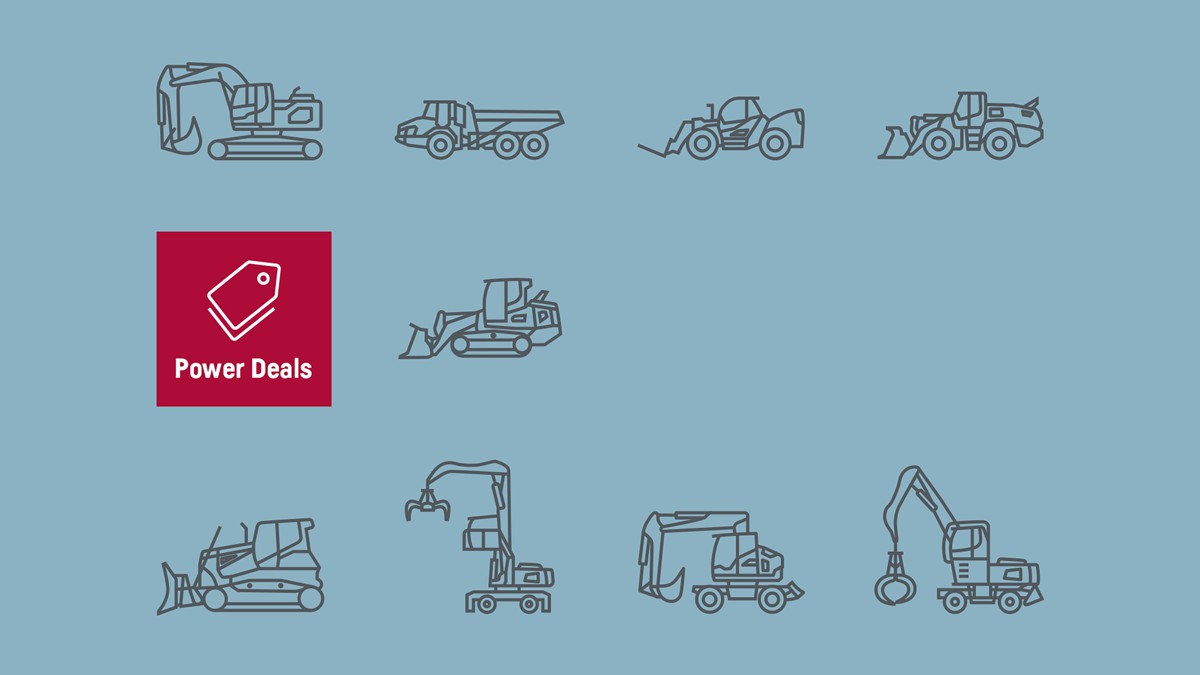
Power Deal 1: Finance Support for High-Utility Machines
The most broadly applicable of the three offers is a financing subsidy aimed at selected Liebherr construction and material handling machines purchased in the first half of 2026. For customers using financing arrangements, Liebherr is offering an annual subsidy of 2% for the first two years of financing, applicable across a range of machines and participating markets.
What makes this type of incentive stand out is that it targets some of the most versatile categories in heavy equipment. Liebherr has included wheeled excavators, an articulated dump truck model, and a spread of material handling machines. These are not niche assets. They’re core fleet tools in civil engineering, utilities, industrial work, ports, and waste operations.
The offer covers wheeled excavators from the A 913 Compact to the A 924. Wheeled excavators occupy an increasingly valuable position for contractors working in and around live infrastructure, where mobility matters, road travel between sites is common, and space constraints reward manoeuvrability. In urban environments and roadside work, the ability to relocate efficiently without extensive transport logistics can make a meaningful difference to daily productivity.
Liebherr has also included the TA 230 articulated dump truck within the financing support. In quarrying and earthmoving operations, ADTs remain essential for shifting material efficiently across rough ground, particularly where haul routes and site conditions change regularly. With major infrastructure programmes often requiring mass earthworks, moving fill and aggregates reliably isn’t glamorous work, but it’s the backbone of project progress.
On the material handling side, the offer includes models across the LH 18 to LH 80 range. Material handlers serve a different but equally important reality: the work doesn’t stop when the excavator shuts down. Scrap yards, recycling facilities, ports, and industrial sites depend on machines designed for repetitive, high-cycle handling tasks. When these machines are modern, well-specced, and properly maintained, throughput improves and safety conditions often improve alongside it.
The point here isn’t that a 2% subsidy will rewrite the economics of construction equipment overnight. It won’t. But it can soften the financial edge at a moment when many contractors are still cautious about borrowing costs, even when the operational need for modern equipment is obvious.
Mobility, Flexibility and the Return of the Wheeled Excavator
It’s also worth noticing how prominently wheeled excavators feature in Liebherr’s current promotions, including the tyre-focused Power Deal later in the package. Wheeled excavators are having a quiet moment across parts of Europe and beyond, as contractors prioritise flexibility and faster mobilisation.
There’s a practical logic to it. Infrastructure work rarely happens in tidy conditions. Utilities upgrades, drainage renewals, roadside maintenance, and rail-adjacent works all involve moving between short-duration jobs, often under traffic management or within narrow work zones. Tracks can be ideal for stability and floatation, but wheels can offer quick relocation, reduced ground disturbance in certain conditions, and in some cases, easier integration with urban work constraints.
The wider industry context also matters. Many contractors are working to reduce unnecessary transport movements, not only for cost reasons but also for emissions reduction and logistics simplicity. A machine that can move between tasks without a low-loader every time can reduce overheads and give planners more freedom when priorities shift mid-week.
That’s why a financing subsidy tied to this category has genuine operational relevance. It aligns with a growing appetite for machines that handle the messy in-between moments of construction delivery, the work that doesn’t always make headlines but absolutely controls programme success.
Power Deal 2: Ten Years of XPower Wheel Loaders, with Real Incentives Attached
The second offer is positioned as a celebration: the 10th anniversary of Liebherr’s XPower wheel loaders in 2026. But the mechanics of the promotion are firmly commercial. During the first half of 2026, customers ordering a new XPower wheel loader including attachments can access fixed discounts depending on the model.
The discount structure is set out clearly:
- L 550 to L 566 XPower: 4,000 €
- L 566 to L 580 XPower: 5,500 €
- L 586 XPower: 9,000 €
These are substantial numbers in the context of attachments and machine configuration decisions, particularly where bucket options, material-specific tools, and other working kit can stack up quickly. For quarry operators, aggregate producers, and materials yards, the wheel loader isn’t simply a support machine. It’s often the heartbeat of the site, feeding crushers, managing stockpiles, loading trucks, and keeping material moving.
Liebherr describes the XPower machines as having an innovative concept, high performance, and a unique travel drive, positioning them as “powerhouses” within the wheel loader series. The operating mass range quoted, from 18,550 to 33,900 kg, places these models firmly in the heavy-duty segment where productivity is measured in tonnes per hour and reliability is non-negotiable.
There’s also a slightly playful note in Liebherr’s announcement, pointing out that “X” doubles as a Roman numeral for ten. That’s a neat detail, but the bigger takeaway is that Liebherr is using the anniversary not just as branding, but as a reason to stimulate orders and reward buyers who commit early in the year.
For investors and decision-makers watching fleet trends, promotions like this often signal where manufacturers see demand momentum. Wheel loaders remain central to aggregates and industrial materials handling, and while electrification and alternative fuels are growing themes across the sector, the immediate focus for many sites is still maximising uptime and managing cost per tonne.
Power Deal 3: Tyres, Timing, and a Quiet Lesson About Downtime
The third offer might be the most grounded of the set, and arguably the most relatable for anyone who’s ever had a machine side-lined by something deceptively “small”.
Liebherr is running a tyre promotion in April and May in Germany, offering up to 15% discount on new “Liebherr EM22-290/90-20 PR18” wheeled excavator tyres depending on the order quantity. The tyre is described as the standard fitment for Liebherr wheeled excavators, with characteristics including high traction, quiet operation, maximum stability, good self-cleaning properties and low wear.
Tyres rarely get the attention they deserve until they become a problem. Yet for wheeled machines, tyres are safety-critical components that influence stability, braking behaviour, and site mobility. In winter conditions, tyres face abrasion, debris, temperature swings, and challenging ground surfaces that accelerate wear. By the time summer workload arrives, worn tyres can quickly turn into avoidable downtime or, worse, a safety incident.
What’s clever about Liebherr’s positioning here is that it treats tyre replacement as proactive planning rather than reactive maintenance. The company frames it as a way to increase operational safety and cost-effectiveness ahead of the coming season, which will ring true for operators who’ve learned the hard way that “we’ll deal with it later” is rarely the cheapest option.
It also reinforces an increasingly important industry message: fleet efficiency isn’t only achieved through major upgrades. Sometimes it’s about protecting the performance of what’s already on site. A contractor that keeps machines moving smoothly and safely often outperforms one that relies on last-minute fixes and workshop scrambling.

A Broader View of Liebherr’s Strategy and Scale
Although the Power Deals are the headline, they sit within the context of a global manufacturer with considerable scale. Liebherr is described as a family-run technology company with a diversified product portfolio, and one of the world’s largest construction equipment manufacturers. The group includes more than 150 companies across all continents, employing more than 50,000 staff in 2024 and generating combined revenues of over 14 billion euros that year.
That scale matters, because it shapes how the company can support everything from financing frameworks to parts supply, dealer networks, and service infrastructure. In modern construction equipment ownership, the purchase price is only the beginning of the relationship. Availability of service, lead times on parts, and the strength of local support partners increasingly influence buying decisions as much as performance specifications.
Liebherr’s origins go back to 1949, founded by Hans Liebherr in Kirchdorf an der Iller in southern Germany. Since then, the company says it has pursued continuous technological innovation and industry-leading solutions. That’s standard language in most corporate descriptions, but the history is relevant: long-term manufacturers tend to understand that fleet decisions are shaped by trust, not just numbers.
For contractors and policymakers alike, equipment availability also has an infrastructure resilience angle. When supply chains tighten or project delivery timelines are under pressure, the ability to maintain machines quickly and access support locally becomes part of national productivity, especially on long-term transport and energy programmes.
Practical Momentum for a Complex Year Ahead
There’s no mistaking what Liebherr is doing with the Power Deals. It’s encouraging early-year action, nudging fleet owners toward upgrades, and providing incentives that connect financing, machine procurement, and maintenance realities. Importantly, it’s not presenting these offers as revolutionary. They’re practical, limited-time opportunities aimed at customers who already understand the operational value of staying ahead of wear, downtime, and financing constraints.
For construction professionals, the relevance is immediate: wheeled excavators, wheel loaders, dump trucks and material handling machines are core assets in projects where time is money and productivity is measured daily. For investors, the promotions offer a small window into the commercial levers manufacturers use to influence demand cycles and keep order books moving. For policymakers and infrastructure planners, the message is quieter but just as important: equipment readiness underpins delivery capability, and the industry is increasingly managing that readiness through structured incentives and lifecycle planning.