Yanmar Innovation to Power a Sustainable Agriculture Future
The world’s food system is being asked to do something close to impossible: produce more, waste less, cut emissions, conserve land and water, and somehow stay profitable for people whose margins are already wafer-thin. All while the workforce that traditionally carried agriculture on its shoulders is shrinking, and climate volatility is turning long-standing growing practices into guesswork.
Yanmar’s newly released documentary, Innovation Powering A Sustainable Future, is a clear statement of intent about where heavy engineering, automation, and energy systems are headed next.
For the global construction, infrastructure, and industrial technology ecosystem, the story matters because agriculture is no longer a standalone sector. It is increasingly intertwined with energy generation, rural infrastructure investment, equipment electrification, robotics, and data-led operations. The documentary frames Yanmar’s response to these converging pressures as a long-term programme of innovation, bringing mechanisation, autonomy, and renewable energy into closer alignment. That blend is becoming a familiar theme across modern industry, and it’s one investors and policymakers are watching carefully.
Why The Pressure On Agriculture Is Becoming An Infrastructure Problem
Agriculture has always depended on infrastructure, from roads and ports to irrigation and electrification. What’s changing now is the scale and urgency of the constraints. Yanmar points to labour availability as a defining challenge, supported by global trendlines showing fewer people working in agriculture even as demand for food rises. According to the company’s documentary notes, the FAO reports that the global workforce share employed in agriculture declined from 40% in 2000 to 26% in 2022. That’s not a minor shift, it’s a structural rewiring of how food gets produced and who is available to do the work.
At the same time, farm structure remains heavily skewed toward small holdings. Yanmar highlights that five out of six farms worldwide operate on less than two hectares, yet collectively produce over a third of the world’s food. Those numbers underline a reality that tends to get lost in discussions about agricultural transformation: a huge proportion of food production is happening on farms that can’t simply “scale up” with more land, staff, or capex-heavy upgrades. In practical terms, technology has to be right-sized, adaptable, and capable of delivering results in constrained conditions.
The wider industry implication is that “future farming” is now tied to systems engineering. If small farms are expected to produce efficiently with fewer workers and lower environmental impact, the solution won’t come from one shiny machine. It will come from integrated approaches that connect mechanisation, energy, resilience planning, and regional economic support. That’s precisely the territory where industrial players with deep engineering roots are trying to position themselves.
Mechanisation Still Matters But It’s Not The Whole Story
For decades, mechanisation has been shorthand for productivity. Yet productivity alone doesn’t solve today’s problem set, and Yanmar’s documentary is unusually direct about that. The company’s Agribusiness R&D Head Shigemi Hidaka is quoted as saying: “Yanmar’s mechanization technology will increase productivity and yields, but this will be pointless unless we also realize sustainable agriculture. We need to think from both sides and realize both increased production and a sustainable environment.”
That’s a telling statement because it reframes engineering priorities. In plain terms, the goal is not just to make machines that work harder, faster, or longer. It’s to deliver productivity improvements that don’t lock farmers into higher emissions pathways, soil degradation, or fragile economics. It also suggests a development strategy that is likely to prioritise electrification, precision operations, and autonomy in environments where labour constraints make traditional workflows difficult to sustain.
Yanmar’s Agribusiness President Kemal Shoshi reinforces that the industry challenge has expanded beyond output targets, adding: “The problem with agriculture now is not only production volume, but climate change, drought—we are facing a lot of challenges that we need to support through our mechanization technology.” There’s a lot packed into that line. It implies that mechanisation isn’t just about making farming easier, it’s becoming a resilience tool, particularly as drought patterns and extreme weather disrupt planning cycles.
Autonomy And Robotics Move From Concept To Field Reality
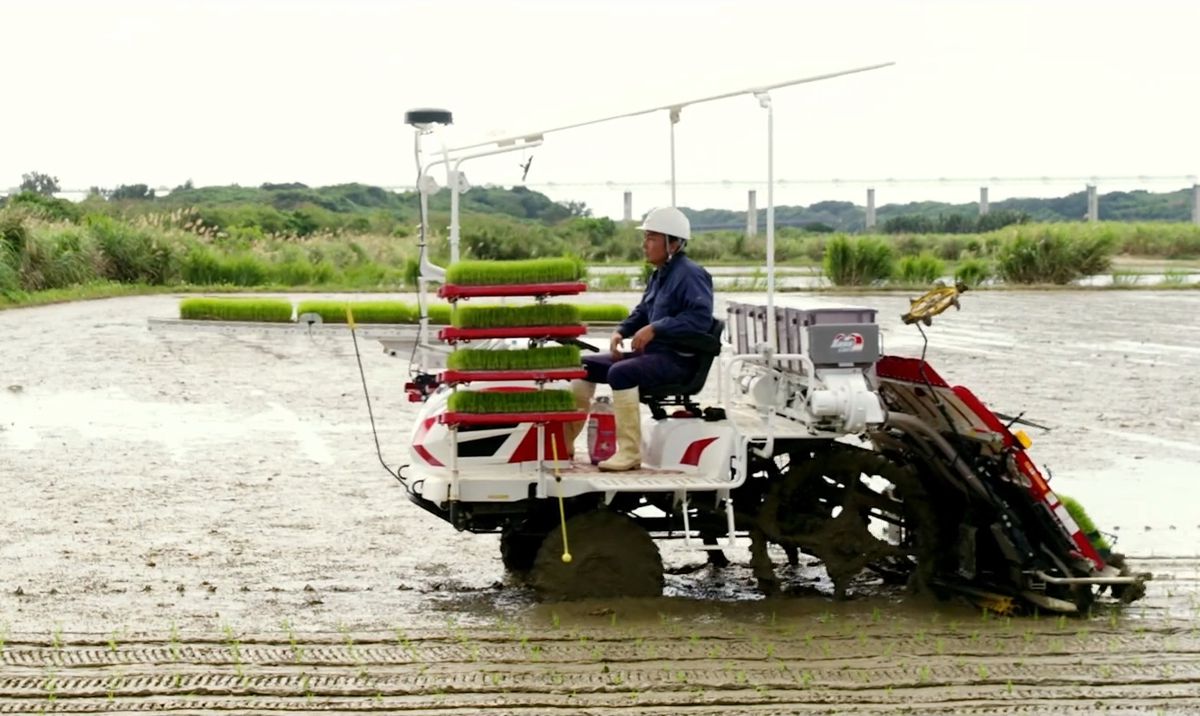
If labour shortages and workforce ageing are part of the pressure equation, autonomy starts to look less like a premium add-on and more like a continuity strategy. In the documentary, Yanmar highlights robotics and intelligent systems designed to reduce physical strain, support consistency, and handle difficult terrain more effectively than traditional equipment alone.
One of the most distinctive examples is the YV01 autonomous vineyard robot, designed to work on steep and uneven ground. Viticulture is a sector where terrain and precision matter enormously, and where labour availability can be a recurring bottleneck. Robotics built for those conditions can help farmers maintain routine operations without depending on seasonal labour pools that may be harder to secure year after year.
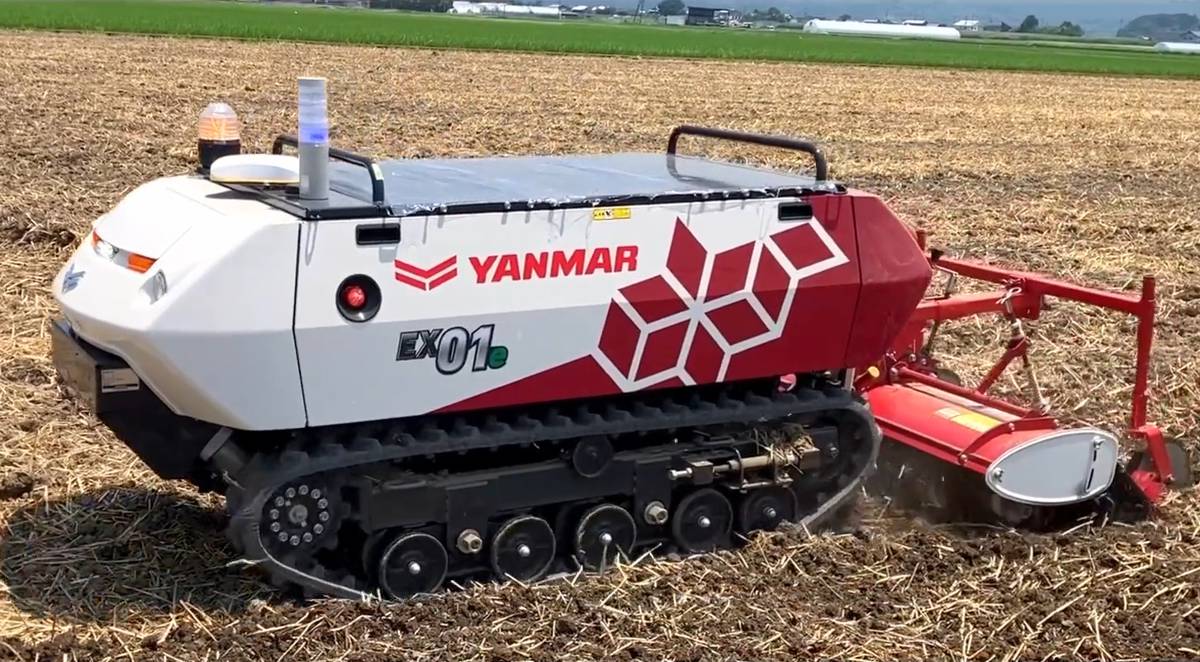
Alongside vineyard automation, Yanmar points to the e-X1, described as a fully electric, autonomous agricultural machine progressing through advanced development toward market monitoring in 2025. That combination, electric propulsion and autonomy, is notable because it speaks to the direction of travel across multiple equipment segments. Electrification reduces local emissions and can support quieter operations, while autonomy can help stabilise productivity even when labour is limited. It’s a pairing that’s likely to surface more frequently across construction-adjacent equipment categories too, particularly in environments where decarbonisation targets are tightening and operators are in short supply.
Importantly, none of this is presented as a simple replacement of people with machines. The thread running through the documentary is about making farming viable under new conditions, and that means reducing physical strain, creating operational consistency, and enabling productivity gains without demanding more from an already stretched workforce.
Agrivoltaics And The Rise Of Dual Use Land Strategy
Perhaps the most infrastructure-relevant element of Yanmar’s story is how it steps beyond machinery into land and energy systems. Through its Save the Farms by Yanmar initiative, the company is applying agrivoltaics, installing solar panels above active farmland, to bring idle land back into productive use while generating renewable energy.
In practical terms, agrivoltaics can change the economics of rural land. Farmers can continue growing crops while gaining an additional revenue stream from electricity generation. That can be especially valuable in regions where farm income is volatile and younger generations see agriculture as a high-risk career choice. If farming is to remain viable in many communities, especially those wrestling with depopulation, it will need to become more financially resilient.
Yanmar’s project leader Kenichi Tanaka describes the initiative in direct terms: “Save the Farms by Yanmar connects agriculture to the future. We are planning to install solar power generation equipment and return the profits to farmers. Our hope is that farming will become a career the next generation will aspire to.” It’s a rare moment of human realism in a technology narrative, because it recognises that the future of farming depends on whether people actually want to do it.
The documentary also positions agrivoltaics as a growing global theme, noting that approaches in Europe and the United States are increasingly framed as climate adaptation measures that support resilience, the energy transition, and long-term sustainability alongside economic benefits. That matters because it signals policy alignment. Where renewable energy, land use planning, and rural development goals overlap, investment tends to follow.
What It Means For Construction, Energy And Industrial Technology Supply Chains
Yanmar’s documentary may be rooted in agribusiness, but its implications spill outward into the wider industrial economy. Autonomy, electrification, and integrated energy systems are not unique to agriculture. The construction equipment sector is moving in the same direction, driven by emissions regulation, urban air quality expectations, and tightening project sustainability requirements.
Electrified machinery and autonomous functions also require a different supporting ecosystem. Charging infrastructure, grid capacity, renewable integration, and energy storage become increasingly relevant, especially in rural or remote environments. For infrastructure planners, that means future agricultural resilience may depend as much on energy networks and digital connectivity as it does on agronomy. The “farm” becomes a node in a broader system, not an isolated production site.
Then there’s the industrial technology angle. Intelligent machines generate data, and data becomes operational leverage. Precision tasking, route planning, terrain response, and energy optimisation all hinge on sensors and software layers that weren’t part of traditional agricultural equipment models. That convergence, between heavy engineering and digital intelligence, is becoming one of the defining features of next-generation industrial products. It’s also where competitive differentiation is likely to intensify over the next decade.
The documentary’s real contribution is in connecting these dots without pretending there’s a one-size-fits-all model. Small-scale farming remains central to global food supply, and technology strategies have to work in varied terrains, climates, and economic realities. The companies that succeed won’t just build machines, they’ll deliver systems that farmers can actually adopt and sustain.
The Yanmar Green Challenge 2050 And The Long View On Decarbonisation
Yanmar frames its current innovation programme through the lens of the YANMAR GREEN CHALLENGE 2050, an ambition to achieve zero greenhouse gas emissions across operations, customers, suppliers, and all areas of business activity by 2050. It’s a far-reaching target, but it’s broadly aligned with the direction global policy and finance are heading, especially as supply chain emissions and lifecycle impacts come under greater scrutiny.
The 2050 target also implies that incremental change won’t be enough. Moving toward zero emissions requires more than improving efficiency. It pushes companies toward electrification, cleaner energy systems, circular resource approaches, and regenerative initiatives that can reduce environmental impacts across product lifecycles. The documentary positions Yanmar as actively investing in those pathways, connecting autonomy and electrification with broader renewable energy and land-use models.
Shoshi highlights the philosophical foundation driving the programme, stating: “A Sustainable Future – New Value Through Technology,’ a statement which reflects the philosophy of Yanmar’s founder Magokichi Yamaoka, guides employees’ actions. We deliver this every day so every part of society can benefit from our technology and environmentally friendly solutions.” It’s a corporate statement, yes, but it also reveals something important about how Yanmar wants to be judged: not purely by product releases, but by societal and environmental outcomes.
For policymakers and investors, that framing matters. Long-term decarbonisation strategies increasingly reward companies that can demonstrate systems impact, not just market share. The combination of autonomous machinery, low-emission product development, and agrivoltaic rural revitalisation offers a preview of what industrial decarbonisation could look like when it’s anchored to real-world constraints and economic needs.
Where Sustainable Innovation Becomes Practical, Not Just Promised
There’s no shortage of sustainability claims in global industry, and frankly, many of them don’t survive contact with reality. What makes Yanmar’s documentary noteworthy is that it grounds its ambition in specific technologies and operational challenges: steep terrain, labour shortages, climate disruption, idle land, and rural income stability. In other words, it’s trying to meet the world where it actually is.
The bigger message for the construction and infrastructure sector is that the same pressures are spreading across multiple industries at once. Workforce constraints, emissions reduction targets, and resilience planning are converging into a single operating environment. Companies that can deliver integrated solutions, not just equipment, will have an advantage. Yanmar is positioning itself in that lane, and the documentary is as much about establishing that direction as it is about showcasing the tools.
From autonomous vineyard machines to electric agricultural concepts and agrivoltaic redevelopment programmes, the company is effectively sketching out a model where productivity, decarbonisation, and rural viability are treated as one interconnected challenge. It’s a pragmatic approach, and one that signals where much of industrial innovation is likely to be focused in the years ahead.