Uzbekistan Scales Solar Energy Project With Battery Storage and Grid Links
Uzbekistan’s renewable energy ambitions are no longer confined to targets on paper or pilot projects tucked away from the realities of national grid operations. With a new US$30 million financing package agreed between the Asian Development Bank (ADB) and Abu Dhabi Future Energy Company Private Joint Stock Company (Masdar), the country is pushing into a more mature phase of clean power development: large-scale solar generation designed from day one to work in tandem with energy storage and modern interconnection infrastructure.
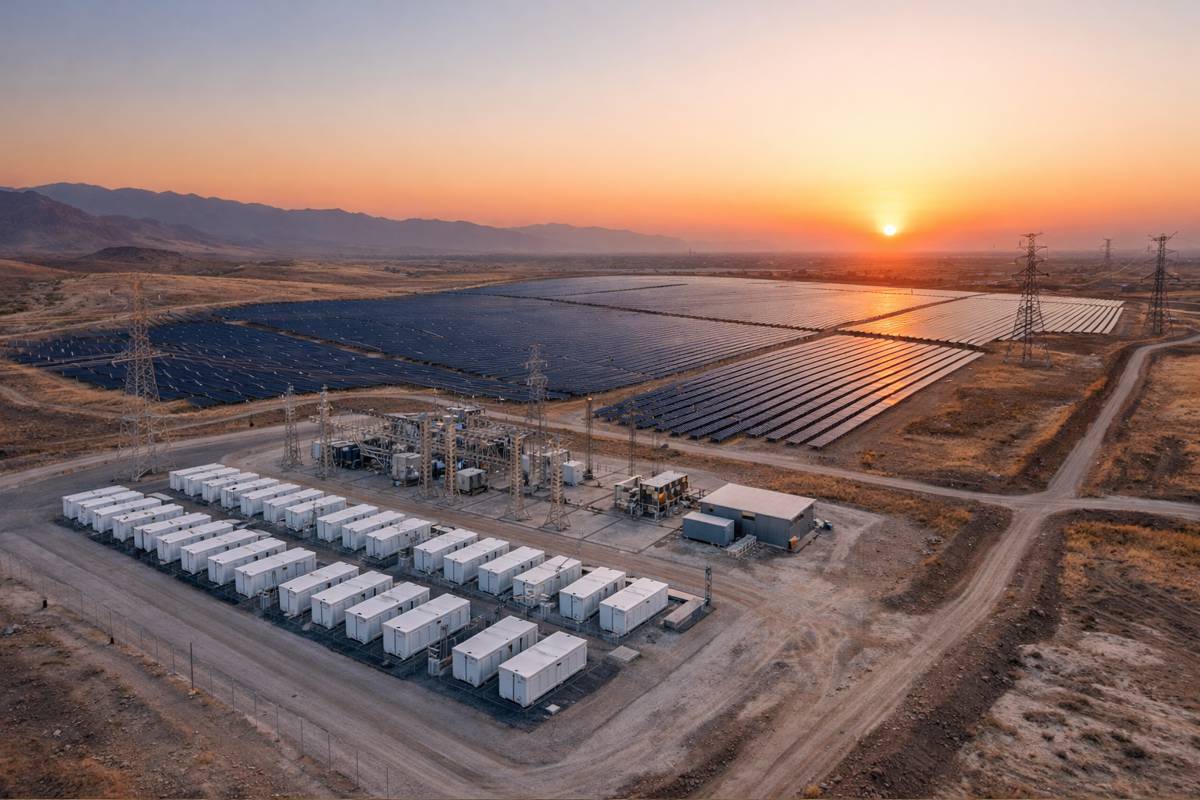
The project, located in Guzar City in the Kashkadarya Region, combines a 300-megawatt solar photovoltaic plant with a 75-megawatt-hour battery energy storage system (BESS). Alongside generation and storage, it includes a practical but often underappreciated piece of the renewables puzzle: grid integration works, specifically 1.6 kilometres of transmission lines and a 220-kilovolt substation. That package is a strong signal to investors and policymakers alike that this isn’t just another solar plant announcement. It’s a grid-ready infrastructure play that responds to the engineering reality of building reliable, low-carbon power systems at scale.
For Uzbekistan, the timing matters. Electricity demand is rising, the economy is modernising, and the state’s energy security priorities have sharpened amid global fuel price volatility and shifting geopolitics. Solar power can deliver cost-competitive electricity, but without grid upgrades and flexibility tools such as storage, renewables growth can quickly run into operational constraints. This project directly tackles that constraint, and that’s why it matters.
Why Solar Plus Storage Has Become the New Baseline
For years, solar PV expansion across emerging markets followed a familiar pattern: build generation quickly, connect it to the grid, and manage intermittency with conventional capacity in the background. That model worked in the early stages, but it becomes less comfortable as renewable penetration grows and system operators need firmer control over voltage, frequency stability, ramping, and peak supply.
That is where battery storage increasingly moves from “nice-to-have” to “strategic asset”. Even at a relatively modest 75 MWh, a BESS can provide rapid-response grid services, support smoother output profiles during cloud events, help shift solar energy toward evening demand, and stabilise the grid around critical nodes such as substations. It doesn’t magically solve every grid challenge, but it changes the operator’s toolkit in ways that traditional solar projects simply don’t.
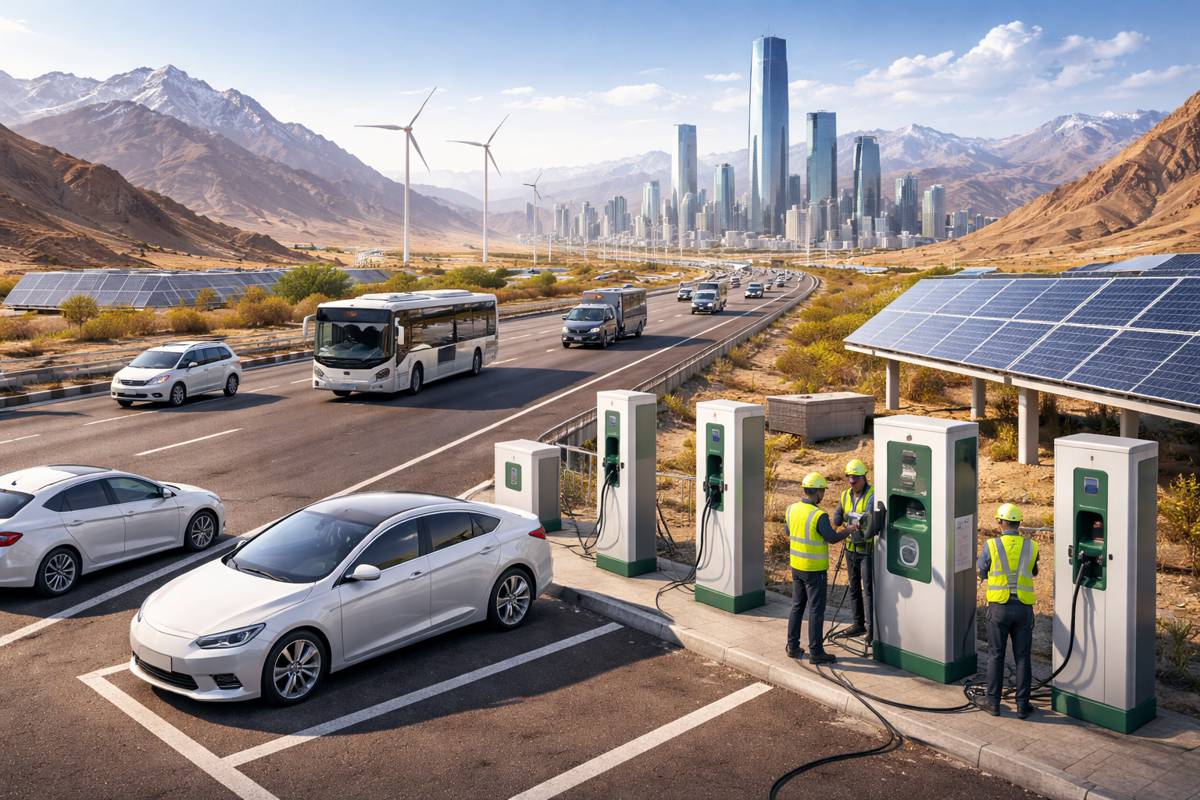
In an infrastructure context, this is especially relevant because reliable electricity underpins productivity across construction, manufacturing, logistics, and public services. Contractors need stable power for batching plants and pre-cast operations. Industrial operators need predictable supply quality for motors, drives, and process equipment. Transport electrification, from rail improvements to EV charging corridors, becomes more viable when the grid is resilient. Put simply, when renewables are backed by storage and modern interconnections, the whole economy benefits.
A Grid Integration Package That Signals Serious Intent
The Guzar Solar and Battery Energy Storage Project is not only about megawatts and megawatt-hours. The inclusion of 1.6 kilometres of transmission lines and a 220-kilovolt substation is a reminder of where many clean energy projects stumble: the connection point.
Grid interconnection isn’t glamorous, but it’s mission-critical. Substations represent the handshake between generation and national transmission systems, and that interface is where grid codes, protection systems, reliability standards, and dispatch arrangements come into play. A well-designed substation and connection line can reduce curtailment risk, improve resilience, and enable future capacity upgrades across a region.
In practical terms, this means the Guzar project is being positioned as a piece of Uzbekistan’s core energy infrastructure, not a standalone renewable installation. That distinction matters for long-term performance, investor confidence, and the ability to attract further private capital into the country’s clean energy pipeline.
The US$30 Million Financing Package and Why the Structure Matters
At face value, US$30 million might look like a modest number in a world of billion-dollar energy investments. But the structure of the financing package is where the story becomes more interesting for the infrastructure finance community.
The agreement consists of:
- US$12.5 million loan from ADB
- US$12.5 million loan from the Leading Asia’s Private Infrastructure Fund 2 (LEAP 2)
- US$5 million loan from the Canadian Climate and Nature Fund for the Private Sector in Asia (CANPA)
Both LEAP 2 and CANPA are administered by ADB. In other words, this is not simply a bank lending to a project. It is a layered approach using multilateral, blended, and climate-aligned capital to support private sector infrastructure delivery.
That matters because renewable energy projects, particularly those involving storage, still face bankability hurdles in many markets. Those hurdles can include offtaker risk, payment delays, currency and convertibility concerns, evolving regulatory frameworks, and uncertainty around dispatch rules for storage assets. By bringing together different pools of development-linked finance, ADB and its managed funds are attempting to reduce friction and accelerate deployment.
From a broader perspective, this kind of blended financing approach is increasingly central to the global energy transition. Climate goals are ambitious, but public finance alone cannot deliver them at the required scale. At the same time, private capital expects risk-adjusted returns, and infrastructure markets can be unforgiving when policy and payment risk is unclear. Instruments like LEAP 2 and CANPA aim to bridge that gap in a way that gets projects built, not just announced.
Managing Offtaker Risk With a Partial Credit Guarantee
One of the most commercially significant components of the deal is ADB’s partial credit guarantee to Nur Kashkadarya Solar PV Foreign Enterprise LLC, the special purpose vehicle established for the project and wholly owned by Masdar.
The guarantee covers a letter of credit of up to US$9 million, designed to mitigate risks associated with the power offtaker’s payment obligations. This is a quietly crucial element. In many emerging markets, even where renewable projects are technically viable and competitively priced, the weak link is often the revenue chain: does the generator get paid on time and in full?
A letter of credit backstopped by a credible multilateral guarantee can materially improve project bankability. It reduces the likelihood of cashflow shocks, strengthens lender confidence, and can lower the cost of capital. For a country building momentum in clean energy investment, that kind of risk mitigation sends a message to the market: this is a jurisdiction where deals can be structured in a way that protects investors while delivering national infrastructure goals.
It’s also an example of how multilateral development banks influence outcomes beyond the headline loan amount. Guarantees can crowd in investment by unlocking private finance that might otherwise sit on the side-lines.
What the Project Delivers in Energy and Emissions Terms
Once operational, the Guzar project is expected to increase Uzbekistan’s electricity production by 634 gigawatt-hours annually and offset at least 354,000 tonnes of carbon dioxide emissions. It is also positioned as a contributor to Uzbekistan’s target of achieving a 40% share of renewables in its power generation mix by 2030.
These figures matter not only for climate metrics, but also for system planning. Additional annual generation at that scale reduces pressure on gas-fired supply, supports economic expansion, and improves the country’s ability to serve both household and industrial demand. The BESS element, meanwhile, increases dispatch flexibility, which can help manage peak conditions and support grid reliability.
The language used by ADB highlights the project’s role in energy security and reliability, which is increasingly how governments frame renewables. The transition is no longer only about decarbonisation. It is about ensuring stable, affordable power as economies grow, industries electrify, and infrastructure modernises.
As ADB Country Director for Uzbekistan Kanokpan Lao-Araya said: “This project demonstrates ADB’s strong commitment to supporting clean energy transition across Asia and the Pacific, and specifically Uzbekistan’s path toward energy security,” adding: “By combining large-scale solar generation with BESS, the project will help meet growing electricity demand, improve power reliability, reduce greenhouse gas emissions, and support Uzbekistan’s commitment to a more sustainable future.”
Uzbekistan’s Broader Clean Energy Momentum
This financing agreement lands in a year of symbolism and substance. ADB and Uzbekistan are marking the 30th anniversary of their partnership in 2025, with Uzbekistan having received US$15.8 billion in public sector loans, grants, and technical assistance since joining ADB in 1995.
The wider picture is that Uzbekistan is actively reshaping its energy mix and investment model. Bringing in major international developers and financing partners is part of building credibility and pipeline capacity, and it aligns with a broader global trend: the most rapid energy transition gains are increasingly coming from emerging markets where demand growth and system expansion coincide.
From an infrastructure delivery standpoint, these projects also develop local capability. They require new standards in procurement, grid compliance, construction delivery, operations and maintenance, and performance monitoring. Over time, that creates a stronger ecosystem for future projects in solar, wind, storage, and potentially green hydrogen.
The Role of LEAP 2 and CANPA in Scaling Private Infrastructure
The presence of LEAP 2 and CANPA in the financing mix offers a glimpse into how the next decade of energy transition funding is being engineered.
LEAP 2 is an ADB-managed fund with a US$1.5 billion commitment from the Japan International Cooperation Agency, established in 2023. It focuses on sustainable private sector infrastructure projects that reduce carbon emissions, improve energy efficiency, and provide affordable services in ADB’s developing member countries.
CANPA, established in 2024, is supported by a Can$360 million commitment from the Government of Canada. It builds on earlier Canadian climate funds and aims to support private sector projects focused on climate and nature-based solutions, while also promoting gender equality.
While the Guzar project is clearly an energy investment, it also sits within a shifting global finance landscape where climate and nature objectives are being integrated into infrastructure funding decisions. For policymakers, this means more access to targeted funding pools when projects align with climate priorities. For investors, it means more co-financing options and potentially stronger project structures.
And for Uzbekistan, it means the renewables transition can be accelerated without placing the full burden on the state balance sheet, provided that the regulatory environment continues to support private investment and enforceable offtake arrangements.
Masdar’s Expanding Footprint in Central Asia
Masdar’s role is also worth noting. Headquartered in the United Arab Emirates, the company has grown into one of the more active global players in renewable energy development. At the end of 2025, Masdar’s total gross generation capacity, operational and under development, exceeded 50 gigawatts, with a goal of reaching 100 gigawatts by 2030.
ADB has financed nine Masdar projects, six of which are in Uzbekistan. That concentration suggests Uzbekistan is not simply one of many markets on the company’s map. It has become a meaningful focal point in Masdar’s expansion strategy, and one where relationships with multilateral partners are helping turn ambition into financed delivery.
For Uzbekistan, working with experienced international developers can reduce delivery risk, strengthen operational standards, and help attract follow-on investment. It also creates a competitive benchmark for future tenders, encouraging performance and accountability across the sector.
Building a More Reliable Low-Carbon Grid
The Guzar Solar and Battery Energy Storage Project will not single-handedly solve Uzbekistan’s energy challenges, and it won’t eliminate the need for broader network upgrades, demand management, and long-term system planning. But it represents a real shift in approach: building renewable generation that is designed to operate like dependable infrastructure, not a variable add-on.
This is what the global clean energy transition increasingly looks like when it is taken seriously. Solar projects are no longer judged only by capacity, but by integration, reliability, bankability, and how well they support national development goals. Storage and interconnection assets, once treated as optional extras, are moving into the core project narrative.
With development finance institutions helping structure risk and crowd in capital, Uzbekistan is positioning itself to scale renewable energy in a way that supports both climate commitments and economic realities. For the broader infrastructure sector, it is another clear sign that the era of grid-ready renewables has arrived, and countries that embrace it early will be better placed to build resilient, competitive economies.