Inclusive and Wildlife Friendly Rural Road Upgrades in Maharashtra
Maharashtra’s ambitious push to upgrade rural roads and state highways is being shaped by a quiet but important shift in how transport infrastructure is planned. Instead of treating environmental and social safeguards as paperwork to be filed after decisions are already made, the state is testing a more practical idea: build risk checks into the workflow from day one, keep them simple enough to use at scale, and make sure local teams have the authority and tools to act.
This article is inspired by an Asian Development Bank (ADB) blog post written by Laureen Laurito, Social Safeguard Practitioner at the ADB and Suvalaxmi Sen, Senior Safeguard Specialist (Environment), ADB Office of Safeguards. Their post explores the works connected to Maharashtra’s Green Roads Programme and the approach taken to strengthen safeguards without derailing delivery. While the discussion is rooted in one Indian state, the implications travel well beyond its borders. Across the global construction and infrastructure sector, transport agencies are trying to expand networks while also responding to tighter expectations around biodiversity protection, community impacts, transparency, and climate resilience. Maharashtra’s experience shows that it’s possible to be pragmatic without being careless, and methodical without being slow.
Road upgrades might appear routine compared with megaproject rail corridors or major port developments, but rural roads and secondary highways are where economies often gain their most immediate productivity. They shape access to markets, services, education, and emergency response. If the systems governing those projects are weak, the risks stack up quickly: delays, disputes, compliance failures, reputational damage, and long-term environmental harm that triggers future costs. Maharashtra’s emerging model offers a grounded blueprint for doing better.
Why Road Safeguards Are Becoming a Delivery Issue, Not Just a Compliance Exercise
Road building has always been about more than asphalt and aggregates. Even small alignment changes can affect drainage patterns, wildlife movement, roadside livelihoods, and land access. That reality is increasingly difficult to ignore, particularly in regions that overlap with sensitive ecosystems or where road corridors pass close to vulnerable communities.
Globally, infrastructure safeguards have hardened into a business-critical concern. International finance institutions and development agencies have raised expectations around biodiversity conservation, stakeholder engagement, grievance processes, and monitoring. For contractors and consultants, this is no longer a box-ticking add-on. Weak safeguards can stop projects, derail funding, or trigger enforcement action. Strong safeguards, on the other hand, can reduce conflict and help maintain a predictable pipeline of work.
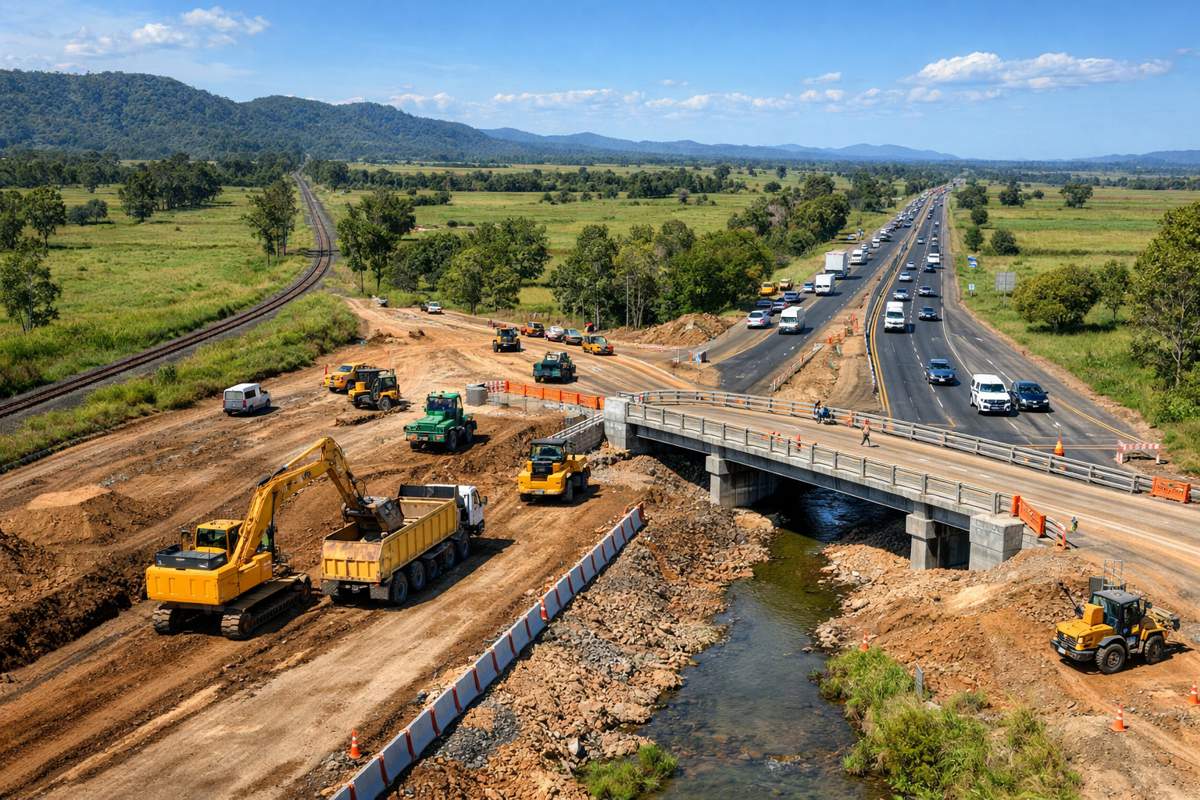
Maharashtra’s challenge is scale. Improving a large network of rural roads and state highways across varied geographies means there simply isn’t time or budget for exhaustive site-by-site technical studies everywhere. The Green Roads approach responds with a more operational solution: use structured screening tools to sort risk early, focus intensive assessment where it’s truly needed, and strengthen oversight so that mitigation measures stick.
A Programme Designed Around Two Very Different Road Realities
One of the most commercially relevant aspects of Maharashtra’s effort is that it does not treat every road as the same kind of project. Instead, the work described recognises that state highways and rural roads create different risk profiles and require different safeguard strategies.
For larger road upgrades, particularly those involving new alignments or significant changes in road geometry, the risks can include ecological disruption, habitat fragmentation, and more complex land and stakeholder issues. These projects demand stronger early screening and more rigorous monitoring, because the footprint and long-term impacts are greater.
Rural roads, meanwhile, often sit within existing rights-of-way and are typically smaller in scope. That doesn’t mean they’re impact-free. Dust, noise, temporary access disruption, and local business impacts can be very real. The difference is that impacts are often localised and manageable, provided communities are involved and the rules are clear. Maharashtra’s programme leans into this distinction rather than fighting it, which is why its safeguards framework looks more practical than performative.
Screening at Scale Without Losing Rigour
The assessment work did not follow the traditional script of a single, exhaustive audit. Given the scale of the programme, that approach would have been slow, expensive, and arguably less useful. Instead, the assessment became a broader exploration across districts, ecosystems, and institutional practices, drawing on scientific analysis, field investigation, and social considerations.
That blended approach matters because it reflects the messy reality of infrastructure delivery. Satellite imagery and biodiversity datasets can highlight risk areas, but they can’t tell you how a village actually uses a road, where seasonal flooding changes access patterns, or how wildlife interacts with roadside drainage. Equally, local experience can be strong, but without structured tools it can become inconsistent across teams and districts. Maharashtra’s programme sought to combine both, shaping a model that can be repeated rather than reinvented.
For construction and engineering professionals, this is a familiar balancing act. The industry is moving toward more data-led decision-making, but “data-led” doesn’t mean “data-only.” It means using information to target effort where it adds the most value. In this case, screening tools and rapid assessments become a way to preserve depth and credibility while still delivering at speed.
Mapping Risk Early Using Satellite Data and Biodiversity Screening
For the Public Works Department, the initial safeguard process began with mapping proposed road alignments using satellite imagery and biodiversity databases, with a particular focus on potential impacts in ecologically sensitive areas such as the Western Ghats. This is a region internationally recognised for its rich biodiversity, and any transport expansion near such areas draws attention for good reason.
This early-stage mapping is a practical step that many road authorities globally could adopt more consistently. It doesn’t require complex new systems, and it can be integrated into standard planning. The value lies in making risk visible before design decisions harden. Once procurement is underway and contractors are mobilised, even small changes can become expensive and disruptive. Early screening keeps options open.
However, the Maharashtra experience also illustrates why mapping alone isn’t enough. Biodiversity risk is rarely a neat yes-or-no question. It’s shaped by habitat connectivity, species sensitivity, water flows, and the small edge effects that show up when a road changes how land is used around it. Recognising that complexity, the programme moved beyond remote analysis into targeted field investigation.
Rapid Critical Habitat Assessment Where It Counts
Because biodiversity and social realities can’t be fully understood through databases alone, the programme undertook a rapid critical habitat assessment in areas flagged as potentially sensitive. This blended satellite analysis with on-the-ground ecological surveys and habitat assessments, allowing teams to validate risk and apply precautionary measures where necessary.
In the infrastructure world, “rapid” can sometimes sound like “shallow,” but that isn’t the point here. The purpose of rapid assessment is to be decisive without being dismissive. It helps identify whether a project needs deeper study and heavier mitigation, or whether risks can be managed through practical engineering measures and monitoring.
This is the kind of safeguard work that, when done well, prevents later disruption. It can reduce redesign costs, shorten dispute timelines, and strengthen the credibility of a programme in the eyes of communities and financiers. It also supports a more mature project culture, where risks are anticipated rather than defended after the fact.
The Sindhudurg Example and Biodiversity-Sensitive Engineering in Practice
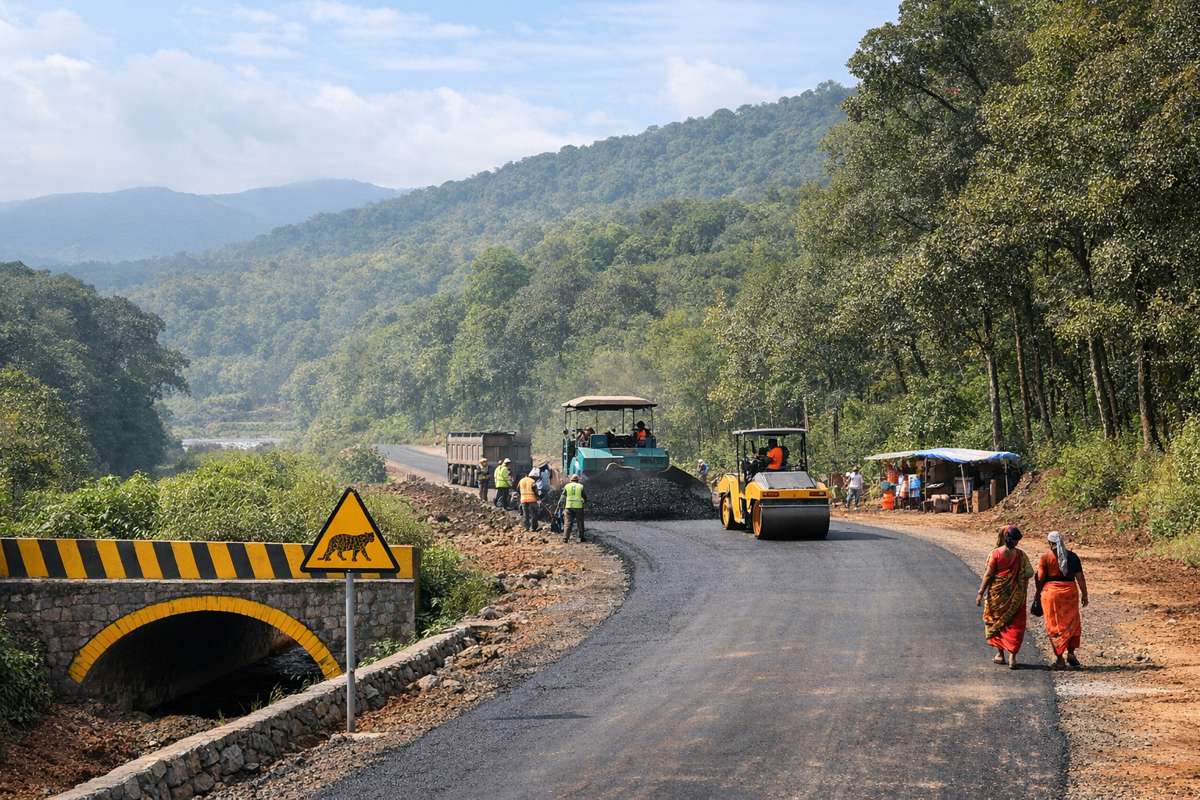
One of the most telling insights comes from a case in Sindhudurg, where screening indicated the potential presence of critical habitat. Rather than relying on assumptions, the team carried out extensive surveys of reptiles and amphibians and introduced precautionary measures based on what they found.
Those measures included improved drainage systems and signage aimed at reducing wildlife mortality. It’s a deceptively simple intervention, but it signals an important design mindset. Roads don’t just fragment habitat through the paved surface itself. Poor drainage can create pooling water, sudden channel flows, and roadside conditions that can harm both wildlife and communities. Getting drainage right is safety, resilience, and environmental mitigation rolled into one.
For contractors, this is the kind of detail that can make or break performance outcomes. Wildlife-friendly drainage and related measures can often be integrated without major cost blowouts, particularly if they’re specified early and embedded into design templates. The alternative, retrofitting fixes after incidents occur, tends to be more expensive and more reputationally damaging.
Rural Roads, No Land Acquisition, and Community-Led Participation
The Rural Road Development Association’s focus sits at the other end of the scale spectrum. These smaller roads typically operate within existing rights-of-way, and importantly, no land acquisition is allowed. That single rule reshapes safeguard priorities. The key risk becomes how to prevent negative impacts on local households during construction and ensure communities have a genuine voice in decision-making.
The approach described centres on a participation framework led by the communities themselves. That matters because rural road impacts are often less about formal displacement and more about daily disruption. If access to a shopfront, a farm entrance, or a water point is blocked for weeks, livelihoods can be hit even if nobody is technically “relocated.” Community-led participation helps surface these issues early, when work planning can still be adjusted.
Assessments confirmed that the rural road construction impacts were manageable and localised, and could be addressed through stronger environmental management plans and better implementation oversight. Social assessments also indicated that disruptions would be minimal and temporary. In practical terms, this points to a safeguard model based on consistency and responsiveness rather than heavy bureaucracy.
Simple Tools That Make Safeguards Usable for Local Engineers
One of the strongest messages emerging from the Maharashtra work is that safeguard systems succeed when they match the realities of delivery teams. Detailed technical studies for every road segment are often impractical, particularly when hundreds of kilometres are being planned or upgraded across many districts.
Instead, straightforward screening checklists, clear guidance, and defined thresholds can help local engineers make informed decisions quickly. That’s not a compromise. It’s a route to higher compliance because it reduces ambiguity. When risk management becomes part of standard workflow, rather than an external audit function, it gradually changes the culture of a programme.
In many markets, the safeguard gap isn’t caused by bad intent. It’s caused by overcomplicated rules, unclear accountability, or tools that don’t translate into daily decisions on site. Maharashtra’s model offers a more grounded pathway: keep tools simple, make them mandatory, and support people to use them properly.
Oversight, Templates, and Grievance Channels That Build Public Trust
Safeguards don’t hold up on their own. They need oversight mechanisms that are visible, consistent, and trusted by communities. Maharashtra’s programme highlights the importance of empowering frontline staff with concise manuals, templates, training, and clear communication channels so that minor disruptions are handled quickly rather than escalating into conflict.
Accessible grievance channels are particularly significant, not because they eliminate complaints, but because they make project response measurable. In infrastructure delivery, trust often comes down to whether people feel heard and whether responses arrive in time to matter. A well-run grievance process also protects agencies and contractors from misinformation and prevents small issues from becoming reputational crises.
The programme also recognises that even road upgrades can impact wildlife and local businesses. Targeted measures such as wildlife-friendly drainage, speed control, and clear pre-construction communication can reduce harm while maintaining community support. Importantly, linking these steps to performance metrics helps ensure they’re implemented rather than forgotten.
What Needed Strengthening Inside the Agencies
The assessment did not present Maharashtra’s agencies as flawless, and that’s arguably where its value lies. It identified improvement areas in existing safeguard practices on both sides of the programme.
For the Public Works Department, the need was for more systematic screening and monitoring mechanisms. Large projects can drift without consistent tracking, and even well-designed safeguards can fail if monitoring is irregular or enforcement is unclear. Strengthening these mechanisms reduces risk for the entire delivery chain, including consultants, contractors, and financiers.
For the Rural Road Development Association, the opportunity was to clarify templates for due diligence and grievance resolution. Rural roads move quickly and in high volumes, so standard templates matter. Clearer templates reduce variation between districts, improve reporting, and make oversight simpler for both management and external stakeholders.
The Safeguard Action Plan and the Shift Toward Institutional Change
What sets this programme apart, according to the original ADB-based material, is how the findings were incorporated into a safeguard action plan. Rather than treating the assessment as a standalone exercise, the action plan produced indicators that track not only physical delivery outcomes but also whether safeguards are becoming embedded into long-term institutional practice.
This is where the commercial relevance becomes clear. Infrastructure investors and development partners look for durable systems, not one-off wins. If safeguards rely on a small number of motivated individuals, they fade when staff change. If they’re embedded through indicators, training requirements, monitoring protocols, and transparent reporting, they become part of how an agency operates.
Agencies are now motivated to improve screening protocols, monitor compliance, train staff, and address environmental and social issues more transparently. That is a stronger foundation for long-term road delivery, especially in a world where the expectation of responsible infrastructure is only moving in one direction.
A More Resilient Road Network Depends on the Systems Behind It
The overall result of the work described is a strengthened ecosystem for road development. The programme confirmed that none of the assessed projects would significantly harm the environment or local communities, and it clarified how both agencies can build independent capacity for safeguard management.
For the global construction and infrastructure sector, Maharashtra’s Green Roads Programme is a reminder that sustainability doesn’t always arrive through revolutionary technology. Sometimes it comes from better habits: early screening, practical checklists, targeted fieldwork, community-led participation, and oversight systems that actually function on the ground.
A safe, resilient, and inclusive road system depends not only on what is constructed, but on the governance and safeguards that guide construction decisions. By placing responsibility into the routine mechanics of delivery, Maharashtra is demonstrating how transport upgrades can serve people and nature at the same time, without turning infrastructure development into an impossible trade-off.