Aqua Cutter 750V Redefines Hydrodemolition at World of Concrete
In the global drive to extend the life of ageing bridges, tunnels, car parks and elevated highway structures, concrete repair has become one of the most important – and most time-sensitive – disciplines in infrastructure maintenance. Asset owners aren’t just looking for patch jobs that keep the network limping along for another season. They need repairs that last, minimise disruption, and stand up to heavier traffic loads, harsher weather cycles and ever tighter safety expectations.
That’s where hydrodemolition is quietly earning its place as a modern standard for selective concrete removal. Using high-pressure water rather than mechanical breakers, hydrodemolition allows contractors to remove damaged or deteriorated concrete while leaving sound material and reinforcement intact. For the construction industry, that’s not merely a technical preference. It translates into reduced rework, stronger repair performance, and fewer surprises once the repair mortar or overlay is placed and the structure returns to service.
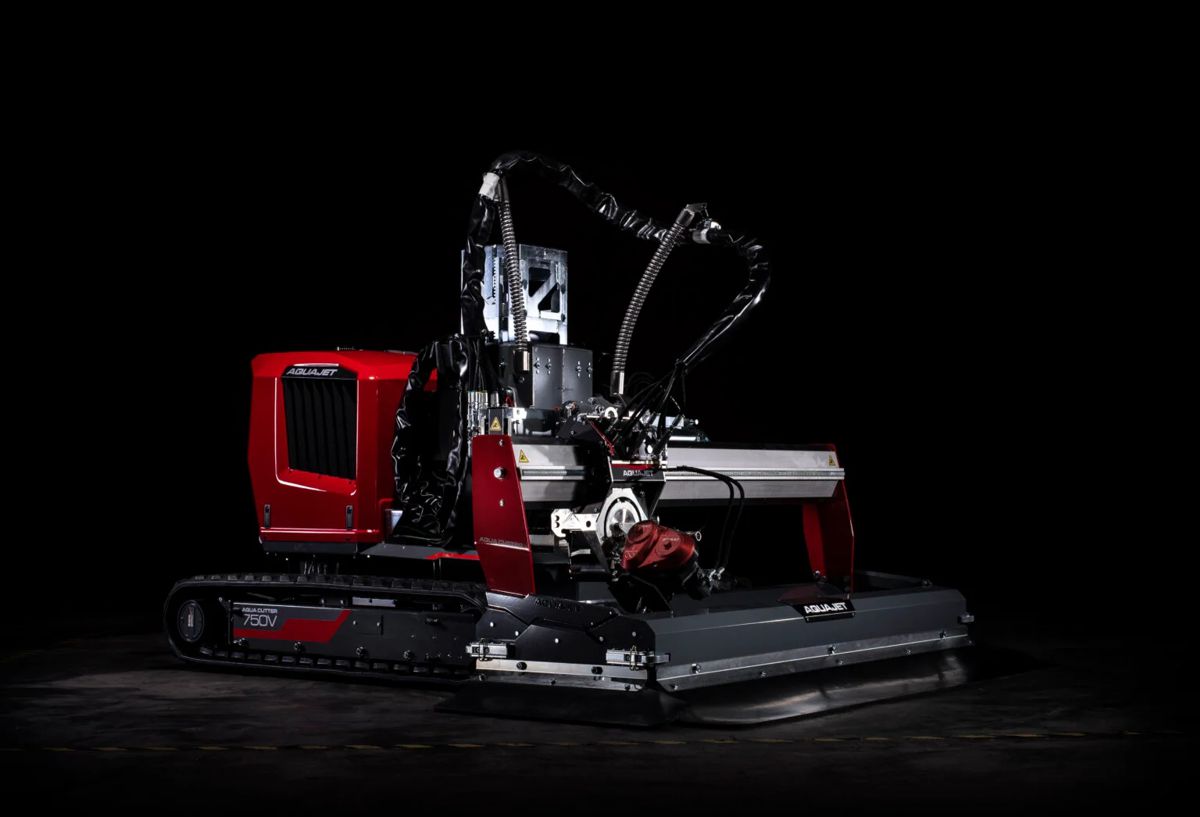
Aquajet’s Aqua Cutter 750V has been positioned as a productivity leap forward in hydrodemolition robotics, with a design that targets one of the most stubborn bottlenecks in the process: how effectively a water jet is moved across the surface to remove concrete quickly and consistently without compromising the substrate.
Why Hydrodemolition Performance Matters More Than Ever
Concrete repair sits at the intersection of engineering, programme risk, and public disruption. A deck repair on a major bridge or a refurbishment job inside a tunnel closure is rarely just another contract. It’s often an emergency response to deterioration, a planned upgrade in a compressed possession window, or a rehabilitation effort tied to long-term asset management funding. In these scenarios, the cost of delays can dwarf the cost of equipment, and the quality of preparation can determine whether the repair holds for decades or begins failing far earlier than planned.
Hydrodemolition has become widely valued because it creates an ideal bonding surface for repair materials. A well-prepared surface contributes directly to better adhesion and a longer-lasting repair. Contractors also benefit from selective removal that can help reduce the risk of damaging reinforcement, micro-cracking surrounding concrete, or undermining the integrity of the structure during demolition work.
Even so, hydrodemolition is a specialised craft. Contractors must balance speed with precision, and production with control. Any step that reduces the need for follow-up work, manual intervention, or unnecessary passes can reshape job economics. That’s the real commercial battleground in concrete rehabilitation: remove more per shift, reduce touch-up work, and deliver a surface that sets the repair up for success.
Aqua Cutter 750V and the Shift Toward Smarter Lance Movement
Aquajet has been developing hydrodemolition systems for decades, and the company’s Aqua Cutter line has become a familiar presence on demanding rehabilitation projects worldwide. With the Aqua Cutter 750V, introduced in 2022, Aquajet focused on a new, patented lance movement approach designed to improve how efficiently the high-pressure water jet engages the surface.
At the centre of the 750V’s performance story is Aquajet’s Infinity oscillation, a motion pattern that moves the water jet in an infinity, or figure-eight, path. It’s a concept that aims to bring together the strengths of conventional oscillating and rotating lance movements, while reducing the weaknesses that appear when cutting patterns create inconsistent contact or uneven energy distribution across the surface.
This change might sound like a purely mechanical innovation, but the impact for contractors can be felt across the job. Hydrodemolition isn’t just about power. It’s about control, repeatability, and how evenly concrete is removed. A water jet that maintains more consistent engagement with the surface can remove material more predictably, helping the operator avoid both under-removal and over-aggressive cutting.
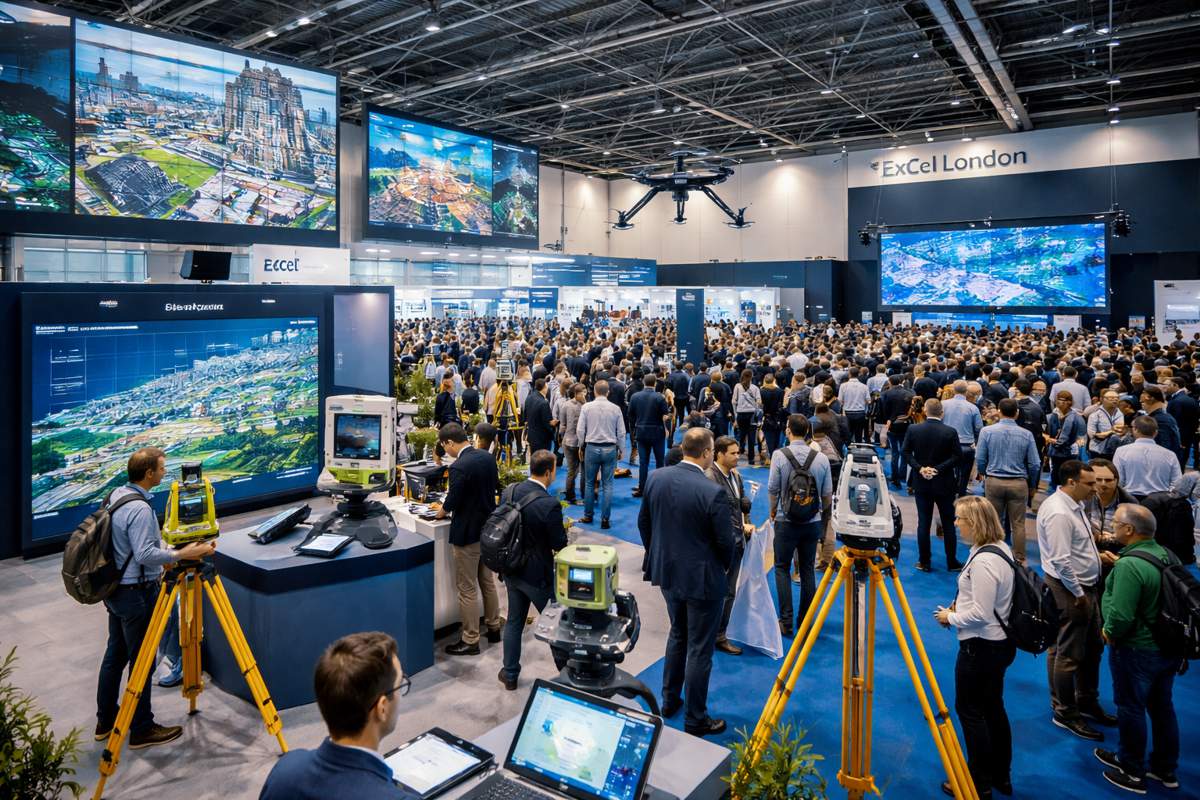
Aquajet showcased the Aqua Cutter 750V at World of Concrete in Las Vegas in January, placing the technology in front of a major international audience of concrete, repair and demolition professionals. In a sector where reputations are built on measurable performance and jobsite outcomes, the attention given to the 750V reflects a broader industry hunger for machines that deliver more output without adding complexity or risk.
Infinity Oscillation and What Contractors Gain on the Ground
Hydrodemolition crews know that removing concrete at speed is only half the job. The other half is what the surface looks like when the machine moves on. Poor consistency can lead to leftover pockets around reinforcement, uneven depths, or surface conditions that require manual correction before repair materials can be placed.
Aquajet’s Infinity oscillation is designed to tackle this issue head-on by keeping the jet in more consistent contact with the surface. The benefits, as outlined by Aquajet, include practical jobsite outcomes that matter to programme managers, site supervisors and repair engineers alike:
- More concrete removed in a single pass
- Less need to follow up with a hand lance to remove small amounts of concrete left under the rebar
- Virtually no risk of pipe holes, or small holes caused by fluctuating speeds within the lance movement
- A lower, more consistent noise level
- And ultimately, an ideal bonding surface that increases the life of the repair
Taken together, these points form a familiar contractor wish list: remove more concrete per hour, cut down manual intervention, and deliver a better finish for the next trade. That last point, the bonding surface, is particularly important because the lifespan of a repair is not determined only by the quality of the repair material. It’s heavily influenced by the preparation that comes before it.
Aquajet has stated that contractors using the Aqua Cutter 750V have achieved a 10% to 20% increase in productivity compared to previous models. For high-volume rehabilitation work, that kind of improvement can influence everything from labour planning and shift allocations to traffic management costs and overall contract profitability. It’s also a reminder that in demolition and removal, incremental performance gains often have outsized financial effects.
A Technology Evolution Aimed at Becoming the New Standard
The hydrodemolition market isn’t short on bold claims, so it’s notable when senior leadership puts a stake in the ground about where the industry is heading. Aquajet managing director Roger Simonsson framed Infinity oscillation not as a niche upgrade, but as the likely future default for contractors chasing productivity and consistency.
“Aquajet has always been at the forefront of Hydrodemolition innovation,” said Roger Simonsson, Aquajet managing director. “Infinity oscillation is the next technological evolution, and it is changing how Hydrodemolition contractors think about productivity. In the coming years, we will see it replacing rotating lances and similar tools to become the new industry standard. With the productivity gains realized, the Aqua Cutter 750V is a significant advancement for Hydrodemolition.”
That statement captures an important point about competitive advantage in construction equipment. The most successful innovations don’t just shave seconds off a task. They change expectations. When contractors experience faster removal without the trade-offs they’ve come to accept, those old compromises start looking unnecessary.
If Infinity oscillation proves itself across a wide variety of project conditions and concrete types, it could shape procurement decisions, training standards, and the benchmark against which other hydrodemolition systems are measured.
Evolution Control System and the Drive for More Intelligent Operation
While the lance movement is the headline feature, Aquajet has also put emphasis on the Aqua Cutter 750V’s upgraded Evolution Control System. First released in 2004, the system includes Aquajet’s patented Equal Distance System (EDS) and supports the ability to cut shapes and remove concrete at varying depths within the same pass.
For repair work, that flexibility is more valuable than it might first appear. Real-world deterioration is rarely uniform. Delamination, chloride damage, and freeze-thaw cracking often vary across a deck or slab. Being able to remove different depths without constantly stopping and recalibrating helps crews maintain flow on complex removal patterns.
The updated control system adds an oscillation menu that automatically calculates optimal settings for the operator. In practical terms, this is designed to do two things at once: maximise production and reduce the risk of errors from manual adjustments. That second point matters because hydrodemolition isn’t forgiving. Inconsistent settings can lead to uneven removal, excessive water usage, or surface outcomes that create downstream repair complications.
This kind of “built-in expertise” is becoming increasingly common across construction robotics and automated equipment. It’s the same trajectory seen in machine guidance, intelligent compaction, and remote monitoring systems. The goal is not to replace the skilled operator, but to support consistent quality and reduce variability between crews, shifts and job conditions.
Durability, Maintenance and the Economics of Long Shifts
In infrastructure rehabilitation, downtime is a budget killer. Whether it’s a mechanical failure during a weekend closure or a repair crew standing by while parts are sourced, equipment reliability becomes just as important as raw cutting performance.
Aquajet has positioned the Aqua Cutter 750V as a machine built for long hours with less maintenance. Its wear parts are described as rugged and long-lasting, supported by field testing and active machines that have surpassed 3,200 working hours. That’s a meaningful figure in any heavy-duty environment, particularly one that involves water systems, harsh operating conditions, and repeated exposure to abrasive concrete removal processes.
For contractors, durability isn’t simply a matter of pride in equipment ownership. It affects the real-world cost-per-square-metre of removal, the viability of taking on larger or more time-critical contracts, and the ability to scale hydrodemolition capacity without scaling maintenance headaches at the same rate.
When reliability improves, it also helps contractors deliver certainty to clients. In asset management and civil engineering, certainty is gold. If the contractor can confidently hit targets within narrow possession windows, the whole project team benefits, from traffic planners and repair crews to public authorities managing disruption.
A Stronger Surface for Repairs and a Better Outcome for Asset Owners
The long-term value of hydrodemolition is not just a cleaner demolition method. It’s about the repair that follows. A surface that bonds well to repair materials can significantly improve durability and reduce the likelihood of premature debonding, cracking, or water ingress at the repair interface.
Aquajet’s positioning of the Aqua Cutter 750V therefore fits neatly into the broader direction of infrastructure investment: extending the lifecycle of existing assets rather than constantly rebuilding from scratch. Across many countries, the political and financial reality is that new megaprojects are not always the priority. Maintenance, resilience upgrades and rehabilitation programmes are where many budgets are going, because they offer an immediate improvement to safety and network performance.
The importance of surface preparation is well understood among repair engineers, and technologies that consistently deliver the right substrate conditions can help standardise better repair outcomes across the industry. In that sense, a productivity improvement is only part of the story. The bigger narrative is quality at speed, and the capacity to repair more of the network in less time without compromising the longevity of the work.
From Demonstration Floor to Jobsite Standard
World of Concrete has long served as a proving ground for concrete technology, demolition tools and repair methods. Aquajet’s decision to spotlight the Aqua Cutter 750V at the Las Vegas event suggests confidence that the machine’s performance is not just theoretical, but measurable and repeatable under real-world conditions.
As more contractors adopt robotic hydrodemolition systems, competition will likely focus on consistency, software intelligence, operator workflow and total cost of ownership rather than headline pressure ratings alone. The Aqua Cutter 750V, with its patented Infinity oscillation and enhanced control platform, appears designed to compete in exactly that arena.
For infrastructure owners and policymakers, the relevance is clear. Faster, higher-quality repairs can reduce disruption, extend asset life and improve the return on maintenance investment. For contractors, the advantage is equally direct. Better production rates, less manual follow-up, and durable equipment can help build a competitive edge in a busy and increasingly demanding rehabilitation market.
And for the wider construction technology ecosystem, this is another sign that robotics is no longer a novelty in demolition and repair. It’s becoming a practical tool for solving real operational challenges, one pass at a time.