DexMat Scales a New Class of Conductive Materials
Global infrastructure systems are under mounting pressure, and not just from ageing assets or rising demand. At a deeper level, the materials that underpin power transmission, transport, energy systems and advanced manufacturing are facing structural constraints. Copper remains the backbone of electrical conductivity across infrastructure, yet demand continues to accelerate while supply growth lags, constrained by geology, geopolitics and the carbon intensity of extraction.
Against that backdrop, DexMat has closed a Seed funding round of more than $5 million, bringing total equity funding to $10 million. The round was led by non sibi ventures, with participation from Governance Partners, Tailwind Futures, BetterWay, Capital Factory and other new and existing investors. While early-stage funding announcements are common, the timing and context of this one matter far beyond the balance sheet.
DexMat is not positioning its technology as a marginal improvement on existing materials. Instead, its flagship product, Galvorn, reflects a deeper rethink of how conductivity, weight, durability and supply resilience can be balanced in an era where infrastructure must do more with fewer resources. For construction professionals, infrastructure owners and industrial investors, that shift has system-level implications.
Why Conductive Materials Are Becoming an Infrastructure Bottleneck
Electrical conductivity sits at the heart of modern infrastructure, from grid expansion and renewable integration to electric vehicles, automation systems and advanced manufacturing equipment. Copper has long dominated these applications due to its excellent conductivity and established supply chains. However, the material brings trade-offs that are becoming harder to ignore.
Copper is heavy, energy-intensive to produce and increasingly exposed to supply volatility. According to the International Energy Agency, copper demand linked to electrification and clean energy technologies is expected to rise sharply through the 2030s, while new mine development faces long permitting timelines and environmental opposition. For infrastructure developers, this creates both cost uncertainty and design constraints.
In weight-sensitive applications such as aerospace, automotive systems, advanced cables and high-performance electronics, copper’s density introduces penalties that cascade through system design. Heavier conductors increase structural requirements, reduce efficiency and limit flexibility. These issues are no longer niche concerns; they are shaping procurement decisions across infrastructure and industrial sectors.
It is within this context that Galvorn’s growing traction becomes relevant. Rather than competing head-on with copper across all use cases, DexMat is targeting applications where traditional conductive materials impose clear limitations, particularly where lightweighting, durability and scalability intersect.
Galvorn and the Shift Toward Lightweight Conductivity
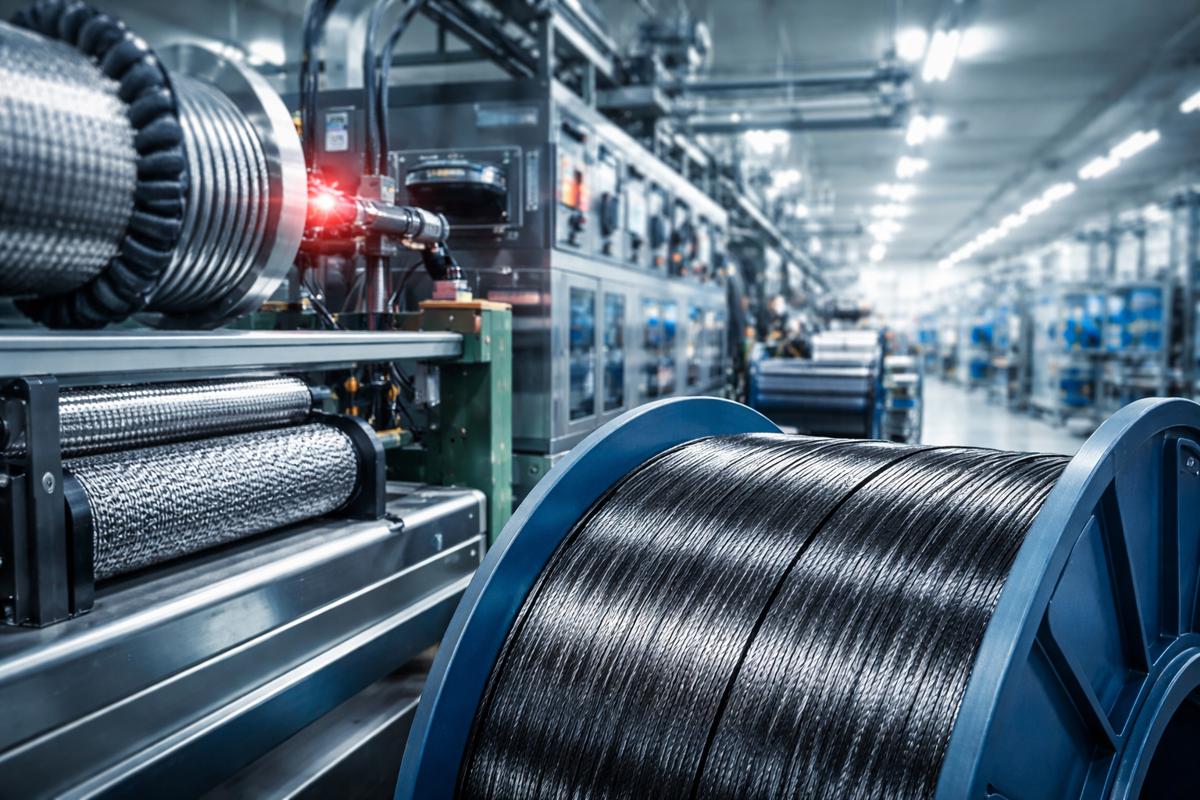
Galvorn is a carbon-based conductive material developed to deliver a combination of low density, flexibility and high performance. While carbon materials have long been explored for conductivity, scaling them economically and consistently has remained a challenge. DexMat’s approach focuses on translating laboratory-grade performance into manufacturable, repeatable outputs suitable for commercial deployment.
Manufacturers of wire and cable products have emerged as early adopters, drawn by the ability to reduce weight while maintaining functional performance. In infrastructure-heavy environments, even modest reductions in conductor weight can translate into lower installation costs, simplified handling and reduced structural loads over long distances.
Durability also plays a role. Traditional metallic conductors are prone to fatigue, corrosion and mechanical degradation over time, particularly in harsh environments. Carbon-based alternatives offer different failure modes, opening the door to longer service life in certain applications. For asset owners facing rising maintenance costs and labour shortages, these characteristics are increasingly attractive.
DexMat reports growing customer demand across targeted applications, reflecting a broader industry search for materials that ease design trade-offs rather than shifting them elsewhere. This is not about replacing copper universally, but about introducing optionality into supply chains that have grown overly dependent on a single material class.
Scaling Production in Response to Real-World Demand
The newly raised capital, alongside $3 million in non-dilutive funding, is earmarked for a clear operational objective: scaling production to meet near-term customer demand. Unlike many early-stage materials companies, DexMat is already supplying commercial customers and expanding output in response to confirmed orders rather than speculative projections.
The company reports 2.5x growth in 2025, more than doubling the amount of Galvorn produced and sold in the previous year. Production capacity has increased twentyfold since the pre-Seed stage, while production costs have fallen by 96%. These figures point to progress not just in materials science but in process engineering and operational discipline.
Such gains are particularly significant in the materials sector, where promising technologies often stall at pilot scale due to cost or manufacturability barriers. DexMat’s emphasis on cost reduction alongside capacity expansion reflects an understanding that infrastructure markets demand reliability and price predictability, not just performance.
As global manufacturers reassess supply chain risk, the ability to scale alternative materials quickly and economically becomes a competitive advantage. For infrastructure projects with long planning horizons, confidence in material availability can influence design decisions years in advance.
Investor Confidence and Market Validation
Early-stage investors are often asked to back teams before markets fully materialise. In this case, investor commentary highlights confidence in both the technology and its commercial trajectory. Kent Lucas, Founding Partner at non sibi ventures, underscored the dual focus on execution and opportunity: “With early stage investing, you’re betting on the team as much as the technology. With DexMat we saw a high-performing team that consistently exceeds targets and a category-defining platform technology addressing a significant market opportunity. We could not be more excited about what we will accomplish together.”
That sentiment is reinforced by continued customer engagement and industry recognition, including being named Trellis 2025 Startup of the Year. While awards alone do not guarantee market success, they often reflect peer validation within industrial and sustainability-focused ecosystems.
DexMat’s leadership has been explicit about what customers are asking for. CEO Bryan Guido Hassin noted: “We’re seeing clear customer pull, particularly in wire and cable applications, as manufacturers look for conductive materials that are less dense, more durable, and resilient at scale. This funding allows us to meet near-term demand and expand production capabilities in response to evolving supply-chain constraints.”
The emphasis on resilience and scale aligns closely with infrastructure priorities, where materials decisions are increasingly shaped by long-term risk rather than short-term cost optimisation.
From Laboratory Concept to Industrial Reality
The scientific roots of Galvorn trace back more than two decades, with its origins linked to research conducted at Rice University. The material emerged from work involving Nobel Prize–winning scientists, including Richard Smalley, whose contributions to nanomaterials helped lay the groundwork for advanced carbon technologies.
For many infrastructure stakeholders, such academic heritage matters less than practical outcomes. However, the long gestation period highlights a recurring theme in advanced materials: meaningful industrial impact often requires decades of incremental progress rather than sudden breakthroughs.
Matteo Pasquali, PhD, Co-Founder and Chief Science Advisor at DexMat, reflected on that journey: “It’s been incredible to be part of Galvorn’s evolution from a conversation on a couch with Nobel laureate Richard Smalley to a product now gaining market traction. This inflection point is the result of over 25 years of concerted R&D. Achieving our mission to reduce reliance on energy-intensive metal production will take a village.”
That mission resonates strongly with infrastructure decarbonisation goals. Metal production, particularly copper smelting and refining, remains highly energy-intensive. While alternative materials will not eliminate the need for metals, they can reduce demand growth at the margins where it matters most.
Implications for Infrastructure and Industrial Systems
The emergence of scalable, lightweight conductive materials carries implications beyond individual products. In power transmission, lighter conductors can reduce tower loads and foundation requirements. In transport systems, weight savings can improve energy efficiency and extend range. In industrial automation, flexibility and durability can simplify routing and maintenance.
These effects compound at system level. Infrastructure projects are complex assemblies of interdependent components, where changes in one material property can unlock efficiencies elsewhere. As such, materials innovation often delivers value indirectly, through design freedom and risk reduction rather than headline performance metrics.
DexMat’s focus on targeted applications reflects an understanding of this dynamic. By engaging with customers early in the design process, the company positions Galvorn as an enabler rather than a drop-in replacement. For infrastructure investors, that collaborative approach can shorten adoption timelines and reduce integration risk.
Building Resilience Into Future Supply Chains
Supply chain resilience has moved from abstract concern to board-level priority across construction and infrastructure sectors. Climate impacts, geopolitical tensions and resource nationalism have exposed the fragility of global material flows. Diversifying material inputs is increasingly seen as a strategic necessity.
Galvorn’s appeal lies partly in its ability to mitigate dependence on energy-intensive metals without demanding wholesale system redesign. For manufacturers and infrastructure owners alike, that balance between innovation and continuity is crucial.
As DexMat expands production and commercial engagement, its progress will be watched closely by an industry seeking credible alternatives to constrained materials. The company’s growth trajectory suggests that advanced materials, once confined to laboratories and niche markets, are beginning to find their place in the infrastructure mainstream.