Public Capital Unlocking Private Energy Investment in Kenya
Kenya’s clean energy transition has quietly become one of the most credible and commercially grounded success stories in global infrastructure. While many countries continue to grapple with intermittency, grid instability and volatile fuel costs, Kenya has pursued a different route, one anchored in geothermal baseload power. The approval of a 16.5 million dollar loan by the African Development Bank Group for the 35 megawatt OrPower Twenty-Two geothermal power plant marks another decisive step in that journey.
At first glance, the project appears modest in scale. In reality, it represents a carefully structured expansion of a proven geothermal cluster that underpins Kenya’s long-term energy security, industrial competitiveness and climate commitments. This is not an isolated power plant. It is part of a deliberate system-level approach to infrastructure development, one that blends public sector risk-taking with private sector efficiency and long-term capital discipline.
For construction professionals, investors and policymakers, the significance lies not only in the megawatts added, but in the replicable model that continues to attract international finance into Africa’s renewable energy landscape.
Menengai as a Strategic Energy Asset
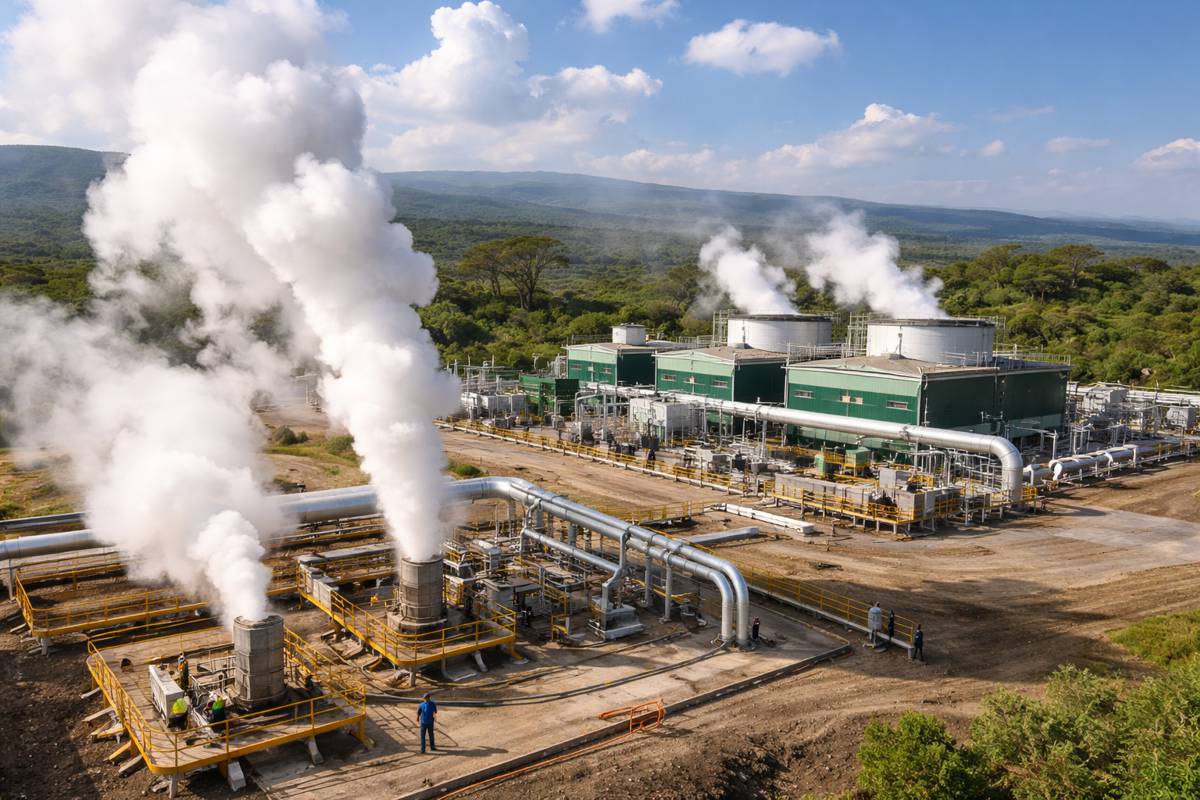
The OrPower Twenty-Two project is located in the Menengai geothermal field, just north of Nakuru and approximately 180 kilometres northwest of Nairobi. Menengai is no longer a speculative resource. It is a de-risked, industrial-scale geothermal field that has moved decisively from exploration into sustained production.
This latest development becomes the third power plant within the field. It sits alongside the operational Sosian Menengai geothermal plant and the Globeleq Menengai project, which remains under construction. Together, these facilities will unlock the full 105 megawatt potential of the first development phase at Menengai, creating a clustered generation hub with shared infrastructure, shared steam resources and predictable output.
The Menengai field itself was made viable through earlier financing of 145 million dollars to the Geothermal Development Company, a government-owned entity responsible for drilling and steam production. That initial public investment absorbed the high geological and exploration risks that typically deter private capital. What followed was a structured handover to independent power producers capable of converting steam into reliable grid-scale electricity.
This sequencing is central to why Menengai works. It separates resource risk from generation risk, allowing each participant to operate within its area of expertise while maintaining bankability across the project lifecycle.
Infrastructure Finance That Reduces Systemic Risk
The African Development Bank’s loan to OrPower Twenty-Two forms part of a wider financing stack that brings total project debt to 64.4 million dollars, against an estimated project cost of 91.9 million dollars. Additional funding is expected from the International Finance Corporation, reinforcing the project’s credibility among development finance institutions.
This blended financing structure reflects a growing consensus in infrastructure finance. Baseload renewable projects with long-term offtake agreements can offer risk-adjusted returns that rival conventional generation, provided that construction risk, resource risk and regulatory risk are addressed upfront.
In this case, Kenya’s regulatory framework and long-standing commitment to geothermal development provide a stable backdrop. A 25 year power purchase agreement with the Kenya Power and Lighting Company ensures predictable revenue flows, while government-backed steam supply contracts underpin operational certainty.
For investors, this reduces exposure to commodity price shocks, foreign exchange volatility and dispatch uncertainty. For policymakers, it demonstrates how public capital can be used strategically to unlock far larger volumes of private investment.
Baseload Power at Competitive Tariffs
One of the most consequential aspects of the OrPower Twenty-Two project lies in its tariff structure. Geothermal power from Menengai is expected to be delivered to the national grid at one of the lowest generation costs in Kenya’s energy mix. That matters, not just for households, but for energy-intensive sectors such as manufacturing, mining, construction materials and transport electrification.
Unlike wind or solar, geothermal operates continuously. When fully operational, the plant is expected to generate approximately 301 gigawatt hours of electricity each year. This level of reliable output strengthens grid stability and reduces reliance on expensive diesel-fired generation, which has historically been used to cover peak demand and supply shortfalls.
From an infrastructure planning perspective, this stability has downstream benefits. It allows utilities to plan transmission upgrades more efficiently, reduces frequency-related wear on grid equipment and supports the integration of variable renewables without compromising reliability.
Climate Impact with Measurable Outcomes
The climate credentials of geothermal power are well established, but what distinguishes this project is the scale of its quantified impact. Over the 25 year duration of the power purchase agreement, the OrPower Twenty-Two plant is expected to avoid approximately 1.9 million tonnes of greenhouse gas emissions.
These reductions are not abstract projections. They reflect direct displacement of fossil fuel-based generation and reduced dependence on emergency diesel plants during dry seasons or demand spikes. For Kenya, this strengthens its position as one of Africa’s lowest-carbon power systems and reinforces its credibility in international climate finance discussions.
For global investors increasingly bound by environmental, social and governance criteria, projects with measurable and verifiable emissions benefits are no longer optional. They are becoming a prerequisite for capital allocation.
A Public-Private Model That Actually Works
The Menengai development model has attracted attention precisely because it delivers mutual benefits without distorting incentives. As Wale Shonibare, Director of Energy Financial Solutions, Policy and Regulations at the African Development Bank, explained: “The Menengai model demonstrates the power of public-private collaboration, where government-led resource development unlocks private investment in geothermal generation, delivering mutual benefits: Geothermal Development Company secures stable revenues from steam sales, allowing it to monetise its significant investment in Menengai and reinvest in expanding geothermal development nationwide, while the private sector drives efficient power generation.”
This structure allows the public sector to retain strategic control over geothermal resources while avoiding the operational inefficiencies that can plague state-owned generation assets. At the same time, private developers are incentivised to optimise plant performance, construction timelines and maintenance regimes.
It is a model that could be replicated across East Africa’s Rift Valley, where geothermal potential remains largely untapped but technically proven.
Technology Choices and Construction Implications
OrPower Twenty-Two will be constructed using proprietary geothermal power technology developed independently by the project sponsor. While details of the technology remain commercially sensitive, the emphasis on next-generation systems highlights a broader trend within the geothermal sector.
Advances in turbine efficiency, heat exchange design and plant control systems are gradually reducing the levelised cost of geothermal electricity while improving operational flexibility. For construction teams, this places greater emphasis on precision engineering, high-temperature materials and long-term asset resilience.
Geothermal plants may lack the visual drama of wind farms or solar arrays, but they demand a level of subsurface and mechanical expertise that few other energy technologies require. This creates sustained demand for specialised contractors, drilling services, civil works and long-term operations expertise.
Aligning with National Development Strategy
Beyond the immediate project economics, OrPower Twenty-Two aligns directly with Kenya’s national development priorities. The project supports Pillar One of the country’s Mission 300 Energy Compact, which focuses on expanding reliable, affordable and sustainable electricity access to underpin economic growth.
Kenya has set a target of increasing geothermal capacity from 940 megawatts to 1,824 megawatts by 2030. Achieving that goal requires not only public investment, but a steady pipeline of bankable private sector projects. OrPower Twenty-Two contributes to that pipeline while reinforcing confidence in Kenya’s regulatory and institutional frameworks.
For policymakers across Africa, the lesson is clear. Clean energy transitions are not driven by announcements alone. They are built project by project, contract by contract, with a clear understanding of how risk is allocated and how returns are earned.
Why This Project Matters Beyond Kenya
The significance of the Menengai expansion extends well beyond national borders. As global infrastructure investment increasingly shifts towards low-carbon assets, projects that demonstrate commercial viability, grid relevance and institutional maturity become reference points for future development.
For investors, OrPower Twenty-Two offers a case study in how geothermal can compete on cost, reliability and scale. For construction and engineering firms, it signals sustained demand for complex energy infrastructure in emerging markets. For governments, it shows how public capital can catalyse private investment without crowding it out.
In a global energy landscape still searching for dependable alternatives to fossil fuels, geothermal remains underutilised. Kenya’s experience at Menengai suggests that, with the right framework, it does not have to be.