Volvo CE Strengthens Its European Retail Backbone with Swecon Acquisition
Volvo Construction Equipment has quietly but decisively reshaped its European operating model with the completion of its acquisition of Swecon, a move that signals a deeper commitment to owning and optimising customer-facing operations in strategically vital markets.
Finalised on January 31, 2026, following regulatory approval from the European Commission, the transaction transfers full ownership of Swecon from Lantmännen to Volvo CE, consolidating one of the most influential dealer networks in Northern and Central Europe directly under the manufacturer’s control.
At first glance, the deal might appear to be a straightforward dealer acquisition. In reality, it reflects a much broader shift underway across the global construction equipment sector. As machines become more connected, more electrified, and more data-driven, the line between manufacturer and retailer has blurred. Control over sales, service, rental and aftermarket support has become central to how original equipment manufacturers protect margins, ensure uptime and guide customers through increasingly complex technology transitions.
Retail as Strategic Infrastructure, Not Distribution
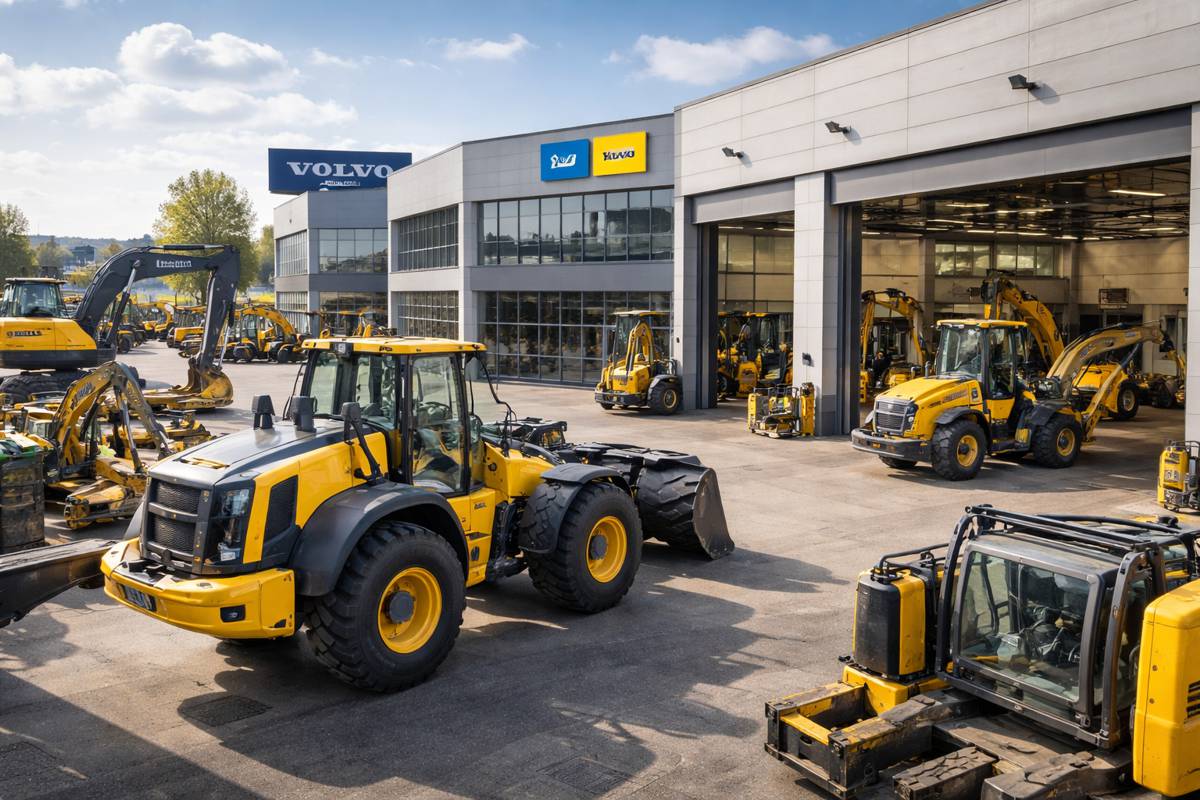
For Volvo CE, bringing Swecon in-house is about more than scale. Retail is no longer simply a route to market. It is infrastructure in its own right, shaping how customers experience equipment across its full lifecycle. Swecon’s operations span Sweden, Germany, Estonia, Latvia and Lithuania, covering markets with mature infrastructure investment, strong sustainability agendas and rising expectations around digital service delivery.
By integrating Swecon fully, Volvo CE gains direct oversight of sales channels, rental fleets, workshops and aftermarket services, along with a workforce of approximately 1,400 employees. That level of vertical integration allows Volvo CE to align product development, service models and customer feedback loops far more tightly than is possible through independent dealer agreements.
Across the industry, this trend has been gathering pace. OEMs are increasingly recognising that customer loyalty is earned not only through machine performance but through service responsiveness, parts availability and the ability to support productivity over decades rather than years. In Europe, where regulatory pressure on emissions, noise and safety continues to intensify, this support role has become mission-critical.
Why Europe Matters So Much Right Now
Europe remains one of the most complex construction equipment markets in the world. Infrastructure investment is shaped by public funding cycles, sustainability mandates and labour constraints, while contractors are under pressure to deliver more with fewer skilled operators. This environment favours manufacturers that can offer integrated solutions rather than standalone machines.
Volvo CE has invested heavily in electrification, automation-ready platforms and digital services, positioning itself as a technology leader rather than a volume-driven supplier. However, advanced equipment only delivers value if customers can deploy and maintain it effectively. Owning retail operations in key European markets gives Volvo CE the ability to standardise service quality, accelerate the rollout of new technologies and gather real-world performance data directly from end users.
The inclusion of rental operations within the acquisition is particularly significant. Rental has become a critical entry point for new technologies, allowing contractors to trial electric or advanced machines without long-term capital commitment. With Swecon’s rental fleet now part of Volvo CE, the manufacturer can actively shape how new technologies are introduced, supported and scaled.
Swecon’s Role Inside the Volvo CE Ecosystem
Swecon brings with it decades of market knowledge and established customer relationships. Its operations encompass the full commercial spectrum, including equipment sales, rental services, aftermarket support, offices and workshop facilities. Rather than dismantling this structure, Volvo CE has made it clear that continuity is central to the strategy.
Melker Jernberg, Head of Volvo CE, underscored this intent in his remarks: “We are excited to welcoming all employees from Swecon to Volvo and we believe that together, we will be stronger and better equipped to continue to enhance the support to our customers in their transition towards more sustainable and productive solutions.”
The emphasis on continuity is not accidental. In construction, trust is built over years of dependable service rather than marketing claims. By retaining Swecon’s existing points of contact and service structures, Volvo CE avoids the disruption that often accompanies dealer consolidation, while still gaining the strategic benefits of ownership.
From a workforce perspective, the acquisition also reflects a broader recognition that skilled technicians, service managers and customer support teams are as valuable as engineering talent. As equipment becomes more software-driven, the expertise required in workshops and field service operations continues to evolve.
Leadership Transition at a Critical Moment
Alongside the acquisition, Volvo CE has confirmed a leadership transition at Swecon. Tomas Kuta has been appointed as the new Head of Swecon, succeeding Tomas Börjesson, who has decided to retire. Kuta will assume his role on March 1, 2026, bringing with him extensive experience from within Volvo CE, most recently as Head of Volvo CE Sales Asia.
The appointment is strategically telling. Experience in Asian markets often involves navigating rapid urbanisation, diverse customer profiles and high adoption rates for new technologies. That background may prove valuable as Swecon supports European customers facing their own transitions, particularly around electrification and digitalisation.
Börjesson highlighted the collaborative intent behind the change: “By joining forces, Swecon combines its market expertise with Volvo CE’s innovation power, while customers continue to receive the same trusted support, services, and points of contact – now strengthened to help them succeed today and tomorrow.”
The message is clear. This is not a reset but an evolution, designed to combine local expertise with global capability.
Implications for Customers and Competitors
For contractors, infrastructure owners and fleet operators, the immediate impact may be subtle. Day-to-day relationships remain intact, and service models continue as before. Over time, however, customers can expect closer integration between equipment, digital services and aftermarket support.
Direct ownership allows Volvo CE to roll out predictive maintenance tools, connected machine services and sustainability reporting capabilities more consistently across markets. For large infrastructure projects, particularly those with strict environmental performance criteria, this level of integration can simplify compliance and improve operational transparency.
Competitors will be watching closely. Dealer consolidation has long been a sensitive topic, balancing independence with alignment. Volvo CE’s move suggests a belief that, at least in core European markets, direct retail ownership offers a competitive advantage that outweighs the flexibility of independent distribution.
A Broader Industry Signal
Beyond Volvo CE and Swecon, the acquisition reflects a structural shift in how construction equipment manufacturers view their role. The industry is moving away from transactional models towards long-term partnerships built around uptime, lifecycle efficiency and sustainability outcomes.
Research from industry analysts has consistently shown that aftermarket services account for a growing share of OEM profitability, often exceeding margins on initial equipment sales. At the same time, customers increasingly expect OEMs to take responsibility for supporting complex technologies throughout their operational life. Vertical integration makes that expectation easier to meet.
In this context, Swecon becomes more than a dealer network. It becomes a platform through which Volvo CE can test, refine and scale new service models, feeding insights back into product development and strategic planning.
Building Resilience Through Integration
Infrastructure delivery across Europe faces persistent uncertainty, from fluctuating public investment to supply chain disruptions and skills shortages. Manufacturers that can offer stability, reliable support and clear technology roadmaps are better positioned to weather these challenges.
By bringing Swecon fully into the organisation, Volvo CE strengthens its ability to manage risk across the value chain. Decisions around inventory, training, service capacity and technology rollout can be coordinated rather than negotiated, improving responsiveness in volatile conditions.
This integration also aligns with broader sustainability goals. Closer control over retail operations allows Volvo CE to support customers more effectively in reducing emissions, optimising machine utilisation and transitioning to lower-impact construction methods.
A Measured but Meaningful Shift Forward
While the acquisition does not dramatically alter Volvo CE’s public profile overnight, it represents a significant internal realignment. Retail is now firmly positioned as a core strategic asset rather than an external partnership. For customers, that promises greater consistency and deeper support. For the industry, it reinforces the idea that the future of construction equipment lies as much in service and integration as in hardware.
As infrastructure demands grow more complex and expectations around performance continue to rise, moves like this are likely to become more common. Volvo CE’s acquisition of Swecon offers a clear example of how manufacturers are adapting, not through headline-grabbing innovation alone, but through thoughtful restructuring of the foundations that support it.