Predictive Vision For Safer Streets
Across the developed world, road safety strategies have steadily reduced fatalities from vehicle occupants. Yet pedestrians remain disproportionately exposed. According to international transport safety research, intersections account for a large share of urban collisions because they compress decision making, limited visibility and competing traffic flows into a single space. Drivers turning right or left often rely on instinct rather than full situational awareness, especially where parked vehicles, street furniture or weather conditions obscure sightlines.
Conventional intelligent transport systems have attempted to address the problem through detection. Cameras or radar sensors identify a pedestrian already in the roadway and warn drivers. In practice that warning frequently arrives too late. Human reaction time alone often exceeds one second, and braking distance rises sharply with even modest speeds. A warning that comes after a person steps off the kerb becomes little more than a post-event alarm rather than a preventative measure.
That gap between detection and prevention has shaped the next phase of traffic safety engineering. Instead of asking whether a pedestrian is present, infrastructure operators increasingly want to know whether a pedestrian will be present. A research demonstration in South Korea now suggests that predictive intelligence may move that ambition from theory into operational reality.
From Detection to Anticipation in Traffic Infrastructure
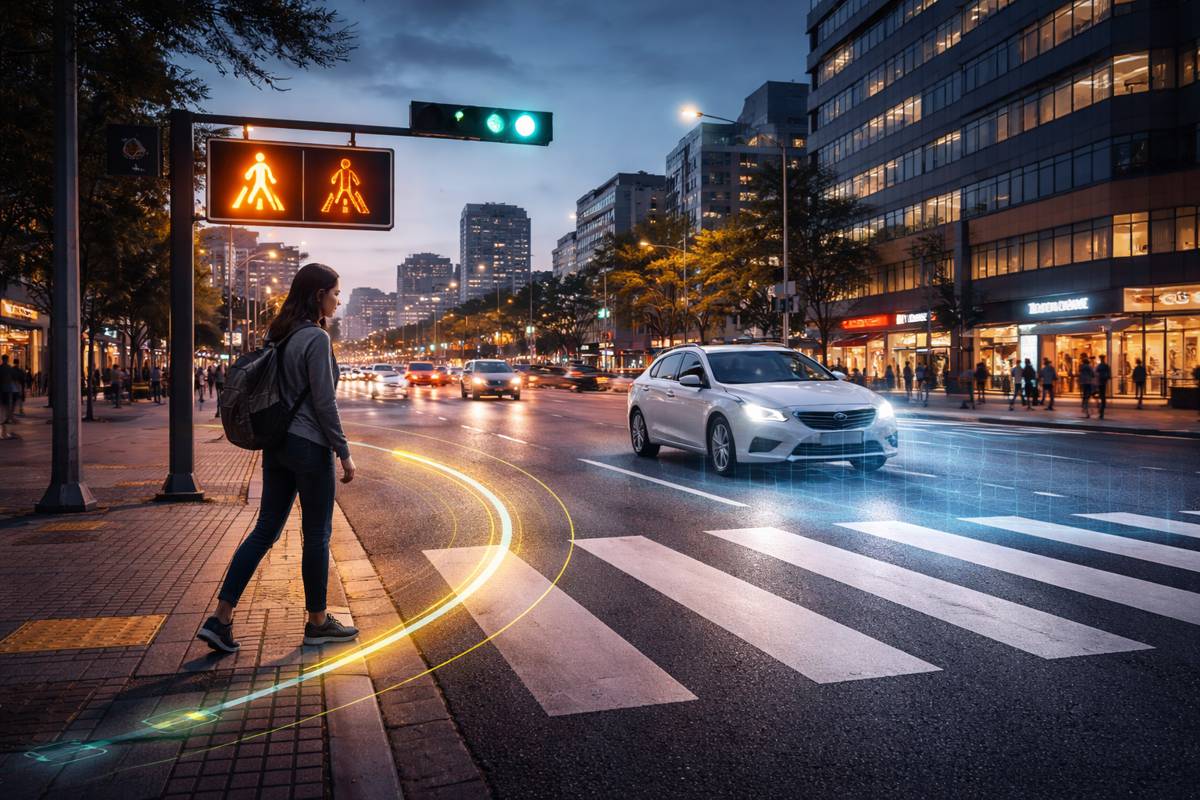
Researchers from the Electronics and Telecommunications Research Institute have deployed a predictive pedestrian safety AI service at four major intersections in Cheonan since October 2025. Rather than identifying objects in a camera frame, the system forecasts trajectories and provides advance warnings before a crossing actually occurs.
The distinction is fundamental. Traditional alert systems require predefined detection zones set manually by engineers. When a pedestrian enters that zone, an alert triggers. This approach creates two persistent problems. First, it produces nuisance warnings when people walk near but not into the roadway. Second, it provides insufficient response time because the alert occurs only once the hazard has already materialised.
The Cheonan deployment reverses the logic. Cameras analyse behaviour patterns and intention. If a pedestrian is predicted to cross, drivers receive a warning approximately three seconds in advance. In road safety engineering, a three-second extension to awareness can be decisive. It allows a driver to release acceleration, adjust steering path and brake progressively rather than abruptly.
Jinyoung Moon, Principal Researcher of ETRI’s Visual Intelligence Research Section, said: “Through this on-site demonstration, we have proven a new traffic safety standard that ‘predicts the pedestrian trajectory and notifies the driver 3 seconds in advance.’ We have verified a safety system that automatically understands intersection conditions and proactively sends alerts. We will continue to cooperate with local governments to consistently enhance predictive traffic safety standards.”
How the Predictive System Works in Practice
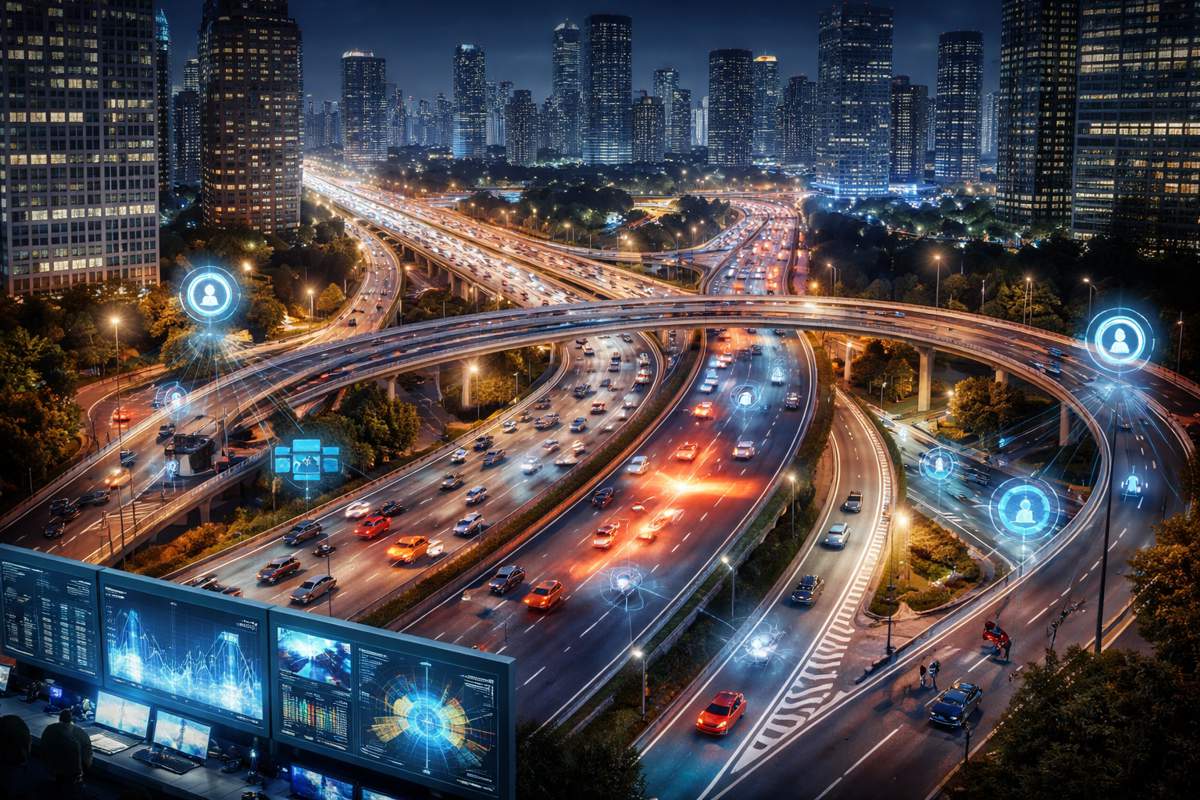
The service combines roadside CCTV cameras, controllers, remote analysis servers and variable message signs visible to approaching drivers. Once video footage is captured, the software automatically creates a ground region map within two seconds. Crosswalks and roadway areas are identified as risk zones without manual configuration.
This automation solves a long-standing operational burden for municipalities. Normally, every time a camera angle changes or a new unit is installed, engineers must redraw detection zones. Predictive mapping removes that task and adapts dynamically to the real geometry of the intersection.
The platform then evaluates pedestrian intention and assigns a risk level between zero and four. Only pedestrians expected to cross trigger a warning. Drivers therefore receive fewer unnecessary alerts and are less likely to ignore the system over time, a common failure point in earlier safety technologies.
Seok-pil Kim, Acting Mayor of Cheonan City, stated: “It is very meaningful that Korea’s first predictive safety AI technology for pedestrians begins practical operation in Cheonan. We expect that this service will contribute to preventing traffic accidents and creating a safe pedestrian environment for citizens. We will expand the demonstration to new downtown areas in the future, making Cheonan a safe transportation city.”
The Science Behind Predictive Visual Intelligence
At the centre of the technology lies what researchers describe as visual memory based predictive visual intelligence. Conventional video analytics recognises objects and actions in individual frames. The new approach builds a contextual memory over time, closer to how human perception works.
By storing and relating previous visual states, the system understands patterns such as walking direction, hesitation near kerbs, and group behaviour. Instead of analysing a moment, it analyses behaviour history. That historical context allows the algorithm to forecast movement rather than react to it.
Academic validation has followed quickly. The pedestrian anticipation technology has been published in a leading science and technology journal and presented at an international advanced surveillance conference. Multiple patents have been filed across Korea, the United States, China and Europe, covering pedestrian classification, crossing intention prediction and trajectory forecasting.
From an infrastructure perspective, the importance lies less in academic novelty and more in operational certainty. Predictive systems must earn trust from city engineers and insurers alike. Demonstrated reliability and intellectual property protection help move a concept into procurement frameworks.
Implications for Smart Cities and Transport Policy
Cities worldwide are shifting towards Vision Zero style strategies aiming to eliminate traffic deaths. However, many programmes struggle to progress beyond speed reduction and physical redesign because of cost and disruption. Predictive AI offers a complementary route.
Instead of rebuilding every junction, authorities can upgrade existing infrastructure with sensing and intelligence layers. If deployed widely, predictive warnings could support vulnerable road user protection without wholesale reconstruction. That matters particularly for historic urban centres where structural changes face planning resistance.
The Cheonan trial currently focuses on right turning vehicles, a manoeuvre consistently associated with pedestrian collisions in dense cities. A scalable solution targeting this scenario could therefore deliver disproportionate safety gains relative to investment.
Looking ahead, researchers plan to add vehicle trajectory prediction and directional audio alerts for pedestrians themselves. Such bidirectional awareness moves closer to cooperative safety infrastructure, where both driver and pedestrian share real time situational knowledge.
Beyond Roads Into Industrial Safety
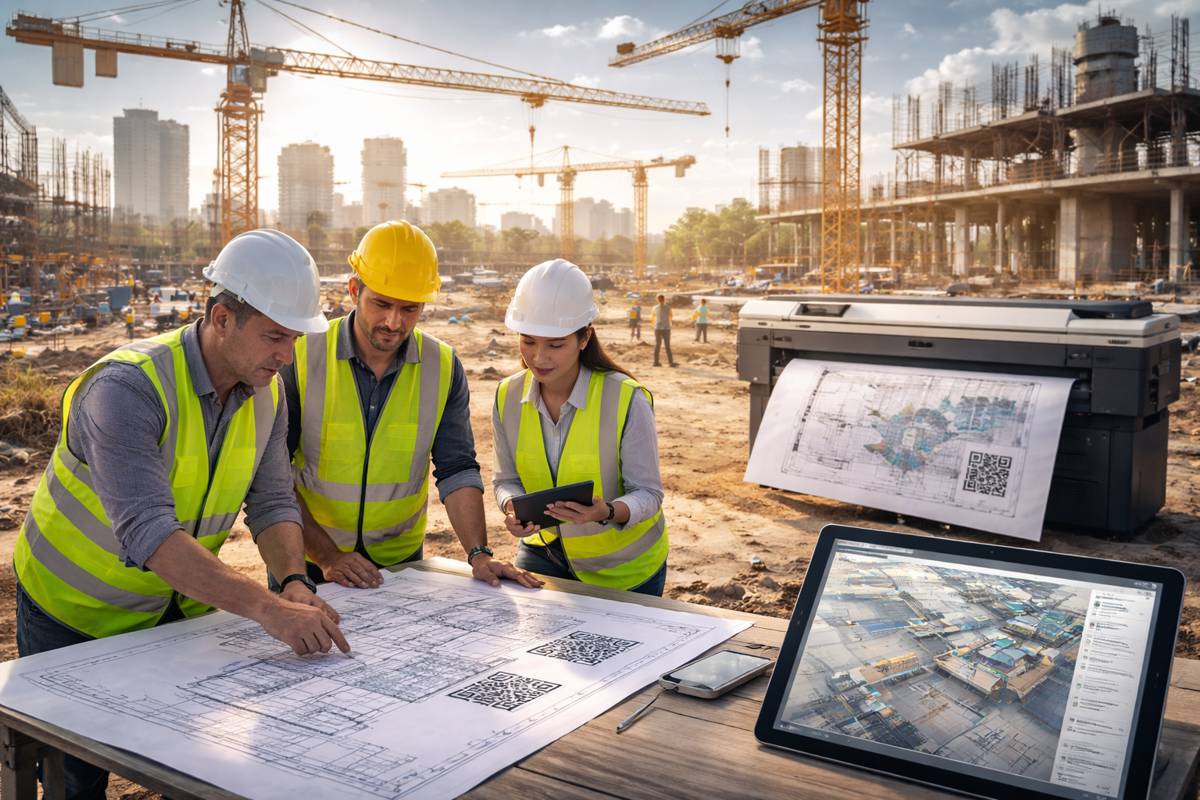
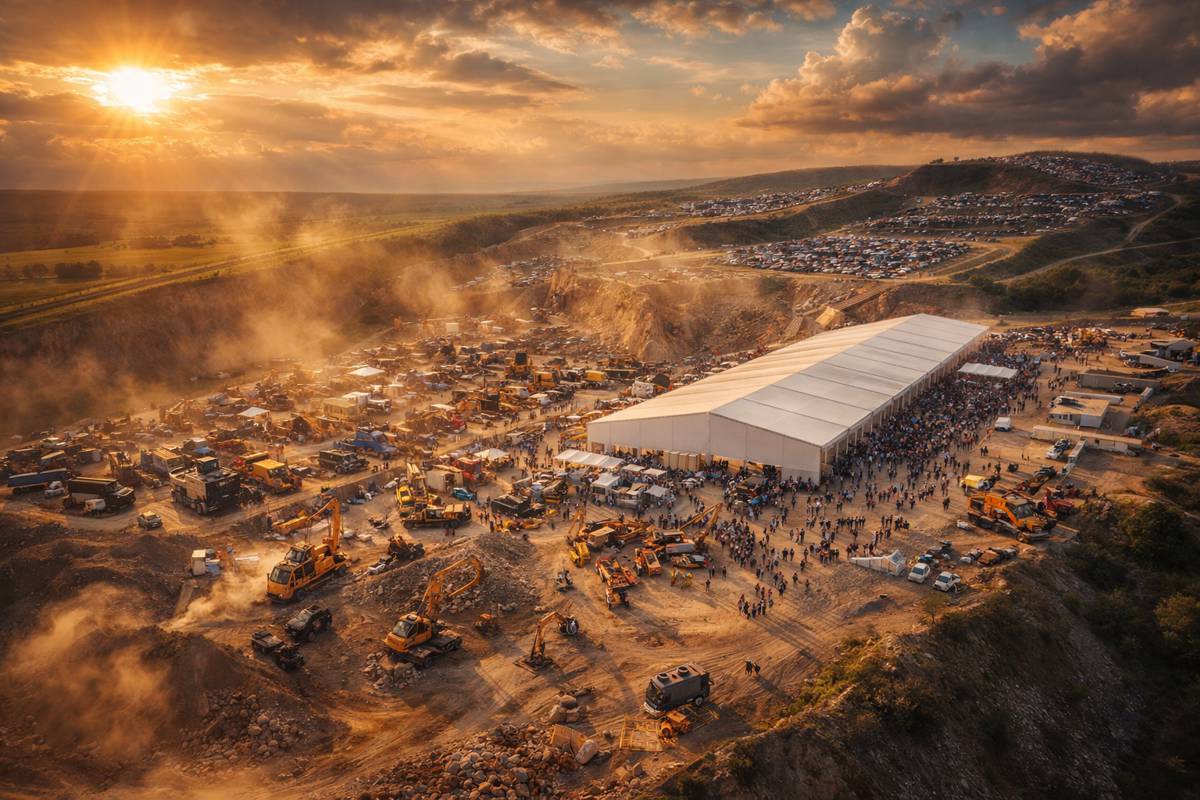
Although developed for intersections, the same technology translates naturally into industrial environments. Logistics centres, construction sites and factories face similar collision risks involving forklifts, robots and workers moving unpredictably in shared spaces.
Because the system automatically maps environments and adapts to layout changes, it can function in dynamic workplaces where materials and equipment frequently shift position. Instead of static hazard zones, managers receive alerts based on real behaviour patterns.
In construction particularly, where temporary layouts and mixed traffic are routine, predictive monitoring could supplement existing proximity detection equipment. Early warnings would provide supervisors additional reaction time and potentially reduce incidents involving plant and personnel.
This broader applicability strengthens the commercial case. Infrastructure technology that crosses sectors tends to scale faster and attract private investment, accelerating adoption beyond public road trials.
Commercialisation and Deployment Outlook
The research team intends to transfer the technology to smart transport solution companies and commercialise it by 2027. Additional trials with local governments are planned to expand deployment nationwide.
An edge server hybrid architecture is also under development. Edge devices at intersections will analyse video locally to minimise latency, while central servers handle statistical analysis and system management. This distributed structure aligns with global intelligent transport system trends, where low latency decision making occurs roadside but data insight remains centralised.
The institute reports dozens of academic publications and patent applications linked to the project. Such depth indicates a multi year research foundation rather than a single prototype, a factor often considered by transport authorities before committing to procurement.
Toward Predictive Infrastructure Safety
For decades, transport engineering has relied on geometry, signage and enforcement to manage risk. Digital sensing added detection. Predictive intelligence introduces anticipation, arguably the most significant conceptual shift since adaptive traffic signals.
If scaled successfully, the approach could influence how intersections, vehicles and even pedestrians interact. Safety becomes a shared real time awareness environment rather than a fixed design constraint.
The Cheonan demonstration does not eliminate risk overnight, nor does it replace infrastructure design principles. Instead, it suggests a layered safety model where physical design, regulation and predictive intelligence reinforce one another. In an era of increasingly complex mobility, that layered strategy may define the next generation of urban transport systems.