Trackunit IrisX Enables Real Time AI Equipment Intelligence
For more than a decade, construction has invested heavily in telematics, sensors and connected machines. The sector now generates extraordinary volumes of operational data, yet much of it still sits idle. The problem has never been collection. It has been usability. Contractors, rental companies and equipment manufacturers routinely capture machine signals but struggle to translate them into decisions that affect productivity on site.
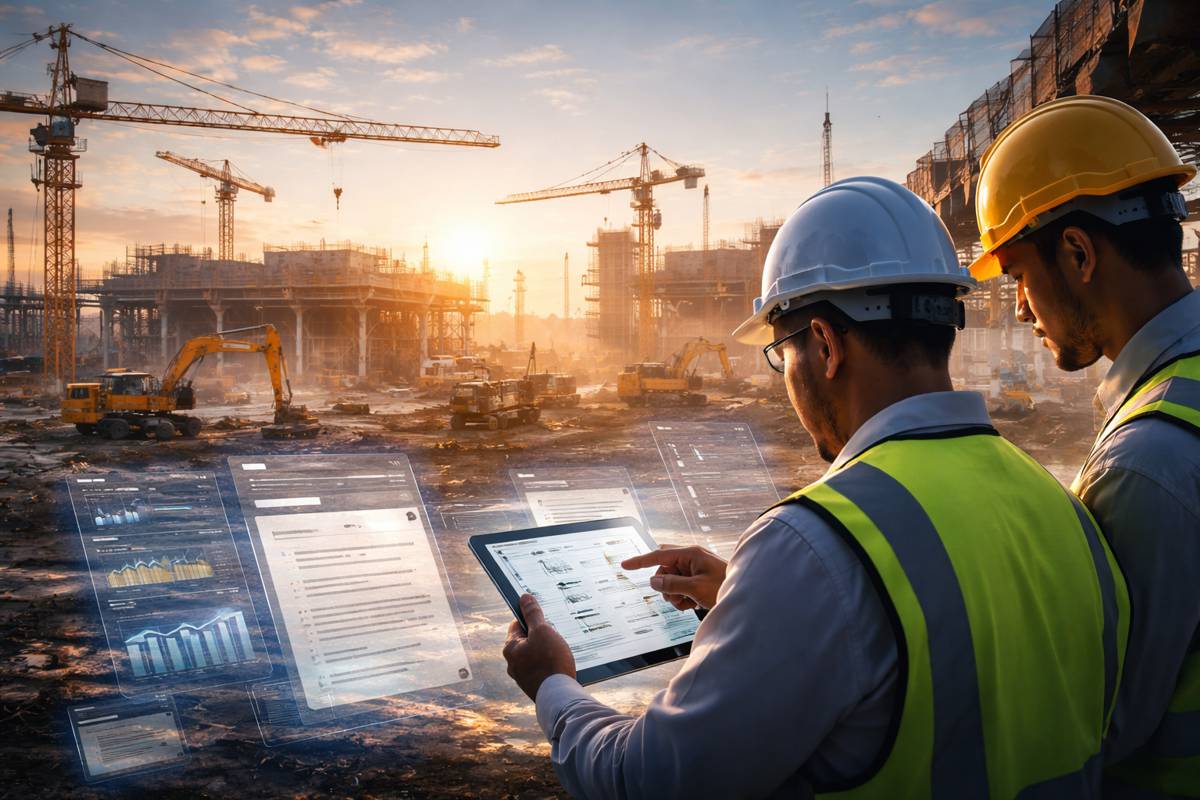
Trackunit’s latest platform developments, presented during its NEXT 2026 session, centre on a simple shift in thinking. Competitive advantage will no longer come from having more data. It will come from making existing data understandable and actionable across an organisation. The company positions operational intelligence as something that should be available to technicians, operators and site managers rather than restricted to analysts.
The significance is practical rather than theoretical. Construction margins remain tight and downtime remains expensive. According to multiple global equipment utilisation studies, a single day of unplanned machine downtime on large projects can cost thousands in direct delays and far more in indirect scheduling impacts. Turning sensor signals into immediate guidance therefore moves beyond digital transformation language and into operational necessity.
Edge Intelligence Moves Decision Making to the Machine
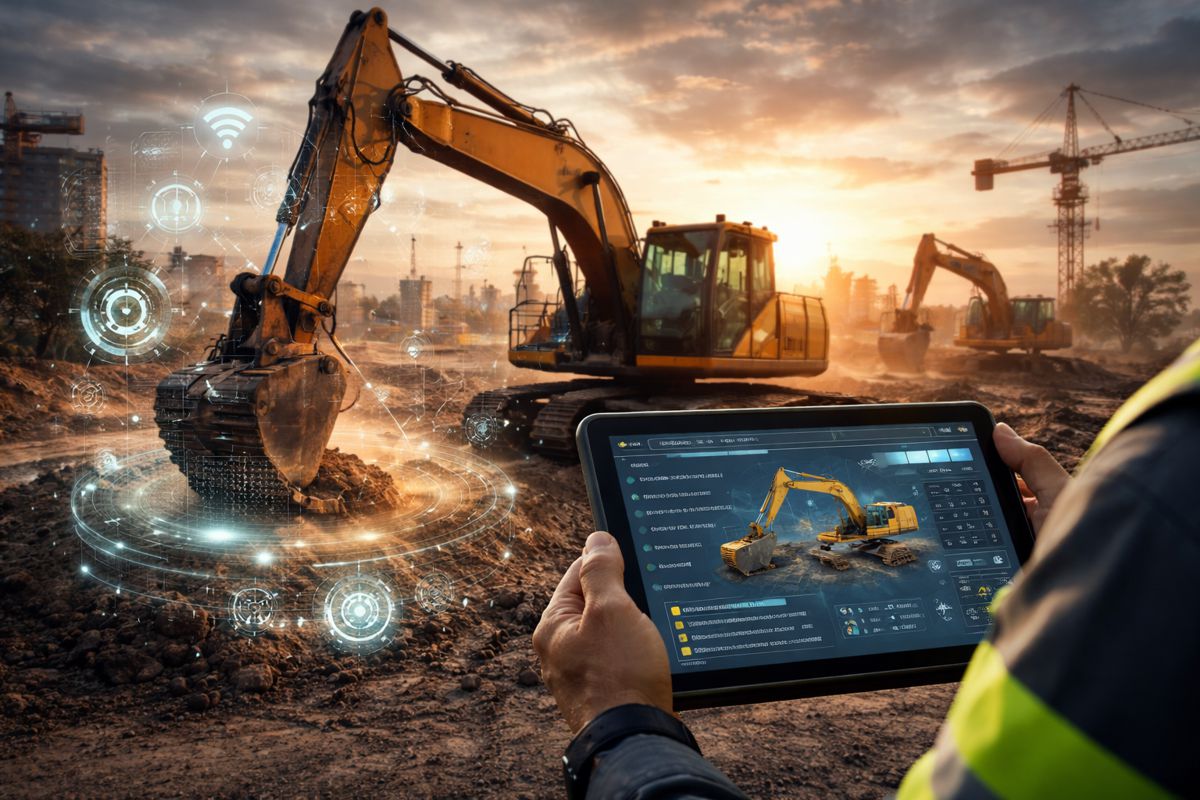
The core of Trackunit’s approach is edge intelligence. Instead of waiting for centralised systems to analyse machine data hours or days later, artificial intelligence continuously evaluates signals as they occur. Fault codes, sensor anomalies and behavioural patterns are assessed in real time.
Technicians are often dispatched today with limited context. A machine may generate dozens of fault alerts but determining the actual cause still requires manual investigation. The IrisX platform uses AI pattern recognition to interpret combinations of signals and produce probable root causes and recommended first actions.
The practical difference lies in preparation. Rather than arriving at a job site to diagnose a problem, technicians arrive with a prioritised checklist and suggested corrective steps. Examples include identifying unstable fuel pressure under load or diagnosing a blocked filter before the machine is opened. This reduces time to repair and lowers repeat failure risk.
For OEMs the implications extend to warranty exposure and brand perception. Diagnostic accuracy influences customer confidence, dealer efficiency and parts usage. For contractors and rental companies it determines whether equipment utilisation remains predictable or whether schedules unravel across a project programme.
Rapid Prototyping Replaces Months of Development
The construction technology sector has historically required long implementation cycles. Software dashboards, integrations and reporting tools often demanded weeks of specification and months of development before users could test them. That model is now changing.
Trackunit demonstrated how customers can request a dashboard and immediately experiment with a working prototype. Instead of commissioning development projects, teams iterate directly with operational data. The change resembles modern software development methods entering heavy industry environments.
The broader impact may be cultural rather than technical. Construction organisations frequently resist digital adoption because solutions appear distant from day to day workflows. Instant prototypes shorten that gap. When a fleet manager can test a report within minutes rather than waiting for procurement approval cycles, adoption barriers fall sharply.
Industry research supports this challenge. The 2025 global artificial intelligence report from RICS found that around 45 percent of construction professionals report no AI implementation and 34 percent remain in pilot phases. Regular operational usage sits below 12 percent. The gap reflects usability issues rather than lack of interest. Most firms struggle to connect AI tools to real working practices.
Conversational Interfaces Expand Access Beyond Specialists
One of the most consequential aspects of the platform is its conversational interface. Users can interact with machine data through natural language rather than technical configuration. They can request operational summaries, identify machines needing service, generate depot reports or configure access permissions through dialogue.
The removal of technical barriers addresses a persistent workforce challenge. Construction companies rarely employ large data science teams. Fleet managers, site supervisors and mechanics must interpret information themselves. Simplified interfaces therefore determine whether digital systems are actually used.
Security applications illustrate this shift. Theft alerts and access controls have historically required manual setup across individual machines. Through conversational commands, users can now create site based alerts and access keys quickly. The result is less administrative overhead and faster protection of high value assets.
AI Agents and Continuous Monitoring
During the discussion, AI specialist Danny Lange described a broader technological change affecting industrial sectors. He explained the emergence of persistent monitoring software rather than static analysis tools: “The Sputnik moment of ChatGPT, is that the computers now understand plain human language, and they can communicate in plain language, that’s new,
“An AI Agent is active autonomous software, running and watching over things.
“In the AI space operational software is constantly searching and reviewing data and will notify you if there are changes. That is the big difference.
“The Agent is there 24/7 and getting back to you when there’s something relevant.”
The concept aligns closely with equipment operations. Machines produce continuous telemetry from engines, hydraulics, location systems and operator behaviour. An autonomous monitoring layer can observe patterns across fleets and notify teams before failures interrupt work.
The importance is amplified in construction because activity rarely pauses. Equipment operates across shifts, climates and locations. Human monitoring alone cannot match the scale of incoming data. Persistent AI observation becomes less about automation and more about awareness.
Integration Across the Construction Ecosystem
The discussion also highlighted integration as a major barrier to adoption. Construction workflows span OEMs, dealers, contractors, rental providers and project owners. Data traditionally remains siloed within each organisation’s software environment.
Trackunit’s platform positions itself as a shared operational layer rather than a standalone application. By connecting machine telemetry with external data sources such as weather, deliveries and site activity, decision making moves closer to real world context.
This reflects a broader shift in digital infrastructure. Rather than replacing existing systems, platforms increasingly act as connectors. The industry’s challenge is no longer a shortage of software but fragmentation between systems. Interoperability therefore determines whether AI remains experimental or becomes routine.
The RICS report reinforces this point. Nearly half of surveyed professionals cited lack of skilled personnel as a barrier, while 37 percent highlighted integration difficulties and 30 percent cited data quality concerns. Simplified interoperability directly addresses all three obstacles by reducing technical overhead and improving trust in outputs.
Safety and Productivity Implications
Predictive maintenance often receives attention because it saves repair costs, yet safety implications may be more significant. Unexpected equipment failure is a major contributor to incidents on site. Machines that stall unexpectedly or behave irregularly create hazardous conditions for operators and surrounding crews.
By identifying anomalies early and recommending immediate action, AI analysis contributes to risk reduction. Site managers can remove equipment from operation before conditions deteriorate. Access management also prevents unauthorised usage, which remains a common cause of theft and accidents on construction projects worldwide.
The productivity impact follows naturally. Planned maintenance schedules support consistent utilisation rates, allowing project planners to coordinate logistics with greater confidence. In infrastructure projects where multiple contractors operate simultaneously, predictable equipment availability reduces cascading delays across the programme.
A Shift Toward Data Partnerships
Perhaps the most strategic element is the reframing of technology providers as data partners. Construction companies increasingly recognise that digital transformation cannot rely solely on internal resources. Instead, platforms must accelerate adoption without forcing organisations into lengthy reinvention cycles.
Industry platforms like IrisX aim to provide a foundation rather than a finished application. Businesses build operational workflows on top of shared intelligence rather than replacing existing tools. This reduces cost barriers and shortens time to measurable benefit.
In practice, the value lies in speed. The construction sector rarely rejects technology because it lacks potential. It rejects it when implementation disrupts ongoing work. Solutions that operate alongside existing processes stand a greater chance of adoption.
Why It Matters to the Infrastructure Sector
Infrastructure delivery is becoming more complex. Projects integrate renewable energy, smart transport systems and digital twins while operating under tighter labour availability. Equipment efficiency therefore becomes critical to maintaining schedules.
AI driven operational intelligence shifts the focus from retrospective reporting to immediate action. Instead of analysing yesterday’s performance, teams respond to current conditions. That transition changes project management itself, moving from reactive troubleshooting to continuous optimisation.
The industry has reached a stage where telematics data is abundant but underutilised. The next phase is not collecting more information but reducing the distance between insight and decision. Platforms that shorten that gap may influence productivity as significantly as previous generations of machine automation.
Construction has long relied on experience and manual oversight. With real time interpretation of machine behaviour, operational awareness expands beyond what any individual team can observe. The result is not the replacement of human judgement but the extension of it across every connected asset on site.