Bi Oceanic Corridor Financing Connects Paraguay To Global Trade Routes
South America has long faced a paradox. The continent is rich in agricultural output, minerals and energy resources, yet moving those goods efficiently across the Andes to global markets remains expensive and slow. Maritime routes around the southern cone or reliance on congested Atlantic ports add time, cost and uncertainty to exports. For landlocked Paraguay, the problem is even sharper. Distance from seaports has historically constrained competitiveness despite strong production capacity.
The approval of a $200 million loan by the Inter American Development Bank to finance a critical section of the Bi Oceanic Corridor therefore represents more than a road building exercise. It is an economic integration project designed to rewire continental trade flows. The corridor establishes a continuous overland connection between the Atlantic and Pacific oceans, stretching more than 2,300 miles across Brazil, Paraguay, Argentina and Chile. In practical terms, it offers agricultural exporters, manufacturers and logistics operators a direct path to Asian markets via Pacific ports rather than detouring through traditional shipping routes.
This shift matters commercially. Freight modelling across Latin America has consistently shown that transport costs can represent up to 30 percent of final export prices in remote inland regions. Reducing overland travel distance and border friction immediately strengthens competitiveness. For Paraguay’s beef, soy, grains and processed goods sectors, the corridor changes the economics of global trade participation.
Transforming A Landlocked Economy
Paraguay has experienced steady growth in agricultural production over the past two decades, becoming one of the world’s largest soybean exporters and a major beef supplier. Yet logistics has remained its structural bottleneck. The country relies heavily on river transport along the Paraguay Paraná waterway, which is vulnerable to drought cycles and seasonal navigation limits. When water levels drop, export volumes and revenue follow.
The Bi Oceanic Corridor introduces redundancy into that system. Instead of a single dependence on river barges moving toward the Atlantic, exporters gain a permanent road connection to Pacific ports in northern Chile such as Antofagasta, Iquique and Mejillones. Those ports serve trans Pacific shipping lanes linking directly to East Asia, one of the fastest growing demand centres for food and raw materials.
The new road infrastructure also alters domestic logistics patterns. Western Paraguay, particularly the Chaco region, has historically been isolated despite hosting large agricultural estates and growing livestock operations. With reliable highway access, producers can shift from regional distribution to export scale supply chains. Cold chain transport becomes viable, processing facilities can be located closer to farms and seasonal disruptions become less economically damaging.
What The Loan Actually Funds
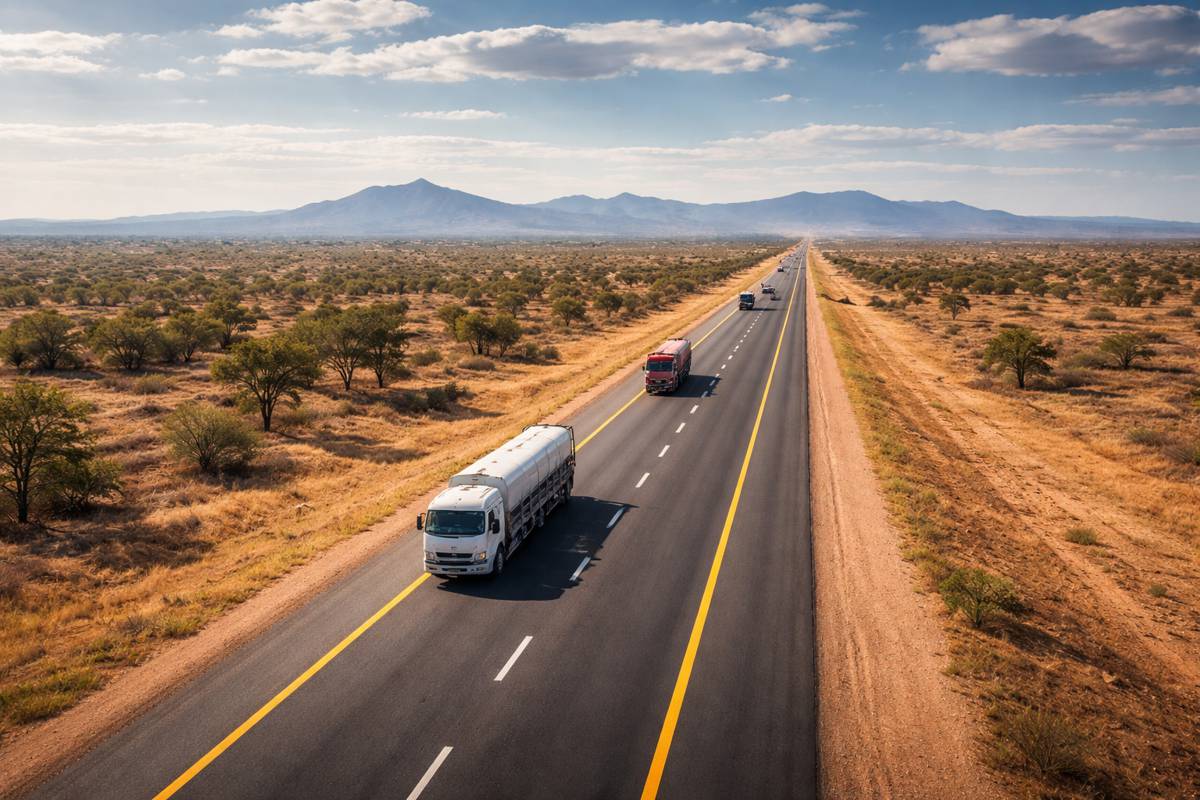
The financing covers the design, construction and maintenance of 63.7 miles of Segment II of Paraguay’s National Highway PY15, along with 5 miles of access road to Mariscal Estigarribia. It also includes upgrades to 17 miles of the eastern route that connects the industrial area of Loma Plata to the corridor.
Although the distances may appear modest, infrastructure networks function as systems rather than isolated stretches. Segment II is a missing link in a continuous route connecting Carmelo Peralta on the Brazilian border to Pozo Hondo on the Argentine frontier. Completing it allows uninterrupted heavy vehicle movement across the country’s western region.
The inclusion of maintenance financing is equally significant. Historically, many Latin American transport projects struggled after completion because upkeep funding lagged behind construction. Embedding maintenance into the financing model aligns with modern infrastructure financing practices promoted by multilateral banks, ensuring lifecycle performance rather than short term ribbon cutting milestones.
Regional Integration And The South Connection Programme
The project forms part of the Inter American Development Bank Group’s South Connection initiative, which aims to strengthen physical integration across the continent. The concept recognises that economic blocs function best when logistics corridors match production geography. Agricultural belts, mining regions and industrial zones must connect seamlessly to international gateways if trade agreements are to produce real economic gains.
Across Latin America, cross border infrastructure gaps remain a major constraint. Studies by regional development agencies repeatedly show that border delays and incomplete transport corridors add days to supply chains compared with equivalent distances in North America or Europe. The Bi Oceanic Corridor addresses this inefficiency directly by linking four countries along a continuous logistics spine.
For Brazil’s central agricultural states, the corridor shortens the route to Pacific ports by thousands of kilometres. For northern Argentina, it creates new export options beyond traditional Atlantic gateways. For Chile, it expands the hinterland served by its northern ports. Paraguay sits in the middle, transforming from an isolated producer to a transit hub.
Social Infrastructure Outcomes Often Overlooked
Large transport corridors are often evaluated purely on freight volumes and trade value. Yet in sparsely populated regions, roads also function as social infrastructure. The sections financed under this operation will directly improve access to healthcare and education across Alto Paraguay and Boquerón.
Approximately 28,700 people will gain improved access to hospital services, including around 1,700 residents of Indigenous communities. In rural Latin America, medical access often depends on travel time rather than facility capacity. A sealed highway can reduce multi hour journeys to predictable travel windows, which directly affects treatment outcomes.
Education access follows a similar pattern. The improved route will connect 99 towns to secondary schools, including 23 Indigenous communities. Research across developing regions consistently links road access with higher school attendance rates, particularly among rural populations where seasonal isolation previously prevented consistent participation.
Economic Multiplier Effects In The Chaco Region
The Paraguayan Chaco has been evolving from a frontier zone into an organised agricultural and industrial region. Mennonite founded towns such as Loma Plata have developed food processing, dairy production and light manufacturing clusters. However, scaling these operations has depended on reliable transport to larger markets.
By connecting industrial areas directly to an international corridor, logistics planning shifts from regional to continental scale. Processing facilities can operate year round, supply contracts become predictable and investment risk declines. Financial institutions typically assess infrastructure accessibility when financing agribusiness expansion. With improved connectivity, access to credit improves alongside transport efficiency.
For over 7,000 primary sector producers, many operating medium sized farms, the corridor provides access to services beyond transport. Input suppliers, veterinary services, equipment maintenance and digital connectivity tend to follow transport routes. In many developing regions, a paved highway effectively becomes an economic backbone around which services cluster.
Trade Competitiveness And Global Supply Chains
The corridor’s broader importance lies in global trade diversification. Supply chains increasingly value resilience alongside cost. The COVID era disruptions and recurring climate impacts on waterways demonstrated the risk of single route dependence. By providing an alternative export pathway, the corridor strengthens reliability for international buyers sourcing agricultural commodities.
For Asian importers in particular, Pacific access shortens delivery times compared with Atlantic routes. Even small time reductions can influence procurement strategies in competitive commodity markets. Reliable transit windows also reduce storage and financing costs along the supply chain, improving margins for exporters and buyers alike.
Infrastructure economists often refer to corridors as trade multipliers. Rather than simply moving existing goods faster, they enable entirely new trade patterns. Producers begin targeting markets previously considered uneconomic, logistics companies establish distribution hubs and manufacturing shifts closer to transport nodes.
Environmental And Development Considerations
While road construction inevitably raises environmental concerns, integrated corridors can also reduce emissions at the network level. Shorter transport distances and fewer modal transfers typically mean lower fuel consumption per tonne moved. In addition, predictable travel speeds reduce idle time and congestion related emissions.
Development banks increasingly integrate sustainability criteria into transport financing. Maintenance planning, drainage design and climate resilience measures are standard components of modern corridor projects. In regions prone to flooding or extreme heat, engineering design must anticipate long term climate conditions rather than historic averages.
The Chaco region presents particular challenges due to seasonal rainfall variation and fragile ecosystems. Proper drainage and pavement design therefore play a central role in ensuring the road supports economic development without triggering accelerated degradation.
A Step Toward Continental Connectivity
The Bi Oceanic Corridor illustrates a broader shift in infrastructure thinking across South America. Rather than isolated national projects, governments and development banks are pursuing integrated networks designed around economic geography. The emphasis is moving from building roads to building corridors.
For Paraguay, the project repositions the country within regional logistics architecture. Instead of relying on neighbours’ infrastructure, it becomes part of a transcontinental route linking production zones to global markets. That transformation affects investment attractiveness, trade strategy and long term economic resilience.
As segments across all four countries reach completion, the corridor could reshape trade flows across the southern hemisphere. Ports, railways and industrial zones are likely to reorganise around the new axis, creating a supply chain corridor stretching from Brazil’s agricultural heartland to the Pacific shipping lanes.
The loan approval therefore marks a financing decision with structural implications. It represents progress toward a connected continental economy where geography becomes less of a barrier and more of an opportunity.