EIB Investment Push Accelerates Czech Infrastructure Modernisation
In 2025, the European Investment Bank Group channelled €1.93 billion into projects across Czechia, reinforcing a pattern that has quietly reshaped the country’s infrastructure landscape over the past decade. The figure alone matters less than where the capital landed. Rail corridors, power grids, housing and municipal upgrades dominated the portfolio, showing a deliberate shift toward long-term economic resilience rather than short-term stimulus.
Over the past five years, cumulative EIB Group financing in Czechia has reached €9.32 billion, averaging €1.86 billion annually and representing roughly 0.6 percent of national GDP last year. That level of participation places the Bank not simply as a lender but as a structural partner in the country’s economic planning. The funding strategy follows a broader European policy direction where infrastructure investment is increasingly treated as industrial policy, shaping competitiveness as much as transport mobility.
Rail Modernisation Anchors the Investment Programme
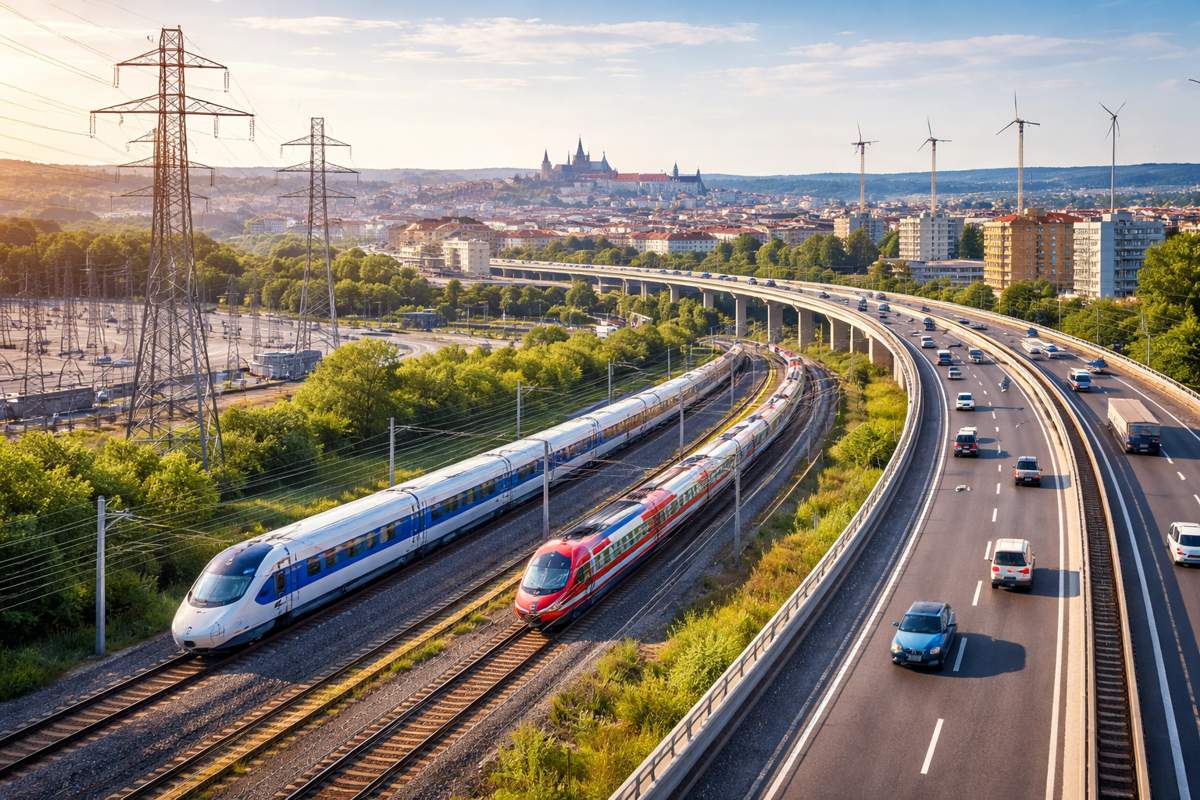
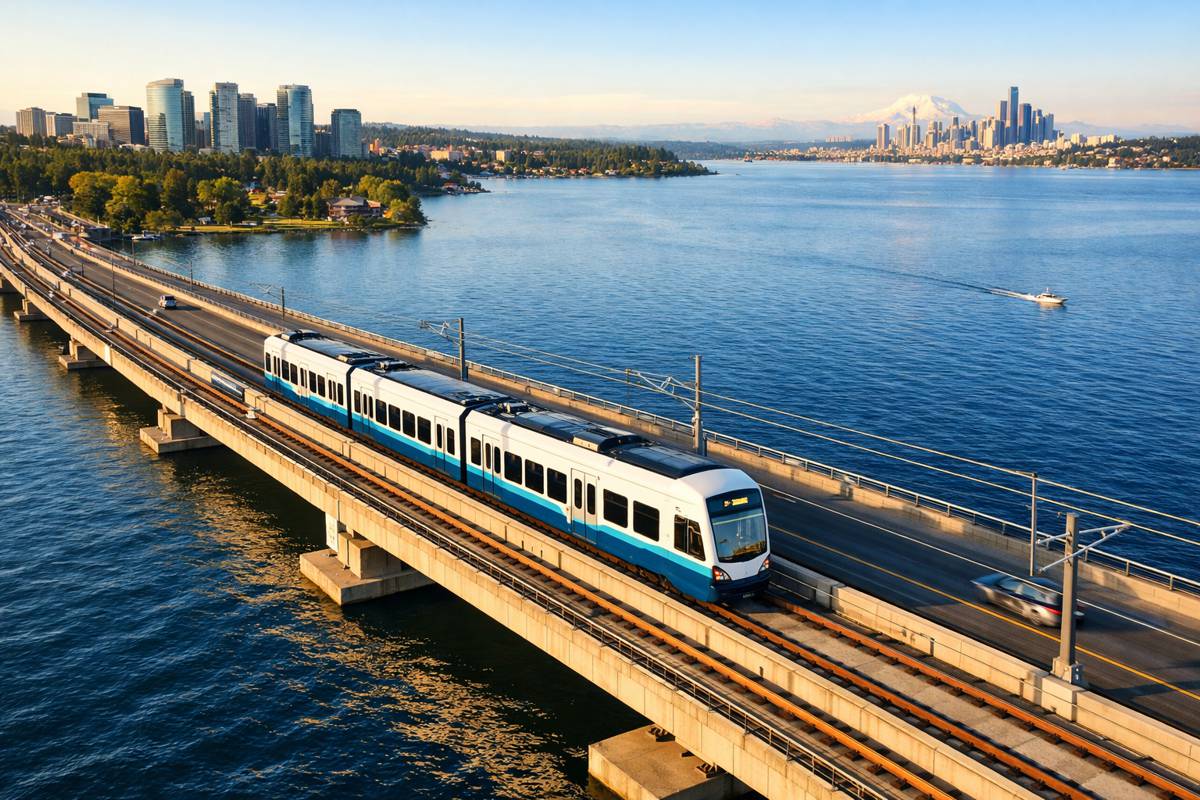
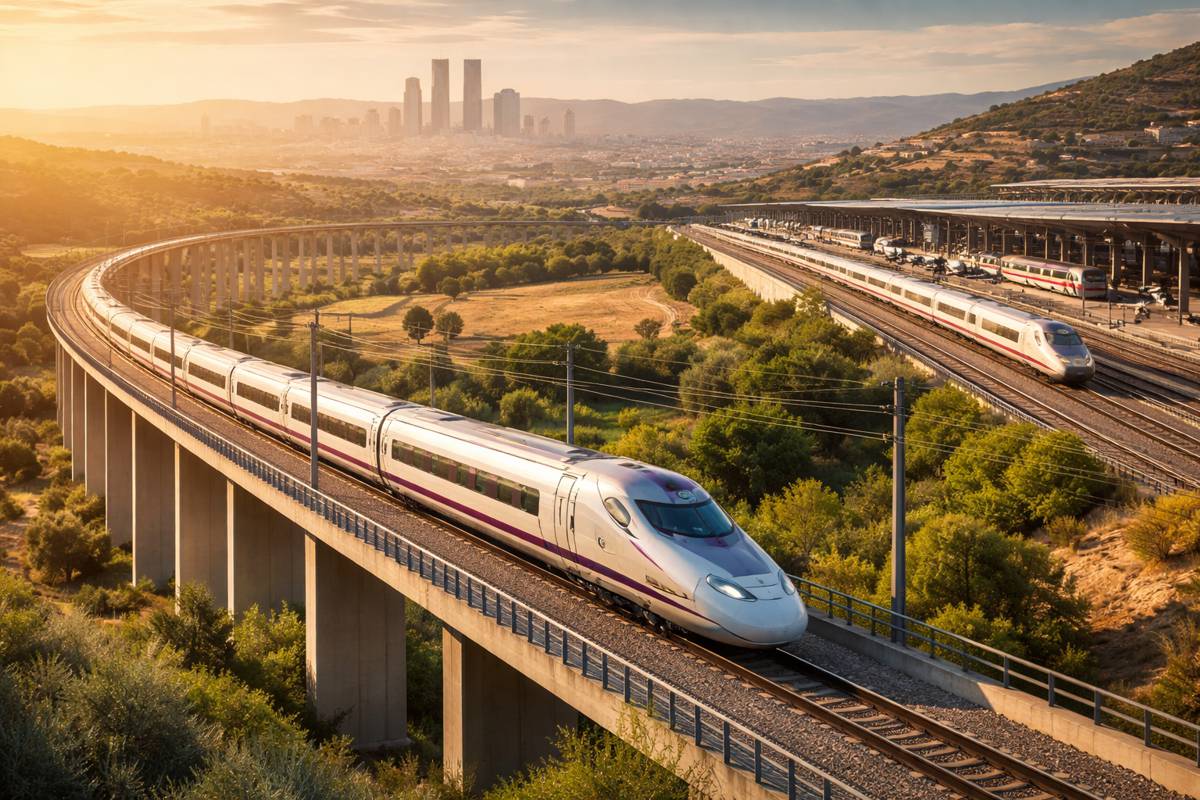
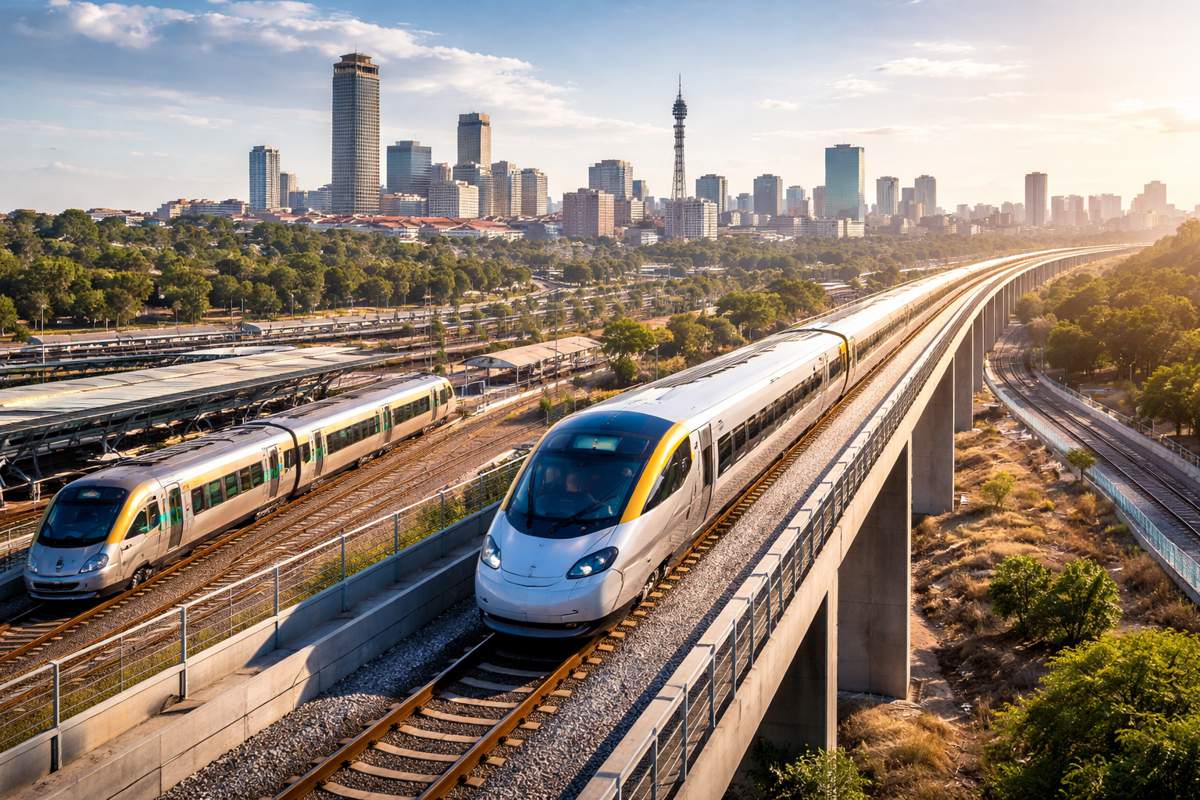
Nearly half of last year’s financing targeted transport, with rail receiving the largest share. Close to €680 million went to upgrades along the Trans-European Transport Network corridors linking Czechia with Austria and Poland. A separate loan exceeding €200 million supported repairs and modernisation of regional lines and funded maintenance equipment.
The works go beyond track renewal. Implementation of the European Rail Traffic Management System introduces interoperable signalling across borders, allowing trains to operate seamlessly between countries. This reduces operating costs, increases line capacity and improves safety through automatic train protection. Across Europe, ERTMS deployment has become essential to enabling high-frequency rail services without building entirely new lines, a significant advantage in densely populated corridors.
Level crossing safety upgrades form another important element. Despite steady improvements, crossings remain among the most common locations for serious rail incidents in Europe. Upgrading these intersections typically delivers one of the highest safety returns per euro spent in transport infrastructure. For freight operators, reliability improvements matter just as much as safety, because predictable transit times determine whether rail can compete with road haulage.
Prague Ring Road Targets Congestion and Logistics Efficiency
Road investment remained targeted rather than expansive. The €205 million EIB loan co-finances a 12.6-kilometre section of the Prague Ring Road southeast of the capital. As part of the TEN-T network, the segment carries importance beyond local commuting patterns.
Prague sits at a strategic crossroads between Germany, Austria, Slovakia and Poland. Congestion around the city has long affected cross-border freight flows, particularly for automotive and manufacturing supply chains. Removing bottlenecks improves delivery reliability and reduces fuel consumption. From a logistics perspective, smoother traffic often produces greater emissions reductions than simply replacing vehicles, because stop-start driving significantly increases fuel burn.
In European transport planning, ring roads increasingly function as economic infrastructure rather than purely urban projects. They separate local and transit traffic, making both safer and faster while allowing city streets to shift toward public transport and active mobility.
Power Grid Reinforcement Enables Renewable Expansion
Energy infrastructure represented another cornerstone of the investment package. A €400 million loan to electricity supplier ČEZ supports grid reinforcement and digitalisation capable of integrating up to 5.5 gigawatts of renewable energy capacity. Meanwhile, transmission operator ČEPS received €100 million to refurbish and extend more than 500 kilometres of high-voltage lines.
Grid upgrades have become one of Europe’s most pressing engineering challenges. Renewable generation is often built in locations far from industrial demand centres, and existing networks were never designed for decentralised electricity flows. Without reinforcement and digital control systems, renewable expansion stalls regardless of how many wind or solar plants are constructed.
Modern grids rely heavily on automation, sensors and real-time monitoring. These technologies stabilise voltage fluctuations and allow operators to predict congestion before it occurs. In effect, digitalisation turns the grid into a managed transport network for electrons, not unlike intelligent traffic systems on highways.
The Czech investments therefore do more than reduce emissions. They create the backbone necessary for electrified transport, industrial decarbonisation and future hydrogen production. Infrastructure investors increasingly recognise grid capacity as a determinant of economic competitiveness, influencing where factories and data centres choose to locate.
Finance Access Supports Industrial Growth
Beyond physical infrastructure, the EIB Group targeted the financial ecosystem supporting industry. A €200 million guarantee to a UniCredit subsidiary unlocks up to €400 million in lending for Mid-Cap companies. These firms often occupy a difficult position: too large for start-up funding yet too small to access capital markets efficiently.
The European Investment Fund complemented this approach by supporting €172 million of investment in 2025 through equity participation and portfolio guarantees. The programme encourages financing for digitalisation, productivity upgrades and innovation under the InvestEU framework.
Across Europe, Mid-Caps account for a large share of advanced manufacturing output but frequently delay investment during periods of uncertainty due to financing costs. Guarantee structures lower risk for lenders, making borrowing viable for modernisation projects such as automation upgrades or energy efficiency retrofits. The economic impact often exceeds the nominal loan value because productivity gains ripple through supply chains.
Urban Development and Housing Address Social Infrastructure
Infrastructure policy increasingly extends beyond transport and energy to living conditions. In Brno, a €121 million municipal framework loan supports long-term urban development planning. Flexible financing allows the city to phase projects gradually, aligning construction schedules with population growth and budget cycles.
Prague received support for a first-of-its-kind affordable housing programme, with up to €60 million financing more than 700 apartments across four locations. The loan covers roughly one-third of project costs, enabling a mixed funding structure involving municipal and private participation.
Housing shortages have become a critical constraint on economic growth across European cities. Employers struggle to recruit workers when accommodation costs rise faster than wages. By treating housing as economic infrastructure rather than purely social policy, financing institutions increasingly link residential development to labour mobility and productivity.
Advisory Services Shape Future Projects
Financing formed only part of the EIB’s involvement. Advisory support helped structure major rail projects as public-private partnerships, including a planned rail link to Prague’s Václav Havel Airport and high-speed corridors in Moravia. Assistance covered risk allocation, procurement preparation and tender documentation, improving bankability and attracting private capital.
Additional programmes supported urban mobility planning in Brno and energy efficiency projects in Ústí nad Labem. These services reduce project delays by resolving technical uncertainties before procurement begins, a step that often determines whether large infrastructure schemes remain financially viable.
Across Europe, advisory capacity has become as valuable as financing. Infrastructure failures frequently stem not from lack of capital but from poor project preparation. Early technical guidance can save years of redesign and litigation later.
The Wider Infrastructure Sector
Taken together, the investments illustrate a broader trend shaping infrastructure policy across developed economies. Rather than funding isolated projects, financing institutions are building interconnected systems where transport, energy, housing and industrial capacity reinforce one another.
Rail upgrades enable freight electrification, which relies on grid capacity, which in turn supports industrial decarbonisation and regional competitiveness. Housing ensures workers can live near employment hubs. Financing access allows companies to adopt new technologies that depend on modern infrastructure. Each component amplifies the value of the others.
The Czech programme also demonstrates a shift toward preventive investment. Instead of reacting to congestion, energy shortages or housing crises after they emerge, funding is directed at structural readiness. For contractors and engineering firms, this approach produces steadier project pipelines rather than cyclical construction booms.
As EIB Vice-President Marek Mora noted: “Economic growth and good living conditions must rest on solid foundations, which include reliable transport connections and a modern energy system.”
The message resonates beyond Czechia. Infrastructure investment is no longer just about building assets. It is about shaping economic geography for decades to come.