Securing Infrastructure Drones Through Intelligent Airborne Networks
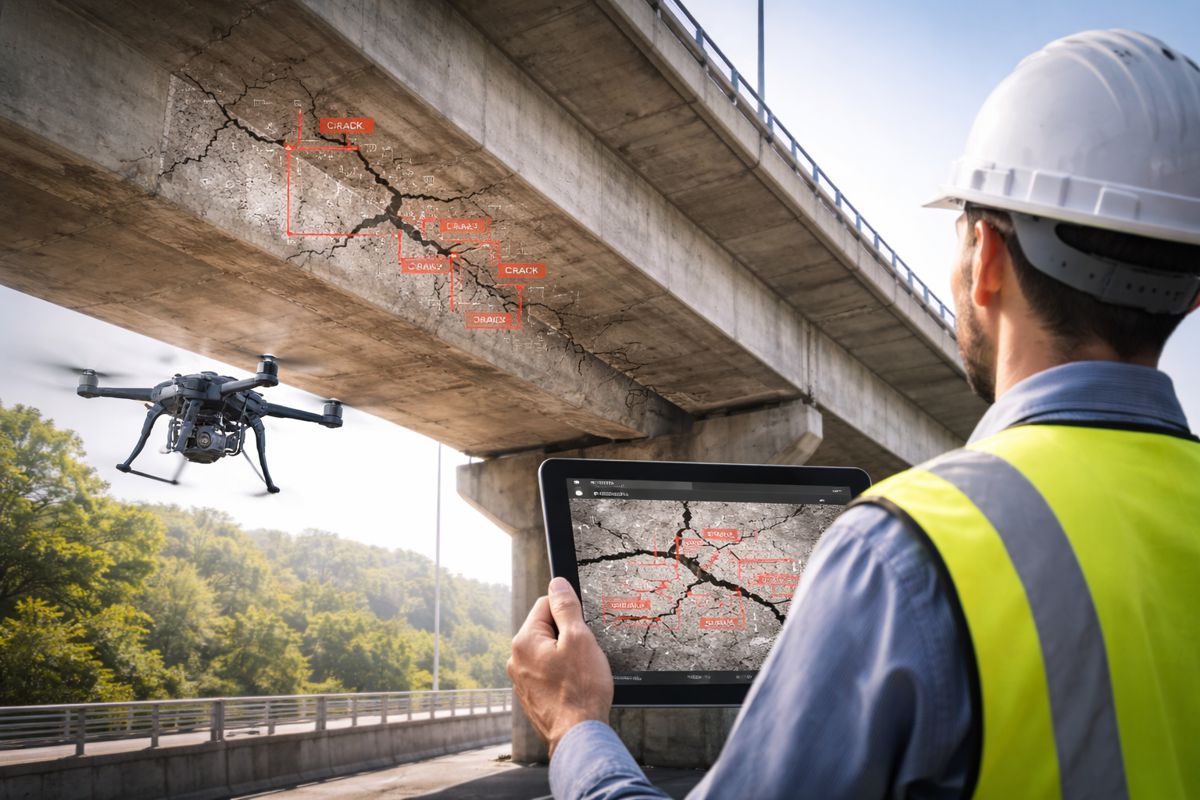
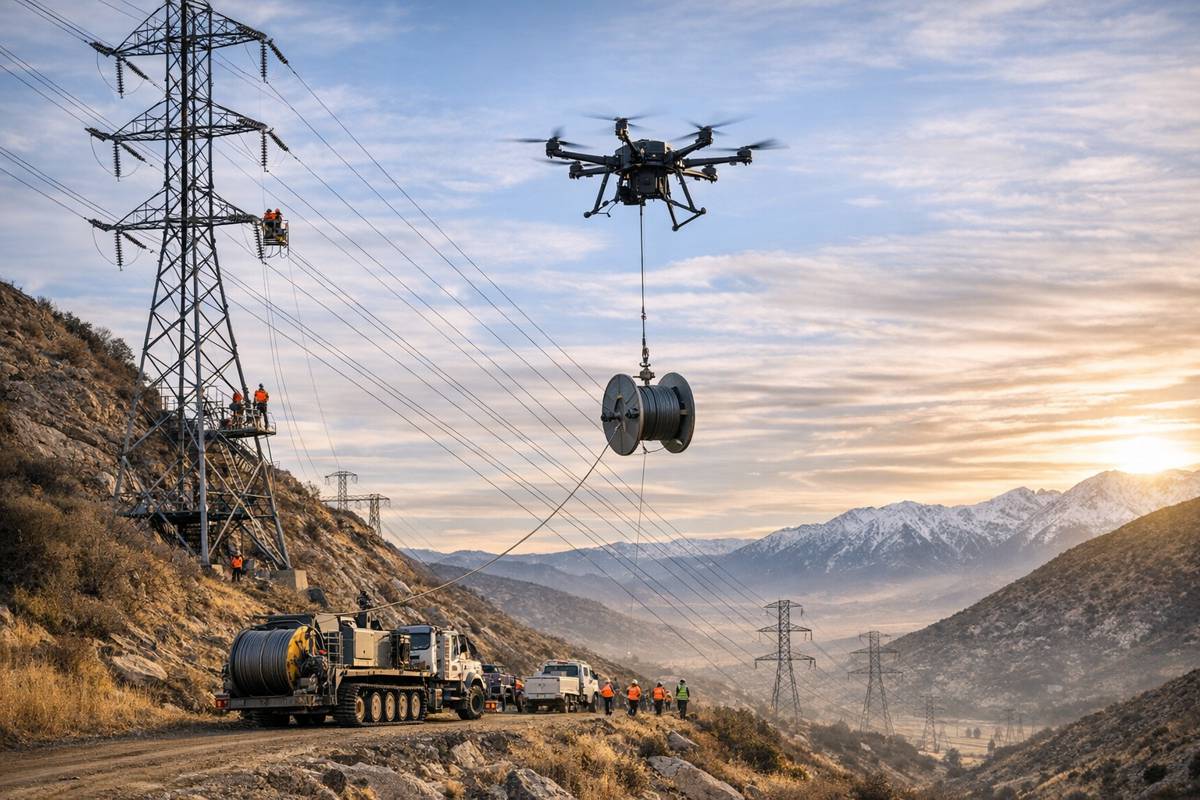
Unmanned aerial systems have quietly become part of the daily workflow across construction, transport and infrastructure management. Inspectors now survey bridges from the air, engineers monitor rail corridors without closing tracks, and utility operators examine power lines without putting workers in danger. What once required rope access teams and traffic closures is increasingly handled by a battery powered aircraft carrying cameras, sensors and edge computing hardware.
That operational shift has introduced a new dependency. Drones are no longer simple remote controlled devices but connected digital platforms integrated into enterprise networks, cloud analytics platforms and asset management software. As the industry embraces automation and remote operations, the cyber resilience of aerial systems becomes inseparable from physical safety. A compromised inspection drone does not merely lose data. It can mislead engineers, disrupt operations or create a real world accident.
Researchers at the University of Adelaide have addressed that growing risk through the development of a cybersecurity architecture specifically designed for drones. The work, led by the Industrial AI Research Centre and published in Computers and Industrial Engineering, focuses on protecting airborne systems against hacking, signal disruption and malicious software. Rather than treating cybersecurity as an afterthought, the project treats it as core flight infrastructure.
Professor Javaan Chahl summarised the breadth of modern drone deployment: “Today’s drones are used in warfare, for emergency response, infrastructure inspections, agriculture, environmental monitoring, logistics and even medical deliveries,”
He then outlined the digital complexity behind that versatility: “They collect large amounts of data, process it onboard, and communicate continuously with operators or cloud-based systems. While this makes drones powerful and versatile, it also makes them vulnerable.”
The Emerging Threat Landscape Around Connected Machines
Construction and transport operators have historically focused on mechanical reliability and human safety procedures. Cyber risk, until recently, was considered an IT department issue. However connected equipment has blurred that boundary. A compromised excavator control system, a manipulated traffic signal or a hijacked drone inspection platform now sits squarely within operational risk management.
Many commercial drones still depend on basic communication links. In practical terms, that means telemetry and control data may travel over channels that lack robust encryption or redundancy. Attackers can intercept data, inject commands or overwhelm communication pathways. Unlike a laptop, a drone cannot simply disconnect from the network. It relies on connectivity to remain stable in flight.
Tom Scully, cybersecurity specialist and PhD candidate involved in the project, explained the physical implications: “A cyber-attack can interfere with flight controls, disrupt communications, expose sensitive data, and even cause a physical accident.”
For infrastructure operators this risk is not theoretical. A compromised inspection aircraft could misreport structural defects, trigger unnecessary shutdowns or collide with live traffic corridors. In logistics and medical delivery environments the consequences extend to public safety. The aviation sector has long applied strict redundancy to mechanical systems. Connected robotics now requires the same philosophy applied to data networks.
A Networking Architecture Built For Flight
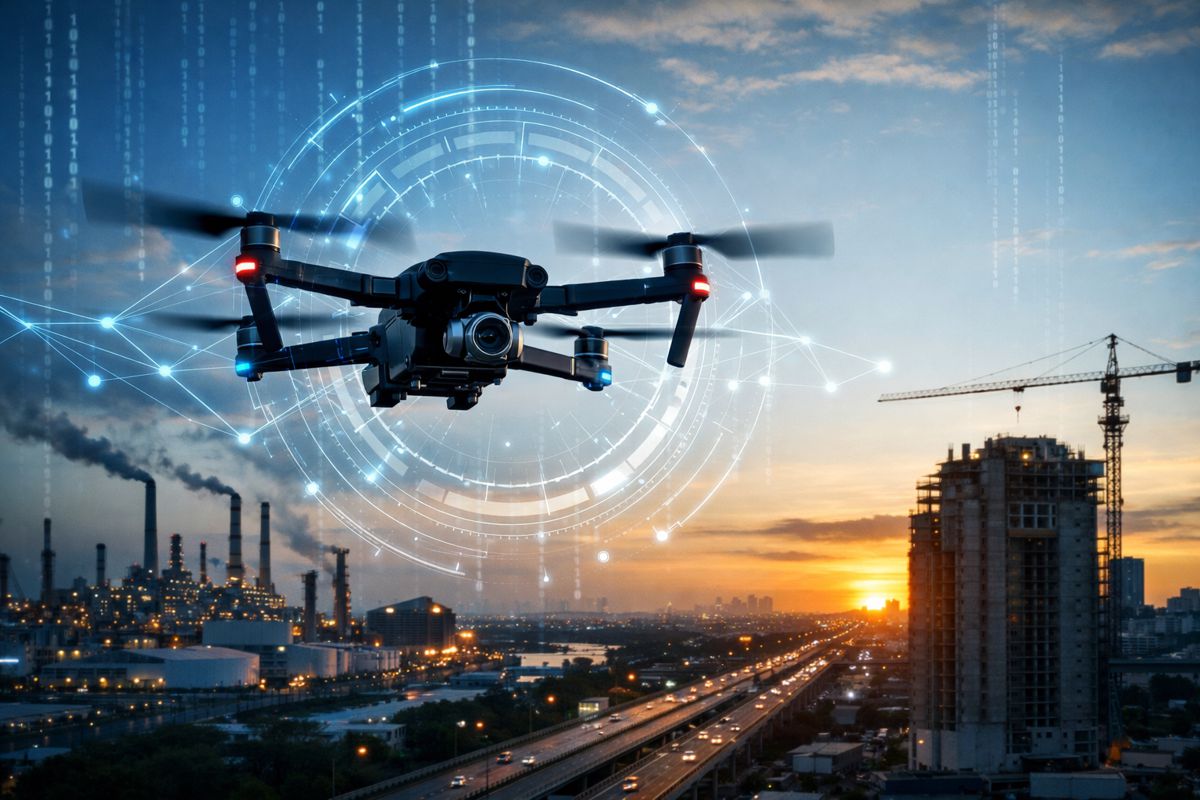
The Adelaide team approached the challenge by redesigning the communication architecture rather than adding a single protective layer. At the centre of the system is Software Defined Wide Area Networking, commonly known as SD WAN. In enterprise IT environments SD WAN dynamically routes traffic across multiple connections. Applying it to an airborne system changes how a drone maintains situational awareness.
Instead of relying on a single communication link, the drone simultaneously uses multiple channels such as mobile networks, Wi Fi and radio frequency links. The onboard system continuously evaluates connection quality and security status. If one pathway fails or appears compromised, traffic automatically reroutes without operator intervention. In operational terms, the aircraft maintains control integrity even under targeted interference.
This design addresses one of the largest operational concerns in infrastructure operations. Engineers cannot always operate drones within line of sight. Large projects such as pipelines, highways and rail networks require beyond visual line of sight operations. Those missions depend entirely on stable communication. By distributing connectivity across networks, the aircraft effectively gains a digital equivalent of redundant flight controls.
The architecture also supports integration with cloud based management platforms. Infrastructure organisations increasingly centralise analytics, asset databases and digital twins in remote servers. The SD WAN approach ensures secure connectivity while maintaining operational continuity even if one network provider becomes unavailable or compromised.
Bringing Enterprise Grade Security Into The Air
Connectivity resilience alone does not stop malicious activity. The researchers therefore embedded a next generation firewall directly onboard the drone. Unlike conventional designs that rely on ground control stations, this firewall operates within the aircraft’s computing environment.
The firewall monitors inbound and outbound data streams in real time, blocking suspicious traffic before it affects flight behaviour or data integrity. Because the system runs locally, it reduces reliance on remote security infrastructure. That matters in environments where latency or signal disruption may occur. A drone cannot wait for a distant server to confirm whether a command is legitimate.
Another significant innovation is the integration of malware sandboxing. This technique is widely used in corporate networks but rarely applied to airborne robotics due to hardware constraints. Suspicious files or data packets are isolated and analysed in a protected environment. If malicious behaviour is detected, the system prevents execution immediately.
For infrastructure operators, this approach changes the security model. Traditionally a compromised drone might only be detected after unusual behaviour occurs. The sandboxing system identifies threats before they influence flight or data output. In inspection operations that means the recorded information remains trustworthy. Reliable data underpins predictive maintenance strategies and long term asset management decisions.
Real World Demonstration And Deployment Potential
The research team successfully demonstrated the software using onboard computing hardware connected to cloud based control systems. Rather than a purely theoretical framework, the system ran on an operational drone platform. This distinction matters to industry stakeholders who often struggle to translate laboratory concepts into field ready solutions.
The next phase involves real time operational trials designed to validate performance under practical conditions. These tests will likely simulate communication loss, interference and attempted cyber intrusion while monitoring flight stability and data integrity. Such validation is essential before adoption in regulated sectors such as transport infrastructure and emergency response.
The project arrives at a time when regulators worldwide are expanding beyond visual line of sight drone permissions. Aviation authorities in Europe, North America and Asia increasingly require robust safety cases that include cybersecurity assurance. Demonstrating built in resilience may help operators secure approvals for large scale infrastructure monitoring programmes.
Implications For Construction And Transport Ecosystems
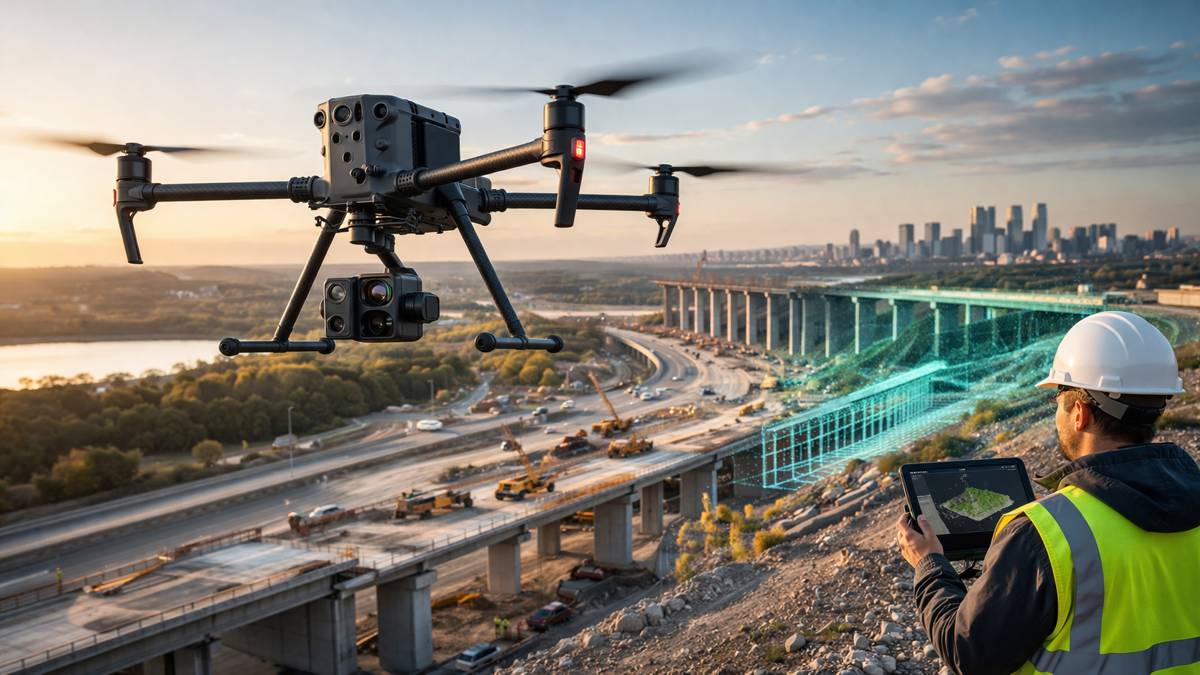
The construction sector is moving toward autonomous data collection. Drones now feed progress tracking systems, volumetric measurements and safety monitoring platforms. These datasets increasingly connect to BIM models and digital twins, informing project management decisions in near real time. A compromised dataset could influence contract claims, maintenance schedules or safety procedures.
Transport agencies face similar exposure. Road authorities use drones to inspect bridges and tunnels without lane closures. Rail operators rely on aerial surveys for vegetation management and overhead line inspection. Ports and logistics hubs use them for security monitoring and stockpile measurement. Cybersecurity failures in any of these environments could cause operational disruption or liability disputes.
The Adelaide system effectively recognises drones as infrastructure nodes rather than simple tools. Just as traffic control systems require secure networks, airborne sensors now demand equivalent protection. Embedding security at the device level reduces reliance on operator expertise and lowers the barrier for safe adoption across smaller organisations.
Towards Trustworthy Autonomous Infrastructure
Autonomous systems promise efficiency, but only if stakeholders trust the information they provide. Governments and insurers increasingly scrutinise digital evidence used in asset management and safety decisions. Secure drones contribute to verifiable data chains, supporting compliance and accountability frameworks.
Scully outlined the broader ambition behind the research: “Our goal is simple. As drones become part of everyday life, we need to ensure they are not only smart and autonomous, but also secure, resilient and trustworthy.”
That statement reflects a wider shift in infrastructure technology. The industry is no longer adopting automation cautiously. It is integrating connected robotics into core operational processes. With that integration comes a requirement to engineer cyber resilience directly into physical systems rather than bolting it on afterwards.
As infrastructure management transitions toward predictive analytics and remote operations, secure data acquisition becomes foundational. A drone inspection is only valuable if its information can be trusted without manual verification. By combining resilient networking, onboard firewalls and malware isolation, the Adelaide approach moves unmanned aviation closer to that standard.