HexaDream Enables Consistent AI Generated Assets for BIM Workflows
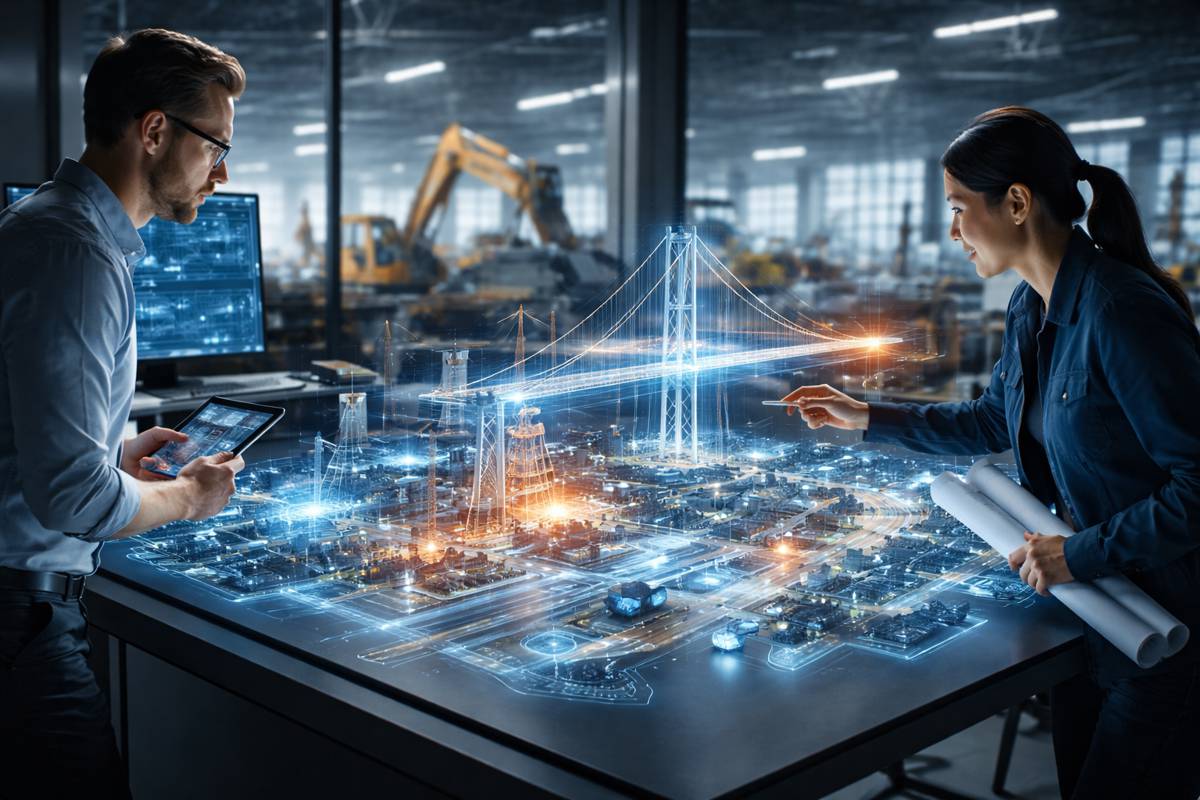
Artificial intelligence is steadily reshaping how the built environment is designed, simulated and communicated. From digital twins of bridges to automated clash detection in Building Information Modelling workflows, the industry increasingly relies on machines to generate geometry rather than merely document it. Yet for all the talk of automation, one persistent weakness has quietly limited real-world adoption. AI-generated three-dimensional models often look convincing at first glance but collapse under scrutiny.
The problem sits at the intersection of geometry and perception. Many generative models produce inconsistent structures depending on the viewing angle. A pipe network might appear correctly aligned from one perspective yet warp or split when rotated. Vehicles sprout duplicate mirrors. Machinery acquires multiple control panels. Researchers call this cross-view inconsistency the Janus problem, referencing the two-faced Roman deity. In engineering contexts, however, the consequences are more serious than visual artefacts. A flawed geometric representation undermines simulation accuracy, quantity take-offs and safety validation.
A newly published study introduces HexaDream, a text-to-3D generation method designed specifically to tackle this structural reliability gap. The research paper proposes a different philosophy of spatial reasoning in machine learning. Rather than asking AI to infer shape from ambiguous cues, the system constrains it with structured spatial evidence from multiple orthogonal viewpoints.
The industry challenge of the Janus problem
Generative AI has already transformed two dimensional content production. Construction marketing teams produce visualisations in minutes, and concept artists can iterate infrastructure proposals without modelling software. Translating that speed into dependable engineering geometry has proven far more difficult.
Most text-to-3D models evolved from image diffusion architectures. They extrapolate a 3D form by predicting how an object should appear from different angles. While effective for entertainment media, the approach leaves gaps in spatial reasoning. Without sufficient geometric constraints, the model fills missing information statistically rather than physically.
For infrastructure professionals, that uncertainty becomes a workflow bottleneck. Digital twins depend on dimensional coherence. Robotics navigation relies on accurate geometry. Autonomous construction equipment needs predictable shapes for collision avoidance. Even asset inspection platforms using machine vision require reliable baseline models. If an AI generated object shifts structure when rotated, downstream analytics become unreliable.
Existing systems such as DreamFusion and Magic123 have advanced the field, but they still struggle with structural stability in professional scenarios. In engineering practice, a model that looks right only from a preferred angle has limited operational value.
HexaDream introduces structured spatial priors
HexaDream approaches the problem by fundamentally changing how AI perceives form. Instead of estimating geometry from sparse or randomly sampled views, the system generates six orthogonal viewpoints as a structured prior. These viewpoints collectively describe the object’s full spatial context.
The principle resembles technical drawing standards used in engineering for centuries. Orthographic projections in front, side and top views communicate shape unambiguously. By embedding that discipline into generative AI, the system reduces interpretative freedom and therefore reduces error.
Three integrated components enable the method:
- A hexaview diffusion model that generates six orthogonal images from a text prompt
- A feature aggregation attention mechanism that fuses multi-view data into one coherent 3D structure
- A dynamic weighted constraint that reprojects the model to 2D and iteratively corrects geometric inconsistencies
Together they form a feedback loop. The model proposes geometry, checks itself against spatial projections, then adjusts errors during training. Rather than guessing shape once, it repeatedly verifies spatial validity.
Measured performance improvements
The study compares HexaDream with widely referenced baseline methods including DreamFusion and Magic123. The results indicate measurable structural gains rather than purely aesthetic improvements.
Researchers recorded a 20.6 percent reduction in the multihead problem, meaning duplicated or fragmented geometry occurs far less frequently across viewing angles. For engineering use, this directly affects trustworthiness because repeated components often corrupt automated interpretation.
Keypart Fidelity improved by 12 percent. Critical structural features such as handles, connectors and load bearing elements appear more accurately reconstructed. These details matter in industrial contexts where small geometric deviations propagate into simulation errors.
The CLIP-R score increased by 8 percent, demonstrating stronger semantic alignment between textual instruction and generated model. In practice, that means a prompt describing a pump assembly produces a structure recognisably consistent with the intended mechanical configuration.
While the percentages may seem modest in consumer graphics terms, in engineering modelling they are significant. Even minor geometric errors can invalidate calculations, whereas incremental consistency improvements unlock practical deployment.
Implications for BIM and digital twin ecosystems
Reliable AI-generated geometry could substantially reshape Building Information Modelling workflows. Currently, early concept models still require manual drafting before integration into project data environments. Generative systems often produce visual references rather than usable assets.
With improved spatial consistency, automated generation may move upstream into engineering design. Conceptual layouts could evolve into parameterised models ready for clash detection and simulation. Designers might begin with a text description and refine rather than rebuild.
Digital twins stand to benefit even more. Asset operators increasingly combine sensor feeds with 3D representations for predictive maintenance and operational analytics. However, generating accurate baseline models for legacy infrastructure remains expensive.
If text-to-3D tools reliably reconstruct mechanical or structural assets from documentation and imagery, operators could populate digital twins far faster. Combined with laser scanning, AI modelling could fill missing geometry where scans are incomplete.
Robotics, inspection and autonomous equipment
Construction robotics depends on spatial certainty. Machine guidance systems interpret surroundings through sensors and reference models. If the model contains ambiguous geometry, navigation safety margins expand and efficiency drops.
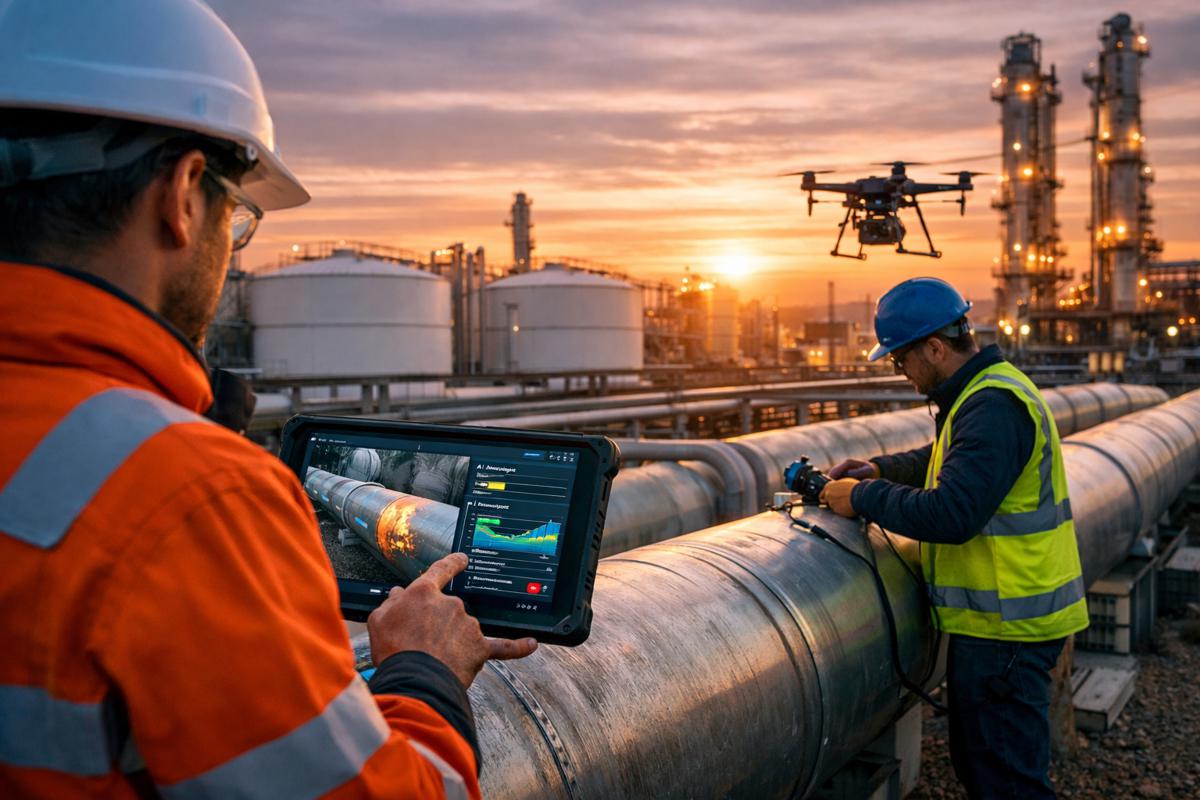
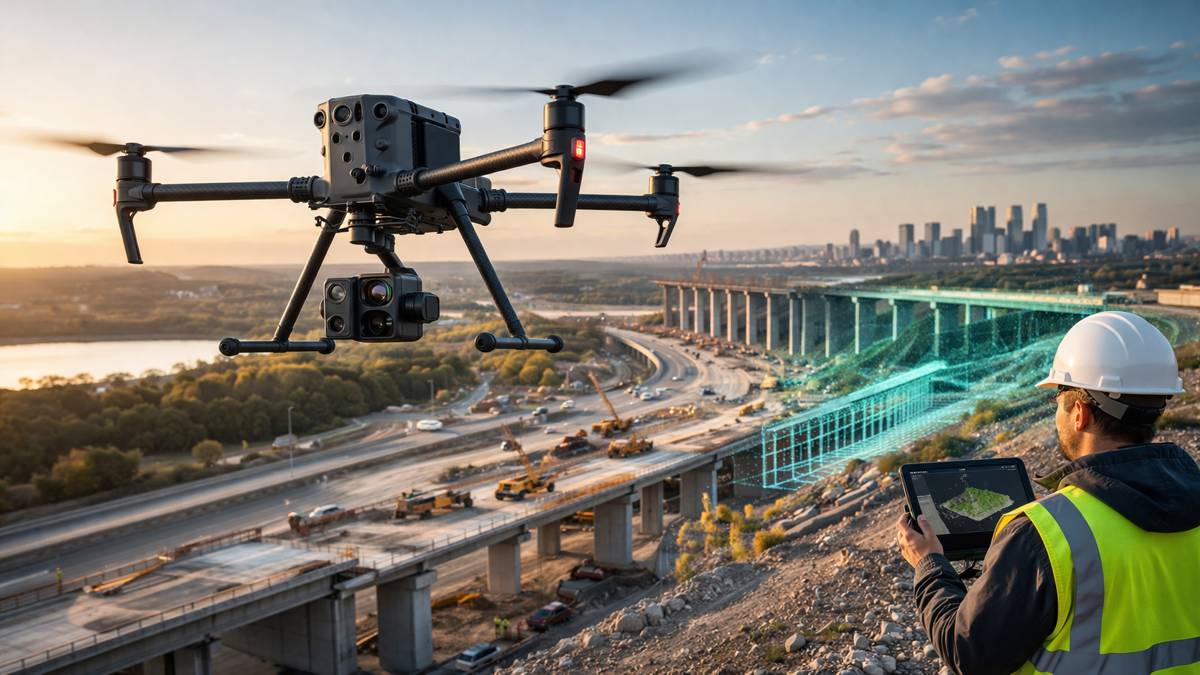
HexaDream’s multi-view consistency could reduce that uncertainty. Robots analysing a generated representation of equipment or structures would encounter fewer contradictory shapes. Inspection drones identifying defects rely on stable geometry to isolate anomalies rather than artefacts.
Infrastructure inspection platforms using computer vision often require synthetic training data. Generative 3D models help create simulation environments, but only if they behave physically plausibly. Better geometric coherence improves AI training quality and reduces false positives in defect detection.
From visualisation tool to engineering instrument
The shift suggested by HexaDream is subtle yet important. Generative AI may be transitioning from illustrative support to operational infrastructure technology. That distinction determines whether it belongs in marketing departments or engineering departments.
Historically, computer graphics and CAD evolved separately before converging in BIM. Generative AI appears to be following a similar path. Early adoption emphasised imagery and communication, but improved geometric reasoning points toward analytical use.
For policymakers and investors, this matters because digital construction productivity gains depend on trustworthy automation. Governments funding digital twin programmes and smart infrastructure initiatives require dependable data foundations. Geometry produced by probabilistic guesswork is insufficient. Geometry constrained by spatial priors begins to meet engineering expectations.
A step toward dependable generative infrastructure tools
HexaDream does not solve all challenges in AI modelling. Material properties, tolerances and standards compliance still require integration with domain knowledge systems. Nevertheless, it addresses a central obstacle that has limited adoption in serious engineering workflows.
By embedding structured spatial reasoning into generation rather than correcting errors afterwards, the research suggests a broader direction for industrial AI. Systems designed around physical reality rather than visual plausibility may finally bridge the gap between creative AI and engineering reliability.
For construction and infrastructure professionals, the importance lies less in the specific model and more in the trajectory it represents. Once generative tools consistently respect geometry, they become candidates for procurement planning, maintenance forecasting and automated design iteration.
The technology remains at research stage, but the underlying principle aligns closely with engineering practice. Constrain the problem, validate the result, iterate until it holds. In that sense, AI modelling is beginning to adopt the discipline engineers have applied to drawings for generations.