Al Layan Oasis Signals a New Phase in Desert Urbanism for Dubai
In the Gulf region, major projects are often measured in height, speed or spectacle. Yet every so often a development appears that tells a different story, one less about skylines and more about everyday life. The planned Al Layan Oasis in Dubai’s Al Marmoom district fits squarely into that category. With a reported investment of around USD 1.08 billion and a footprint approaching one million square metres, the project represents a deliberate shift from iconic architecture toward landscape driven infrastructure.
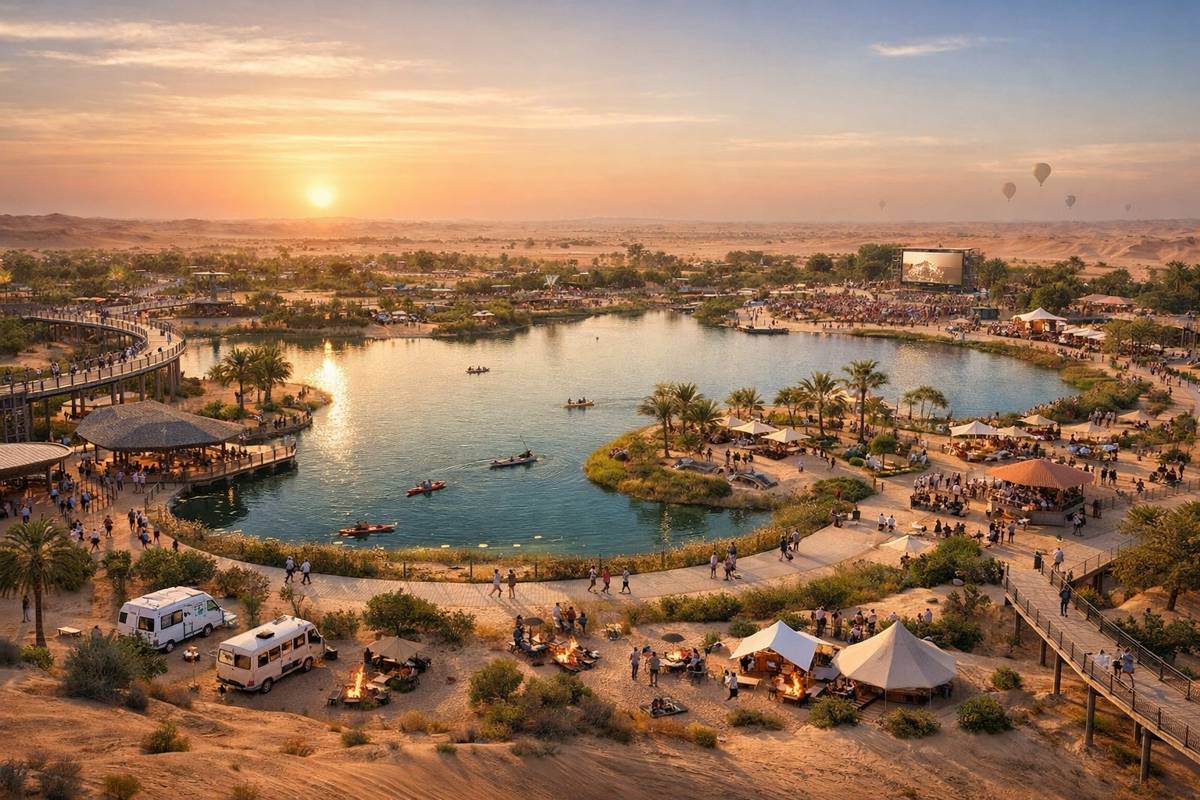
Rather than positioning tourism purely as a hospitality sector, the scheme frames recreation as public infrastructure. A 250,000 square metre artificial lake will form the centrepiece, surrounded by walking trails, gathering spaces and environmental education facilities. In practical terms, this places water and shade at the core of urban planning in a desert environment, something Gulf cities historically lacked outside private compounds and beachfront resorts.
The significance extends beyond aesthetics. Cities in arid climates increasingly recognise that public outdoor space is not a luxury but a health and productivity asset. Urban planners worldwide have linked accessible green space with reduced heat stress, improved mental wellbeing and higher physical activity rates. By embedding these principles into a tourism development, Dubai is effectively merging public health policy with economic diversification.
Eco Tourism Becomes Economic Policy
Tourism in the UAE has traditionally revolved around retail, beaches and business travel. Desert experiences existed but largely as short excursion packages rather than long duration destinations. Al Layan Oasis changes that structure by creating a permanent recreational landscape capable of supporting year round visitation, targeting approximately 330,000 annual visitors.
The model follows a global shift in travel preferences. International tourism agencies have reported steady growth in nature based travel over the past decade, particularly among younger travellers seeking outdoor activity rather than urban sightseeing alone. Governments increasingly see eco tourism as a stabilising sector because it attracts repeat visitors and distributes spending across smaller businesses.
The development allocates around 365,000 square metres for private sector participation, effectively inviting operators to build services around a shared environmental asset. That approach spreads risk and encourages innovation. Instead of a single mega operator controlling the site, the project can host multiple experiences from caravan camping to event programming.
For investors and infrastructure suppliers, this structure matters. It signals demand not only for construction but also for long term maintenance, mobility systems, waste management and environmental monitoring. These recurring operational contracts often exceed the value of initial build works over the lifetime of such projects.
The Engineering Behind a Desert Lake
Constructing a lake in an arid landscape is not new to the region, but its purpose here differs from ornamental waterfront developments. The water body functions as microclimate infrastructure, cooling surrounding areas through evaporation while supporting vegetation and recreational use.
Delivering that effect requires careful engineering. Artificial lakes in desert environments typically rely on lined basins to prevent seepage, combined with treated water systems rather than freshwater extraction. This reduces pressure on groundwater reserves while maintaining water quality for public use.
The surrounding 14 kilometre network of walking and cycling routes, including four kilometres of elevated pathways rising five metres above ground level, introduces another technical dimension. Elevated routes allow airflow beneath the structure, lowering surface temperatures and improving comfort during warmer months. They also reduce disruption to natural desert terrain and wildlife movement compared with ground level paving.
By connecting to the existing Al Marmoom trail network, the design effectively expands a regional mobility corridor for non motorised transport. While primarily recreational, such networks increasingly influence property value and development patterns, shaping how future communities expand beyond the urban core.
A Four Zone Model for Community Building
The site will be organised into four distinct zones, each serving a social function rather than simply a commercial one. The Camping Oasis provides pitches for around 100 caravans alongside environmental awareness facilities. This combination suggests an educational agenda, introducing residents and visitors to desert ecology rather than presenting it as a backdrop.
The Family Oasis incorporates rest areas and play zones, effectively creating a public park scaled to regional conditions. In hot climates, shaded rest infrastructure often determines whether outdoor spaces are actually usable. Integrating these amenities from the outset avoids the common issue of parks becoming seasonal rather than permanent community assets.
The Gathering Oasis, featuring an open air cinema, amphitheatre and food truck plaza, transforms the landscape into an event venue. Outdoor entertainment infrastructure has gained importance since the pandemic, as cities recognised the resilience of open air gatherings compared with enclosed venues.
Finally, the Recreation Oasis introduces retail and activity providers within a natural setting. By embedding commerce within the landscape rather than building enclosed malls, the project shifts consumer behaviour toward outdoor social interaction, aligning with broader wellness strategies.
Infrastructure Beyond Roads and Buildings
For construction professionals, projects like Al Layan Oasis broaden the definition of infrastructure. Traditionally the sector focused on transport networks, utilities and buildings. Increasingly, however, landscape and recreation projects deliver measurable economic return.
Dubai’s Blue and Green Spaces Roadmap 2030, under which the project sits, plans the planting of approximately 1.5 million trees and more than 120 new parks covering nearly three million square metres. Such programmes require irrigation networks, soil engineering, sensor based monitoring and long term maintenance operations comparable in complexity to urban utility systems.
This creates opportunities for contractors specialising in environmental engineering, smart irrigation, renewable energy lighting and digital asset management. Monitoring vegetation health, water consumption and visitor flow often relies on sensor networks and predictive analytics similar to those used in transport infrastructure.
In other words, the oasis is not a leisure add on. It is a platform for a new category of infrastructure services that merges civil engineering with ecological management.
Heat Resilience and Urban Liveability
Climate adaptation plays a central role in the project’s relevance. Gulf cities face increasing pressure to mitigate extreme temperatures, which affect workforce productivity, tourism and public health. Studies in urban climatology show that shaded green areas can reduce local ambient temperatures by several degrees, particularly when combined with water bodies.
By locating the site roughly 50 minutes from the city centre, planners are effectively extending the liveable boundary of the metropolitan area. Instead of retreating indoors during hotter months, residents gain an alternative outdoor environment designed to remain usable across seasons.
This has indirect economic consequences. A workforce with access to outdoor recreation tends to demonstrate improved wellbeing and retention. Governments in high temperature regions increasingly consider environmental amenities part of national competitiveness, especially when attracting skilled expatriate labour.
Mobility and Access Planning
Provision for 1,000 parking bays might appear conventional, but in desert edge developments accessibility determines viability. Large visitor volumes require carefully managed entry points to avoid congestion and protect surrounding natural habitats.
The integration with existing trail networks hints at a gradual shift toward multimodal access. As Dubai expands public transport and cycling infrastructure, such destinations become nodes within a wider mobility ecosystem rather than isolated attractions. Over time, shuttle services and autonomous transport solutions could reduce reliance on private vehicles, aligning with sustainability goals.
For transport planners, projects like this offer testbeds for low speed autonomous mobility and smart wayfinding systems in controlled environments before deployment in dense urban districts.
A Template for Future Desert Cities
Across the Middle East and North Africa, rapid urbanisation has produced sprawling metropolitan regions surrounded by underused desert land. Traditionally these edges hosted industrial zones or remained undeveloped. Al Layan Oasis demonstrates an alternative model where peripheral landscapes become social and economic buffers.
If successful, the concept could influence master planning across similar climates, from Saudi Arabia’s expanding cities to North African coastal developments. Rather than replicating temperate climate urban parks, designers are creating region specific outdoor infrastructure suited to high temperature conditions.
The shift also resonates with global construction trends toward regenerative design, where projects aim not only to minimise impact but to actively improve environmental conditions. By combining water features, vegetation and public access, the oasis contributes to local biodiversity while supporting economic activity.
The Broader Investment Perspective
For policymakers and investors, the project highlights a strategic recalibration. Mega structures once symbolised economic ambition, yet liveability increasingly defines long term attractiveness. Cities competing for talent, tourism and investment must demonstrate environmental quality alongside financial strength.
The Al Layan Oasis effectively operates as both tourism development and social infrastructure programme. Its value will not be measured solely in ticket sales but in extended visitor stays, increased surrounding property development and enhanced city branding as a sustainable destination.
In practical terms, this signals sustained demand for landscape architecture, environmental engineering and smart infrastructure technology across the Gulf region. Contractors capable of integrating civil works with ecological systems will likely find expanding opportunities as governments prioritise outdoor liveability.
Rather than another isolated attraction, the project represents a broader shift in how desert cities grow. It reframes land previously considered empty into a productive asset, turning climate challenges into planning drivers rather than constraints. If replicated, such developments could redefine the urban edge across arid regions worldwide.