Western Bypass Vision Reshapes Freight Mobility Between Rouen And Orléans
France’s transport map has long contained a curious gap between Rouen and Orléans. Freight moving between the Channel ports and the agricultural heartlands of central France often detours through the already saturated Greater Paris road network. That inefficiency has quietly shaped logistics costs, safety risks and urban congestion for decades. Now the planned A154 and A120 motorway link aims to close that gap and rebalance mobility flows across northern France.
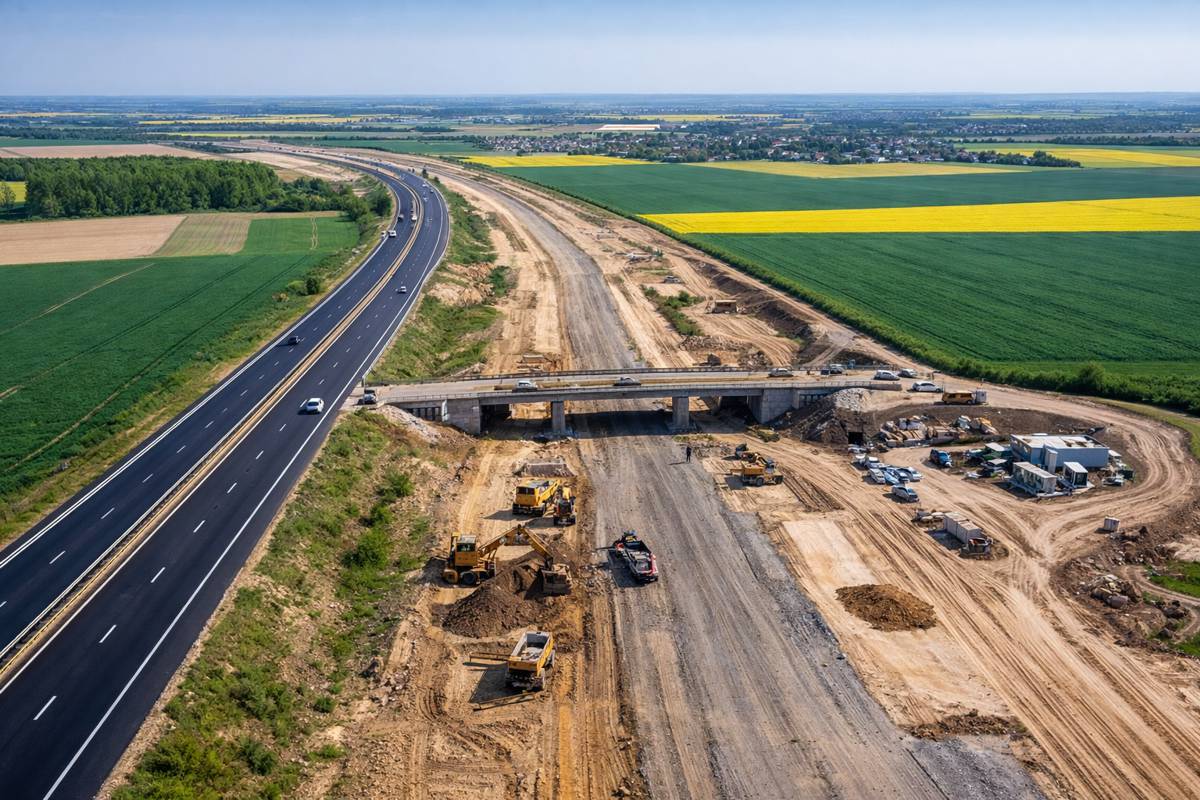
VINCI, through the AREL consortium, has entered exclusive negotiations with the French government for a 35-year concession to design, finance, build and operate a 97 kilometre motorway system in Eure-et-Loir. The project would complete the Rouen-Orléans corridor and create a western bypass of the Paris region, offering long-distance traffic a direct alternative to metropolitan routes.
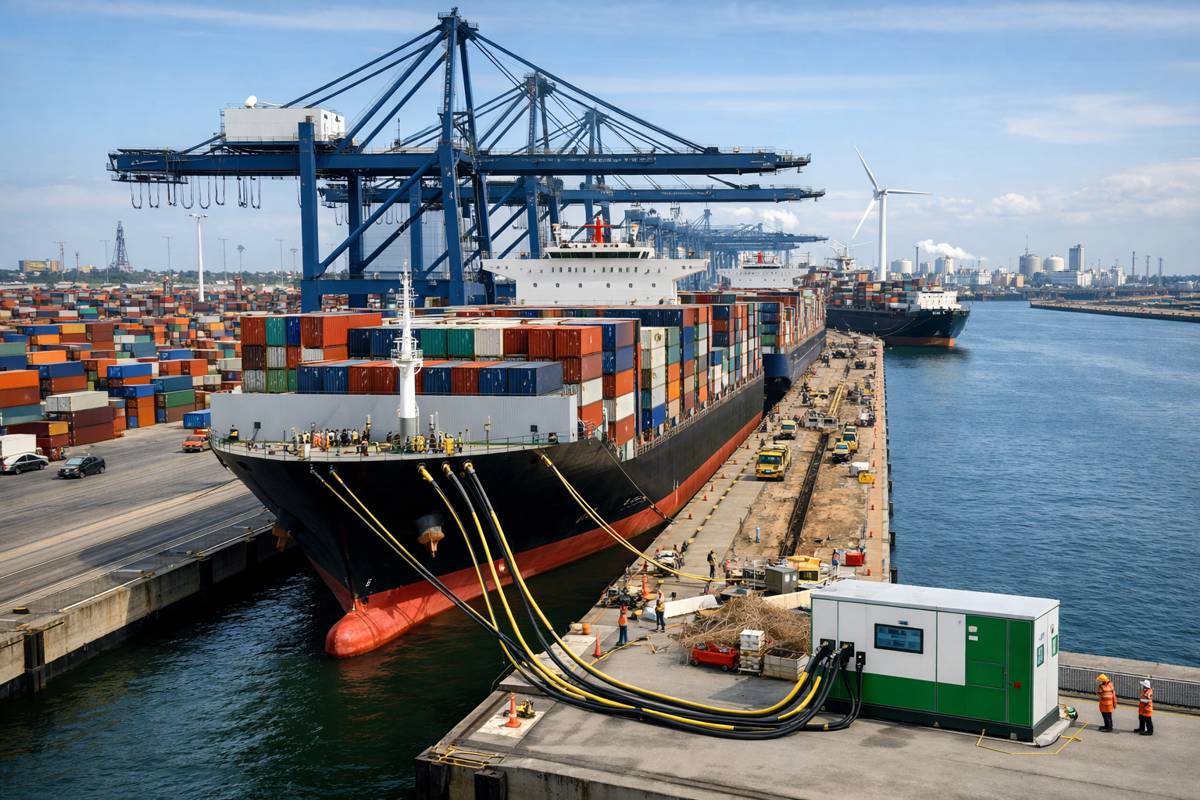
This matters well beyond regional commuting patterns. France’s logistics backbone depends heavily on the Seine corridor linking inland industry and agriculture to the ports of Rouen and Le Havre. When long haul freight is forced into urban ring roads around Paris, transport reliability drops and emissions rise. By restoring continuity to the route, the project effectively re-engineers a national freight artery rather than merely adding local capacity.
European transport policy increasingly focuses on strengthening multimodal corridors connecting ports to inland production zones. The European Commission’s Trans-European Transport Network programme highlights port-to-hinterland efficiency as essential for competitiveness and decarbonisation. In that context, the Rouen-Orléans connection represents a structural upgrade to a supply chain rather than a typical motorway expansion.
Freight Efficiency And The Seine Axis Economy
The economic logic of the scheme sits squarely within the Seine Axis strategy, a long running French initiative linking Paris, Rouen and Le Havre into a unified logistics corridor. The ports of Rouen and Le Havre together handle tens of millions of tonnes of goods annually, including grain exports from the Centre-Val de Loire agricultural basin.
At present, a significant share of heavy goods vehicles travelling between those regions navigates urbanised environments. That creates bottlenecks and increases travel times, but it also weakens the competitiveness of French exports. Even marginal delays matter when grain shipments must meet vessel schedules or when just-in-time supply chains depend on predictable arrival windows.
The new motorway would create a continuous high-standard route, eliminating fragmented sections that currently disrupt traffic flow. Such continuity is a fundamental but often overlooked element of infrastructure performance. Research from the International Transport Forum has consistently shown that reliability improvements generate economic value comparable to capacity expansion, because predictable travel times allow logistics operators to reduce buffers, fleets and fuel consumption.
Agriculture stands to benefit significantly. The Centre-Val de Loire region is a major cereal producing area, and efficient connections to seaports determine export competitiveness. Lower logistics costs translate directly into stronger margins for producers and traders, especially in global markets where shipping rates fluctuate and infrastructure efficiency becomes a competitive advantage.
Rerouting Traffic Away From Communities
Beyond freight economics lies a clear social objective. Many towns along the existing route carry a disproportionate burden of through traffic, particularly heavy vehicles. The project aims to redirect long distance flows onto a dedicated motorway, relieving built-up areas and improving local living conditions.
Urban bypasses historically deliver measurable safety benefits. Studies across Europe show accident rates fall significantly when heavy traffic is separated from local circulation networks. Pedestrian exposure decreases, junction conflicts reduce and emergency response becomes more predictable.
Air quality improvements are also expected. Stop-start congestion within towns produces higher particulate emissions than steady motorway speeds. By transferring vehicles onto free-flow infrastructure, emissions per kilometre drop even before any fleet electrification gains are considered. For residents, that translates into quieter streets, safer crossings and cleaner air rather than merely faster journeys for passing drivers.
The project therefore operates on two levels simultaneously. Nationally it improves freight competitiveness, locally it restores urban environments previously shaped by transit traffic. That dual outcome often determines public acceptance of transport infrastructure in Europe, where community impact increasingly outweighs raw mobility metrics.
Concession Model And Industrial Structure
The concession framework reflects France’s long tradition of privately operated motorways under public oversight. Under the proposed agreement, VINCI Autoroutes will manage programme development, financing and operations, while VINCI Construction companies will undertake design and build activities.
A 35-year concession horizon is typical for large motorway schemes because infrastructure financing depends on stable long term revenue streams. Investors accept high upfront capital expenditure only when repayment spans decades, aligning repayment with traffic demand maturation.
From an industry standpoint, such concessions illustrate how major contractors have evolved into infrastructure service providers. Construction now forms only one phase of the value chain. Operations, maintenance and digital traffic management often generate the most predictable returns. For contractors, that changes risk profiles and business models, shifting emphasis from project delivery toward lifecycle performance.
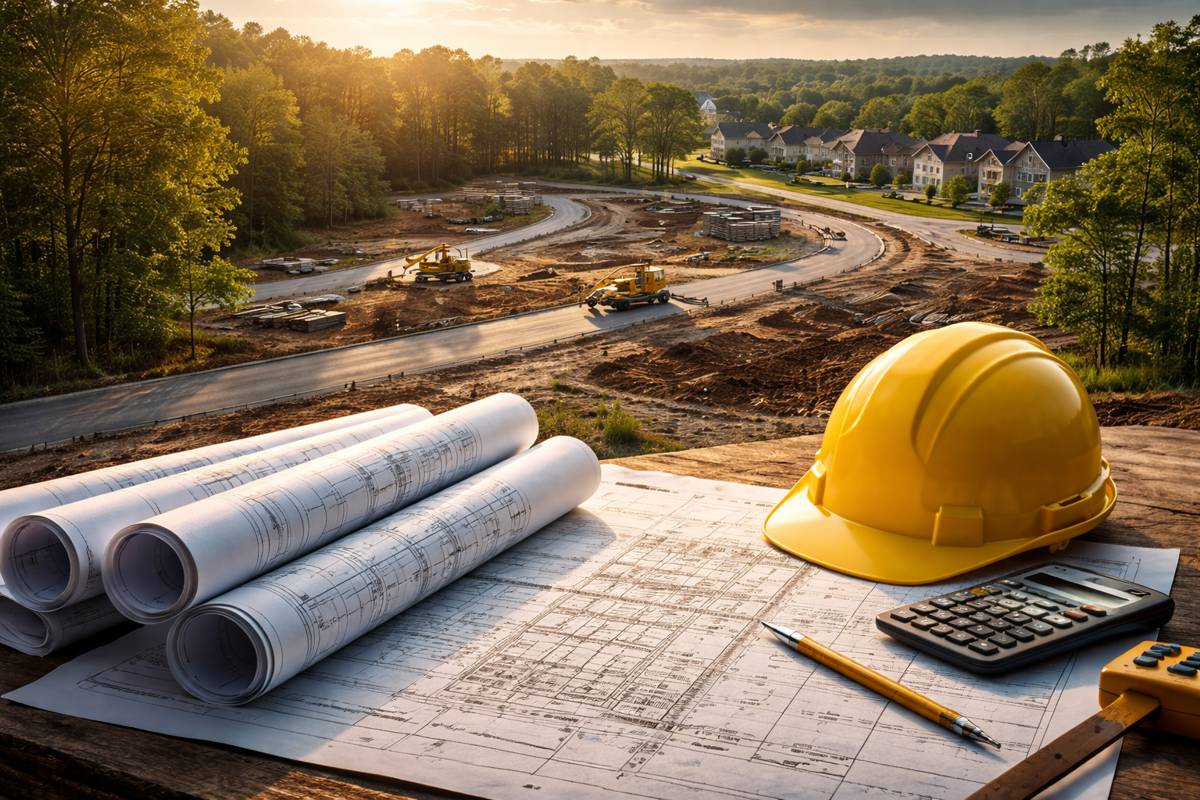
The works include 69 kilometres of new motorway and modernisation of 28 kilometres of the existing RN154 national highway. Upgrading existing infrastructure rather than building entirely new routes also reflects contemporary European practice. Reusing corridors reduces environmental footprint, land acquisition complexity and construction emissions while maintaining capacity improvements.
Integrating Low Carbon Mobility Measures
The project explicitly includes measures encouraging low carbon transport and shared mobility. While details remain subject to approval, such commitments align with broader French transport policy promoting electric vehicle infrastructure, car sharing and multimodal interchange.
Motorways increasingly function as energy corridors as well as transport corridors. Charging infrastructure deployment along major routes has become essential to national decarbonisation strategies. A continuous corridor linking inland regions to seaports provides a natural backbone for high capacity charging hubs serving freight electrification in future decades.
Shared mobility considerations also reflect changing travel patterns. Dedicated park and ride areas, high occupancy vehicle incentives and digital traffic management systems can increase vehicle occupancy rates without new lanes. Infrastructure no longer serves purely mechanical movement but integrates behavioural and digital transport systems.
The significance lies in timing. Europe’s transport sector faces strict emissions reduction targets under climate legislation. New infrastructure must demonstrate compatibility with those goals from the outset. Projects designed only for conventional traffic risk becoming politically and financially vulnerable. By embedding low carbon measures early, the corridor positions itself as part of a long term decarbonised network rather than a legacy asset.
Construction Challenges And Engineering Context
Although geographically less dramatic than alpine crossings or long tunnels, the corridor presents its own engineering complexity. Integrating new motorway sections with upgraded existing routes requires careful phasing to maintain traffic continuity. Construction sequencing becomes a logistical exercise in minimising disruption to communities already affected by heavy traffic.
Drainage, environmental mitigation and agricultural land interfaces also shape design decisions. Northern France’s agricultural landscape requires careful access management to avoid fragmenting farmland operations. Modern European motorway design increasingly incorporates wildlife crossings and hydrological continuity to meet environmental standards introduced over the past two decades.
The project’s phased approval process reflects those sensitivities. Subject to regulatory consent, the concession agreement is expected in autumn 2026. That timeline underscores how infrastructure development today involves extensive environmental assessment and public consultation before physical construction begins.
Strategic Impact On French And European Networks
The broader implication lies in network resilience. European transport systems historically radiated from capital cities, concentrating flows into metropolitan bottlenecks. Bypass corridors redistribute traffic and create redundancy, allowing networks to function during disruptions, maintenance or peak demand.
For France, relieving pressure on Parisian routes improves national reliability. For Europe, strengthening port access enhances trade efficiency, particularly as supply chains shift toward regional resilience after recent global disruptions. Infrastructure that shortens inland-to-port connections effectively reduces dependence on congested hubs.
The Rouen-Orléans corridor therefore sits at the intersection of regional development, national logistics strategy and continental trade efficiency. It demonstrates how relatively modest length projects can carry disproportionate economic importance when they eliminate structural network gaps.
Rather than a simple road addition, the scheme represents a rebalancing of movement across northern France. By connecting agriculture to maritime trade, separating freight from communities and embedding low carbon mobility from the outset, the corridor reflects how modern infrastructure planning blends engineering, economics and environmental responsibility into a single system.