Faster MultiQTC Transforming Hydraulic Attachment Changes for Large Excavators
On modern construction and demolition sites, efficiency often hinges on how quickly machines can adapt to changing tasks. Excavators rarely perform a single role during a project. Instead, operators switch between buckets, breakers, crushers, and specialised demolition tools throughout the day. Each attachment change introduces downtime, safety risks, and mechanical complexity.
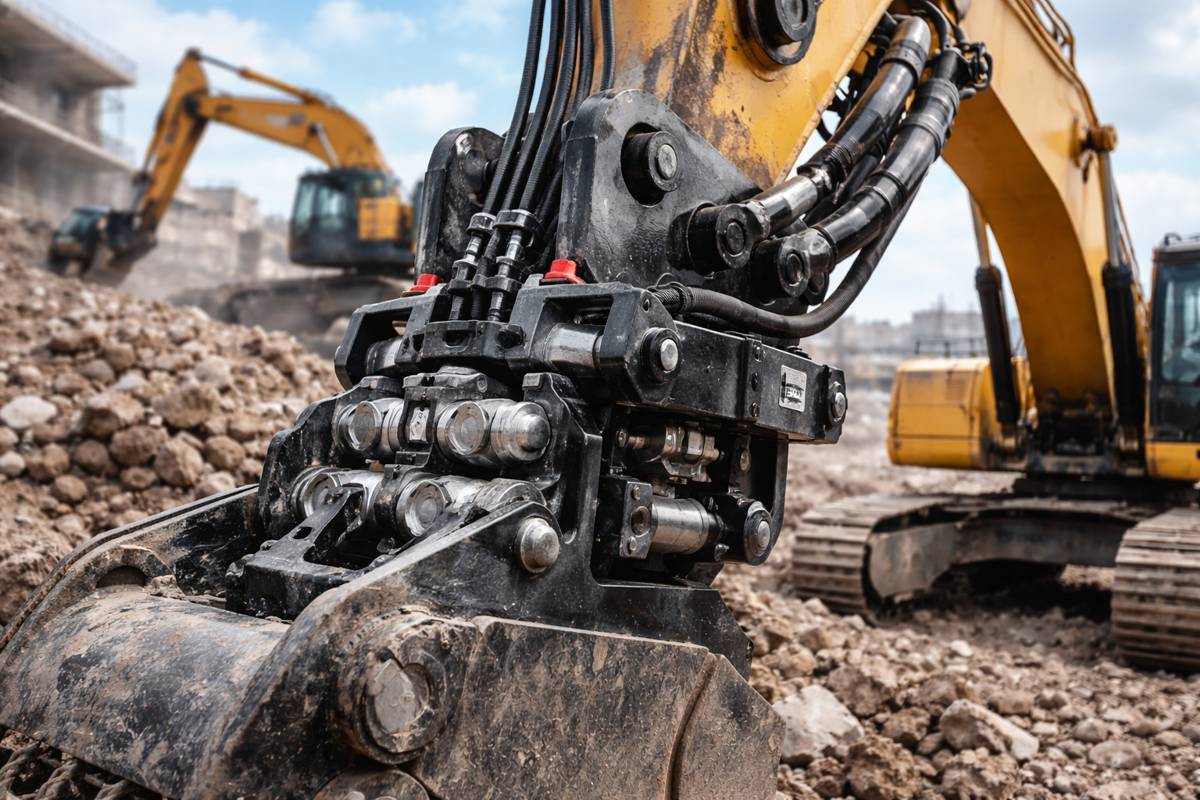
Helios Technologies operating company Faster S.r.l. has introduced the MultiQTC™, a hydraulic multiconnection system designed for large excavators in the 20 to 50 tonne class. The technology focuses on a challenge that contractors know all too well: making attachment changes faster, cleaner and more reliable without adding excessive cost or complexity.
Rather than relying on traditional single-coupling connections or expensive fully automated systems, MultiQTC consolidates multiple hydraulic connections into a single manoeuvre. The result is a mechanical solution intended to streamline excavator versatility while maintaining the performance needed for heavy-duty attachments used in demolition and infrastructure projects.
Why Hydraulic Connection Efficiency Matters on Modern Jobsites
Hydraulic attachments have fundamentally reshaped how excavators are used across the construction industry. A single machine can now perform digging, lifting, crushing, cutting and material processing tasks simply by swapping tools. This versatility is particularly valuable on complex urban projects and demolition sites where space constraints limit the number of machines that can operate simultaneously.
However, the efficiency gains from attachments often depend on how quickly those tools can be connected. Traditional hydraulic couplings require several manual connections for pressure lines, pilot lines and auxiliary circuits. These steps are repetitive, time consuming and physically demanding for operators working in dusty or hazardous environments.
Research from equipment manufacturers and contractors suggests that attachment changeovers can consume a significant portion of operational downtime on multi-purpose excavators. In large demolition projects, where tools may be swapped multiple times per shift, even small delays accumulate into measurable productivity losses.
MultiQTC addresses this bottleneck by combining multiple hydraulic lines into a single connection interface. Instead of connecting each line individually, operators perform one coordinated movement that engages all hydraulic circuits simultaneously.
Matteo Arduini, President of Hydraulics, Fluid Conveyance Technology, explained the operational rationale behind the system: “Unlike single-coupling layouts, MultiQTC™ consolidates multiple hydraulic connection steps into a single maneuver, improving operator control, reducing connection time, and minimizing physical strain. By delivering fast and reliable attachment changeovers at a fraction of the cost of fully automated in-cab systems, MultiQTC™ offers a compelling cost-to-performance advantage for contractors optimizing excavator versatility.”
Engineering a Multi-Line Hydraulic Connection System
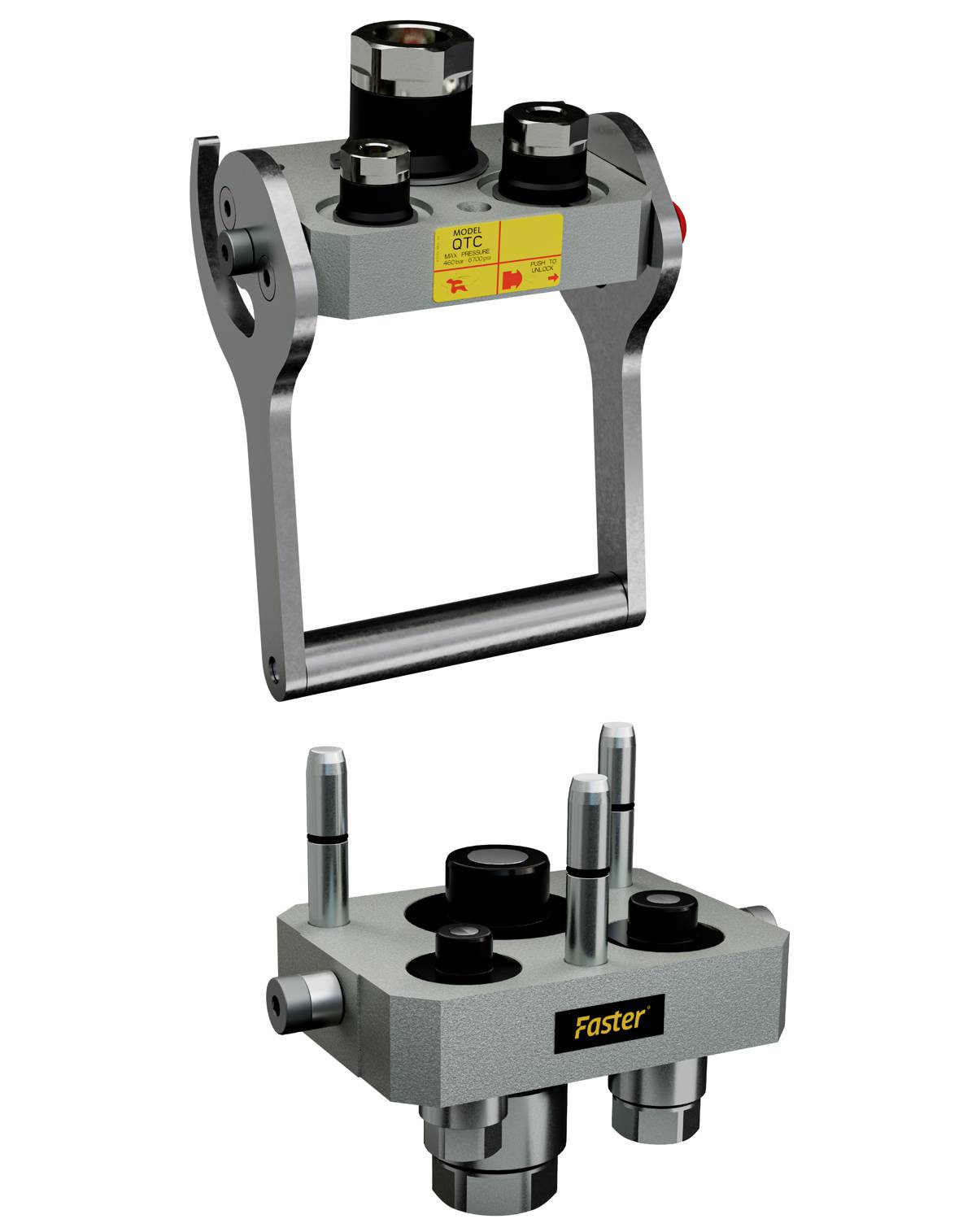
At the heart of MultiQTC is a dual-module design that manages multiple hydraulic circuits within a compact coupling interface. Each excavator arm side contains a connection module capable of handling two primary hydraulic lines and two pilot lines.
This configuration allows the system to support the hydraulic demands of heavy attachments while maintaining a manageable connection layout. By organising multiple circuits into paired modules, the system reduces the complexity typically associated with multi-line hydraulic setups.
The design also integrates case drain capability, a feature required by many modern attachments that use independent hydraulic motors. These motors rely on a dedicated drain line to return leakage oil safely to the system reservoir. Without proper drainage, internal pressure can build up, potentially damaging seals and reducing equipment lifespan.
By supporting case drain integration, MultiQTC ensures compatibility with high-performance demolition tools such as hydraulic shears and crushers that place considerable demands on excavator hydraulic systems.
The system is also engineered to withstand the challenging environments typical of demolition and infrastructure work. Fully sealed interfaces help prevent contamination from dust, water and debris, factors that frequently compromise hydraulic reliability on construction sites.
Supporting High Flow Demands of Modern Attachments
Modern hydraulic attachments require significantly higher oil flow than earlier generations of equipment. Hydraulic hammers, concrete crushers and steel shears all depend on large volumes of pressurised oil to deliver the force required for breaking reinforced concrete or cutting structural steel.
MultiQTC is designed to accommodate these demands by enabling more than 50 percent higher flow capacity at equivalent pressure drop compared with conventional connection interfaces. Maintaining high flow capacity while controlling pressure losses is critical because excessive pressure drop reduces attachment performance and increases energy consumption.
For contractors, this engineering detail translates directly into operational efficiency. Attachments receive the hydraulic power they require without forcing operators to compensate with higher engine speeds or extended cycle times.
The system also helps encourage correct tool selection on site. When attachment changes are quick and straightforward, operators are more likely to switch to the optimal tool for each task rather than using a single attachment across multiple applications. Over time, that behaviour reduces wear on equipment and improves fuel efficiency.
Reducing Oil Spills and Environmental Risks
Hydraulic oil leaks are a persistent challenge on construction sites. Even small spills create environmental concerns, particularly when working near waterways, urban infrastructure or environmentally sensitive areas.
Traditional coupling systems often release small amounts of oil during connection or disconnection. These leaks may seem minor, yet repeated changes throughout the day can result in measurable fluid loss and contamination.
MultiQTC incorporates integrated sealing technology that prevents oil from escaping during the connection process. This zero-spillage design reduces both environmental impact and maintenance costs associated with hydraulic fluid replacement.
From a regulatory perspective, preventing hydraulic leaks is becoming increasingly important. Environmental standards governing construction and demolition activities are tightening in many regions, particularly within Europe and North America. Equipment that minimises fluid discharge can help contractors comply with site environmental management plans and reduce clean-up requirements.
Improving Operator Safety and Comfort
Excavator operators frequently work long shifts under demanding conditions. Tasks that require repeated physical effort, such as manually connecting hydraulic hoses, contribute to fatigue and increase the risk of injury.
MultiQTC incorporates a dual-hand coupling control system that stabilises the mobile connection unit during operation. An auxiliary locking mechanism on the fixed side provides additional control when engaging the coupling interface.
This design improves precision during connection while reducing the physical strain associated with aligning multiple hoses and connectors. By simplifying a repetitive task, the system contributes to safer operating conditions and potentially lowers the risk of musculoskeletal injuries among equipment operators.
While the technology itself is mechanical rather than automated, its practical impact lies in making a routine process easier and faster without requiring significant changes to existing equipment practices.
Economic Benefits for Contractors and Fleet Operators
For contractors managing large fleets, equipment versatility plays a critical role in project economics. Excavators capable of performing multiple tasks reduce the number of specialised machines required on site.
By enabling faster and cleaner attachment changes, MultiQTC allows a single large excavator to undertake a wider range of activities throughout a project. That flexibility can reduce equipment idle time and lower the overall capital investment needed for specialised machinery.
The system also occupies a middle ground between basic hydraulic couplings and fully automated in-cab connection systems. Automated couplers provide convenience but can add considerable cost and technical complexity to machines.
MultiQTC offers a simpler alternative that delivers many of the operational benefits of automated systems while maintaining a more accessible cost structure. For contractors seeking to improve machine utilisation without major equipment upgrades, this balance could prove attractive.
Built for Demolition and Heavy Construction Environments
Excavators in the 20 to 50 tonne class are widely used in heavy construction and demolition projects. These machines handle demanding attachments that generate high vibration, hydraulic pressure and structural loads.
To withstand these conditions, MultiQTC incorporates robust mechanical components and a compact lever design intended to minimise interference with hoses or debris. This configuration helps prevent accidental damage during operation or when working in confined demolition environments.
Extensive prototype testing, including thousands of hours of field operation, has been conducted to validate the system’s mechanical durability. These trials focused on ensuring reliable coupling performance even under harsh site conditions involving dust, vibration and heavy attachment loads.
Such testing is essential because hydraulic connection failures can lead to costly downtime and potential safety hazards. By demonstrating reliability in real-world environments, the system aims to build confidence among contractors operating high-value equipment fleets.
A Long Legacy of Hydraulic Innovation
Faster S.r.l., headquartered in Italy, has been developing hydraulic coupling technology for more than seven decades. Over that time, the company has produced more than 500 million quick-release couplings and registered over 145 patents related to hydraulic connection systems.
Its product portfolio spans quick-release couplings, customised casting solutions and manual multi-connection plates used across numerous industries. The company operates globally with subsidiaries in the United States, Brazil, China and India.
Faster’s parent company, Helios Technologies, focuses on engineered motion control and electronic control systems used across sectors including construction, agriculture, material handling and marine applications. The company’s products are sold in more than 90 countries, reflecting the global demand for specialised hydraulic and control technologies.
Within this broader ecosystem, innovations such as MultiQTC highlight the continued evolution of hydraulic infrastructure supporting modern construction equipment.
Demonstrating the Technology at CONEXPO
Industry professionals will have the opportunity to see the MultiQTC system in operation at CONEXPO-CON/AGG 2026 in Las Vegas. The exhibition remains one of the largest construction equipment events in the world, attracting tens of thousands of contractors, engineers and equipment manufacturers.
Held every three years, the event provides a platform for companies to demonstrate emerging technologies shaping the future of construction machinery. Hydraulic systems, digital machine controls and automation technologies are increasingly prominent themes across the exhibition floor.
Faster will showcase the MultiQTC system at the Helios Technologies booth, where visitors can observe the coupling mechanism and its integration with excavator attachments.
For contractors and fleet managers evaluating new equipment solutions, demonstrations like this provide a valuable opportunity to assess whether innovations translate into practical advantages on the jobsite.
Supporting a More Flexible Excavator Workforce
Construction projects continue to demand greater flexibility from equipment fleets. Tight project schedules, complex urban environments and rising labour costs all place pressure on contractors to maximise machine productivity.
Technologies that reduce downtime and simplify routine tasks play a quiet yet important role in meeting those demands. Hydraulic coupling systems may not attract the same attention as autonomous machinery or digital construction platforms, but they remain fundamental to daily operations on site.
MultiQTC reflects a practical approach to equipment innovation. By simplifying attachment changes and improving hydraulic connection efficiency, the system targets a routine challenge faced by operators across construction and demolition sectors worldwide.
In an industry where small operational improvements accumulate into significant productivity gains, even incremental innovations in hydraulic infrastructure can have a lasting impact on how heavy equipment is used.