MariaDB Accelerates AI Infrastructure with Strategic Acquisition
The race to build infrastructure capable of supporting autonomous artificial intelligence has entered a decisive phase. With enterprises rapidly shifting from experimental AI deployments to operational agent-based systems, the pressure on underlying data architectures is intensifying.
MariaDB plc’s latest acquisition of GridGain Systems signals more than a routine consolidation, it reflects a broader industry pivot toward unified, high-velocity data platforms engineered specifically for machine-speed decision making.
At its core, the move positions MariaDB to redefine what a modern database platform must deliver. No longer just a system of record, the database is becoming the operational backbone for intelligent automation, real-time analytics and AI-driven reasoning. By integrating GridGain’s in-memory computing capabilities, MariaDB is aiming to create a single, cohesive platform capable of handling the full lifecycle of agentic AI workloads, from ingestion through to inference.
Briefing
- Data infrastructure is rapidly becoming the limiting factor for real-world AI deployment across construction and industrial sectors.
- MariaDB’s acquisition of GridGain signals a move toward unified, high-velocity data platforms for autonomous AI systems.
- In-memory computing enables sub-millisecond processing, allowing AI agents to operate at machine speed.
- Consolidating transactions, analytics and vector workloads reduces complexity and total cost of ownership for enterprises.
- The move reflects a broader industry shift toward distributed, AI-ready data architectures built for real-time decision making.
The Infrastructure Challenge Behind Agentic AI
The emergence of autonomous AI agents is reshaping expectations across infrastructure, construction, logistics and industrial operations. These systems are no longer passive tools responding to prompts. Instead, they are designed to interpret data, make decisions and execute actions independently, often within milliseconds. That shift introduces a fundamental bottleneck: traditional data architectures were never built for this level of velocity or complexity.
Industry forecasts underline the scale of the transition. Gartner predicts that 40 percent of enterprise applications will incorporate task-specific AI agents by 2026, a sharp rise from less than 5 percent in 2025. Meanwhile, IDC warns that organisations failing to establish robust AI-ready data foundations risk measurable productivity losses as systems struggle to operate effectively under real-world conditions.
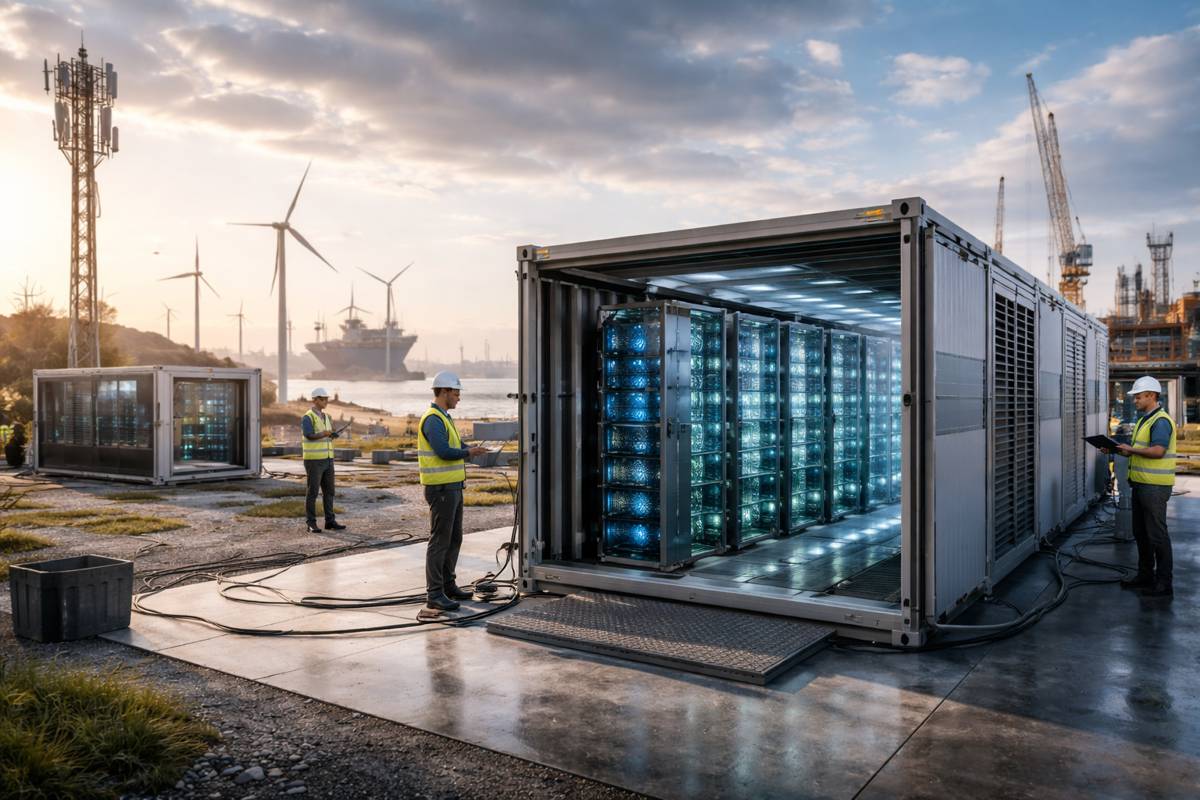
For infrastructure-heavy sectors, the implications are particularly significant. Digital twins, predictive maintenance platforms, traffic management systems and autonomous construction workflows all rely on the ability to process vast streams of data in real time. Without a high-performance data layer, even the most advanced AI models risk becoming constrained by latency, fragmentation and inconsistent data quality.
From Fragmented Stacks to Unified Data Platforms
Historically, enterprise data systems have evolved in silos. Transactional databases handle operational data, analytics platforms process historical insights, while separate systems manage caching, streaming and vector-based AI workloads. Stitching these components together has become a costly and complex exercise, often involving ETL pipelines, middleware and significant engineering overhead.
MariaDB’s strategy aims to collapse these layers into a single platform. By combining transactional processing, real-time analytics and in-memory computing within one environment, the company is attempting to eliminate the need for data movement and duplication. This approach not only reduces latency but also simplifies system architecture, a critical factor for organisations operating at scale.
Rohit de Souza, CEO of MariaDB, framed the ambition clearly: “For the last 18 months, we have been building MariaDB for the agentic era. By bringing GridGain into the fold, we are delivering a unified platform that does the heavy lifting for the enterprise. We are removing the friction of manual data assembly and defining the high-velocity grounding layer that AI agents need to be truly useful – all backed by integrated support from a single company.”
That notion of a “grounding layer” is central to the platform’s design. In practical terms, it refers to a persistent, high-speed data environment where AI systems can reliably access, update and reason over information without delays or inconsistencies.
The Role of In-Memory Computing in High Velocity Workloads
GridGain’s technology introduces a critical capability into the MariaDB ecosystem: in-memory data processing. Unlike traditional disk-based systems, in-memory platforms store data directly in RAM, enabling dramatically faster access times and sub-millisecond response speeds.
This capability is not merely a performance upgrade. It fundamentally changes how applications can be designed. For example, in infrastructure management, real-time decision making is essential for traffic optimisation, energy distribution and construction site automation. In-memory computing allows these systems to process continuous data streams without waiting for batch updates or disk reads.
Vikas Mathur, chief product officer at MariaDB plc, highlighted the practical implications: “Building for this level of scale today is like trying to build a high-speed machine out of a bucket of LEGOs – you have the pieces, but none of the pieces were meant to fit together under that kind of intensity. At AI-speed, the window for a response shrinks. A data platform like MariaDB no longer has seconds; it has single-digit milliseconds to deliver answers to agents. By providing a platform with a high-speed in-memory ‘baseplate’ already built-in, we eliminate the friction of manual assembly. We are giving developers a unified grounding layer that can handle the massive scale these agents demand.”
For industries reliant on operational continuity, the benefits extend beyond speed. In-memory systems also support resilience and scalability, enabling distributed architectures that can maintain performance across multiple regions and cloud environments.
AI Ready Data Foundations and the Rise of Vector Workloads
Beyond speed, the nature of data itself is evolving. AI systems increasingly rely on vector embeddings, which represent complex data such as text, images and sensor readings in numerical form. Managing these embeddings requires specialised indexing and querying capabilities that traditional databases often lack.
MariaDB’s platform incorporates native vector search functionality, allowing organisations to store and query embeddings alongside transactional and analytical data. This integration is particularly relevant for retrieval augmented generation workloads, where AI models combine real-time data retrieval with generative capabilities.
The inclusion of Model Context Protocol support further enhances interoperability, enabling AI agents to interact directly with enterprise data systems. For infrastructure applications, this could translate into more intelligent digital twins, adaptive traffic systems and predictive maintenance platforms that continuously refine their outputs based on live data.
External research reinforces the importance of this shift. According to McKinsey, organisations that successfully integrate AI into core operations can achieve productivity gains of up to 40 percent in certain workflows, provided that data infrastructure supports real-time processing and integration.
Implications for Construction and Infrastructure Ecosystems
While database innovations may appear abstract, their impact on the construction and infrastructure sectors is tangible. Modern projects are increasingly data-driven, with sensors, drones, IoT devices and BIM systems generating continuous streams of information.
In large-scale engineering projects, delays often stem from fragmented data and slow decision-making processes. By enabling near real-time analytics and unified data access, platforms like MariaDB’s could significantly reduce response times for critical decisions, from supply chain adjustments to on-site safety interventions.
A real-world example comes from Hatch, a global engineering consultancy. Tara Drover, CIO at Hatch, described the operational impact of adopting GridGain technology: “By migrating to GridGain, we dramatically reduced our data processing times, transforming complex analysis and mid-project changes that once took minutes into near-instant outcomes. This is exactly the type of high-velocity capability we needed as we move toward an agentic future and deliver intelligent, predictive project management capabilities to our customers.”
Such improvements are not merely incremental. In complex infrastructure projects, even small reductions in latency can translate into significant cost savings and risk mitigation over time.
A Broader Shift Toward Distributed Data Architectures
Looking ahead, the integration of GridGain lays the groundwork for a more distributed data architecture. As AI systems become geographically dispersed, the data they rely on must be equally distributed, ensuring low latency and resilience across regions.
MariaDB’s vision involves extending its platform into a globally distributed data layer capable of supporting hybrid and multi-cloud deployments. This approach aligns with broader industry trends, where organisations are moving away from centralised data centres toward edge computing and regional data hubs.
For infrastructure operators, this shift is particularly relevant. Autonomous systems managing transport networks, energy grids or construction equipment require localised data processing to maintain performance and reliability. A distributed database architecture ensures that these systems can operate effectively regardless of location.
Competitive Positioning in the Evolving Database Landscape
The database market is undergoing significant transformation, driven by the demands of AI and real-time analytics. Established vendors are facing increasing competition from platforms that prioritise flexibility, performance and integration.
MariaDB’s recent acquisitions and product developments reflect a deliberate strategy to compete in this evolving landscape. The integration of SkySQL strengthened its cloud capabilities, while Galera Cluster enhanced high availability. The introduction of MariaDB Enterprise Platform 2026 and the Exa analytics engine further expanded its offering.
Industry analysts view the GridGain acquisition as a logical extension of this strategy. Devin Pratt, research director at IDC, noted: “The GridGain acquisition extends that strategy into in-memory and real-time data processing, which may appeal to buyers seeking a more open alternative to fragmented or proprietary data stacks.”
For enterprises, the appeal lies in reducing dependency on complex, multi-vendor ecosystems while maintaining the flexibility to deploy across different environments.
Building the Foundations for Machine Speed Infrastructure
The integration of GridGain into MariaDB’s platform highlights a broader reality. As AI systems become embedded in operational workflows, the distinction between data infrastructure and application logic is beginning to blur. Databases are no longer passive repositories. They are active participants in the decision-making process.
For the construction and infrastructure sectors, this evolution could prove transformative. From autonomous construction equipment to intelligent transport systems, the ability to process and act on data in real time will define competitive advantage.
MariaDB’s approach, centred on unifying data layers and enabling high-velocity processing, reflects a growing consensus across the industry. The future of infrastructure will not only be built with concrete and steel. It will be underpinned by data platforms capable of operating at machine speed, supporting systems that think, adapt and act with minimal human intervention.