Worksport Expands Market Reach With New Truck Cover Platform
In the highly competitive automotive aftermarket, product launches rarely hinge on spectacle alone. Instead, the real battleground lies in distribution, installer adoption, and dealer economics. That reality underpins the latest move by Worksport Ltd, which has quietly positioned a new tonneau cover model in front of key buyers rather than relying on traditional marketing channels.
By presenting the product at the Keystone BIG Show, organised by Keystone Automotive Operations, Worksport has effectively targeted the decision-makers who influence purchasing at scale across North America. The approach reflects a broader industry trend where manufacturers prioritise direct engagement with distribution networks to accelerate adoption and shorten time-to-revenue.
The early response suggests that strategy may be paying off. Buyers attending the event have already initiated pre-orders, signalling that demand could materialise quickly once the product enters full production. For a company seeking to expand its dealer footprint and reinforce its position in the light truck segment, this is more than a product launch. It is a calculated commercial step designed to strengthen its role in a market where installer preference and supply chain reach are decisive.
Briefing
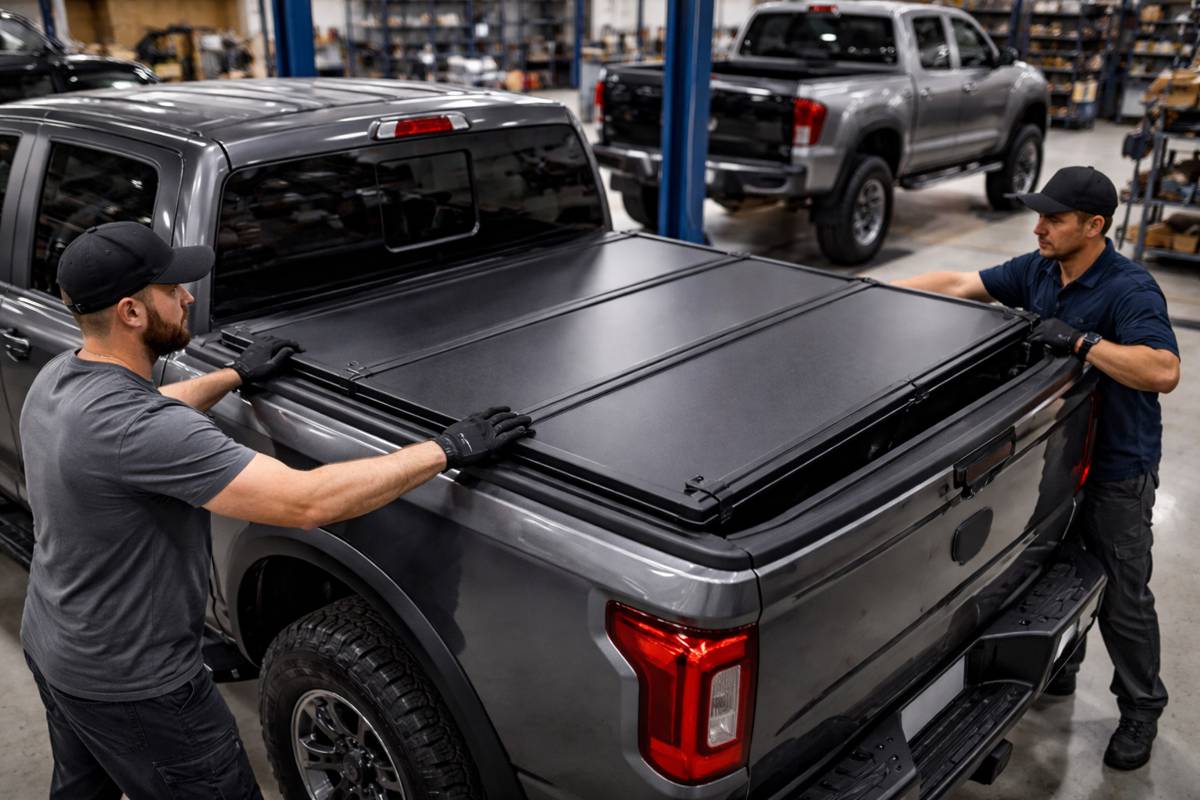
- Worksport unveiled a new professional-grade tonneau cover at the Keystone BIG Show to target high-volume buyers
- Early buyer interest has translated into pre-orders ahead of a near-term commercial launch
- The strategy focuses on expanding the U.S. dealer network and accelerating revenue generation
- The product is designed for professional installers and commercial fleet applications
- The launch builds on Worksport’s broader push into clean energy integrations and vehicle-based power systems
Direct Engagement with Distribution Networks
The decision to debut the new model at the Keystone BIG Show reflects a shift in how automotive aftermarket products are introduced to the market. Rather than prioritising consumer-facing campaigns, manufacturers are increasingly focusing on distributor-led ecosystems where purchasing decisions are made in bulk and relationships carry long-term value.
Keystone Automotive Operations plays a central role in that ecosystem. With an extensive logistics network and established relationships across dealerships, installers, and specialty retailers, Keystone acts as a gateway to market scale. Its distribution infrastructure spans multiple facilities and serves thousands of businesses across the United States and Canada.
By placing its new product directly in front of this network, Worksport has effectively reduced the friction between product introduction and commercial rollout. The presence of buyers with immediate purchasing authority allows for faster validation of demand, as evidenced by the early pre-order activity following the event.
From a commercial standpoint, this approach aligns with broader supply chain dynamics. In a market shaped by inventory constraints, logistics pressures, and fluctuating demand, manufacturers benefit from early commitments that provide visibility on production volumes. It is a practical move that reflects the realities of modern distribution rather than a reliance on speculative demand.
Engineering for the Professional Segment
While detailed specifications of the new tonneau cover remain under wraps, its positioning is clear. The product is designed for professional installers and commercial users, a segment that prioritises durability, ease of installation, and long-term performance over purely aesthetic considerations.
This focus is consistent with trends across the global light commercial vehicle market. Pickup trucks, particularly in North America, are increasingly used as work platforms rather than lifestyle accessories. Contractors, utility providers, and fleet operators require solutions that enhance functionality while reducing downtime.
Worksport’s existing product range, including the AL3, AL4, and HD3 models, already targets this intersection between utility and design. The new model appears to build on that foundation, with an emphasis on installer efficiency and dealer profitability. These factors are critical in a market where labour costs, installation time, and aftersales support directly influence purchasing decisions.
Beyond the product itself, the emphasis on professional-grade performance reflects a wider industry shift. As vehicles become more integrated with digital and energy systems, aftermarket components are expected to deliver more than basic functionality. They must integrate seamlessly with broader vehicle ecosystems while maintaining reliability under demanding conditions.
Pre-Orders Signal Market Confidence
The early pre-order activity following the Keystone presentation offers a useful indicator of market sentiment. While initial interest at trade events is not uncommon, the conversion of that interest into pre-orders suggests a higher level of confidence among buyers.
For Worksport, this creates a near-term revenue pipeline ahead of the official launch. It also provides valuable data on demand patterns, enabling the company to align production volumes with market requirements. In an environment where supply chain efficiency is closely tied to financial performance, this level of visibility can be a significant advantage.
The timing of the launch, expected in the second quarter, also aligns with seasonal demand patterns in the automotive aftermarket. Spring and early summer typically see increased activity in vehicle upgrades and fleet preparation, particularly in regions where weather conditions influence operational planning.
From a broader perspective, the use of pre-orders as a commercial tool reflects a shift towards more agile business models. Manufacturers are increasingly leveraging early commitments to de-risk product launches, reduce inventory exposure, and improve cash flow management.
Expanding the Dealer Network
A key objective behind the launch is the expansion of Worksport’s dealer network across the United States. In the automotive aftermarket, distribution reach is often the primary determinant of market share. Products that are widely available and supported by installers tend to outperform those with limited access, regardless of technical merit.
Worksport’s strategy appears to focus on strengthening relationships with dealers and installers while offering products that align with their operational needs. By designing the new tonneau cover with installer demand and dealer economics in mind, the company is addressing two of the most influential factors in purchasing decisions.
This approach also reflects the increasing consolidation within the aftermarket sector. Large distributors and dealer networks are playing a more dominant role, creating both opportunities and challenges for manufacturers. Companies that can integrate effectively into these networks are better positioned to scale, while those that cannot may struggle to gain traction.
The emphasis on dealer expansion also ties into broader industry trends around service and support. As vehicles become more complex, the role of professional installers becomes increasingly important. Products that are easy to install, maintain, and support are more likely to be adopted at scale.
Aligning with Clean Energy Integration Trends
Worksport’s broader strategy extends beyond traditional automotive accessories. The company has been actively developing products that integrate clean energy solutions with vehicle platforms, reflecting a growing convergence between mobility and energy systems.
Its COR portable energy system and SOLIS solar tonneau cover illustrate this direction. The latter, developed in collaboration with Hyundai Motor Company, represents an effort to incorporate renewable energy generation directly into vehicle components. This approach aligns with wider trends in electrification and off-grid energy solutions.
The integration of solar and energy storage technologies into vehicle accessories is still in its early stages, but it is gaining attention in sectors such as overlanding, remote operations, and emergency response. These applications require reliable, portable power solutions that can operate independently of traditional infrastructure.
By positioning its tonneau cover portfolio within this broader ecosystem, Worksport is not only addressing current market needs but also preparing for future demand. As electrification continues to reshape the automotive landscape, the ability to offer integrated energy solutions could become a key differentiator.
Market Context and Competitive Landscape
The global automotive accessories market is characterised by steady growth, driven by factors such as vehicle ownership trends, consumer customisation, and the increasing use of vehicles for commercial purposes. Within this market, tonneau covers represent a niche but important segment, particularly in North America where pickup trucks dominate.
Competition in this space is intense, with a mix of established brands and emerging players offering a wide range of products. Differentiation is often achieved through material innovation, design features, and distribution strategies rather than fundamental changes in functionality.
Worksport’s focus on professional-grade products and dealer-centric distribution places it in direct competition with companies that have strong installer networks and established brand recognition. Success in this environment depends not only on product quality but also on the ability to navigate complex distribution channels and build lasting relationships with key stakeholders.
The company’s emphasis on in-house manufacturing and intellectual property ownership also plays a role in its competitive positioning. Control over design and production processes can provide greater flexibility and resilience, particularly in a market where supply chain disruptions have become more common.
A Calculated Step Towards Scalable Growth
The introduction of the new tonneau cover is not an isolated development. It forms part of a broader strategy aimed at scaling Worksport’s presence in the U.S. market while reinforcing its position within the automotive aftermarket.
By aligning product development with distribution strategy, the company is addressing both supply and demand dynamics. The early engagement with buyers, combined with a focus on installer and dealer requirements, creates a foundation for sustainable growth rather than short-term gains.
At the same time, the integration of clean energy technologies into its product portfolio suggests a longer-term vision that extends beyond traditional automotive accessories. This dual focus on immediate commercial opportunities and future market trends reflects a pragmatic approach to growth in a rapidly evolving industry.
As the product moves towards commercial launch, its performance in the market will depend on a range of factors, including production execution, distribution efficiency, and ongoing support for dealers and installers. What is clear, however, is that the groundwork has been laid for a launch that prioritises substance over spectacle.