Spain’s High-Speed Rail Expansion and the Real Cost of Ambition
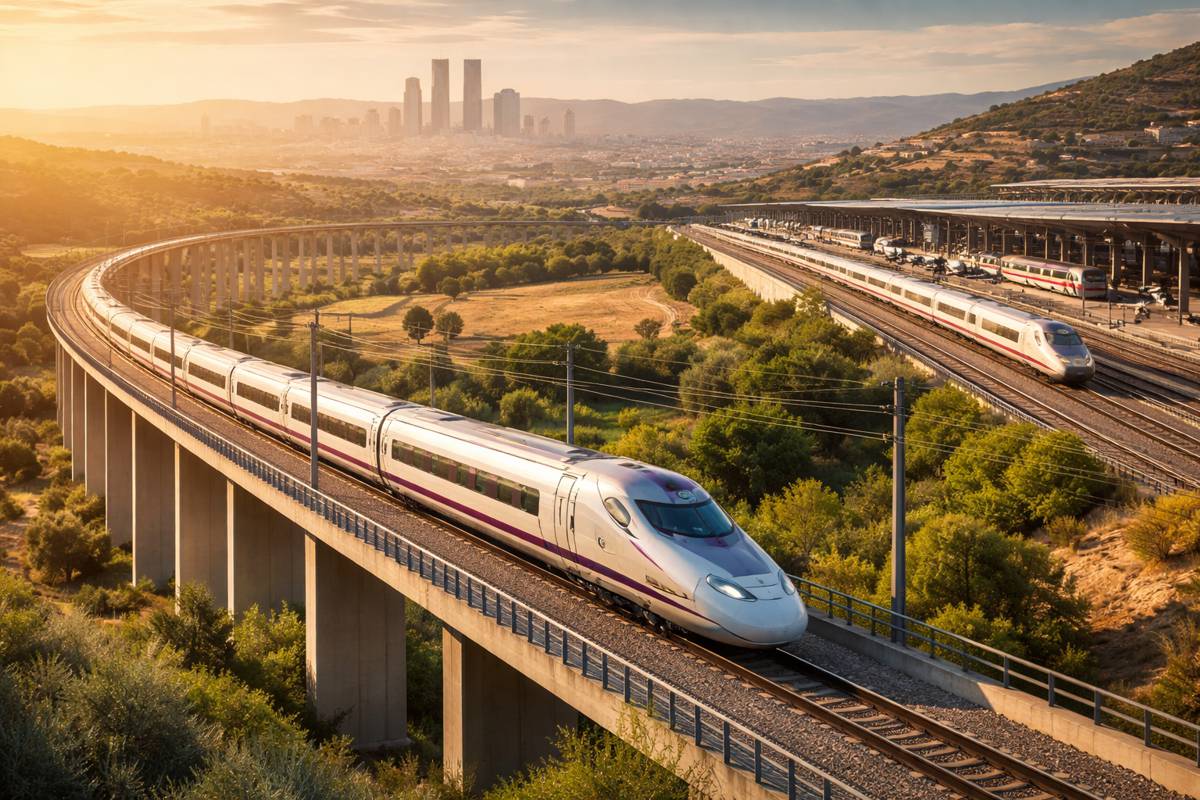
Spain’s high-speed rail programme stands as one of the most ambitious infrastructure undertakings in modern Europe. Over a period of roughly 25 years, the country built close to 4,000 kilometres of high-speed rail (HSR), transforming its transport landscape and redefining intercity mobility. What began as a pragmatic response to decades of rail decline evolved into a politically driven national project with profound implications for infrastructure investment, governance, and public finance.
This analysis draws on the policy brief Policy Considerations for National High-Speed Rail Network Development: Cases from Spain by Ángel Aparicio, published by the Asian Development Bank Institute (ADBI), which examines the strategic, financial and operational decisions behind Spain’s HSR expansion.
The journey wasn’t linear. Early decisions were shaped by necessity. Spain’s rail system had struggled throughout the 20th century, hampered by war damage, underinvestment, and competition from road and air transport. By the 1980s, policymakers faced a stark choice: accept continued decline or commit to large-scale modernisation. The decision to pursue high-speed rail emerged incrementally, driven by political leadership rather than purely economic rationale, and ultimately reshaped the country’s transport priorities.
Over time, the HSR network became more than a transport system. It became a symbol of national cohesion, technological capability, and economic ambition. Yet, beneath the surface, the Spanish experience raises difficult questions about cost efficiency, demand assumptions, and long-term value for money.
Briefing
- Spain built nearly 4,000 km of high-speed rail through incremental, politically driven decisions over 25 years
- Development relied almost entirely on public funding, including national budgets, EU grants, and public debt
- Liberalisation since 2021 introduced competition, boosting passenger demand but increasing financial pressure
- Cost-effective construction techniques enabled rapid expansion despite ongoing debate over economic returns
- Limited multimodal integration has led to potentially avoidable infrastructure expansion
From Decline to High-Speed Ambition
Spain’s transition to high-speed rail must be understood in the context of its historical shortcomings. Following the Civil War, the rail network lagged behind European counterparts, both in performance and investment. By the late 20th century, rail had lost ground to more flexible and efficient transport modes, particularly roads.
The initial policy response was pragmatic. In the mid-1980s, low-traffic lines were closed while investment focused on upgrading key corridors. However, this approach gradually gave way to a more ambitious strategy. The decision to adopt high-speed standards for the Madrid–Seville line in the late 1980s marked a turning point, introducing new technology and setting the stage for a dedicated HSR network.
That first line proved politically and socially successful, despite technical criticisms. It demonstrated the appeal of fast, reliable rail travel and shifted expectations across the country. From there, expansion gathered momentum, extending to major corridors such as Madrid–Barcelona and eventually reaching smaller cities, often regardless of demand levels.
Political Momentum Over Economic Orthodoxy
Spain’s HSR expansion was not purely driven by traditional cost-benefit analysis. In fact, many transport economists questioned the rationale behind extending high-speed lines to regions with relatively low demand.
Political leadership played a decisive role. Successive governments viewed HSR as a tool for regional development, territorial cohesion, and economic stimulus. The argument was straightforward: connecting all regions to the high-speed network would prevent economic disparities and strengthen national unity.
Critics, however, highlighted the risks. Several studies pointed to inflated demand forecasts, underestimated costs, and limited socioeconomic returns. A 2020 analysis by Spain’s fiscal authority concluded that many HSR corridors offered low or even negative returns on investment.
Even so, the programme retained strong public and political support. High-speed rail became associated with progress and modernity, making it difficult for policymakers to reverse course once momentum had built.
Financing a National Megaproject
The scale of investment required to deliver Spain’s HSR network is substantial. Total capital costs have been estimated at over €86 billion in constant 2025 prices, with an average cost significantly lower than many European counterparts.
This relative cost efficiency stems from several factors:
- Extensive use of ballasted track instead of more expensive slab systems
- Lower land acquisition costs in sparsely populated areas
- Established construction expertise from earlier motorway expansion
- Standardised project delivery approaches
Despite these efficiencies, the funding model has remained overwhelmingly public. Financing has been drawn from a combination of:
- National government budgets
- European Union grants
- Loans from the European Investment Bank
- Bond issuances, including green bonds
Private sector participation has been limited. Attempts to introduce public–private partnerships largely failed, most notably in the cross-border Perpignan–Figueres section, where demand fell short of expectations and required a bailout within five years.
In effect, taxpayers have borne the majority of the financial burden, either directly or through public debt.
Liberalisation and the Rise of Competition
A major shift occurred in 2021 with the liberalisation of Spain’s rail market. In line with European Union policy, infrastructure management and train operations were separated, with ADIF overseeing infrastructure and multiple operators competing for passenger services.
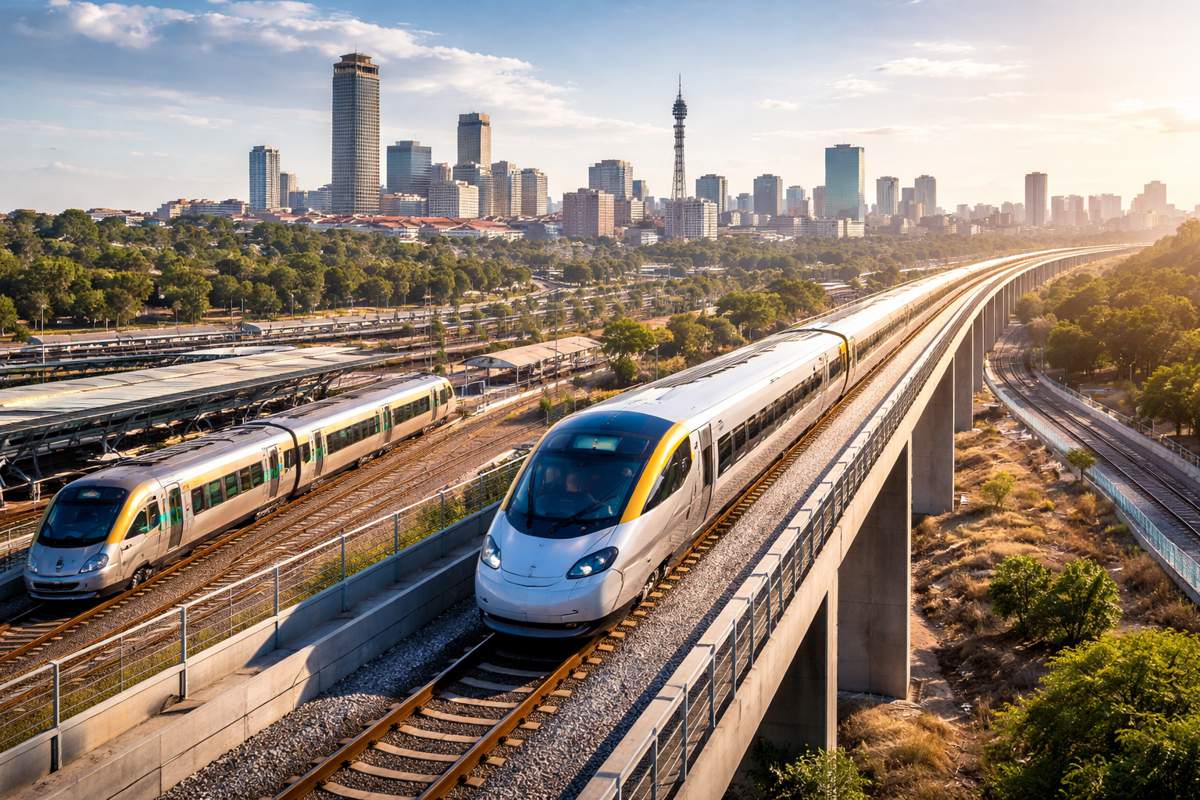
This transition introduced new dynamics. Competition led to lower fares, increased service frequency, and a significant rise in passenger numbers. High-speed rail demand grew from approximately 22 million passengers in 2019 to nearly 40 million by 2024.
The market now includes:
- The incumbent national operator
- A French-backed low-cost entrant
- An Italian-backed operator targeting a hybrid service model
This shift has delivered clear consumer benefits. Lower prices and improved accessibility have encouraged modal shift from cars and aircraft, as well as generating new travel demand.
However, the financial picture remains complex. Infrastructure revenues have not kept pace with rising operational and maintenance costs, requiring increased government subsidies. Even with higher ridership, operators themselves have reported financial losses, raising questions about long-term sustainability.
Operational Realities and Network Performance
Spain’s HSR network operates within a sophisticated regulatory framework aligned with European standards. Independent bodies oversee competition, safety, and interoperability, ensuring compliance with EU directives.
Operationally, the network performs well in terms of speed and coverage. Yet, utilisation remains relatively low compared to some of Europe’s busiest high-speed corridors. This reflects both geographic factors and demand distribution.
Maintenance strategies have also played a role in cost management. Daily maintenance windows and the use of predictive technologies help minimise disruptions. Meanwhile, innovations such as dual-gauge trains and advanced track systems have improved interoperability and operational flexibility.
Even so, challenges persist. Increased traffic following liberalisation has led to higher delays, and high-profile incidents have attracted public scrutiny. These issues highlight the complexity of balancing capacity, reliability, and cost in a rapidly evolving system.
The Missing Piece in Multimodal Integration
One of the most persistent criticisms of Spain’s HSR strategy is the lack of effective integration with other transport modes. While airports have embraced intermodal connectivity, many high-speed rail stations remain focused on car access rather than seamless links with bus or regional transport networks.
This has significant implications. Improved multimodal integration could expand the catchment area of existing HSR stations, reducing the need for costly network extensions. It could also enhance accessibility for smaller communities without requiring direct high-speed connections.
Transport planners have long advocated for a more balanced approach, combining high-speed rail with complementary modes. Yet, these recommendations have often taken a back seat to the political appeal of expanding the network itself.
Lessons for Future Infrastructure Strategy
Spain’s experience offers valuable insights for countries considering large-scale high-speed rail investments. The most striking lesson is the power of political leadership in shaping infrastructure outcomes. Once committed, the HSR programme became a national priority that transcended economic debate.
Cost control and engineering efficiency have also been notable strengths. Spain has demonstrated that large networks can be delivered at relatively low cost, provided that technical and administrative processes are optimised.
At the same time, the limitations are clear. Demand alone has not been sufficient to justify the scale of investment, and financial sustainability remains dependent on continued public support. The challenges of integrating HSR with broader transport systems further underline the importance of holistic planning.
Ultimately, Spain’s high-speed rail network reflects a deliberate choice to prioritise connectivity and national cohesion over strict economic efficiency. For policymakers elsewhere, the key question is not whether such a model works, but whether it aligns with their own strategic objectives and fiscal realities.
Spain High Speed Rail Strategy Shapes Global Infrastructure Thinking
Spain’s high-speed rail journey is neither a cautionary tale nor a straightforward success story. It is something more nuanced. It demonstrates what can be achieved when political will, engineering capability, and sustained investment converge around a long-term vision.
Yet it also serves as a reminder that infrastructure decisions carry lasting consequences. Once built, networks shape mobility patterns, economic geography, and public finances for generations.
As countries across Europe, Asia, and beyond consider expanding their own high-speed rail systems, Spain’s experience offers a detailed case study in both ambition and trade-offs. The lessons are there for those willing to look beyond the headline speeds and examine the foundations beneath.