Rebuilding Critical Artery in Chicago Moves Forward with I 290 Modernisation
Chicago’s transport network has long relied on the I-290 Eisenhower Expressway as a vital east–west corridor linking the city centre with its western suburbs and beyond. Carrying more than 200,000 vehicles each day, the route is both an economic lifeline and a persistent congestion hotspot. Now, a new phase of infrastructure investment led by the Illinois Department of Transportation signals a determined effort to futureproof this heavily used corridor.
At the centre of the programme is Jacobs, selected to deliver two technically demanding projects that combine rail bridge reconstruction with underground drainage improvements. While the individual schemes may appear discrete, taken together they reflect a broader strategy to tackle congestion, improve resilience and unlock long-term capacity along one of the Midwest’s most important transport routes.
Rather than a single headline project, this is a layered intervention. It addresses structural constraints above ground, hydrological challenges below it, and operational pressures throughout the corridor. That integrated approach underscores a wider shift in infrastructure delivery, where transport, water and urban resilience are no longer treated as separate disciplines but as interconnected systems.
Briefing
- Jacobs appointed by IDOT for two key I-290 corridor upgrades in the Chicago region
- Replacement of the Indiana Harbor Belt railroad bridge will enable future highway widening
- Over 200,000 daily vehicle movements stand to benefit from reduced congestion
- New storm sewer infrastructure will enhance flood resilience using tunnelling methods
- Programme reflects growing integration of transport, water and underground engineering
Unlocking Capacity Through Rail Bridge Replacement
One of the most strategically important elements of the programme is the replacement of the Indiana Harbor Belt railroad bridge. Although not widely visible to motorists, this structure plays a pivotal role in constraining the future expansion of the expressway. Without its reconstruction, plans to widen sections of I-290 would remain stalled.
Chicago is one of North America’s busiest rail hubs, with freight volumes passing through the region affecting supply chains across the continent. The Indiana Harbor Belt line, which the bridge supports, is a key freight artery connecting multiple Class I railroads. Any intervention here demands careful sequencing to avoid disruption to both rail and road operations.
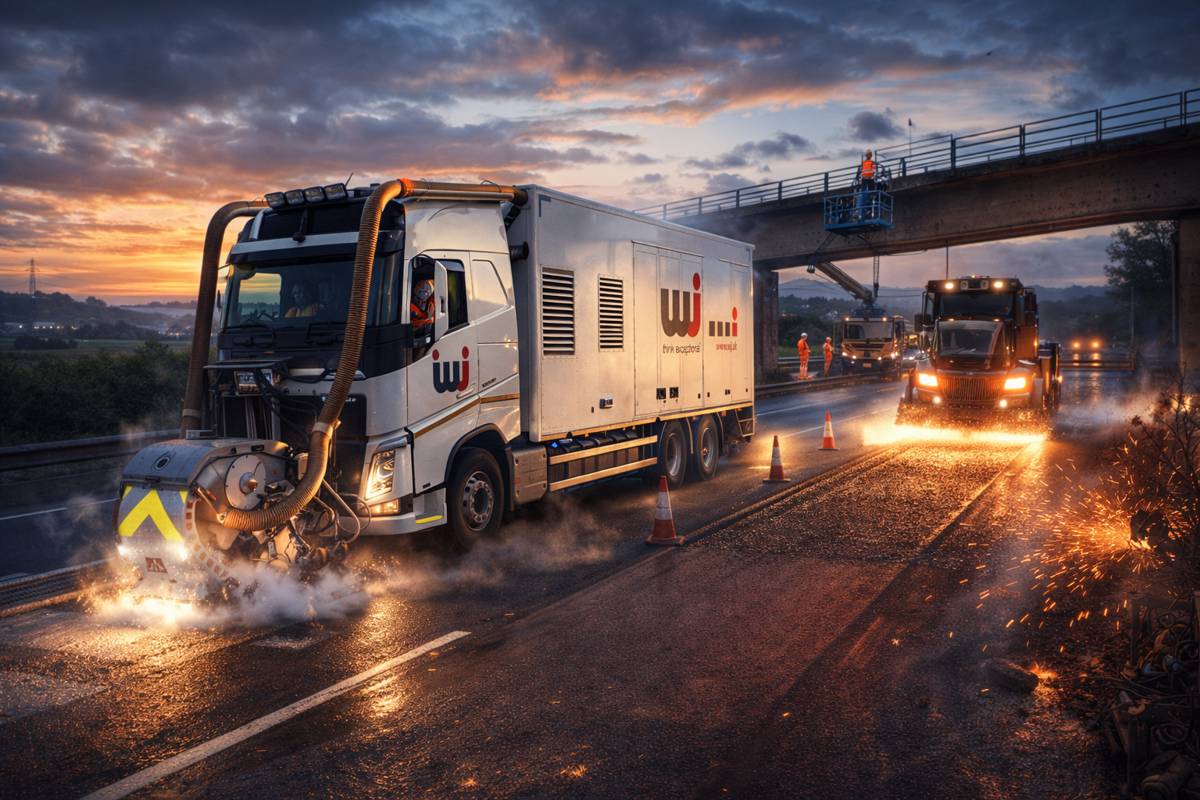
Jacobs’ role spans design services and project management, with a strong emphasis on accelerated construction staging. That approach is not simply about speed. It reflects the realities of working in a live corridor where shutting down infrastructure is rarely an option. Instead, engineers must choreograph construction activities around existing traffic flows, freight schedules and utility networks, all while maintaining safety and structural integrity.
Beyond enabling future widening, the bridge replacement also addresses ageing infrastructure. Many structures along the I-290 corridor date back decades and were not designed for current traffic volumes or modern freight demands. Upgrading them is essential not only for capacity but also for reliability and long-term maintenance efficiency.
Managing Complexity in a Live Freight Corridor
Delivering major works in a corridor that supports both heavy road traffic and critical rail operations introduces layers of complexity that go far beyond standard highway projects. Construction teams must contend with constrained working windows, safety requirements tied to active rail lines and the presence of essential utilities that cannot be disrupted.
Accelerated staging techniques are increasingly being used in such environments, combining prefabrication, modular construction and carefully sequenced installation. These methods reduce the time spent working in high-risk areas and limit the knock-on effects for users. In a corridor like I-290, where delays can ripple across the wider Chicago network, that matters.
Utility protection is another key consideration. Beneath and alongside the expressway lies a dense web of services, including power, communications and water infrastructure. Any misstep can trigger outages with far-reaching consequences. As a result, detailed mapping, coordination and risk management form a significant part of the engineering effort, even if they remain largely invisible to the public.
This level of complexity reflects a broader trend in urban infrastructure projects. As cities grow denser and networks become more interdependent, engineering solutions must balance construction efficiency with operational continuity. The I-290 programme sits squarely within that evolving landscape.
Strengthening Resilience with Underground Stormwater Infrastructure
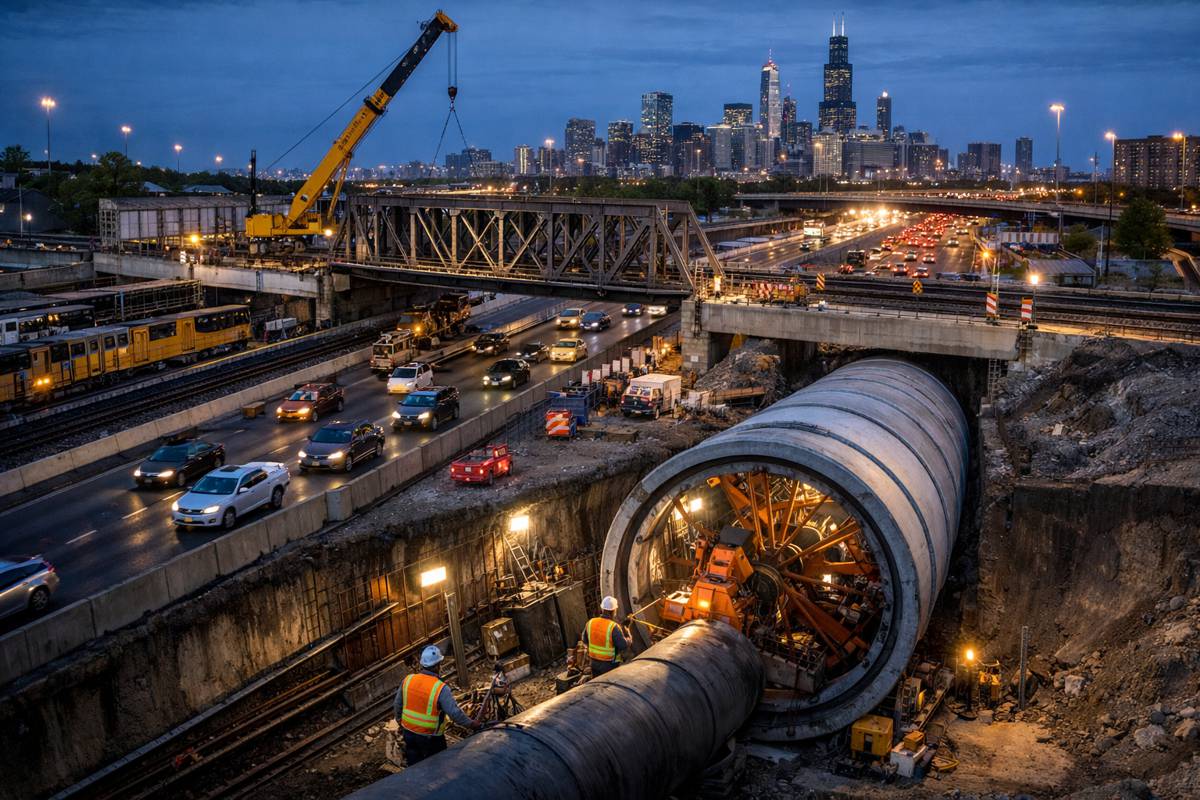
Alongside the bridge works, Jacobs will oversee the installation of a supplemental storm sewer beneath the expressway. While less visible than structural upgrades, drainage improvements are increasingly central to transport infrastructure planning, particularly in regions facing more frequent and intense rainfall events.
Chicago’s history with flooding is well documented. Ageing drainage systems, combined with expanding urban surfaces, have placed growing pressure on stormwater networks. When highways flood, the consequences extend beyond inconvenience. They can disrupt freight movement, emergency response and daily commuting, with economic impacts that quickly add up.
The new storm sewer is designed to enhance the corridor’s ability to manage runoff, reducing the risk of water accumulation on the carriageway. Importantly, the installation will use tunnelling methods, allowing construction to proceed with minimal disruption to surface traffic. This approach requires specialised expertise in underground engineering, including ground conditions assessment, structural lining and quality assurance.
Tunnelling beneath active highways is no small undertaking. It demands precision, monitoring and contingency planning to ensure that surface stability is maintained throughout the process. The inclusion of such methods highlights the technical sophistication of the project and the increasing role of underground construction in modern infrastructure upgrades.
Integrating Transport and Water Engineering
What sets the I-290 programme apart is not just the individual projects, but the way they are being delivered as part of a coordinated strategy. Transport infrastructure can no longer be considered in isolation from environmental and water management systems. Flood resilience, drainage capacity and climate adaptation are now integral to how roads are designed and upgraded.
Jacobs’ involvement across both the bridge replacement and stormwater works reflects this integrated approach. By combining expertise in transportation, water and tunnelling, the programme aims to deliver outcomes that extend beyond immediate congestion relief. It is about creating a corridor that can cope with future demand and environmental pressures alike.
This integration is increasingly reflected in global best practice. Projects such as urban motorway upgrades in Europe and Asia have shown that combining structural improvements with drainage and resilience measures can deliver more durable and cost-effective outcomes. The I-290 works align with that direction of travel, positioning the corridor for long-term performance rather than short-term fixes.
Economic and Network Implications for Greater Chicago
The significance of the I-290 corridor extends well beyond local commuting. It forms part of a wider network that connects Chicago to regional and national markets. Delays and bottlenecks here can have knock-on effects for logistics, manufacturing and trade across the Midwest.
Improving traffic flow on the expressway is therefore not just about reducing journey times. It supports the efficient movement of goods, helping to maintain the competitiveness of industries that rely on timely deliveries. In a region where freight volumes continue to grow, even marginal improvements in corridor performance can translate into substantial economic benefits.
The bridge replacement also has implications for rail operations. By modernising infrastructure on the Indiana Harbor Belt line, the project contributes to the reliability of freight movements through one of the busiest rail hubs in the United States. That dual impact, on both road and rail, underscores the strategic importance of the programme.
Moreover, infrastructure investment of this scale generates employment and supports the broader construction ecosystem. From engineering design to on-site works and supply chain activity, projects like these play a role in sustaining industry capacity and expertise.
A Broader Track Record in Complex Infrastructure Delivery
Jacobs’ appointment reflects its established presence in large-scale transport and infrastructure projects. The company has been involved in a range of high-profile programmes, including major rail modernisation efforts in Chicago and complex interchange upgrades internationally.
Its work on urban rail systems and highway interchanges demonstrates an ability to operate in densely populated, high-demand environments. These projects often require the same combination of technical expertise, stakeholder coordination and operational sensitivity that defines the I-290 programme.
Industry recognition, including high rankings in transportation engineering, points to a consistent track record in delivering such schemes. While each project has its own challenges, the underlying requirement remains the same: to balance innovation with reliability, and ambition with practical execution.
Delivering Infrastructure That Works in the Real World
Large infrastructure programmes are often judged not by their design intent but by how they perform once delivered. For the I-290 corridor, success will be measured in smoother traffic flow, reduced flooding incidents and improved reliability for both commuters and freight operators.
Achieving those outcomes requires more than engineering expertise. It demands careful planning, stakeholder engagement and a willingness to adapt as conditions evolve. Projects of this nature rarely proceed exactly as planned, particularly in live urban environments. Flexibility and resilience in delivery are therefore as important as the physical infrastructure itself.
As cities continue to grapple with ageing assets, rising demand and climate pressures, the lessons from programmes like this will carry wider relevance. Integrating transport upgrades with environmental resilience, maintaining operations during construction and addressing long-term capacity needs are challenges faced in urban centres around the world.
The I-290 modernisation effort offers a clear example of how these challenges can be addressed in a coordinated manner. By tackling structural constraints, enhancing drainage systems and enabling future expansion, the programme lays the groundwork for a more reliable and resilient transport corridor in Greater Chicago.