Global Truck Giants Unite to Accelerate Hydrogen Power for Heavy Transport
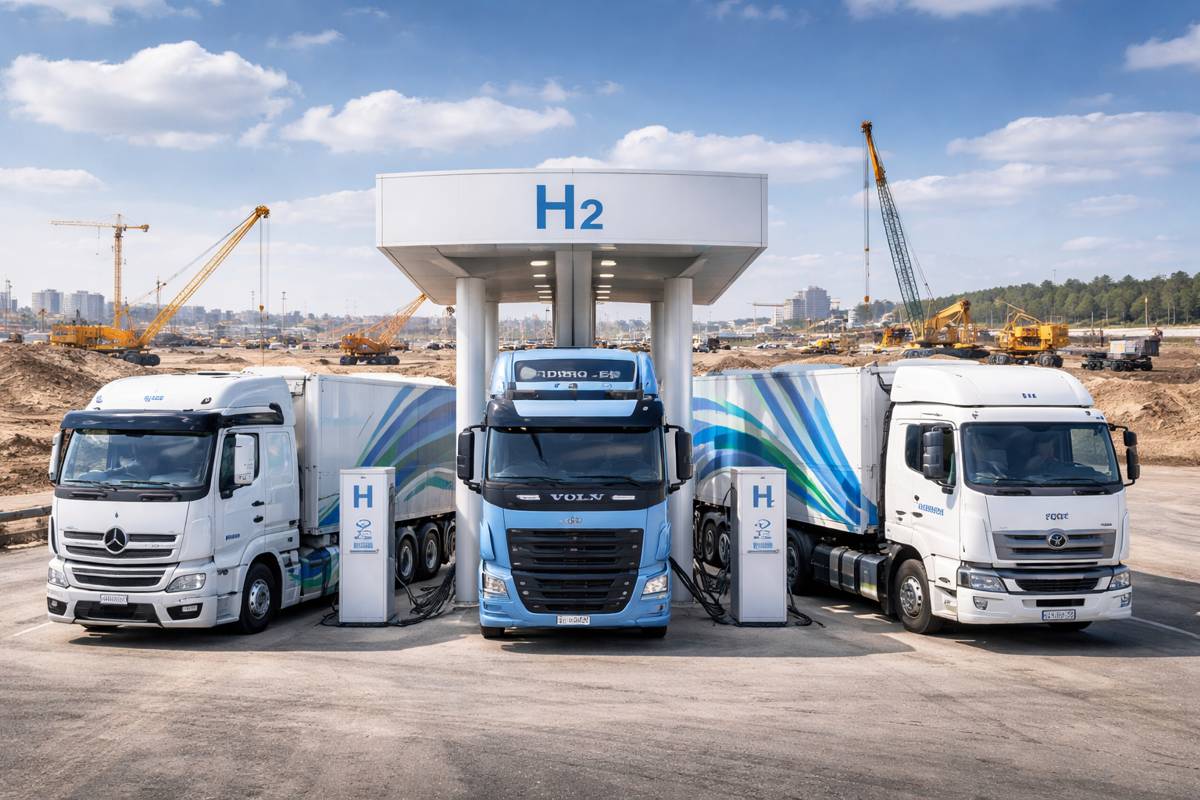
The decision by Daimler Truck AG, Volvo Group and Toyota Motor Corporation to deepen collaboration through cellcentric marks a significant moment in the race to decarbonise heavy-duty transport. While the agreement remains non-binding for now, the intent is clear: scale hydrogen fuel cell systems into a commercially viable, global solution for trucks, off-road machinery and other energy-intensive applications.
Heavy transport remains one of the most difficult sectors to decarbonise. Battery-electric systems have made inroads in urban logistics and short-haul operations, yet their limitations in range, charging time and payload impact are well documented. Hydrogen fuel cells, by contrast, offer fast refuelling and high energy density, making them particularly suited to long-haul trucking, construction equipment, mining fleets and other demanding use cases. Bringing together three of the most experienced players in automotive engineering signals that hydrogen is no longer a speculative pathway, but an industrial strategy taking shape at scale.
Briefing
- Daimler Truck, Volvo Group and Toyota plan equal ownership in cellcentric
- Collaboration focuses on fuel cell systems for heavy-duty transport and equipment
- Toyota contributes decades of fuel cell expertise and manufacturing capability
- Joint effort aims to accelerate hydrogen infrastructure and ecosystem development
- cellcentric positioned as a global centre for fuel cell technology and production
A Strategic Push to Industrialise Hydrogen Mobility
The proposed partnership reflects a broader shift in how the industry approaches zero-emission technologies. Developing fuel cell systems for heavy-duty applications is capital intensive, technically complex and dependent on infrastructure that is still emerging. No single manufacturer can realistically shoulder the burden alone. Pooling resources, intellectual property and production capabilities offers a more pragmatic route to scale.
cellcentric, originally established in 2021 by Daimler Truck and Volvo Group, was designed as a dedicated platform to accelerate fuel cell development. With Toyota joining as an equal partner, the venture gains access to more than three decades of fuel cell research and commercialisation experience. Toyota’s work on hydrogen-powered passenger vehicles, including early production models, has helped establish baseline technologies that can now be adapted for heavier applications.
From an industry perspective, the move addresses a persistent bottleneck. While prototype hydrogen trucks have demonstrated technical feasibility, scaling production and reducing costs remain major hurdles. By aligning development efforts and consolidating supply chains, the partners aim to close the gap between demonstration and deployment.
Building a Centre of Competence for Heavy-Duty Fuel Cells
The ambition for cellcentric goes beyond incremental improvements. The joint venture is expected to act as a global centre of competence for fuel cell systems, covering development, production and commercialisation. Its scope includes both on-road and off-road applications, extending into construction machinery, mining equipment and potentially stationary power systems where similar performance characteristics are required.
This broad application range matters. Infrastructure sectors such as construction and mining operate under conditions that demand high reliability, long operating hours and rapid refuelling. Hydrogen fuel cells align well with these requirements, particularly in remote or energy-intensive environments where battery charging infrastructure may be impractical.
cellcentric already employs hundreds of specialists across Germany and Canada, supported by a substantial patent portfolio. Expanding its shareholder base is expected to accelerate research and development while improving production efficiency. In practical terms, that could mean faster iteration cycles, improved system durability and lower unit costs over time.
Technology Integration at the Core of the Collaboration
At the heart of the partnership lies the development of fuel cell unit cells, the fundamental building blocks of any fuel cell system. Toyota and cellcentric intend to jointly manage this critical area, along with the associated architecture and control systems that govern performance and efficiency.
This focus on core components reflects a strategic understanding of where competitive advantage is created. While vehicle integration is important, the efficiency, durability and cost of the fuel cell stack ultimately determine commercial viability. By combining Toyota’s manufacturing expertise with cellcentric’s heavy-duty application knowledge, the partners aim to produce systems that can withstand the rigours of real-world operations.
The collaboration also extends to system-level optimisation. Heavy-duty vehicles require robust thermal management, advanced control software and integration with drivetrain components. Aligning these elements across multiple manufacturers could lead to more standardised platforms, simplifying maintenance and improving interoperability across fleets.
Scaling Up to Meet Global Decarbonisation Targets
The timing of the agreement aligns with increasing regulatory pressure to reduce emissions in transport and infrastructure sectors. In Europe, policies linked to the European Commission and its Green Deal framework are pushing manufacturers towards zero-emission solutions. Meanwhile, Japan continues to promote hydrogen as a cornerstone of its long-term energy strategy.
Hydrogen’s role in these strategies is not limited to transport. It is also seen as a key enabler for decarbonising industrial processes and balancing renewable energy systems. By investing in fuel cell technology for heavy-duty applications, Daimler Truck, Volvo and Toyota are positioning themselves within a broader energy transition.
However, technology alone will not deliver results. The success of hydrogen depends heavily on infrastructure, including production, storage and distribution networks. Recognising this, the partners have signalled their intention to work with industry associations and stakeholders across the hydrogen value chain. Early-stage collaboration is essential to ensure that vehicles, refuelling stations and supply systems evolve in tandem.
A Competitive Yet Collaborative Model
One of the more notable aspects of the agreement is its structure. The companies intend to maintain equal shareholding in cellcentric while continuing to compete independently in their respective markets. This hybrid model allows for collaboration in foundational technologies while preserving brand differentiation and market competition.
Such arrangements are becoming more common as industries grapple with the scale of transformation required for decarbonisation. Shared platforms reduce duplication of effort and spread risk, yet companies retain the flexibility to innovate at the product level. For customers, this could translate into faster access to mature technologies without sacrificing choice or competition.
The planned capital increase by Toyota is expected to support this structure, enabling the company to join as a full partner. Regulatory approvals and final agreements are still pending, but the intent signals a long-term commitment from all parties involved.
Industry Voices Reflect Growing Momentum
The leadership of the participating companies has framed the collaboration as a decisive step forward.
Karin Rådström, President & CEO, Daimler Truck, said: “We are proud that Toyota plans to join cellcentric as a shareholder. This will enable us to strengthen development and further scale hydrogen technology, which we believe complements battery-electric drives in decarbonising transport.”
Andreas Gorbach, Daimler Truck Board Member, said: “Joining forces with the world’s largest automotive manufacturer and fuel cell pioneer is a privilege for us―and a game changer in making hydrogen in transportation a reality and cellcentric the go to place for fuel cell technology in commercial vehicles worldwide.”
Martin Lundstedt, President and CEO, Volvo Group, said: “We are thrilled to explore this collaboration with Toyota, so that we through cellcentric can accelerate and create critical mass for hydrogen applications. This is an important signal to customers, suppliers, and others in the ecosystem.”
Koji Sato, President and CEO, Toyota, said: “We are deeply grateful for the opportunity to soon be joining Daimler Truck and Volvo Group as partners in building a hydrogen society.”
Nicholas Loughlan, Managing Director and CTO, cellcentric, said: “We are extremely proud that Toyota intends to join as a shareholder of cellcentric―a great sign of trust in our company from one of the world’s leading automotive companies.”
These statements reflect a shared recognition that collaboration is no longer optional. The scale of investment required, combined with the urgency of climate targets, is pushing even the largest manufacturers towards joint initiatives.
Hydrogen Finds Its Place in the Energy Mix
While battery-electric solutions continue to dominate headlines, hydrogen is carving out a distinct role in sectors where batteries struggle. Long-haul freight, heavy construction equipment and high-utilisation fleets all present challenges that hydrogen can address more effectively.
That said, hydrogen is not without its own hurdles. Production remains energy intensive, and the availability of green hydrogen, produced using renewable energy, is still limited. Infrastructure rollout is uneven, with significant regional disparities. Addressing these issues will require coordinated action from governments, industry and energy providers.
The involvement of major manufacturers adds weight to the argument for investment. When companies of this scale commit resources, it sends a signal to the wider market, encouraging suppliers, infrastructure developers and policymakers to align their efforts.
Setting the Stage for Commercial Deployment
Looking ahead, the focus will shift from development to deployment. Demonstration projects have already shown that hydrogen trucks can operate effectively under real-world conditions. The next step is to scale production, reduce costs and integrate vehicles into existing logistics and infrastructure systems.
cellcentric’s expanded partnership is designed to accelerate this transition. By consolidating expertise and resources, the venture aims to move beyond prototypes and into series production. For construction and infrastructure sectors, this could open the door to cleaner operations without compromising performance.
The road to widespread adoption remains complex, but the direction is becoming clearer. Hydrogen is no longer a niche technology confined to pilot projects. With coordinated efforts from industry leaders, it is edging closer to becoming a practical solution for some of the most demanding applications in transport and infrastructure.