Harbor Freight Tools for Schools Invests in the Future Infrastructure Workforce
For years, the conversation around preparing young people for work has tended to orbit university pathways, coding skills and academic performance tables. Yet quietly, and often without much fanfare, another conversation has been gathering momentum across the United States. It centres on a straightforward question: who will actually build, maintain, inspect, power and repair the infrastructure societies depend on every day?
That question is becoming increasingly difficult to ignore in regions facing labour shortages, ageing workforces and mounting infrastructure obligations. Across construction, transport, utilities, manufacturing and energy, employers continue to warn of widening skills gaps while public investment programmes expand. At the same time, rapid advances in artificial intelligence are reshaping assumptions about which careers will remain resilient over the long term.
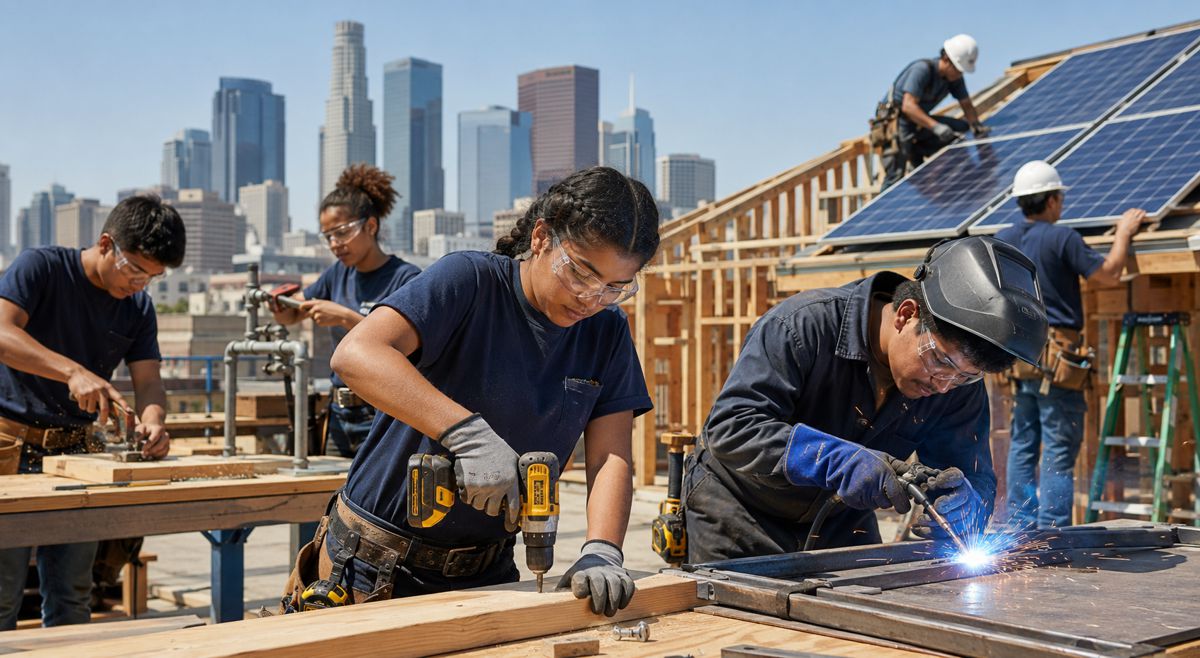
In Los Angeles County, one response is taking shape through a growing summer initiative that pays secondary school students to learn practical trades before they leave education. Supported by Harbor Freight Tools for Schools, the L.A. County Skilled Trades Summers programme is expanding again in 2026, offering hundreds of teenagers paid access to training in construction, welding, solar installation, electrical work and other disciplines directly connected to the built environment.
The programme’s growth arrives alongside new national survey findings showing unusually broad public agreement that schools should invest more heavily in trades education. Rather than viewing vocational routes as alternatives to academic success, respondents increasingly appear to see them as part of a more balanced and resilient education system.
Briefing
- L.A. County Skilled Trades Summers has expanded to more than 800 students across 11 locations in 2026.
- Students receive paid, hands-on training and in many cases gain recognised industry credentials.
- New survey data shows skilled trades ranked as voters’ highest priority elective funding area for schools.
- Programmes increasingly connect training to community rebuilding, housing and local infrastructure projects.
- Educators and policymakers are re-examining vocational pathways as labour shortages intensify.
Infrastructure Demands Are Colliding with a Talent Shortage
Infrastructure ambitions mean little without people capable of delivering them.
Across North America and many other developed economies, public authorities are attempting to modernise roads, housing, utilities, energy networks and transport systems while simultaneously managing workforce transitions. Construction employers continue to report shortages across specialist and general trades, while retirements steadily reduce experienced labour capacity.
Research commissioned by Harbor Freight Tools for Schools previously highlighted a structural mismatch between employer demand and the number of students entering skilled pathways. Earlier analysis found no major skilled trade category where education pipelines were projected to meet expected workforce demand over the following decade.
Los Angeles presents a particularly visible example of this challenge. Large-scale urban maintenance requirements, housing pressures, energy transition projects and recovery work following regional disruption all require sustained access to practical skills. Yet access to school-based trades education has steadily contracted.
According to the programme material and supporting research, only around one in five public high schools in Los Angeles County currently offers skilled trades classes, while nearly four in five voters describe that decline as a significant concern.
Paying Students to Learn Changes the Equation
Traditional work experience often asks students to volunteer time for exposure. Skilled Trades Summers approaches the challenge differently.
Beginning each June, participants enter earn-and-learn placements lasting up to eight weeks. Students receive wages while completing intensive practical training across sectors that directly support construction and infrastructure delivery.
Training areas include:
- Construction
- Welding
- Solar installation
- Carpentry
- Plumbing
- Electrical work
- Automotive technologies
- Woodworking
- Metal fabrication
- Building inspection
- Industrial fabrication
Alongside technical instruction, students receive career readiness support and many leave with industry-recognised credentials.
That structure matters because access frequently determines participation. For students balancing family responsibilities, transport costs or summer employment needs, paid programmes can remove barriers that unpaid enrichment opportunities often create.
“Skilled trades careers remain essential and resilient,” said Belen Vargas, Senior Director of L.A. County Programs at Harbor Freight Tools for Schools.
“Through hands-on learning and work experience, students build confidence, develop real-world skills, and explore pathways to meaningful careers. Year after year we see that giving students early access to these opportunities while they are still in high school can be life-changing.”
Education Policy Is Shifting Beyond the University Debate
The debate surrounding education pathways has changed noticeably over the last decade.
Career and technical education was once frequently framed as secondary to academic achievement. Increasingly, policymakers and employers are approaching the issue differently, treating practical learning as complementary rather than competitive.
Recent NORC survey findings suggest public sentiment may be moving faster than institutional systems. Survey respondents ranked skilled trades as the highest funding priority among high school elective subjects, ahead of STEM, business, arts and physical education. Support extended across political lines, while large majorities expressed support for increasing public investment in trades education.
Another theme emerging from the survey concerned technological disruption. Respondents showed particularly strong support for government investment in career training considered more resilient to automation and AI-led labour shifts.
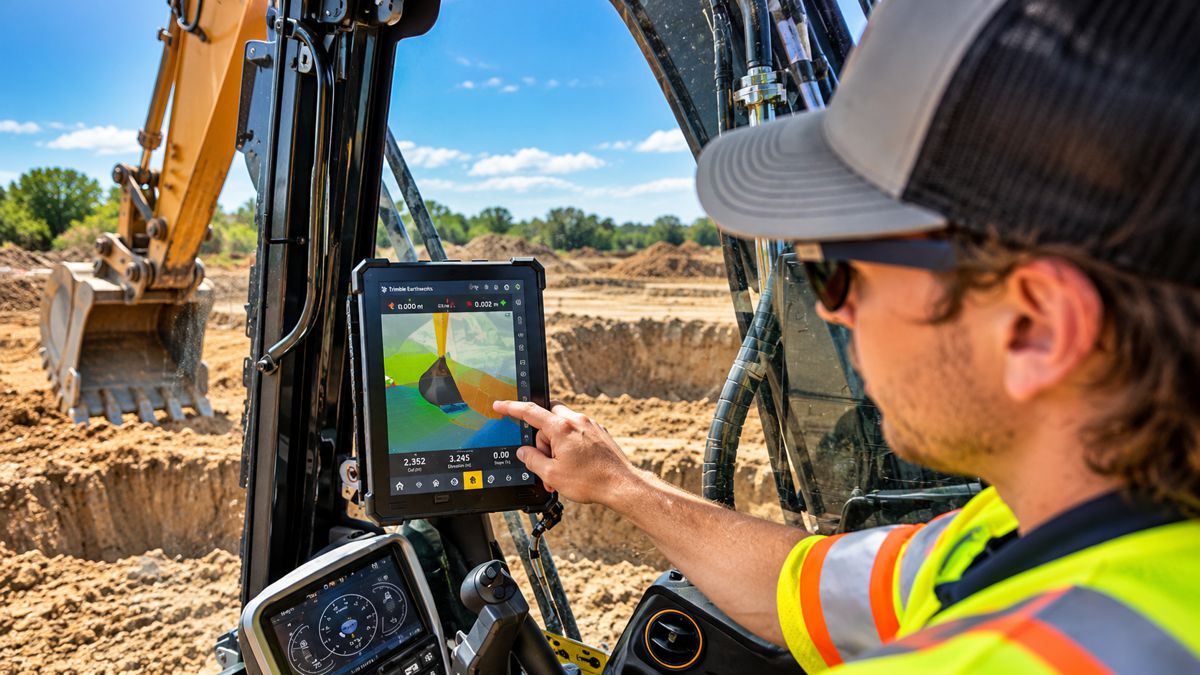
This does not suggest construction and infrastructure are immune to digital transformation. Quite the opposite. Modern trades increasingly combine digital workflows, data interpretation, automation and physical delivery. What changes is the balance of capability required.
Rebuilding Communities Through Applied Learning
One notable shift inside the programme is the move from training exercises toward visible community outcomes.
Several summer cohorts will complete projects designed to leave physical improvements behind. Welding students will construct and install benches within their communities, while solar participants will support installations benefiting local residents. That subtle change transforms training into civic participation.
Housing organisation BRIDGE Housing is also expanding involvement beyond summer delivery. Beginning in autumn 2026, the programme will operate year-round and support 120 students from Jordan Downs and Evermont housing communities.
Meanwhile, Pasadena City College is scaling its Construction Readiness pathway to reach 110 students, linking skills development to longer-term rebuilding efforts following destructive fires experienced in early 2025.
“Skilled Trades Summers is awesome,” said participant Victor Soto Marquez. “It is really important for us to learn trades young, so we have real experience and know how to help our community. We are going to be the generation that will fix and build up Altadena again.”
These examples illustrate something infrastructure professionals have long understood. Construction is rarely just about assets. It is also about social capability, local resilience and creating communities that can maintain themselves.
Bringing Creative Industries Into the Trades Conversation
One of the more unexpected additions this year connects trades with the creative economy.
A new partnership involving Otis College of Art and Design and the TGR Foundation will introduce 24 students to intersections between making, fabrication, design and technical production.
Manufacturing, architecture, industrial design and advanced construction increasingly depend on people who can move comfortably between creativity and practical execution. Digital fabrication, prototyping, modular methods and advanced materials all blur traditional boundaries.
Programmes that expose students to both worlds may ultimately produce workers capable of adapting across industries rather than specialising too narrowly too early.
Confidence, Identity and Long Term Opportunity
Supporters of skilled trades education often focus on labour economics. Yet student outcomes suggest something broader may be taking place.
Research referenced by Harbor Freight Tools for Schools found students participating in trades education reported stronger engagement with school and greater confidence about their futures. Participants were more likely to feel education connected to life after graduation and more likely to report positive educational experiences.
Teachers involved in delivery describe similar patterns. “Skilled Trades Summers is really a transformative program, and I can see it in the students,” said instructor Jordan Ivie.
“Typically, students come in with zero experience since they aren’t learning the trades in school. The interest is sparked; they fall in love with it.”
Former participant Nataliah Castro highlighted another dimension: “It’s awesome seeing that I can do this, even though not many girls think they can – it pushes me to continue to be better and makes me want to work hard in life.”
Reintroducing Practical Skills Into the Modern Education Model
The expansion of paid trades programmes in Los Angeles does not solve labour shortages overnight, nor does it replace broader reforms needed across education and workforce policy. Still, it points toward a practical shift already underway.
For decades, vocational pathways often sat at the edge of educational planning while infrastructure investment accelerated and skilled workforces aged. Programmes such as Skilled Trades Summers suggest a different approach: exposing students earlier, paying them for participation, connecting learning to communities and recognising that practical capability remains central to economic resilience.
Construction professionals, investors and policymakers watching workforce trends may find the most important detail is not the number of students enrolled this summer.
It is that a growing number of schools, communities and voters appear ready to treat skilled trades education as infrastructure in its own right.