Continuous AI Monitoring Delivers a Clearer View of Infrastructure Risk
Local authorities in England and Wales are running an ageing, weather-battered network on money that never quite reaches the work. The Asphalt Industry Alliance’s 2026 ALARM survey put the carriageway repair backlog at a record £18.62 billion, a figure it would take twelve years to clear even though average highway maintenance budgets rose 17 per cent to £30.5 million per authority.
Set against that pressure, KaarbonTech’s launch of SMART Shot AI matters far less for the camera on the pole than for what the camera produces. It generates a continuous, time-stamped record of how critical highways and drainage assets actually behave in the long gaps between inspections, and that record is fast becoming one of the most valuable things a highway team can hold.
The wider story here is a quiet change in what councils are really buying. For a decade the currency of highways maintenance has been the work itself, the potholes filled and the gullies cleared. The currency that increasingly decides funding, liability and public trust is proof: defensible evidence of what an asset was doing, when it was doing it, and whether anyone could reasonably have known.
SMART Shot AI is aimed squarely at that shift, taking the periodic snapshot model that has underpinned inspection regimes for years and layering on something closer to a continuous condition history. In a sector where every pound is contested and every claim is scrutinised, the ability to show how conditions developed rather than how they looked on a single Tuesday morning is a commercial capability, not a technical nicety.
Briefing
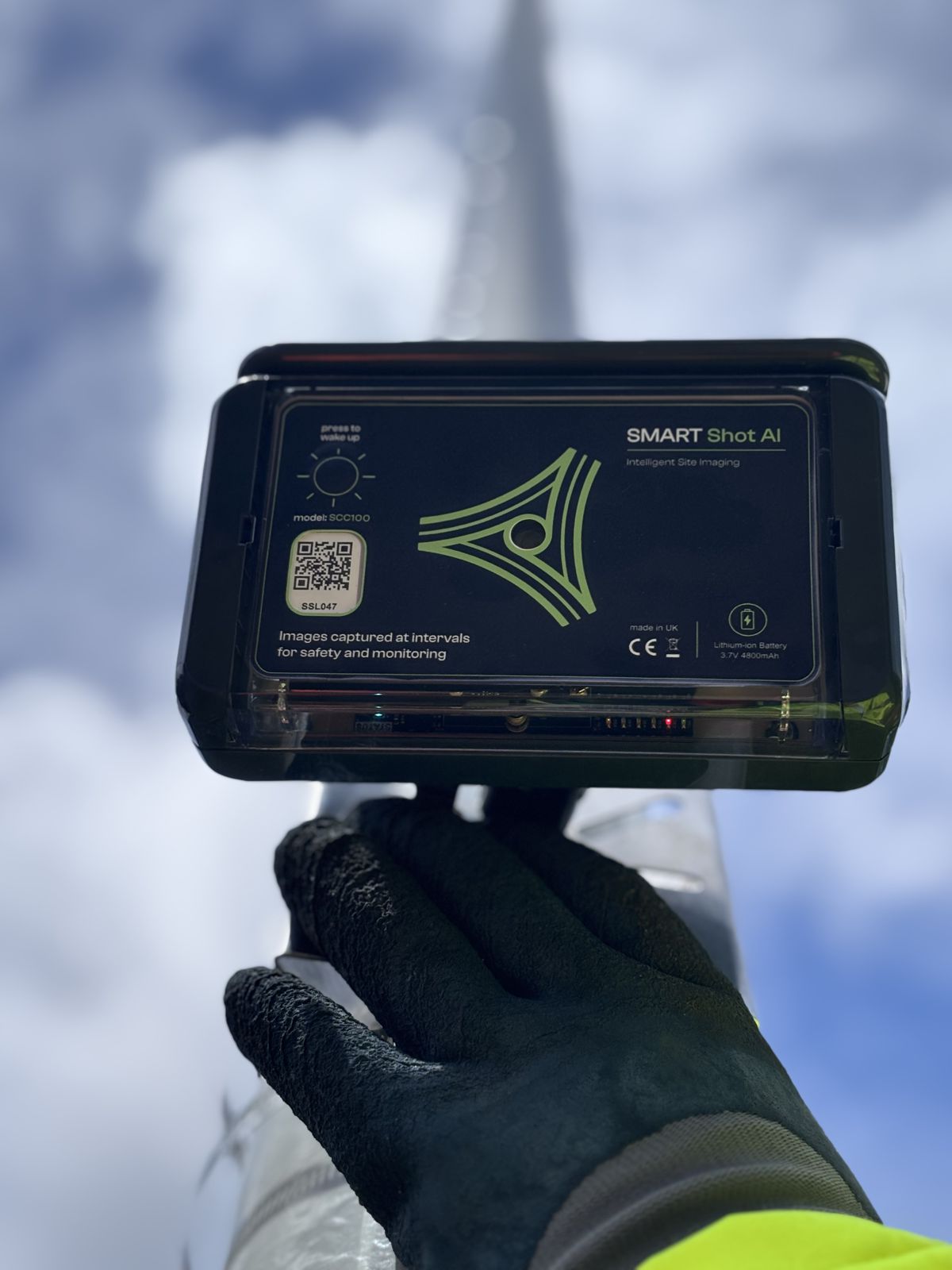
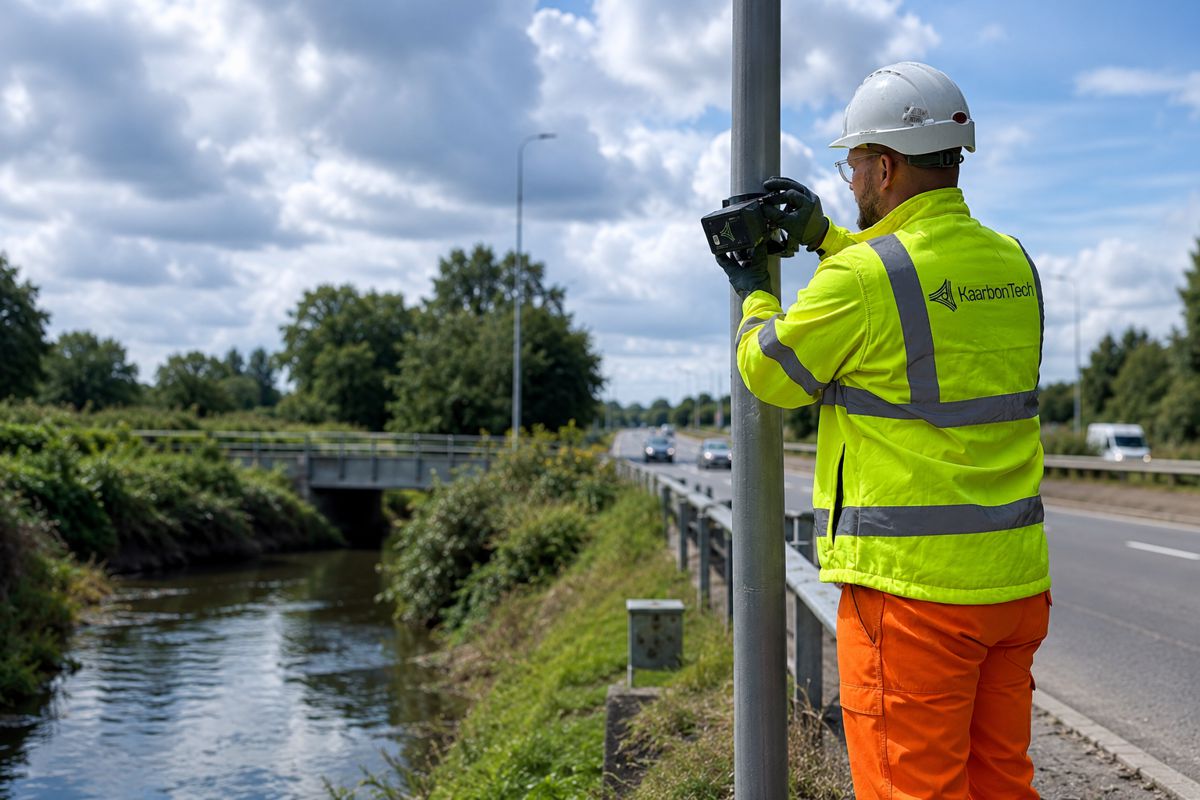
- SMART Shot AI pairs solar-powered, self-running image capture with AI review to track how culverts, trash screens, watercourses and high-risk junctions change between scheduled inspections, feeding results to a central dashboard.
- The commercial value sits in the continuous evidence trail rather than the hardware, because that trail strengthens liability defence, targets scarce maintenance spending and builds stronger funding cases.
- The market context is severe. ALARM 2026 records an £18.62 billion repair backlog, only around a quarter of pothole damage claims are paid, and AI condition data has already been credited with cutting one town’s road-related claims from £1.8 million a year to under £100,000.
- Fixed-point continuous monitoring occupies a different niche from the vehicle-mounted carriageway surveys now being reshaped by the Department for Transport’s PAS 2161 data standard, and the two approaches are beginning to look complementary rather than competing.
- KaarbonTech, which positions itself as a resilience partner to more than 70 UK authorities, is extending a drainage-focused portfolio that includes Gully SMART and Risk SMART into always-on asset monitoring.
The Evidence Gap Is Where Risk Quietly Accumulates
Scheduled inspections remain the backbone of asset management, and nothing about SMART Shot AI is designed to displace them. The difficulty is that an inspection is a single frame from a moving picture. At a culvert inlet, a trash screen or a flood-prone junction, the conditions that matter can turn over in hours: debris arrives, water rises, an obstruction worsens, then the whole scene resets before anyone returns. When something goes wrong at one of those locations, the evidence needed to understand why is often simply not there, and the authority is left reconstructing events from a report that predates the problem by weeks.
That absence is more than an operational irritation. It sits at the centre of how councils defend themselves, plan spending and account for their decisions.
Conor Holgate, Innovation and Change Manager at KaarbonTech, framed the problem directly, noting that “Local authorities already hold a significant amount of asset information, but one of the hardest gaps to close is what happens after an inspection team leaves. SMART Shot AI adds evidence over time, helping teams understand not only what an asset looked like on a particular day, but how it reacted, whether risk developed and when intervention could have the greatest impact.”
The point worth drawing out is that continuous evidence changes the questions a team can answer. Instead of confirming that a screen was clear on inspection day, an authority can show whether debris repeatedly returns after clearance, whether water keeps climbing, or whether an issue resolves on its own, and each of those patterns carries a different maintenance and financial consequence.
Why Continuous Evidence Has Become a Financial Asset
The clearest commercial case for continuous monitoring runs straight through the courts. Under Section 41 of the Highways Act 1980, highway authorities carry a statutory duty to maintain the roads for which they are responsible, and when a defect causes damage or injury the authority can be held liable. Section 58 provides the escape route, allowing a council to avoid liability if it can prove it operated a reasonable system of inspection and maintenance and had no prior knowledge of the specific defect. That defence is documentary by nature, and it works.
National figures suggest only around a quarter of pothole damage claims result in any payout, with the great majority rejected on the strength of inspection records. A monitoring layer that quietly builds a dated, verifiable history of asset condition therefore does something with a direct line to the balance sheet: it hardens the evidence a Section 58 defence depends on, while equally exposing the moments where intervention was genuinely warranted.
The savings on offer are not theoretical. Reporting by ITS International on a Department for Transport backed scheme described how AI condition data from survey specialist Gaist helped Blackpool cut its road-related vehicle damage claims from £1.8 million a year to under £100,000, alongside more than £1 million saved on pothole repairs through faster, targeted detection.
Those numbers reframe monitoring technology from a cost line into a risk-management instrument, and they explain why authorities are increasingly willing to fund it. SMART Shot AI approaches the same logic from a different angle, concentrating on the fixed high-risk locations where a claim, an investigation or a flood inquiry is most likely to land, and where a single well-evidenced timeline can be the difference between a defensible position and an expensive settlement.
Targeting Scarce Budgets Against a Record Backlog
Evidence also decides where limited money goes, and the arithmetic facing councils leaves little room for waste. ALARM 2026 found that authorities in England and Wales would have needed an additional £1.37 billion, roughly £8.1 million each, simply to hold their networks at target condition, and that clearing the backlog altogether would eventually cut annual maintenance costs by around £1 billion.
Central government has responded with £1.6 billion for the 2025/26 year and a pledge of £7.3 billion over four years, but the ALARM authors were blunt that funding at that level is not a silver bullet. In an environment like this, the value of monitoring lies in precision. Knowing which locations are deteriorating, which are stable and which reset on their own allows teams to direct crews toward the sites where a visit actually changes the outcome.
There is a productivity dividend embedded in that precision. Continuous visibility can strip out unnecessary site visits to assets that turn out to be behaving normally, freeing crews for the locations that need them, while still catching the early signs of a developing problem before it escalates into an emergency response or a compensation claim. The broader policy direction reinforces the point.
Department for Transport analysis cited across the sector has suggested that a data-standard approach to road condition could unlock in the region of £300 million a year in efficiency savings by enabling genuinely risk-based maintenance and reducing duplicated surveys. KaarbonTech’s own drainage work has long carried this logic, with its Risk SMART modelling helping councils move gully cleansing from blanket cyclical routines to targeted, risk-led programmes, and SMART Shot AI extends the same evidence-led discipline to the assets that are hardest to keep eyes on.
Drainage, Culverts and the Flood-Risk Dimension
The choice of launch targets is telling, because culverts, trash screens and watercourses are where continuous monitoring earns its keep fastest. The United Kingdom holds well over a million culverts and outfalls, thousands of them fitted with debris or security screens, according to the guidance consolidated by CIRIA and the Environment Agency. These are precisely the assets that fail without warning, block during the storms when they matter most, and sit in locations that are awkward, unsafe or simply too numerous to inspect often.
The flood exposure behind them is growing rather than receding. The Environment Agency’s 2024 assessment put around 4.6 million properties at risk of surface water flooding, a sharp increase on its previous estimate, and blocked trash screens recur again and again in the Section 19 flood investigation reports that authorities must produce after serious events.
For a lead local flood authority, the operational reality during a storm is labour-intensive and reactive, with crews dispatched to inspect and clear screens by hand as rainfall alarms trigger. A solar-powered unit that watches a screen continuously, flags when debris is building and confirms whether a clearance actually held changes that posture from reactive to informed, and it produces exactly the documented timeline that a subsequent flood investigation demands.
This is familiar territory for KaarbonTech, whose Gully SMART and Risk SMART systems already sit inside the drainage operations of numerous authorities. Extending that heritage into always-on visual monitoring is a logical progression, and it targets a duty area where the combination of climate pressure, statutory reporting and public scrutiny is intensifying at once.
A Monitoring Market That Is Splitting in Two
Step back from the single product and a clear market structure comes into view. Highway condition monitoring in the UK is bifurcating. On one side sit the mobile, network-wide carriageway surveys, dominated by AI-driven players such as Gaist, Route Reports and Vaisala’s RoadAI, whose sensors ride on inspection cars and even bin lorries to score thousands of assets a day.
That side of the market is being formalised at speed by the Department for Transport’s PAS 2161 standard, under which English local highway authorities are expected to submit classified road condition data in an approved format from 2026, with TRL appointed as the independent approvals auditor through to 2030 and a rolling two-year reapproval cycle to keep pace with retrained AI models. On the other side sits fixed-point, continuous monitoring of specific high-risk assets, which is where SMART Shot AI belongs.
Those two approaches answer different questions and are best read as complementary. Mobile surveys tell an authority how the whole network is trending; fixed-point monitoring tells it how a particular culvert, screen or junction is behaving hour to hour. Commercial researchers expect the broader AI road condition monitoring market to expand materially over the coming decade, and while precise vendor forecasts vary and should be treated with caution, the direction of travel is not in doubt as regulation, liability and funding pressure all push in the same direction.
KaarbonTech’s positioning as a resilience partner to more than 70 authorities, spanning highways, drainage and green assets, gives it an established base into which to sell continuous monitoring, and the fixed-point niche is one the mobile survey specialists are not built to serve.
Where This Leaves Asset Owners
For infrastructure owners, the practical message is that the definition of a well-run inspection regime is being rewritten in real time. Regulators, insurers and the public are converging on an expectation that condition can be evidenced continuously, not merely asserted on the basis of a periodic visit, and the authorities that adapt early will find themselves better defended in court, sharper in targeting spend and more credible when bidding for funding.
Technology like SMART Shot AI does not replace professional judgement or established regimes, and it should not be procured as though it does. What it offers is a fuller information base on which that judgement can operate, concentrated at the locations where the cost of being wrong is highest.
The strategic question for highway teams is therefore less about whether to adopt continuous monitoring and more about where to point it first. The assets that carry the greatest combination of liability exposure, flood risk and inspection difficulty are the obvious starting point, and the value compounds as the evidence base lengthens.
Suppliers who can pair reliable capture with genuinely useful AI review, and who understand the statutory and financial machinery councils actually operate within, are the ones likely to capture the budget as it moves. In a market defined by scarcity and scrutiny, the ability to prove what happened is quietly becoming the product that matters most.
Key Industry Questions
- What problem does SMART Shot AI actually solve for a highway authority? It closes the evidence gap between scheduled inspections. Routine inspections capture a single moment, but assets such as culverts, trash screens and flood-prone junctions can change condition within hours. SMART Shot AI uses solar-powered units to capture regular images, reviewed by AI, so teams can see whether debris keeps returning, whether water continues to rise or whether a problem clears on its own. The result is a continuous condition history rather than a point-in-time snapshot, which supports better decisions on when to send a crew, where to prioritise maintenance and how an asset is performing across its life. It supplements professional judgement rather than replacing it.
- How does continuous monitoring help councils defend liability claims? Under Section 41 of the Highways Act 1980 authorities must maintain their roads, but Section 58 lets them avoid liability if they can prove a reasonable inspection and maintenance system was in place and they had no prior knowledge of the defect. That defence rests almost entirely on records, which is why only around a quarter of pothole damage claims are paid. A continuous, dated record of asset condition strengthens the documentary basis of a Section 58 defence and helps distinguish genuinely unforeseeable failures from defects that should have been acted on, reducing exposure at the specific high-risk sites where claims are most likely to arise.
- Is this the same as the AI road surveys councils use for potholes? No, and the distinction matters commercially. Vehicle-mounted AI surveys from suppliers such as Gaist, Route Reports and Vaisala scan whole networks at speed to score carriageway condition, and that side of the market is being formalised through the Department for Transport’s PAS 2161 data standard from 2026. SMART Shot AI is fixed-point monitoring of specific assets, watching a single culvert or junction continuously rather than driving past it periodically. The two approaches answer different questions, one about network-wide trends and the other about how an individual high-risk asset behaves over time, and they are better understood as complementary layers than as competitors.
- Does PAS 2161 apply to a system like SMART Shot AI? PAS 2161 is aimed at classified carriageway condition data submitted by mobile survey technologies, so a fixed-point asset monitoring tool does not sit directly within its scope. The relevance is contextual rather than regulatory. PAS 2161 signals that central government is standardising and formalising AI-based condition data across highways, with independent auditing and rolling reapproval, which normalises the wider move toward evidence-led, continuously updated asset management. That policy momentum benefits credible monitoring suppliers generally by building authority confidence in AI-derived condition data, even where a specific product is not itself a PAS 2161 survey system.
- How does better monitoring help with tight maintenance budgets? The ALARM 2026 survey records a record £18.62 billion repair backlog and a £1.37 billion annual shortfall against target condition, so precision in spending is essential. Continuous monitoring lets teams see which locations are actually deteriorating and which are stable, directing crews to the sites where a visit changes the outcome and cutting unnecessary trips to assets that are behaving normally. It also catches developing problems early, before they escalate into emergency works or compensation claims. Department for Transport analysis has suggested a data-standard, risk-based approach to road condition could unlock around £300 million a year in efficiency savings across the sector.
- Why focus on culverts and trash screens specifically? These assets combine high consequence with high inspection difficulty. The UK holds well over a million culverts and outfalls, many fitted with debris screens, and blockages recur repeatedly in the Section 19 flood investigations authorities must produce after serious events. With the Environment Agency estimating around 4.6 million properties at risk of surface water flooding as of 2024, the exposure is growing. During storms, crews currently clear screens by hand as alarms trigger, which is reactive and labour-intensive. Continuous monitoring flags debris build-up as it happens and confirms whether a clearance held, producing exactly the documented timeline a flood investigation later requires.
- What should councils weigh before deploying it? The technology supplements rather than replaces established inspection regimes, so it should be procured as an evidence layer for the highest-risk locations, not as a substitute for statutory duties or professional judgement. Sensible deployment starts where liability exposure, flood risk and inspection difficulty overlap most, because that is where a strong condition timeline delivers the greatest financial and operational protection. Authorities should also consider integration with existing asset management systems, data ownership and how AI-flagged change is validated by staff. The value compounds as the record lengthens, so early, targeted adoption at critical sites tends to pay back faster than broad, unfocused rollout.
- Where is commercial value concentrating in highways monitoring? Value is shifting from performing maintenance toward proving asset condition, because evidence now drives liability outcomes, funding bids and public accountability. That shift is splitting the market into mobile network-wide surveying, which regulation is formalising, and fixed-point continuous monitoring of critical assets, which is a newer and less contested niche. Suppliers that pair reliable data capture with genuinely useful AI review, and that understand the statutory and financial machinery councils operate within, are best placed to win budget as it moves. Established asset management partners with existing authority relationships hold a distribution advantage when extending into continuous monitoring.
Strategic Takeaways
- The decisive product in highways is no longer the maintenance work itself but the defensible evidence of asset condition, and continuous monitoring turns that evidence into a tangible financial and legal asset.
- Section 58 liability defence is documentary by design, so a dated, verifiable condition history has a direct line to the balance sheet at exactly the high-risk sites where claims and flood investigations concentrate.
- With a record £18.62 billion repair backlog and a persistent funding shortfall, precision spending matters more than ever, and monitoring that distinguishes deteriorating assets from stable ones directs scarce crews where they change the outcome.
- The UK monitoring market is bifurcating into mobile network-wide surveys, now formalised by PAS 2161, and fixed-point continuous monitoring of critical assets, giving suppliers such as KaarbonTech a defensible niche the mobile survey specialists are not built to serve.
- Culverts and trash screens are the sharpest early use case, combining rising surface water flood risk, statutory Section 19 reporting and severe inspection difficulty, which is where early, targeted adoption of continuous monitoring is likely to pay back fastest.