When Infrastructure Starts Managing Itself: The Next Step Beyond Digital Twins
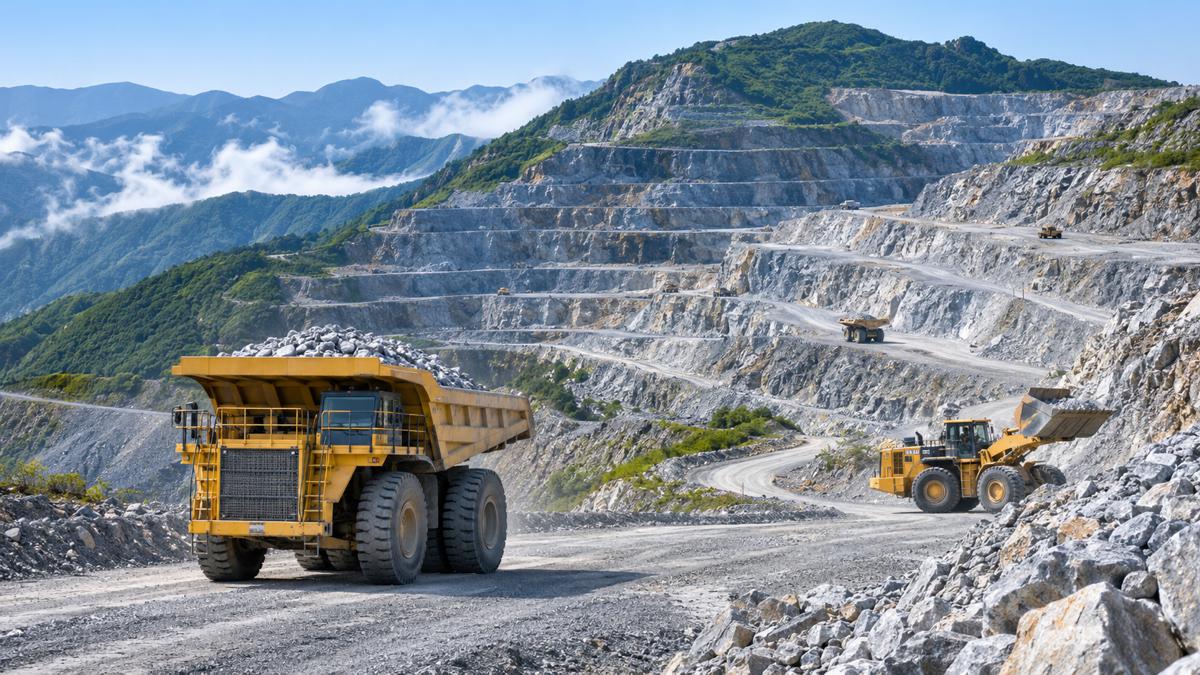
A construction equipment fleet can generate detailed information about engine hours, fuel consumption, idle time and productivity, yet decisions about where machines should be working often remain with the site manager. A bridge may be fitted with sensors monitoring movement and structural behaviour, but engineers must still interpret the information and decide what action is needed. Traffic management systems are further along, with some already adjusting signals automatically as conditions change.
Across these applications, the technology for observing infrastructure has become increasingly sophisticated. Turning those observations into operational decisions, particularly decisions that can be implemented without constant human intervention, presents a different engineering challenge. It requires systems capable of understanding how individual assets interact, recognising the consequences of an adjustment and operating within boundaries that engineers can trust.
An interesting example of this approach has emerged from the computing industry. The software company groundcover has introduced a system that continuously monitors the resources used by cloud applications and adjusts their allocation settings automatically, within limits established by engineers.
The product has no direct application to roads, bridges or construction equipment, but its operating principles have clear parallels with the management of physical infrastructure, where considerable investment has already been made in collecting operational data.
Briefing
- Groundcover launched its Autonomous Infrastructure beta on 3 November 2026, using operational data to adjust computing resource requests.
- Adaptive traffic signal systems already demonstrate how physical infrastructure can respond automatically to changing conditions.
- Construction equipment telematics provide much of the information needed for more responsive fleet and site management.
- Smart buildings, utilities and structural monitoring systems offer further opportunities for controlled operational optimisation.
- Engineering safety, data reliability and human oversight remain fundamental constraints on autonomous infrastructure.
From Monitoring to Operational Control
Groundcover’s new Autonomous Infrastructure product addresses a familiar problem in computing. Engineers allocate processing power and memory to software applications before knowing precisely how much those applications will require under real operating conditions.
Providing too much capacity wastes money, while allocating too little can affect performance or cause failures. Engineers have traditionally addressed the problem through periodic reviews of resource usage, often making adjustments only after an operational issue has emerged or costs have become excessive.
Groundcover’s system uses detailed operating data collected by its existing monitoring technology to adjust resource requests according to actual demand. The optimisation considers the wider computing environment rather than treating every application independently, taking account of available capacity and the demands of neighbouring workloads.
The technology incorporates capabilities from Wand, a resource optimisation company that groundcover acquired in September 2026. During the beta, the software changes Kubernetes resource requests but leaves resource limits unchanged, with additional confirmation required before those limits can be raised. Adjusting a request does not necessarily produce an immediate reduction in computing costs, since the financial outcome also depends on how workloads are scheduled and how the underlying computing capacity is provisioned.
Engineers decide which applications the system may manage, establish minimum and maximum resource allocations, and retain an audit record of changes. Nothing is altered until an administrator enables the system for the selected workloads.
The underlying process is familiar to industrial engineers: monitor actual performance, evaluate demand against available capacity, identify an appropriate adjustment and implement it within defined constraints. The process then repeats as operating conditions change, allowing the system to respond to fluctuations that might otherwise remain unnoticed until the next scheduled review.
Physical infrastructure has employed variations of this approach for decades, particularly in industrial process control. Extending it to more complicated operating environments, where multiple assets, people and activities influence one another, introduces opportunities that are considerably more demanding than the optimisation of individual machines.
Traffic Networks Already Provide a Working Example
Road traffic management offers one of the clearest examples of infrastructure responding to actual conditions rather than following a predetermined operating schedule.
Conventional traffic signals may operate according to timing plans established for different periods of the day. Such arrangements can work well under predictable conditions but become less effective when traffic volumes change unexpectedly, particularly around incidents, roadworks or major events.
Adaptive traffic signal control systems address this by collecting information from traffic detectors, evaluating demand and adjusting signal timings accordingly. The US Federal Highway Administration has documented how adaptive signal control can improve traffic flow and travel time reliability, reporting average travel time improvements exceeding 10% in the applications it assessed, although performance varies considerably between networks and installations.
In Britain, National Highways also uses variable speed limits to manage motorway traffic and improve journey time reliability. These arrangements demonstrate another form of responsive infrastructure management, although individual control functions may involve different combinations of automation and operator intervention.
The scope for further development becomes apparent when traffic management is considered across an entire transport corridor. Traffic signals, motorway controls, incident detection and roadworks information could be coordinated to respond to changing conditions across a connected network, rather than being managed predominantly as separate systems.
Improving vehicle movement through one junction, for example, may simply transfer congestion to the next. A network-wide system must therefore account for downstream capacity, pedestrian movements, public transport priorities and emergency access, while recognising that the most efficient outcome for one group of road users may not be appropriate for the network as a whole.
Those competing objectives introduce decisions that cannot be resolved through traffic data alone. The quickest route for general traffic may conflict with pedestrian safety, bus priority or restrictions protecting residential streets, requiring transport authorities to establish the priorities within which automated control systems operate.
Construction Equipment and the Problem of Unused Capacity
On a major earthworks project, production depends as much on the relationship between machines as on the performance of individual equipment. An excavator may have ample loading capacity but spend much of its shift waiting for haul trucks, while trucks assigned elsewhere queue unnecessarily at a discharge point. Adding more machinery will accomplish little if the underlying problem is how equipment is coordinated.
The same principle applies across construction operations. A paving crew may be capable of working faster than asphalt deliveries can sustain, while a concrete placement operation can be disrupted by inconsistencies in batching, transport or site access. Equipment capacity is only one element of overall productivity, and the most effective allocation of resources can change throughout the working day.
Modern telematics systems can already reveal much of this inefficiency. Caterpillar’s VisionLink platform, for example, provides information about machine utilisation, idle time and operating performance, while productivity functions can support analysis of loading cycles, payloads and material movements.
The information allows managers to identify where production is being lost, but there is a difference between recognising an inefficient operation and having a system capable of recommending how the available equipment should be redistributed.
On an earthworks project, more advanced optimisation software could analyse truck cycle times, loading capacity, haul-road congestion and material movements together. If one excavator were consistently waiting for trucks while another operation had excess haulage capacity, the system could identify an opportunity to rebalance the fleet, taking account of the time and cost involved in moving equipment.
It might also recognise that a longer haul route was producing better overall throughput because of reduced congestion, or recommend changing the sequence of activities to avoid machinery standing idle while awaiting materials.
These are potential extensions of existing telematics and site management capabilities, rather than functions attributed to groundcover or claimed to be universally available in present construction platforms.
Physical constraints quickly complicate the calculations. Reassigning a virtual computing resource may take seconds, while relocating a 50-tonne excavator involves travel time, ground conditions, operators, site access and the wider construction programme. An apparent improvement in fleet productivity could also create additional costs if it interrupts another activity or requires machinery to travel repeatedly between working areas.
An effective system would need to understand those restrictions rather than optimise numerical productivity indicators in isolation. For many contractors, continuously updated recommendations with human approval may offer a more practical starting point than allowing software to direct site activities independently.
Buildings and Utilities Offer Greater Control
Some physical infrastructure is better suited to autonomous optimisation because its operating parameters can be adjusted frequently and reversibly.
Heating, ventilation and air-conditioning systems provide an established example. Building management systems can regulate temperatures, airflows and equipment operation in response to occupancy, environmental conditions and energy demand, with individual control functions operating automatically within parameters established by facilities engineers.
The US Department of Energy has explored more advanced capabilities through its Grid-Interactive Efficient Buildings initiative, examining how buildings can combine energy efficiency with flexible electricity consumption.
A commercial building may need to maintain comfortable working conditions while controlling ventilation, reducing energy costs and limiting equipment wear. More sophisticated systems can evaluate those requirements together, potentially adjusting some electrical loads to support grid operation or reduce demand during expensive periods without compromising essential building services.
Water infrastructure provides a similar opportunity, particularly where pumping stations, storage reservoirs and distribution networks must operate together.
Pumping stations are commonly managed through supervisory control and data acquisition systems, while variable-speed drives allow pump output to respond to changing demand. More advanced control strategies can coordinate pumps, storage capacity and electricity consumption across a wider network, taking account of conditions that may be difficult to evaluate when individual facilities are considered separately.
For a water utility operating several pumping stations and reservoirs, the most efficient decision at one location may not produce the lowest overall operating cost. Pumping additional water during a period of cheaper electricity could reduce expenditure later, provided storage levels, pressure requirements and system resilience remain within acceptable limits.
These applications benefit from measurable operating parameters and established control equipment, although maintaining efficiency across a complete network is more complicated than managing individual pumps or buildings. Equipment condition, electricity pricing, seasonal demand and operational resilience can all affect the most appropriate response.
Bridges and the Boundary Between Monitoring and Action
Structural infrastructure presents a more difficult proposition because the consequences of an incorrect decision may be severe, while the relationship between measured behaviour and actual structural condition is not always straightforward.
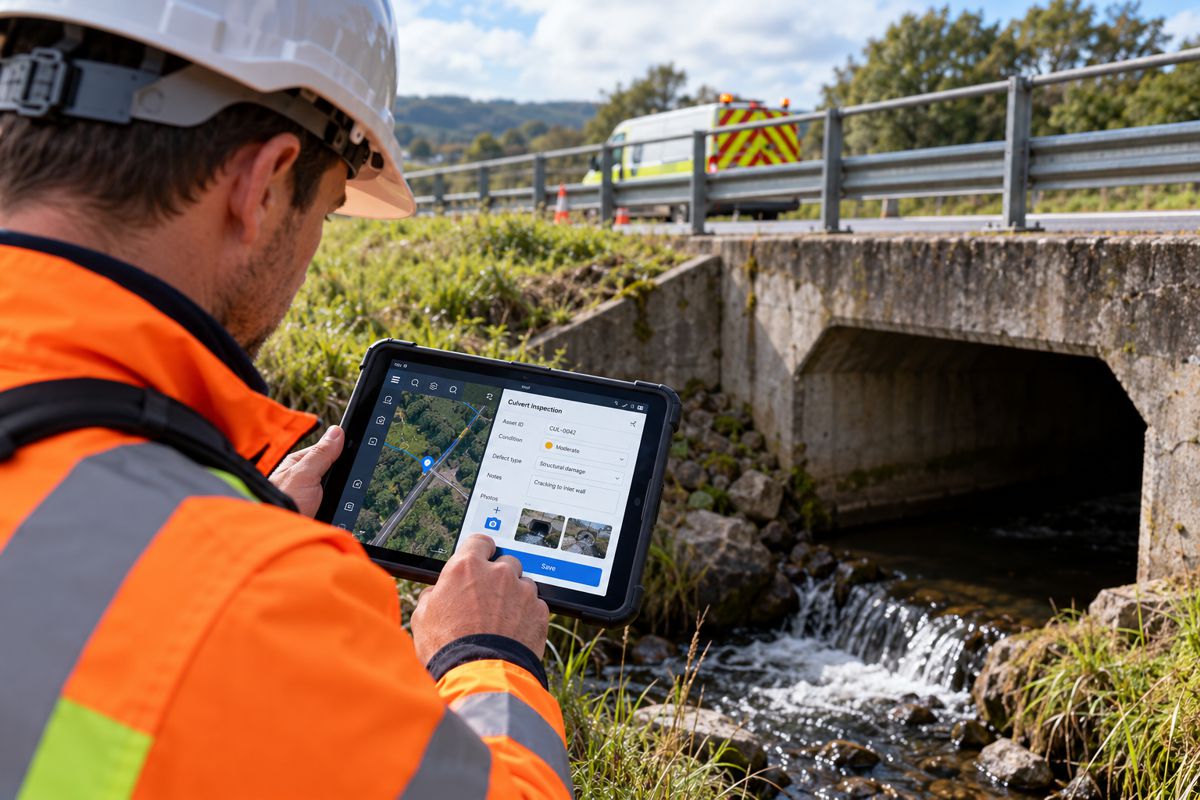
Bridge monitoring systems can collect information about vibration, displacement, strain, temperature and other aspects of structural behaviour. Engineers use these measurements to assess performance, investigate unusual responses and support maintenance decisions, particularly where continuous observations reveal changes that might be missed during periodic inspections.
Research by the Federal Highway Administration has examined how structural health monitoring can improve understanding of the relationship between design assumptions, actual loading conditions and measured structural responses.
A continuously monitored bridge could provide a more detailed record of its behaviour over time, helping engineers distinguish between normal variations and developments that warrant investigation. Such systems may be particularly valuable where changes occur gradually or under unusual operating conditions that cannot easily be reproduced during a scheduled inspection.
Connecting this information to maintenance planning offers a practical application of more autonomous decision-making. A monitoring system might identify a developing abnormality, compare it with historical measurements and recommend bringing forward an inspection. Across an entire bridge portfolio, similar analysis could help an infrastructure owner prioritise engineering resources among structures showing different patterns of deterioration.
There is, however, a fundamental difference between recommending an inspection and automatically changing the operating restrictions on a bridge.
Structural behaviour can be affected by temperature, loading patterns, sensor movement, calibration errors and environmental conditions. Unusual data does not necessarily indicate structural damage, while apparently normal measurements cannot guarantee that every critical component remains sound.
Decisions about load restrictions, closures and structural interventions require engineering judgement supported by appropriate evidence, procedures and statutory responsibilities. Automated analysis may help identify where attention is needed, but the authority to make safety-critical decisions must be established through a much more demanding process of validation and operational control.
Autonomous infrastructure management is consequently likely to develop at different speeds across different asset classes, with routine operational adjustments offering more immediate opportunities than decisions affecting structural safety.
Digital Twins Need an Operational Purpose
Digital twins have become a prominent part of infrastructure technology, providing digital representations of physical assets that can incorporate design information, operational data and engineering analysis.
Their capabilities vary substantially. Some are primarily visual models linked to asset records, while others incorporate live measurements, simulation or predictive models that allow engineers to examine how an asset is performing and how it might respond to different conditions.
A digital representation of a pumping station, for example, can show equipment condition, operational status and predicted maintenance requirements. More advanced arrangements may evaluate alternative operating scenarios using current demand, available storage and equipment performance, allowing engineers to compare their likely outcomes before making changes.
Connecting those calculations to an approved operational action introduces additional requirements. Reliable information and models validated against actual conditions are essential, particularly where software can influence physical equipment. Engineers also need to establish precisely what the system is authorised to change, with sufficient records to reconstruct its decisions when an unexpected result requires investigation.
A digital twin could support adjustments to a pumping schedule, changes to a building’s ventilation system or recommendations for redistributing equipment on a construction site. In each case, the value depends on the model’s ability to represent the relevant operating conditions accurately enough to support a useful decision.
Infrastructure owners also face considerable integration problems. A large transport network or industrial facility may contain equipment installed over several decades, with different communication protocols, proprietary interfaces and control systems. Connecting these assets can involve substantial engineering work, and the benefits of greater automation may not justify the expense for every installation.
The ability to create a detailed digital representation does not automatically provide the information, authority or control mechanisms needed to manage an asset autonomously. Some relatively simple control systems already make effective operational adjustments without a digital twin, while sophisticated models may remain primarily analytical tools.
The practical value of digital twins will increasingly depend on the engineering decisions they help improve, rather than the visual sophistication of their representation.
Engineering Control and the Limits of Autonomy
Groundcover’s approach to software optimisation offers an interesting parallel with established engineering control principles.
Its new system is disabled by default, allowing administrators to choose where it operates, define acceptable boundaries and retain control over automated adjustments. Changes are recorded, while certain potentially disruptive alterations remain subject to explicit approval.
These restrictions are relatively straightforward in computing, where many configuration changes can be reversed or rolled back. Physical systems introduce additional constraints because adjustments may affect machinery, people, public safety or services that cannot simply be restarted when something goes wrong.
A traffic signal controller must preserve safe signal sequences, while a pumping station has to maintain pressure and storage requirements even when operating conditions change unexpectedly. Construction machinery cannot be redirected without accounting for personnel, site access and ground conditions, and any system influencing bridge operations must respect the engineering restrictions governing structural safety.
There are also differences in the consequences of failure. An incorrectly allocated computing resource may interrupt an application, whereas an inappropriate decision affecting traffic movements or industrial equipment could create an immediate physical hazard.
Autonomous decision-making therefore requires considerably more than a sufficiently sophisticated algorithm. Engineers must establish which decisions can be delegated, the limits within which the system may operate, how abnormal conditions are recognised and what happens when sensors, communications or control equipment fail.
For some applications, a practical progression may begin with monitoring and automated recommendations before moving towards supervised implementation and, eventually, independent operation within tightly defined limits. This is consistent with established industrial control practice, where automation is designed around explicit operating boundaries and protective systems.
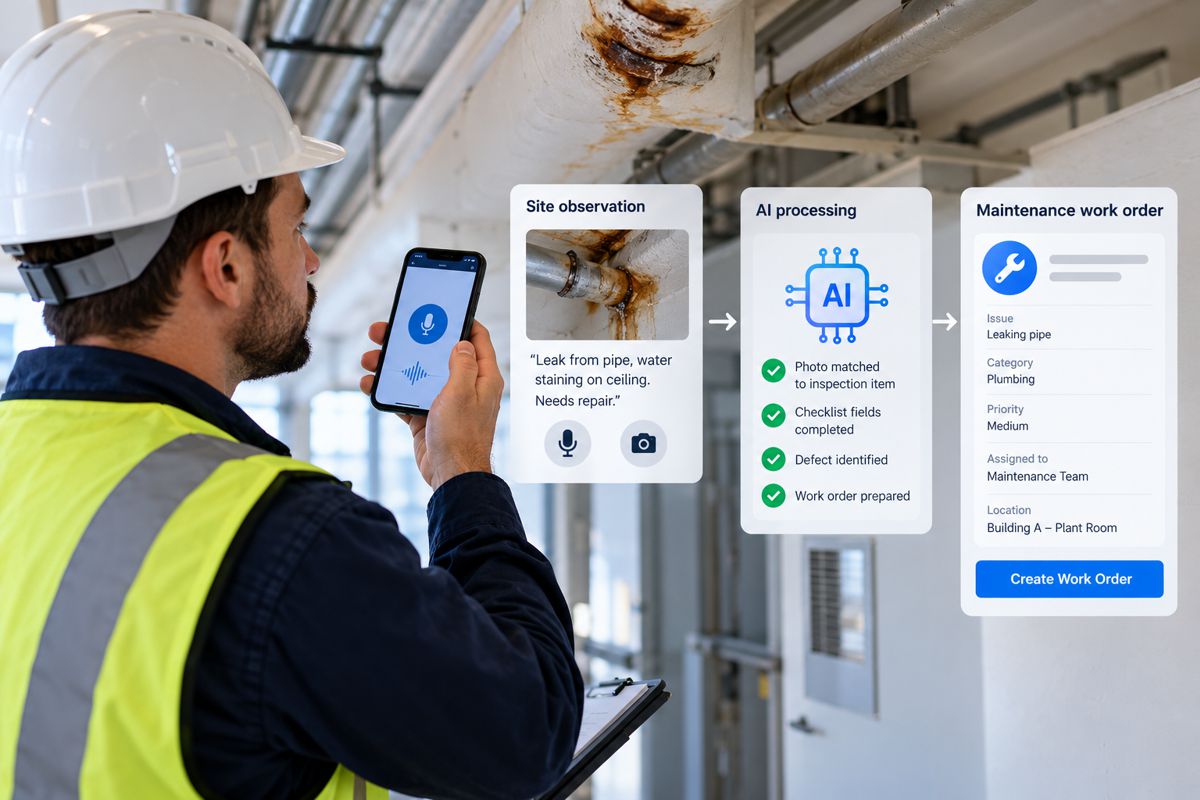
There is also considerable scope for modest improvements that stop well short of full autonomy. Automatically identifying an underused machine, recommending a revised maintenance schedule or coordinating energy consumption across several facilities may deliver substantial operational benefits without transferring responsibility for safety-critical decisions to software.
The Economics of Better Decisions
Greater autonomy introduces commercial questions alongside the engineering ones, particularly where infrastructure owners have already invested heavily in monitoring systems but have yet to demonstrate consistent returns from the information collected.
Continuous monitoring requires sensors, communications, software, maintenance and specialist expertise. Adding automated decision-making creates further costs associated with system integration, validation, cybersecurity and operational responsibility, all of which must be justified through measurable improvements.
On a construction site, relevant outcomes might include more material moved per working hour, less fuel consumed per tonne or reduced equipment waiting time. Utilities could assess electricity consumption, maintenance expenditure and service reliability, while transport authorities would need to consider congestion, journey time reliability and safety together.
The commercial opportunity is often found in coordinating resources already available rather than purchasing additional capacity.
A contractor with sufficient machinery but poor utilisation might improve production through better scheduling, while a water utility could reduce energy costs by changing when and how its pumps operate. A transport authority may achieve better traffic flow through improved coordination of existing signals, particularly where congestion is caused by the interaction between junctions rather than an absolute shortage of road capacity.
None of these improvements necessarily requires new physical infrastructure, although the monitoring, communications and control technology needed to support them still involves investment. Nor will every opportunity justify automation, especially where operating conditions are relatively stable or the cost of integration exceeds the value of improved performance.
Groundcover’s beta provides a narrowly focused commercial example of continuous optimisation in software. It does not establish that the same technology can be transferred directly into physical engineering, and the company has not announced applications in construction or transport infrastructure.
Across roads, construction sites, buildings and utilities, however, variations of the same operating principle are already established. Sensors provide information about actual conditions, analytical systems identify possible adjustments, and control equipment can implement selected changes where the operational consequences are sufficiently understood.
The next advances are likely to come from improving the coordination between those functions, particularly where infrastructure owners can establish clear engineering limits and demonstrate that better decisions produce measurable operational benefits.
The most useful innovation may be less about making individual assets intelligent than enabling the equipment and systems already in place to work together more effectively.
Key Industry Questions
- What is autonomous infrastructure? Autonomous infrastructure refers to assets or operating systems that can monitor conditions, evaluate information and make certain operational adjustments with limited human intervention. The level of independence varies according to the technology, operating environment and safety requirements.
- How does autonomous infrastructure differ from a digital twin? A digital twin represents or models a physical asset or system, while autonomous infrastructure involves the ability to make or recommend operational changes based on actual conditions. A digital twin can support autonomous control, but it is not a prerequisite for it.
- Are autonomous traffic management systems already in operation? Yes. Adaptive traffic signals automatically adjust timing according to observed demand, while other road management systems use varying degrees of automation and human supervision. Their capabilities differ between installations.
- Can construction equipment be allocated automatically? Fleet management systems already identify utilisation and productivity patterns, and more advanced systems could recommend changes in equipment deployment. Fully autonomous allocation must also account for operators, site restrictions, safety and construction sequencing.
- Could autonomous systems reduce infrastructure maintenance costs? Potentially. Condition monitoring and predictive analysis can help identify maintenance needs and improve scheduling, although actual savings depend on data quality, asset characteristics, maintenance procedures and the cost of deploying the technology.
- Which infrastructure systems are best suited to autonomous optimisation? Systems with measurable operating conditions, established controls and reversible adjustments are generally more suitable. Building services, pumping stations and some traffic management functions provide practical examples.
- What are the principal safety concerns? Unreliable measurements, incorrect models, unexpected operating conditions, cybersecurity failures and inappropriate control actions can all create risks. Safety-critical systems require validated operating limits, protective arrangements and clearly defined responsibilities.
- Does autonomous infrastructure require artificial intelligence? No. Conventional feedback control, optimisation algorithms and rule-based systems can automate many functions. Machine learning may support prediction and decision-making, but it is not essential to every autonomous application.
- How should infrastructure owners assess the commercial value? Performance should be measured against an established operating baseline, including productivity, energy consumption, reliability, maintenance expenditure and safety. The benefits must be weighed against integration, operating and lifecycle costs.
Strategic Takeaways
- Existing assets offer immediate opportunities. Better operational coordination may deliver improvements without requiring additional physical capacity.
- System-wide performance should take priority. Optimising individual machines, junctions or facilities can produce poor results elsewhere in a connected operation.
- Autonomy should match the consequences of failure. Routine, reversible adjustments offer a more practical starting point than safety-critical engineering decisions.
- Reliable data remains fundamental. Poor measurements and incomplete models can undermine even sophisticated optimisation systems.
- Human oversight remains an engineering responsibility. Defining operating boundaries, validating performance and managing exceptional conditions are central to responsible autonomous infrastructure