






Humanoids Summit 2026 Brings Tesla Optimus and Industrial Robotics to Silicon Valley
Humanoids Summit will return to Silicon Valley on 1–2 December 2026, bringing Tesla’s Optimus robot together with leading developers of artificial intelligence, advanced robotics and industrial automation. The two-day gathering at the San Mateo County Event Center comes as manufacturers begin testing humanoid systems in working factories, where the demands of reliability, safety and commercial productivity are considerably greater than those of a controlled demonstration.
Organised by ALM Ventures, the summit has moved to a larger venue following two years of attendance growth. Tesla will participate through a partnership that includes Optimus and complimentary demonstrations of its Full Self-Driving (Supervised) technology, while robotics manufacturers, researchers and investors will examine the practical challenges of moving humanoid machines towards commercial production.
The programme brings together companies pursuing different approaches to robot intelligence, mobility and manipulation, alongside organisations concerned with industrial safety and manufacturing. For construction and infrastructure businesses, many of the technologies under discussion have potential applications well beyond the factory floor, although deploying humanoid robots on active construction sites presents an altogether more demanding engineering problem.
Briefing
- Humanoids Summit takes place in San Mateo, California, on 1–2 December 2026.
- Tesla will bring Optimus and offer Full Self-Driving (Supervised) demonstration drives.
- Organisers anticipate attendance approximately 50% higher than in 2025.
- The programme covers physical AI, robotic dexterity, actuators, manufacturing and safety.
- Industrial deployment and commercial readiness are central to the discussions.
Moving Humanoid Robotics into Industrial Production
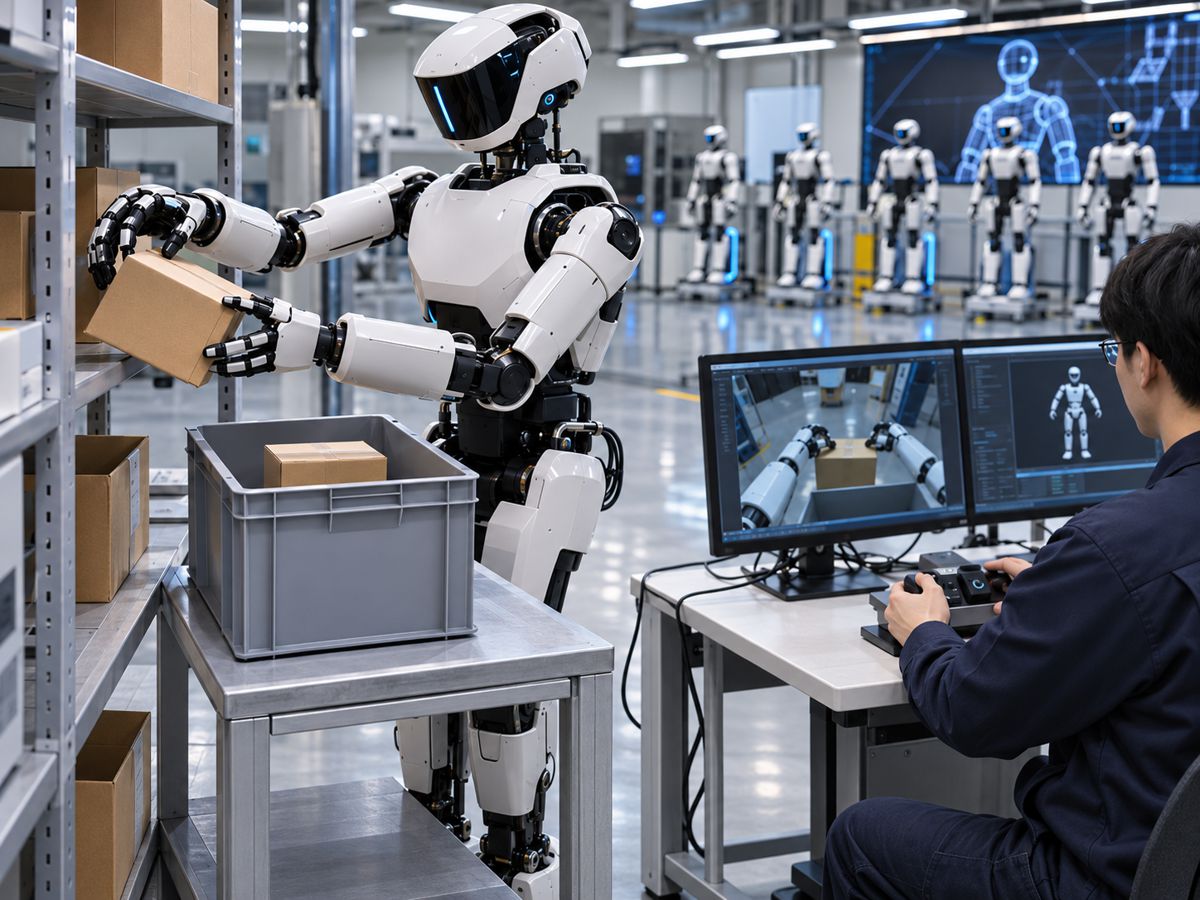
Humanoid robots have attracted considerable investment because their physical form offers the possibility of working within environments originally designed for people. A machine capable of walking, handling objects and using existing equipment could undertake different activities without the extensive infrastructure changes required by some conventional automation systems.
Achieving that flexibility presents substantial engineering challenges, particularly when walking, balancing and manipulating unfamiliar objects must happen simultaneously. A robot handling components of different shapes, weights and surface characteristics must coordinate its movements continuously, often while working alongside employees and moving equipment. The mechanical demands are accompanied by the computational challenge of interpreting surroundings and responding appropriately when conditions change.
Industrial customers have requirements that extend far beyond demonstrating these capabilities individually. Robots must repeat tasks throughout a working shift, recover safely from errors and operate within established production processes without creating additional disruption. Their performance must also justify the cost of acquisition, maintenance and integration, particularly where conventional automation is already capable of undertaking the same work.
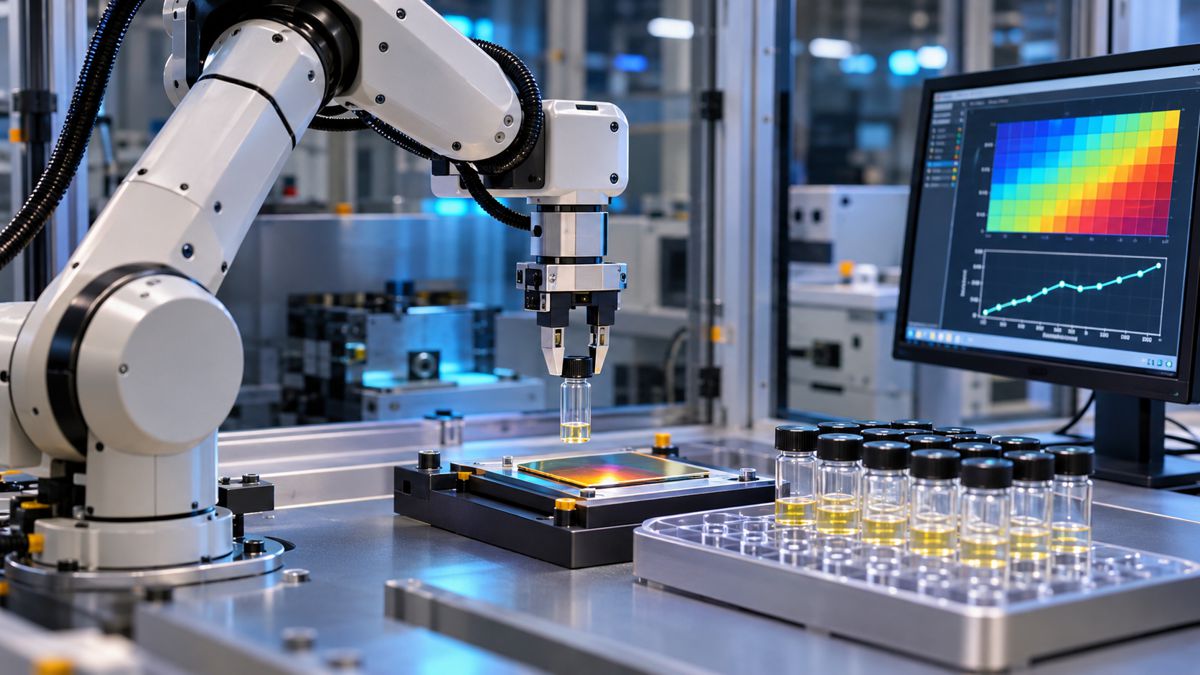
Research published by the Fraunhofer Institute for Manufacturing Engineering and Automation IPA in May 2026 addresses the difficulty of evaluating these machines against industrial requirements. The institute developed a standardised benchmarking service that assesses humanoid robots through practical challenges, allowing prospective users to compare their capabilities against specific applications.
The approach recognises that different robotic platforms may be suited to different tasks. A machine capable of carrying loads or moving efficiently through a factory may not possess the manipulation accuracy required for assembly work, while impressive mobility does little to compensate for limited operating endurance or unreliable object handling.
Tesla Optimus and the Expanding Robotics Ecosystem
Tesla’s involvement gives the December summit one of its most recognisable attractions. Optimus forms part of the company’s efforts to develop general-purpose humanoid robots, combining robotic hardware with artificial intelligence and manufacturing expertise drawn from its automotive operations.
The organisers have confirmed that Optimus will be present, alongside opportunities for visitors to experience Tesla’s Full Self-Driving (Supervised) system. The announcement does not specify the extent of the robot’s demonstration activities or establish additional commercial deployment milestones.
Tesla will be appearing alongside organisations developing competing approaches to humanoid robotics. The announced speaker programme includes representatives from Apptronik, Google DeepMind, Humanoid, Honda R&D, 1X Technologies, Skild AI, FieldAI, AGIBOT, Booster Robotics and Unitree, with researchers and specialists from NASA’s Johnson Space Center and the US National Institute of Standards and Technology also participating.
Across two conference tracks, presentations and discussions will examine robot foundation models, spatial intelligence, advanced actuators and the mechanical dexterity needed for increasingly complex tasks. Manufacturing and commercial deployment will feature alongside safety and regulation, reflecting the range of problems that must be addressed before humanoid robots can operate routinely in industrial environments.
The range of participating organisations also reflects how dependent modern robotics has become on advances across several disciplines. Artificial intelligence determines how machines interpret and respond to their surroundings, but those decisions must be translated into physical movements through motors, transmissions, sensors and control systems capable of operating accurately under changing loads.
Manufacturing Experience Is Beginning to Accumulate
Industrial deployment is already providing evidence of what contemporary humanoid robots can achieve, particularly in controlled manufacturing environments where tasks, materials and operating conditions can be carefully defined.
In September 2026, Boston Dynamics announced the opening of its Robotics Metaplant Application Center at Hyundai Motor Group Metaplant America in Georgia. The facility is being used to train Atlas humanoid robots for automotive manufacturing, beginning with activities involving the preparation, movement and sequencing of components for assembly.
The programme is intended to develop robotic capabilities through practical experience in a production environment. Engineers can observe how machines interact with actual manufacturing processes, refine their movements and collect operational data while gradually introducing more demanding activities. Boston Dynamics has outlined plans to extend the scope of Atlas training and investigate applications across other industrial sectors.
Manufacturing provides relatively structured conditions for this work. Production lines follow established processes, materials arrive in predictable sequences and individual operations can be repeated sufficiently often to evaluate robotic performance. Even where the factory environment is well controlled, however, a robot that successfully completes an isolated task may still struggle to maintain the pace and consistency required for continuous operation.
The distinction becomes apparent when considering production economics. A machine that requires frequent intervention, cannot reliably complete a full working shift or demands extensive maintenance may offer little advantage over existing equipment. Industrial users must assess the complete operating cycle rather than the successful execution of individual movements.
Construction Presents a Different Operating Challenge
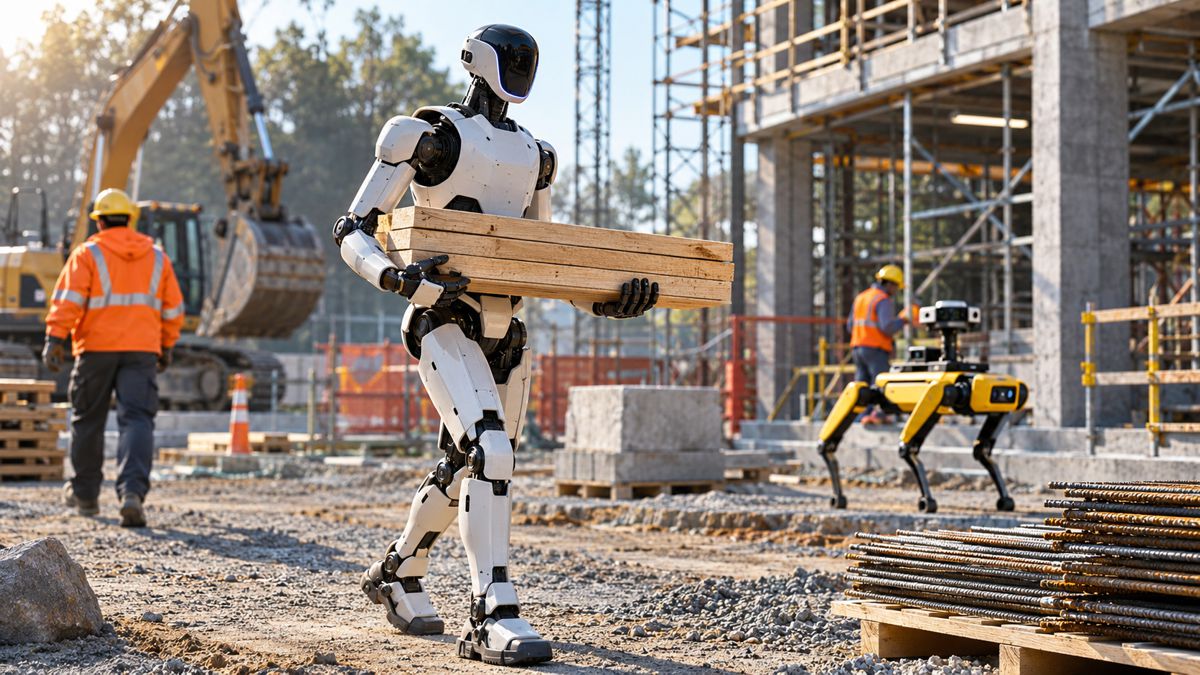
The construction industry offers potentially valuable applications for humanoid robotics, particularly where work involves handling materials, accessing confined spaces or undertaking repetitive activities in environments designed around human movement.
Unlike factories, construction sites rarely remain unchanged for long. Ground conditions deteriorate after heavy rain, access routes move as projects progress and materials arrive in different configurations. Work areas are shared by multiple trades, while partially completed structures introduce obstacles that may not exist from one day to the next.
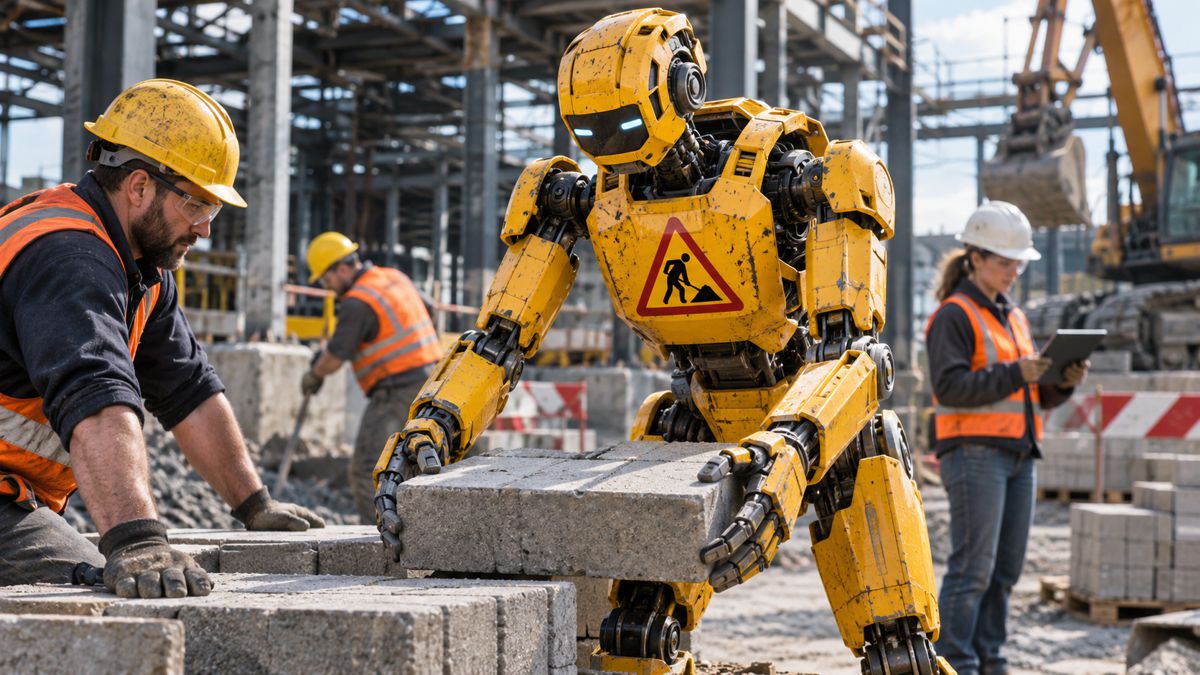
A humanoid robot moving materials across an active building site would need to maintain balance on uneven surfaces, recognise temporary hazards and respond to people or machinery entering its path. Handling construction components introduces further complications because objects may be dirty, damaged, irregularly shaped or considerably heavier than the items typically used in controlled demonstrations.
Research published in Scientific Reports examined the opportunities and challenges associated with introducing humanoid robots into construction. The study identified difficulties involving adaptive locomotion, perception, dexterity and human-robot collaboration, alongside the operational and regulatory questions raised by working in unpredictable environments.
Specialised robotic platforms are already addressing some of these challenges, particularly in inspection and site monitoring, while general-purpose humanoids remain largely at the experimental stage in construction.
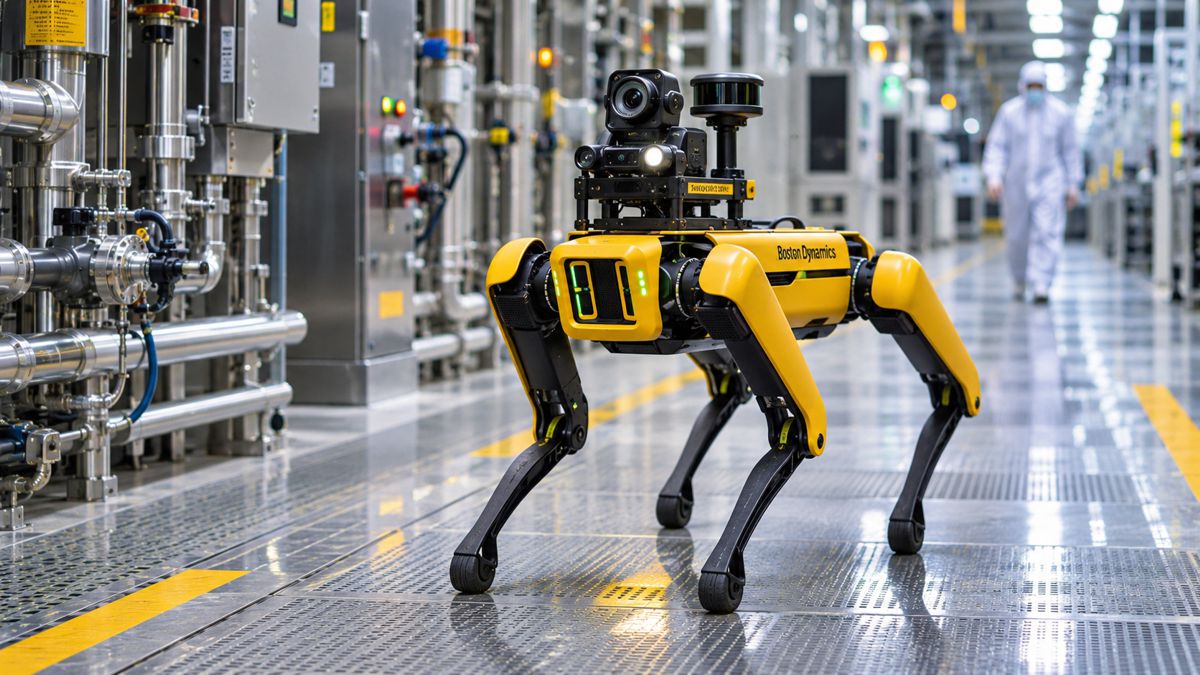
In March 2026, Boston Dynamics and FieldAI announced a partnership to develop robotic autonomy for construction and other changing environments. Their work combines the Spot quadruped robot with artificial intelligence technology intended to support navigation and inspection in complex surroundings, reducing the dependence on fixed routes and predictable operating conditions.
Although Spot is not humanoid, the engineering problems being addressed overlap considerably with those facing developers of general-purpose machines. Reliable autonomous navigation, environmental awareness and the ability to operate safely around changing obstacles will all be necessary before humanoid robots can undertake a broader range of construction activities.
For now, inspection and monitoring offer more established applications for autonomous site robotics than general-purpose manual labour. As manipulation and mobility improve, the range of possible tasks may expand, but individual applications will still have to demonstrate advantages over specialised machinery and conventional construction methods.
Safety and Human-Robot Collaboration
Safety presents another substantial challenge as mobile robots begin operating alongside people rather than within segregated industrial areas.
Traditional industrial robotics has generally relied on controlled workspaces, protective barriers and established procedures governing access to moving machinery. Humanoid robots may need to travel through shared environments, handle materials and alter their movements in response to changing conditions, making it more difficult to rely on fixed exclusion zones.
Consider a robot transporting construction materials across a partially completed building. An unexpected obstruction might require it to stop, change direction or adjust its grip, while a worker entering the same space could demand an immediate response. If the machine loses balance or fails to recognise an obstacle, the consequences may extend beyond damage to the robot itself, particularly when heavy or awkward loads are involved.
The US National Institute for Occupational Safety and Health examined these issues in guidance published in October 2026. It identified the potential for robots to reduce exposure to hazardous construction tasks while warning that human-robot interaction can introduce additional risks involving unexpected movement, sensing limitations and changing site conditions.
The institute advocates considering safety from the design stage, supported by task-specific risk assessments and continuous evaluation of how workers and robotic systems interact. Existing industrial robot safety practices provide useful foundations, although their application to mobile machines in changing construction environments requires further consideration.
For humanoid systems, the challenge extends to the behaviour of artificial intelligence controlling physical movements. A robot may be capable of recognising objects and planning its actions, but its responses must remain safe when sensors provide incomplete information or an unfamiliar situation falls outside previously tested conditions.
These questions are particularly relevant to construction, where workers may enter robotic operating areas without direct involvement in the automated task. Reliable detection, predictable movements and effective emergency stopping are essential, but site organisation and employee training will remain equally important.
Manufacturing Capacity and Commercial Economics
Producing a small number of advanced robots allows manufacturers to devote considerable engineering attention to individual machines. Scaling production into the thousands demands repeatable assembly processes, consistent component quality and a servicing infrastructure capable of supporting equipment throughout its working life.
Humanoid robots contain numerous precision components, particularly within their joints and manipulation systems. Actuators must deliver controlled movement while remaining compact enough for practical operation, and sensors must function reliably despite vibration, mechanical wear and changing environmental conditions. Battery capacity and energy consumption place further constraints on operating endurance.
Manufacturers must balance these technical requirements against production costs and eventual selling prices. A highly capable robot may find applications in specialised industrial settings, but widespread adoption will depend on whether its performance offers sufficient economic value compared with conventional equipment and human-operated processes.
These manufacturing questions are central to the December summit, which will bring together robotics developers, technology suppliers and investors alongside organisations investigating potential commercial applications.
Organisers expect attendance to increase by approximately 50% compared with 2025, when the event attracted more than 2,000 participants. The larger San Mateo venue will accommodate an expanded exhibition area and live demonstrations, with the programme also covering the investment and manufacturing requirements associated with bringing humanoid systems into broader production.
Modar Alaoui, Founder and Chair of Humanoids Summit and General Partner at ALM Ventures, described the challenge facing developers: “Humanoid robotics is entering the stage when the challenge is no longer just demonstrating capabilities, but making robots reliable, affordable, and ready for deployment at scale,” he said. “Our expansion reflects that shift. We’re bringing together the companies building the robots, the industries preparing to deploy them, and the capital needed to scale production.”
The summit has established an international presence through events in London, Tokyo and Seoul, connecting robotics businesses and research communities across several major technology markets. The Silicon Valley gathering remains an important meeting point for companies seeking industrial partnerships, manufacturing investment and potential customers.
From Demonstrations to Working Machines
Humanoids Summit 2026 arrives at a point when robotics manufacturers are beginning to gather practical evidence from industrial environments, although the commercial maturity of individual systems remains uneven. Improvements in artificial intelligence, dexterity and mobility have expanded what these machines can demonstrate, while questions about reliability, maintenance and operating costs are becoming increasingly difficult to avoid.
Construction and infrastructure businesses have reasons to follow these developments, even if widespread humanoid deployment on active sites remains some distance away. Many of the technologies under development, particularly autonomous navigation, environmental perception and robotic manipulation, are already relevant to specialised equipment operating in demanding industrial environments.
The demonstrations and technical discussions in San Mateo should provide an opportunity to assess how far humanoid robotics has progressed towards sustained industrial operation, where successful performance is measured across working shifts rather than individual demonstrations.
Key Industry Questions
- When and where is Humanoids Summit 2026 taking place? The event runs from 1–2 December 2026 at the San Mateo County Event Center in California, United States.
- Will Tesla Optimus be demonstrated at the event? Organisers have confirmed that Optimus will be present, although the precise scope of its demonstration activities has not been specified in the announcement.
- Which companies are participating in Humanoids Summit 2026? The announced speaker programme includes representatives from Apptronik, Google DeepMind, 1X Technologies, Honda R&D, Skild AI, FieldAI, AGIBOT, Unitree and other robotics and research organisations.
- What is physical AI? Physical AI refers to artificial intelligence systems that perceive, interpret and interact with the physical world through equipment such as robots, autonomous vehicles and industrial machinery.
- Are humanoid robots already working in factories? Limited industrial pilots and training programmes are under way, with manufacturers evaluating robots for handling, logistics and production-related activities. Commercial maturity varies considerably between systems and applications.
- Could humanoid robots eventually work on construction sites? Potential applications include material handling, inspection and repetitive support activities. Unpredictable ground conditions, changing work areas and human-robot safety requirements remain substantial technical barriers.
- What prevents humanoid robots from entering mass production? Manufacturers must overcome problems involving component costs, technical reliability, production capacity and maintenance while establishing whether robots can deliver sufficient economic value in practical applications.
- How are humanoid robots being assessed for industrial safety? Existing industrial robotics requirements provide foundations for safety assessment, while research organisations and standards bodies are developing approaches to the challenges presented by increasingly mobile and autonomous machines.
Strategic Takeaways
- Industrial trials are providing practical operating evidence that controlled laboratory demonstrations cannot establish.
- Independent benchmarking will help manufacturers and industrial users assess competing humanoid platforms against specific tasks.
- Construction presents greater environmental and operational uncertainty than conventional manufacturing, favouring specialised robotic applications in the near term.
- Manufacturing economics, operating endurance and maintenance requirements will influence the pace of commercial adoption as much as advances in artificial intelligence.
- Technologies developed for humanoid robots may benefit construction and infrastructure automation even before general-purpose humanoids become commercially practical.