Trimble Expands AI Construction Platform with Scheduling and Machine Control
Trimble has unveiled a substantial expansion of its construction technology portfolio at the 2026 Trimble Dimensions User Conference in Las Vegas, introducing AI-assisted scheduling, new machine positioning hardware, design software enhancements and automated workflows built around its Trimble Connect platform.
Announced on 9 and 10 November, the developments bring together activities that have traditionally operated through separate applications and information systems. Construction programmes, equipment positioning, design models, site inspections and commercial records can increasingly be connected through a shared digital environment, with artificial intelligence used to interpret project information and support operational decisions.
The announcements also extend beyond software. A new integrated positioning unit for Trimble Earthworks combines satellite positioning, communications and processing functions, while SketchUp 2027 introduces more flexible modelling tools and a new route for transferring design information into Autodesk Revit.
Briefing
- Trimble is expanding Trimble Connect with AI-assisted workflows spanning design, construction and operations.
- Trimble Connect Scheduling analyses project information to identify potential delays and recommend programme adjustments.
- The new MP1087 positioning unit demonstrated up to 15% improved uptime in challenging environments during Trimble testing.
- SketchUp 2027 introduces non-destructive modelling, alongside a new importer for Autodesk Revit.
- Several AI capabilities are commercially available, while others remain in limited deployment, development or laboratory programmes.
Building a Common Environment for Construction Data
The centrepiece of Trimble’s announcements is an expanded Trimble Connect platform, designed to connect specialised construction applications with project information gathered in the office and on site.
Trimble reports that the platform has supported more than 55 million cumulative users working across more than 35 million projects, with an ecosystem of over 400 integrations. These are company-reported cumulative figures, rather than a measure of current active users or projects.
The expanded environment brings together information from design models, positioning equipment, machine control systems, project management applications and commercial software. Applications can exchange information while retaining the specialised functions needed for individual construction activities, reducing the reliance on manual transfers between disconnected systems.
Trimble Assist provides a conversational interface through which users can interact with AI capabilities and retrieve information from connected applications. Alongside it, Trimble Agent Studio allows organisations to configure specialised AI agents using established operating procedures, project information and institutional knowledge.
The architecture combines project-specific data with specialised construction applications and information generated by field equipment. Drawing revisions, machine measurements, contract records and inspection reports may describe different aspects of the same operation, but they are rarely maintained in identical formats or updated at the same time.
Bringing these records into a shared environment creates opportunities to identify discrepancies earlier and automate parts of the administrative workload. It also requires applications to recognise which information is current, which source is authoritative and whether a proposed action has been approved.
Trimble is introducing standardised AI safety labels covering areas including security, data provenance and governance. According to the company, all currently available agents and models within its platform AI layer carry these labels, which it describes as aligned with ISO/IEC 42001 and relevant European AI governance requirements. Alignment does not, by itself, establish independent certification.
AI-Assisted Scheduling for Construction Projects
Among the more immediately applicable announcements is Trimble Connect Scheduling, a planning system designed to connect master construction programmes with operational information as work progresses.
Critical path method scheduling remains central to coordinating major activities and managing contractual milestones. Maintaining an accurate programme, however, requires continuous information from the people carrying out the work, particularly when labour availability, deliveries, design approvals or site conditions change the planned sequence.
Trimble’s system draws information from requests for information, short-term look-ahead schedules, daily reports, submittals, weather forecasts and other project records. An AI planning engine evaluates potential conflicts and recommends adjustments, including resequencing activities or reconsidering available programme float.
Project teams review and approve the recommendations, retaining responsibility for changes to the construction programme. The software also supports importing schedules from Primavera P6 and Microsoft Project while preserving their logic and baselines, allowing contractors to build on established planning practices.
On major projects, the contractual programme may be maintained by a dedicated planning department while subcontractors and site supervisors work from shorter schedules that respond to immediate conditions. A delayed delivery, outstanding RFI or unexpected restriction on access can affect several activities before the problem appears in a formal reporting cycle.
Connecting site-level information with the master programme gives planners an opportunity to identify those conflicts earlier. The system can cross-reference current project records with historical operational information and suggest possible responses, although its effectiveness will depend on the quality and completeness of incoming data.
Trimble developed the software with input from contractors including DILFO Mechanical and Consolidated Construction. Their published feedback describes improvements in usability, planning flexibility and collaboration between field and office teams, although independently measured reductions in project delays or costs have not been established.
Trimble Connect Scheduling is currently available in North America for general contractors and subcontractors.
Integrated Positioning Hardware for Earthmoving Equipment
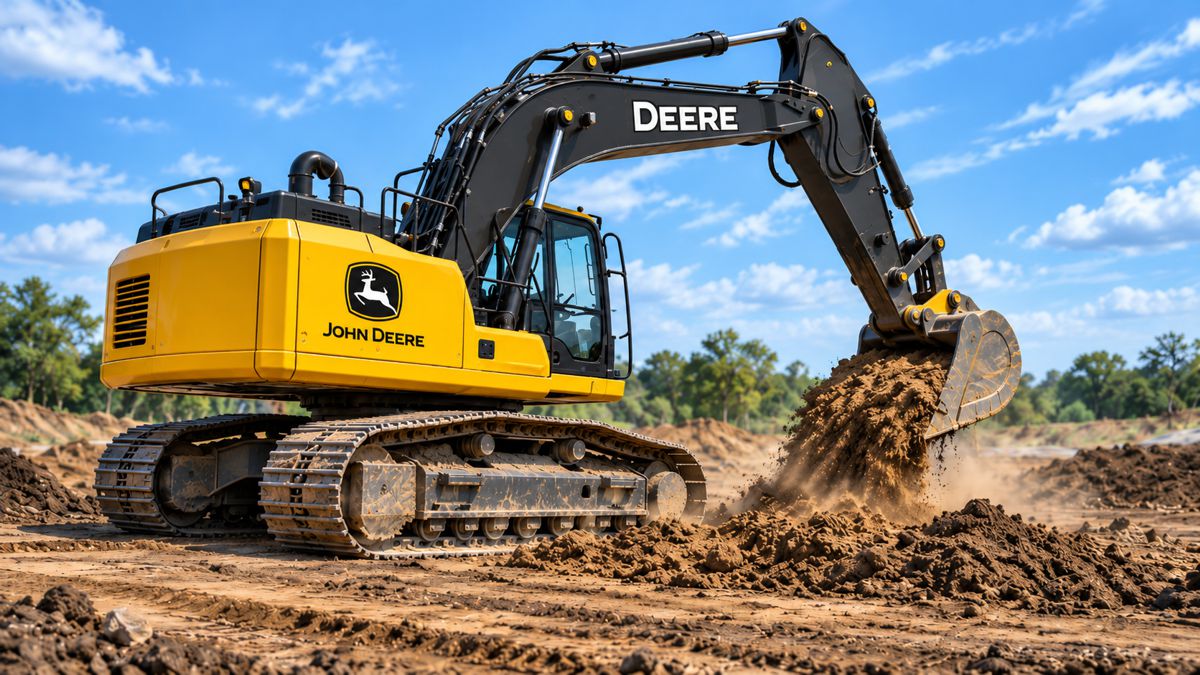
Alongside the software announcements, Trimble has introduced the MP1087 machine positioning solution for its Earthworks grade control platform.
The compact unit consolidates positioning and communications functions previously distributed across several hardware components. Combining them into a single enclosure reduces the number of separate devices and connections required during installation, while simplifying access for maintenance and fault diagnosis.
On earthmoving equipment, the positioning system must maintain an accurate relationship between the machine, its working attachment and the digital design. Interruptions to satellite positioning or communications can affect the operator’s ability to follow the intended grade, particularly where the equipment is working close to buildings, beneath trees or in difficult terrain.
The MP1087 incorporates Trimble’s Maxwell 8 GNSS technology, including enhanced resistance to satellite signal interference and capabilities intended to address jamming and spoofing. It also integrates Wi-Fi, cellular communications, UHF radio and network connectivity, with support for technologies including Wi-Fi HaLow.
Wi-Fi HaLow operates in sub-1 GHz frequency bands and is designed to support longer-range, lower-power wireless communication than conventional Wi-Fi in suitable applications. Its inclusion provides another option for transferring project information where site layouts or operating conditions make conventional connections difficult.
Trimble reports that its new positioning technology demonstrated improvements in uptime of up to 15% during testing in challenging environments. The company also claims approximately ten times faster communications between the machine display and positioning unit, together with typically five times greater processing capability.
Those results relate to Trimble’s reported system performance and should not be interpreted as a guaranteed increase in machine productivity. Equipment configuration, satellite visibility, communication conditions and the performance of the previous installation will all influence the operational outcome.
Additional processing capacity allows the system to handle more demanding design information and machine control applications. Modern grade control equipment must process positioning measurements, interpret design surfaces and communicate continuously with displays and other onboard components, often while the machine operates in conditions that are far removed from those of an office computer.
There is also a practical maintenance consideration. Distributed electronic systems introduce multiple enclosures, cables and connectors, each of which can become a potential point of failure or complicate troubleshooting. Consolidating components can simplify installation and servicing, although the reliability of the complete system will still depend on its integration with the machine and the conditions in which it operates.
Trimble expects the MP1087 to become available worldwide through its dealer network in late 2026. It will also be offered through Trimble Works and Works Plus subscriptions.
SketchUp 2027 and Design Interoperability
Trimble’s design announcements concentrate on reducing repetitive modelling work and improving the transfer of information between software environments.
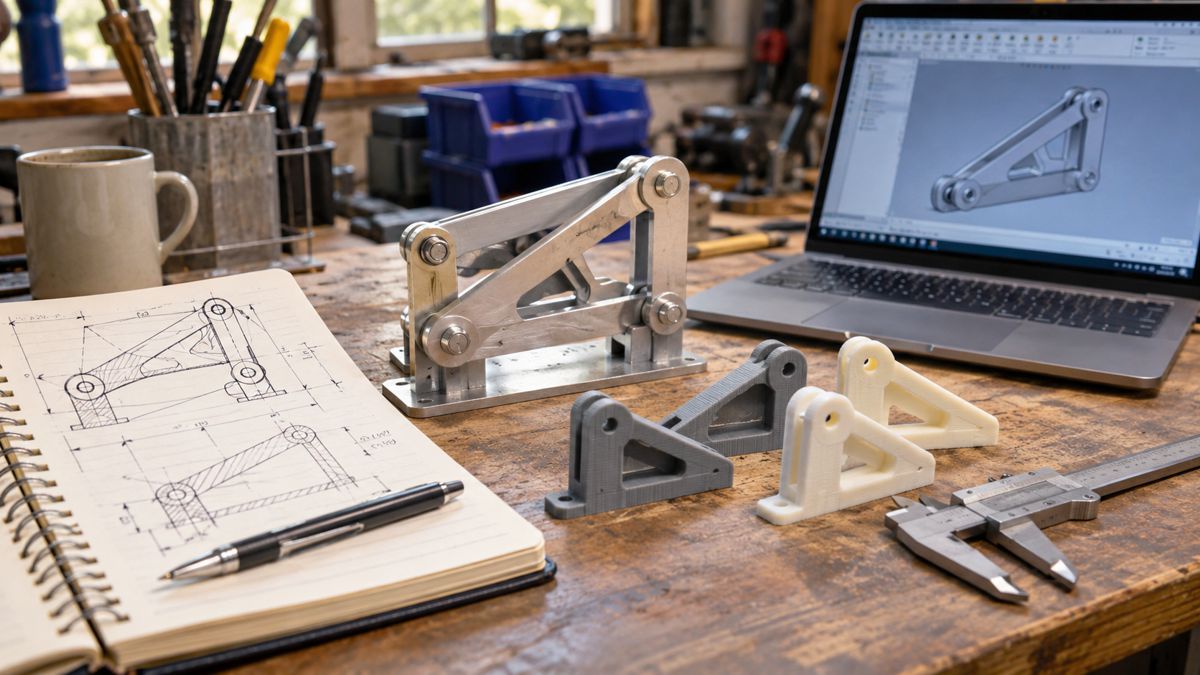
SketchUp 2027 introduces Procedures, a non-destructive modelling system that allows designers to modify complex geometry without reconstructing earlier work. Modelling operations can be adjusted as a design develops, providing greater flexibility when layouts, dimensions or component arrangements change.
The release also includes section hatch patterns for technical drawings, a paperless drafting canvas in LayOut and improvements to Live Components that allow selected objects to resize automatically to fit the surfaces on which they are placed.
Trimble has also introduced SketchUp Importer for Revit, intended to preserve more of the structure and information contained in conceptual models as they move into Autodesk Revit.
The importer recognises component tags and classifications in SketchUp, maps them to corresponding Revit categories and converts supported geometry into native architectural elements. These can then be edited, scheduled and documented within the Revit environment.
The transfer from conceptual design into detailed building information modelling has traditionally required substantial reconstruction, particularly when imported geometry arrives as objects that cannot readily be modified or associated with native building components.
Preserving those relationships can reduce repetitive work, although the results will depend on how the original SketchUp model is organised and which elements the importer supports. Designers will still need to check the converted model before relying on it for detailed documentation or coordination.
Trimble has also introduced Connect Design Hub within its Labs programme, bringing design communication, model files and project administration into a consolidated project record.
SketchUp 2027 is available to Pro and higher-tier subscribers, while the Revit importer is expected to become available during November 2026 for qualifying Pro Advanced Workflows and Studio subscriptions.
AI Applications Across Site and Office Operations
Beyond scheduling and design interoperability, Trimble has outlined a collection of AI-enabled functions covering structural modelling, reality capture, field inspections, equipment diagnostics and commercial administration.
Its automated structural modelling capability is designed to generate steel models and fabrication information from natural-language instructions and spatial data. Other applications include classifying point clouds into recognised structural regions and processing 360-degree site imagery into spatial information aligned with project drawings.
For site operations, Trimble has introduced AI Punch Walk, an inspection workflow that allows engineers to record observations by voice, associate them with locations and attach inspection items to project drawings. The system transcribes observations and organises them into records that can be managed through the connected project environment.
The commercial applications include automated matching of supplier invoices against purchase orders and delivery records. This creates a means of identifying discrepancies between what was ordered, what reached the site and what a supplier has invoiced, although the underlying records must still be sufficiently complete and consistent for the comparison to be useful.
Other developments are at an earlier stage. Trimble is working on automated verification of machine control design files and systems capable of examining contractual records to prepare draft potential change orders for review.
The distinction between these applications is important when considering implementation. Trimble identifies automated structural modelling, indoor point-cloud classification, 360-degree reality capture, AI Punch Walk, procurement matching and Trimble Connect Scheduling as available capabilities. AI diagnostics for field hardware are currently available to selected customers.
Design-file verification and automated change-order generation remain in development, while generative design capabilities are being explored through Trimble Labs. The announcements therefore combine deployable products with a longer-term programme of automated construction workflows.
Integration and Data Governance
Construction companies rarely operate within a single technology environment. Large contractors may use different applications for project planning, design coordination, cost control, equipment management and subcontractor administration, often because clients or contractual arrangements require particular systems.
Trimble is positioning Connect as a shared platform while retaining compatibility with external applications. Its integration ecosystem and support for established scheduling formats suggest a strategy of connecting specialist software rather than replacing every existing function.
That approach places considerable importance on the accuracy and accessibility of project records. A construction schedule may identify an activity as complete while a field inspection records outstanding work, or a revised design model may not yet have reached the equipment operating on site. Connected applications need to preserve the relationships between those records without obscuring their origin or status.
Automated recommendations also introduce questions about authority and accountability. A planning system may suggest resequencing activities, but the resulting programme change could affect access arrangements, subcontractor commitments or contractual milestones. Similarly, an AI-generated change-order proposal must be checked against contract terms, supporting records and the actual circumstances of the work.
Trimble’s platform architecture places human review and approval at the centre of these decisions, supported by governance information about the automated systems involved.
The practical requirements will differ between applications. An inspection tool that helps organise observations presents a different level of operational exposure from software preparing commercial claims or verifying design information intended for machine control. Contractors will need to evaluate individual functions against their existing procedures for technical approval, data management and contractual administration.
Connecting Construction Information with Physical Operations
The Dimensions announcements bring several established construction technologies into a more closely connected environment. Scheduling applications can draw on current site information, design systems can transfer models with less reconstruction, and positioning hardware can provide more reliable access to the geometry used by earthmoving equipment.
Some of the improvements are relatively straightforward to assess. Installation time for positioning hardware can be measured, interruptions to machine control can be recorded, and designers can compare the work required to transfer models between applications. Scheduling intelligence and AI-assisted commercial processes present more complicated questions, particularly when their outputs depend on incomplete information or decisions involving several organisations.
Construction sites also remain difficult environments for digital systems. Designs change, satellite signals become obstructed, connectivity is inconsistent and subcontractors may work with different software and reporting procedures. A shared platform can make information easier to exchange, but it cannot eliminate those operating conditions.
Trimble is developing a system in which more of that information can follow a project from design through to construction and operation. The immediate test will be whether the individual tools save time and improve reliability in everyday work, while the more ambitious AI applications will need to demonstrate that their recommendations remain dependable when the information reaching them is incomplete, disputed or changing.
Key Industry Questions
- What is Trimble Connect? Trimble Connect is a construction collaboration and information platform designed to connect project data across design, construction, field operations and management applications.
- How does Trimble Connect Scheduling use artificial intelligence? It analyses project schedules, RFIs, field reports, weather forecasts and other information to identify potential delays and recommend adjustments for review and approval.
- Can contractors use existing Primavera P6 or Microsoft Project schedules? Yes. Trimble Connect Scheduling supports importing existing programmes while preserving their scheduling logic and baselines.
- What is the Trimble MP1087? The MP1087 is an integrated machine positioning and communications unit developed for Trimble Earthworks grade control systems.
- Does the MP1087 increase machine uptime by 15%? Trimble reports improvements of up to 15% in positioning-system uptime during testing in difficult operating environments. Results will vary according to equipment configuration and site conditions.
- What is Wi-Fi HaLow and why is it relevant to machine control? Wi-Fi HaLow is a wireless networking technology designed for longer-range, lower-power communication in suitable applications. It provides an additional connectivity option for connected equipment and field systems.
- What is new in SketchUp 2027? The release introduces non-destructive modelling through Procedures, together with improvements to technical drawing production, component sizing and documentation workflows.
- How does SketchUp Importer for Revit work? It maps supported SketchUp components to corresponding Revit categories and converts recognised geometry into native elements that can be edited and documented.
- Are all the new Trimble AI capabilities commercially available? No. Several are available, while equipment diagnostics have limited customer availability and other functions remain in development or Trimble Labs programmes.
- Can AI-generated scheduling and commercial recommendations be implemented without human approval? Trimble describes human review and approval as central to its approach. The precise controls depend on the application and the workflow being used.
Strategic Takeaways
- Connected construction data: Linking specialist applications can reduce repetitive information transfers without requiring contractors to abandon established software.
- Scheduling intelligence: Early identification of programme conflicts depends on reliable field reporting and a clear relationship between short-term activities and the master schedule.
- Machine control reliability: Consolidated positioning hardware may simplify installation and maintenance while improving GNSS availability in difficult environments.
- Design interoperability: Converting conceptual models into editable native elements can reduce reconstruction work between design and documentation applications.
- AI deployment: Commercially available tools, selected-customer releases and experimental capabilities require different approaches to procurement, testing and operational approval.