






Mongolia’s Mining Boom Is Building the Foundations of a More Diversified Economy
Mongolia’s mineral wealth has transformed its economy over the past two decades, attracting international investment, expanding copper and coal production, and generating revenues that have helped finance infrastructure and public services. The country now faces a more demanding challenge: ensuring those gains endure when commodity markets weaken.
The Asian Development Bank (ADB) approved a further $200 million in financing on 17 November 2026 to help Mongolia strengthen public finances, improve its banking system and encourage investment beyond the extractive industries. The package forms the final phase of a reform programme launched in 2023 and comes as rising international energy costs and volatile export markets place renewed pressure on the country’s finances.
Mining accounts for more than 90% of Mongolia’s exports and approximately one-third of government revenues. Copper production at the vast Oyu Tolgoi mine has added fresh momentum to the economy, while coal exports have encouraged railway construction and the expansion of transport services serving the Chinese market. These developments have created opportunities for domestic contractors, engineering companies and equipment suppliers, although much of the country’s economic activity remains exposed to movements in commodity prices.
The latest ADB financing provides an opportunity to examine what Mongolia has gained from its mining industry and how that wealth might support a broader economic future.
Briefing
- ADB approved $200 million in financing for Mongolia on 17 November 2026.
- Mining accounts for over 90% of exports and approximately one-third of government revenues.
- Mongolia’s economy grew by 6.8% in 2025, supported by mining and agriculture.
- Copper expansion, coal exports and railway investment are supporting economic development.
- Tax, debt and banking reforms aim to strengthen public finances and support investment beyond mining.
The Mining Industry Behind Mongolia’s Economic Growth
Mongolia possesses extensive deposits of coal, copper, gold and other minerals, making the extractive sector a natural foundation for economic development. Its geographical position between China and Russia provides access to major industrial markets, although dependence on neighbouring transport corridors also creates commercial and logistical constraints.
Mining investment has delivered substantial economic gains. According to the International Monetary Fund’s 2025 assessment, government mining revenues more than doubled between 2022 and 2024, helping to support public expenditure and contributing to fiscal surpluses in 2023 and 2024. The associated increase in spending also heightened exposure to commodity-price fluctuations, a recurring difficulty for countries whose public finances depend heavily on natural resources.
Mongolia’s economic progress has extended beyond government accounts. The country achieved upper-middle-income status in 2024, following decades of rising national income and falling poverty. Although these achievements cannot be attributed exclusively to mining, mineral production has provided much of the investment, export earnings and fiscal capacity underpinning development.
The industry continues to drive economic growth. The Asian Development Outlook published in April 2026 recorded growth of 6.8% in 2025, supported by expanding mineral production and a strong agricultural recovery following two difficult winters. ADB projected further growth of 5.7% in 2026, with copper production and coal demand remaining important contributors.
More recently, the IMF reported that Mongolia’s economy grew by 7.7% during the first half of 2026, supported by higher mining production and favourable commodity prices. The Fund welcomed the additional revenues but recommended that exceptional gains be used primarily to strengthen fiscal reserves rather than support permanent spending commitments.
Oyu Tolgoi and the Benefits of Large-Scale Investment
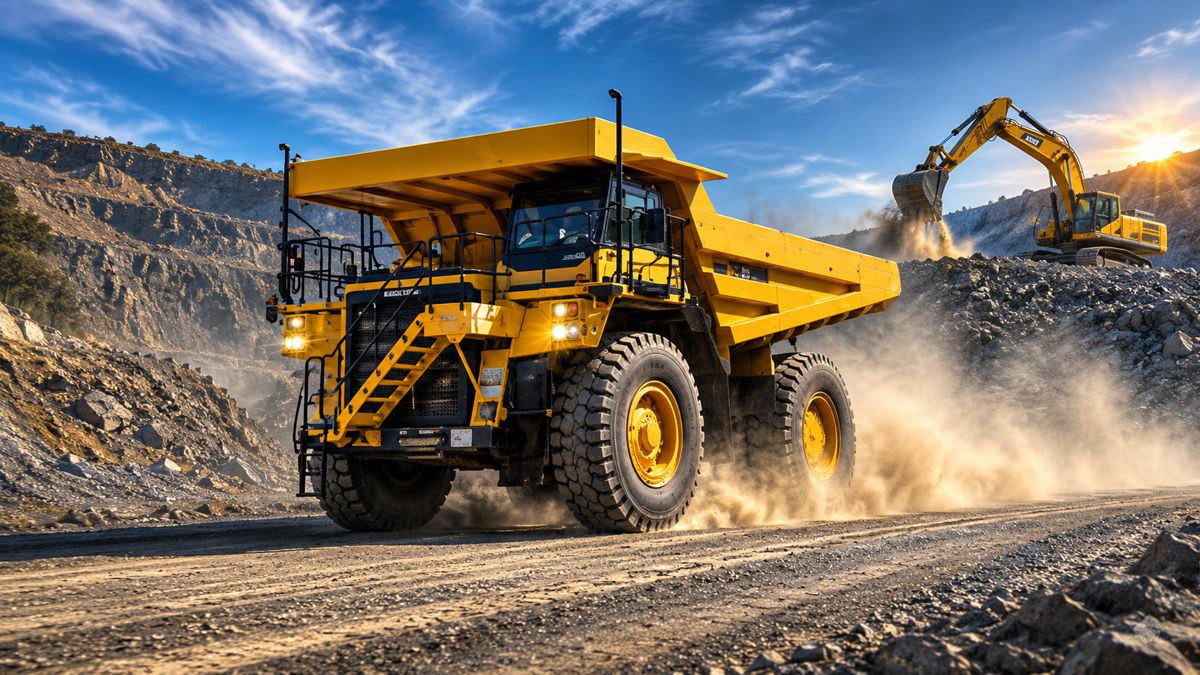
The Oyu Tolgoi copper and gold operation in the South Gobi Desert demonstrates how major mining projects can influence economic activity far beyond the mine itself. The development involves extensive underground workings, mineral-processing facilities, power and water infrastructure, sophisticated machinery and an international network of suppliers and engineering contractors.
Underground production began in 2023, opening access to higher-grade ore and substantially increasing the mine’s productive potential. According to the World Bank’s April 2026 Mongolia Economic Update, expanding copper output helped sustain economic growth during 2025, even as weaker coal prices placed pressure on another major export commodity.
Figures published by the Mongolian state-owned shareholder, Erdenes Oyu Tolgoi, indicate that the project procured approximately $12.6 billion in goods and services between 2010 and 2023, of which around $11.2 billion was classified as local procurement.
Local procurement does not necessarily mean that every product was manufactured in Mongolia or that its full value remained within the domestic economy. Nevertheless, purchasing through Mongolian businesses creates opportunities for construction contractors, transport operators, equipment maintenance specialists and professional service providers. For domestic suppliers, long-term mining contracts can provide the commercial certainty needed to invest in machinery, workshops, workforce training and logistics facilities, some of which may eventually serve customers outside the extractive industries.
The expansion of Oyu Tolgoi has also made copper increasingly important to Mongolia’s export earnings. Coal remains a major commodity, but growing copper production provides some diversification within the mining sector itself, with demand linked to electrical infrastructure, industrial manufacturing and energy systems.
Railways and Transport Infrastructure
Mongolia’s mineral resources are spread across a vast territory with relatively low population density and demanding climatic conditions. Moving coal, copper concentrate, machinery and industrial supplies between remote production sites and international markets requires substantial investment in roads, railways and border facilities.
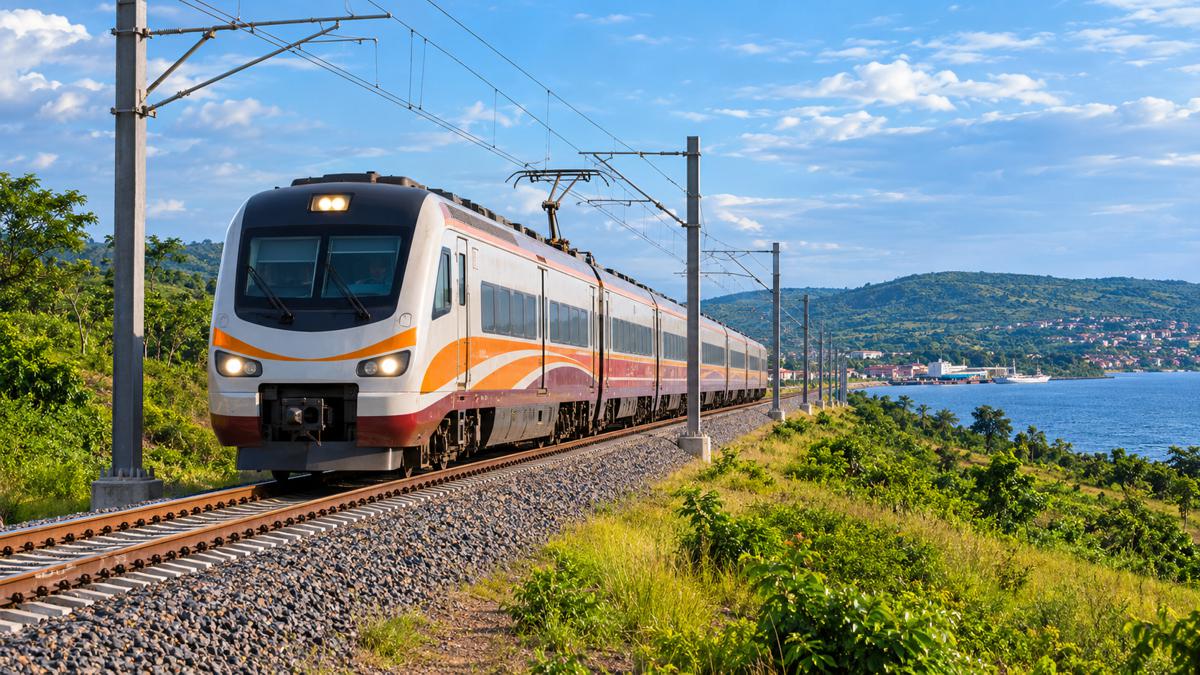
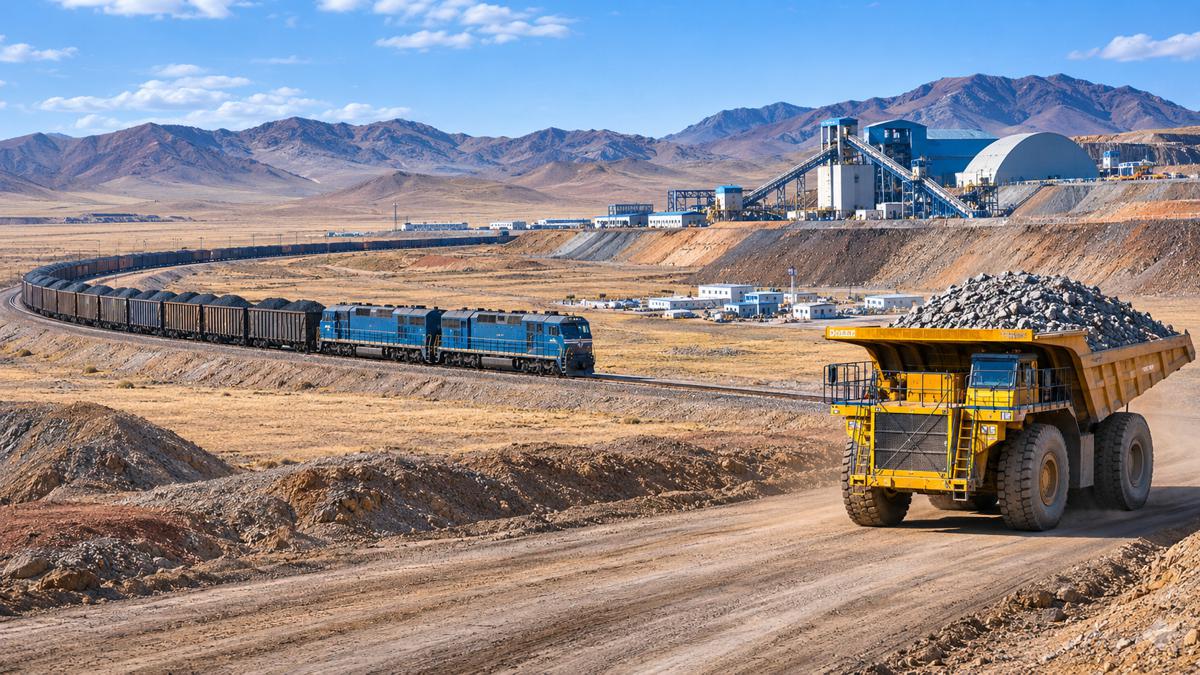
Coal exports to China have been particularly influential in transport development. Railway connections serving the Tavan Tolgoi coal-producing region have been designed to improve freight efficiency and reduce reliance on long-distance road haulage, where large fleets of trucks have historically carried mineral exports towards border crossings.
The European Bank for Reconstruction and Development’s 2025–26 country assessment identified the start of construction on the Gashuunsukhait–Gantsmod cross-border railway as an important infrastructure development. The connection is intended to improve the movement of mineral exports into China, although its eventual economic contribution will depend on completion, operating arrangements, freight volumes and market demand.
Mining has also generated substantial activity in road transport. The World Bank reported that Mongolia’s road freight transport sector expanded by 34% in 2024, supported by increased coal production and exports. Although much of this activity remains tied to mineral production, the expansion of transport capacity offers opportunities for moving construction materials, agricultural products, imported equipment and manufactured goods.
How far those benefits extend will depend on whether new infrastructure accommodates wider commercial traffic or remains primarily dedicated to individual mining operations. Connections developed around mineral production could eventually serve industrial estates, processing facilities and other businesses, particularly where investment improves access to border crossings and established trade routes.
Public Finances and the Value of Mineral Revenues
Mining taxes, royalties, dividends and other receipts provide Mongolia with substantial public revenue, creating opportunities to invest in healthcare, education, utilities and infrastructure. Strong export earnings have also helped improve the country’s external financial position and reduce public debt.
The World Bank’s August 2025 fiscal policy review found that strong mineral exports had contributed to lower public debt, improved external financial buffers and stronger sovereign credit ratings. Better debt management had reduced refinancing risks, giving the government greater room to manage its financial obligations.
Coal prices, copper demand and international trading conditions can change much faster than governments can adjust their spending. A railway may take years to build and a hospital must be funded indefinitely, while the mineral revenues supporting both can decline sharply over a comparatively short period. Mongolia has experienced these pressures before, with strong export earnings encouraging expenditure increases during favourable conditions and leaving public finances exposed when commodity markets weaken.
The country’s fiscal arrangements have therefore become increasingly important to the management of mineral wealth. Under Mongolia’s sovereign wealth framework, part of the income generated by natural resources is retained through national savings mechanisms intended to preserve financial assets and support longer-term stability.
The IMF’s 2026 Article IV assessment reported that Mongolia’s Future Heritage Fund had accumulated approximately $1.6 billion by the end of 2025, equivalent to around 6% of GDP. These reserves provide a financial buffer against weaker economic conditions while preserving a portion of the proceeds of resource extraction for future generations.
Managing those savings alongside immediate development needs remains a difficult balance. Roads, water systems, schools and hospitals require investment now, but the government must also preserve sufficient financial flexibility to meet its obligations when mining revenues decline.
ADB Financing to Strengthen Mongolia’s Economy
The ADB’s newly approved $200 million package will support the institutions responsible for managing Mongolia’s economic development rather than finance another mine or a specific construction project. It combines a $150 million regular loan with a $50 million concessional loan, the latter provided through the bank’s wider response to economies affected by the Middle East conflict.
The financing represents the second and final phase of the Strengthening Fiscal, Financial, and Economic Resilience Programme, launched in 2023. Mongolia has completed all 19 policy actions required for this phase, covering taxation, public debt management and financial-sector reform.
ADB President Masato Kanda described the objectives in terms of the long-term benefits of resource development.
“A mining boom should leave a country stronger,” said Kanda. “Mongolia is using this period of growth to put its finances on firmer ground and create more opportunities for businesses beyond mining. With ADB’s assistance, these initiatives will help secure the country’s prosperity against the next downturn.”
The fiscal reforms include modernising tax administration, reducing compliance costs for businesses and improving transparency. Changes to public debt management will strengthen oversight of government borrowing and support the revival of local-currency bonds, potentially giving the government more domestic financing options and reducing some of the risks associated with international borrowing.
Banking reforms address another constraint on economic diversification. Improved financial reporting, stronger borrower protections and mechanisms for resolving problem loans are intended to increase confidence in lending institutions. The Bank of Mongolia and 11 commercial banks have also adopted measures to improve access to finance for women entrepreneurs.
Although Mongolia has completed the required policy actions, the longer-term benefits will depend on sustained improvements in lending, investment conditions and fiscal management. The programme provides a stronger institutional foundation, while its commercial and economic effects will emerge through the implementation of those reforms.
Building Industries Beyond Mining
Mongolia already has the beginnings of a broader industrial economy within its mining supply chain. Engineering contractors, equipment maintenance businesses, transport operators and specialist service providers have developed capabilities serving the country’s mineral projects, giving some of them a potential foundation for expansion into other sectors.
Large mining operations require industrial maintenance, construction materials, machinery, software, logistics and environmental services. Businesses capable of supplying these products and services to demanding industrial customers may find opportunities elsewhere in Mongolia or in overseas markets, particularly where their experience involves operating heavy equipment in remote locations and challenging climates.
Agriculture and livestock production provide another established economic foundation. Mongolia’s cashmere industry offers opportunities for processing, manufacturing and export development, while improvements in transport, cold-chain logistics and access to finance could help agricultural businesses reach larger markets.
The World Bank’s September 2026 assessment of private investment opportunities identified potential for expanding investment in cashmere, energy and critical minerals. Its analysis suggested that improvements in quality standards, pricing arrangements and financing could attract $150 million in private investment to the cashmere sector and create up to 5,000 jobs by 2030, although these figures represent potential outcomes rather than committed investment.
Developing more domestic manufacturing and processing capacity will require reliable electricity, water supplies, transport connections and access to finance. These are familiar requirements for industrial development, but they present particular challenges in a country where businesses are separated by considerable distances and much of the population and economic activity is concentrated around Ulaanbaatar.
Mining has helped establish some of the infrastructure and technical capabilities needed for further development, although major projects continue to rely on imported equipment and specialist services. Expanding domestic supply chains will depend on workforce skills, competitive production costs and sufficient demand to justify investment.
ADB’s broader programme in Mongolia includes transport, healthcare, education, climate resilience and private-sector development. In October 2026, the bank announced plans for up to $1.3 billion in financing by 2027, including support for provincial healthcare, education and disaster preparedness.
Such investments can address longstanding development needs while improving the conditions in which private businesses operate. Better regional services, reliable infrastructure and stronger financial institutions can help economic activity extend beyond the country’s principal mining operations and urban centres.
Managing the Next Commodity Cycle
The economic benefits of Mongolia’s mining expansion are substantial, although rapid growth has also created new pressures. Higher copper production has increased export earnings and government revenues, while stronger domestic demand, public expenditure and supply disruptions have contributed to inflation.
In its October 2026 assessment, the IMF reported that inflation had reached 12.9% in September, driven partly by higher food prices and fuel shortages. The Fund also expressed concern about additional government spending financed through exceptional dividends from state-owned enterprises and Oyu Tolgoi, recommending greater emphasis on rebuilding fiscal reserves.
Mongolia’s increasing copper production provides opportunities as international demand develops, but the country’s dependence on China as a major export destination and its exposure to commodity prices remain significant vulnerabilities. A prolonged downturn in coal or copper markets could place pressure on government revenue, investment and the businesses serving mining operations.
The country enters the next stage of its development with considerable advantages accumulated through mineral extraction. Mining has attracted international capital, supported infrastructure construction, created industrial capabilities and provided resources for public investment. Stronger financial institutions and more disciplined management of mineral revenues could help preserve those gains through less favourable market conditions.
The most enduring benefit of Mongolia’s mineral wealth may eventually be measured in the businesses, infrastructure and public services that continue to operate independently of the mining boom that helped establish them.
Key Industry Questions
- How important is mining to Mongolia’s economy? Mining accounts for more than 90% of Mongolia’s exports and approximately one-third of government revenues. It is the country’s principal source of export earnings and a major contributor to public finances and investment.
- What benefits has Mongolia gained from mining development? Mining has attracted substantial foreign investment, increased national income, supported government expenditure and generated demand for roads, railways, energy infrastructure, construction services and industrial equipment.
- What is the Oyu Tolgoi mine? Oyu Tolgoi is a major copper and gold mining operation in Mongolia’s South Gobi region. Underground production began in 2023, expanding access to higher-grade ore and increasing copper production capacity.
- How much financing has ADB approved for Mongolia? ADB approved $200 million in November 2026, comprising a $150 million regular loan and a $50 million concessional loan to support economic and financial reforms.
- Will the ADB financing fund new mining or infrastructure projects? The package is policy-based financing rather than a dedicated construction or mining investment. It supports reforms in taxation, debt management, financial supervision and economic resilience.
- How has mining influenced Mongolia’s railway development? Coal production and exports have encouraged investment in rail connections to China, including the Gashuunsukhait–Gantsmod cross-border railway, which is intended to improve mineral freight efficiency and export capacity.
- How does Oyu Tolgoi support Mongolian businesses? The mine purchases goods and services through domestic suppliers, creating opportunities for construction contractors, transport operators, engineering companies and maintenance specialists. Local procurement does not necessarily represent an equivalent amount of domestic value added.
- Why does Mongolia need to diversify its economy? Dependence on mineral exports leaves government revenues and economic growth vulnerable to commodity prices, overseas demand, transport costs and international trading disruptions.
- Which industries could benefit from Mongolia’s economic diversification? Potential growth sectors include agriculture, cashmere processing, manufacturing, logistics, construction materials, industrial maintenance and specialist engineering services.
- How can Mongolia preserve the benefits of mining for future generations? Stronger fiscal reserves, productive infrastructure, improved financial institutions, education and the development of competitive domestic businesses can help convert mineral revenues into longer-term economic capacity.
Strategic Takeaways
- Mining has created substantial development capacity. Export revenues and foreign investment have supported infrastructure, public services and stronger national finances.
- Copper is becoming increasingly important to Mongolia’s export economy. Oyu Tolgoi’s underground expansion has strengthened production, although dependence on extractive industries remains high.
- Transport infrastructure offers opportunities beyond mineral exports. Railways and roads developed for mining could support wider trade where operating arrangements accommodate other commercial users.
- Domestic mining suppliers represent a potential source of industrial diversification. Engineering, maintenance and logistics businesses may be able to apply their experience in other sectors and export markets.
- Fiscal discipline will determine how much mineral wealth is preserved. Stronger reserves, more effective public financial management and improved access to investment finance can help Mongolia withstand future commodity downturns.