






SANY Brings Electric Mining Giants and Autonomous Construction to bauma CHINA
A 240-tonne battery-electric mining truck, a 320-tonne electric crawler crane and an autonomous roadbuilding fleet capable of coordinating 15 machines under a single supervisor will be among the headline exhibits when SANY arrives at bauma CHINA 2026.
The Chinese equipment manufacturer is preparing the largest exhibition presence in its 40-year history, bringing together mining machinery, construction equipment, roadbuilding technology, lifting systems and port-handling machines at the Shanghai New International Expo Centre from 24 to 27 November. Much of the display will concentrate on electrification and autonomous operation, reflecting the company’s increasingly ambitious engineering programme and its expanding international business.
Founded in 1986, SANY has developed from a domestic machinery manufacturer into one of China’s major international equipment groups. Its anniversary exhibition provides an opportunity to demonstrate how far its electric and autonomous technologies have progressed, particularly in applications where payload, energy consumption and continuous operating requirements have traditionally favoured diesel-powered machinery.
Briefing
- SANY marks 40 years with its largest-ever exhibition presence at bauma CHINA 2026.
- The SET260E electric mining truck carries 240 tonnes using a 4,130 kWh battery.
- A 320-tonne electric crawler crane offers more than 12 hours of battery operation.
- Autonomous paving and compaction technology coordinates up to 15 machines.
- Electric machinery is supported by charging infrastructure, energy storage and site-power systems.
Bringing Battery Power to the Largest Mining Machines
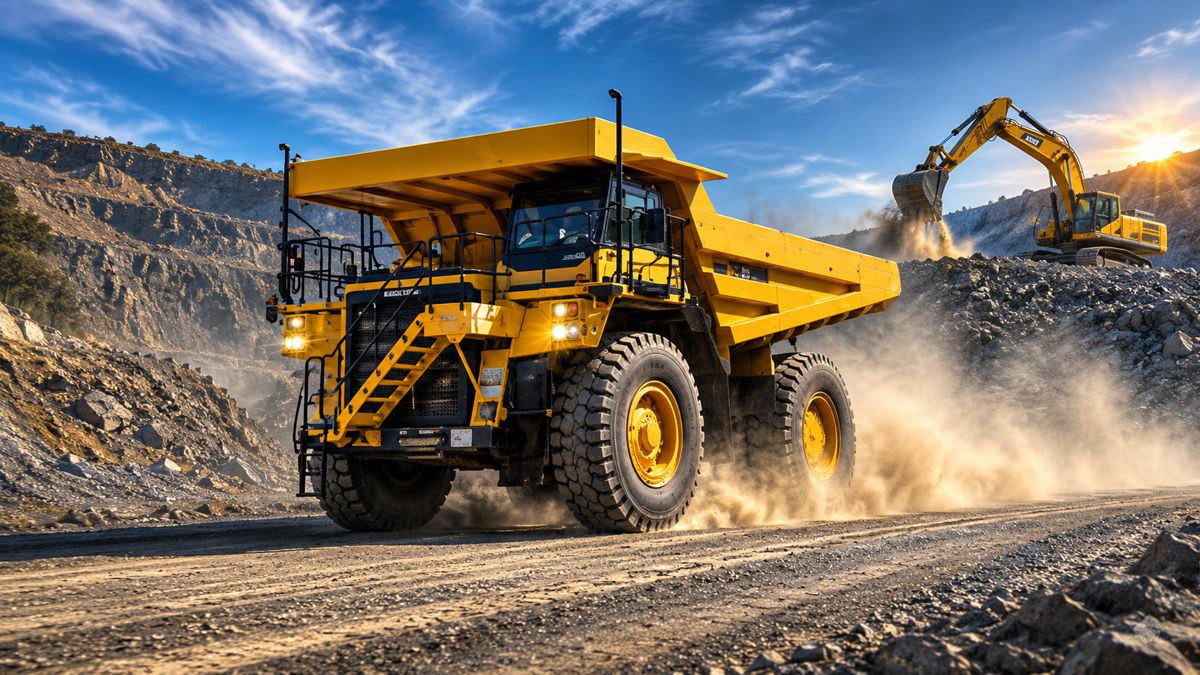
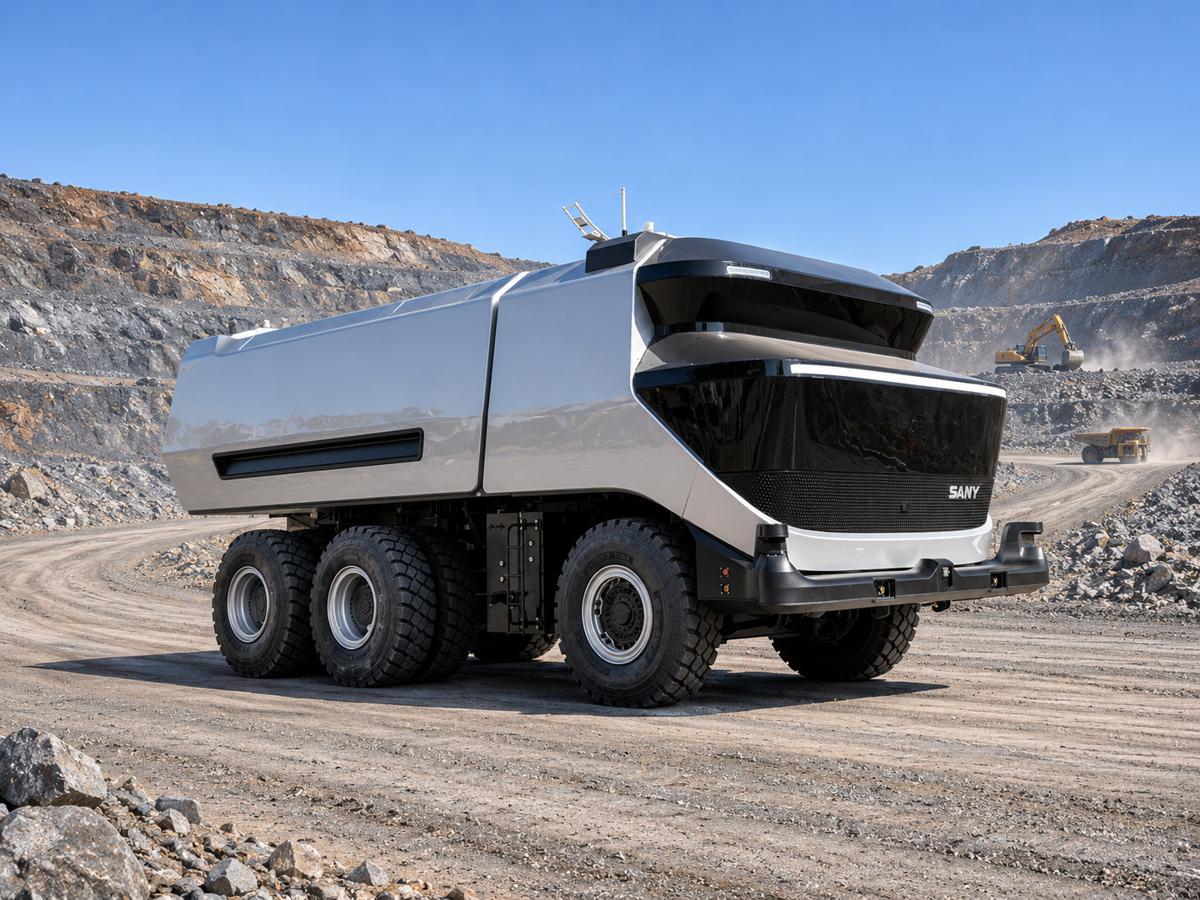
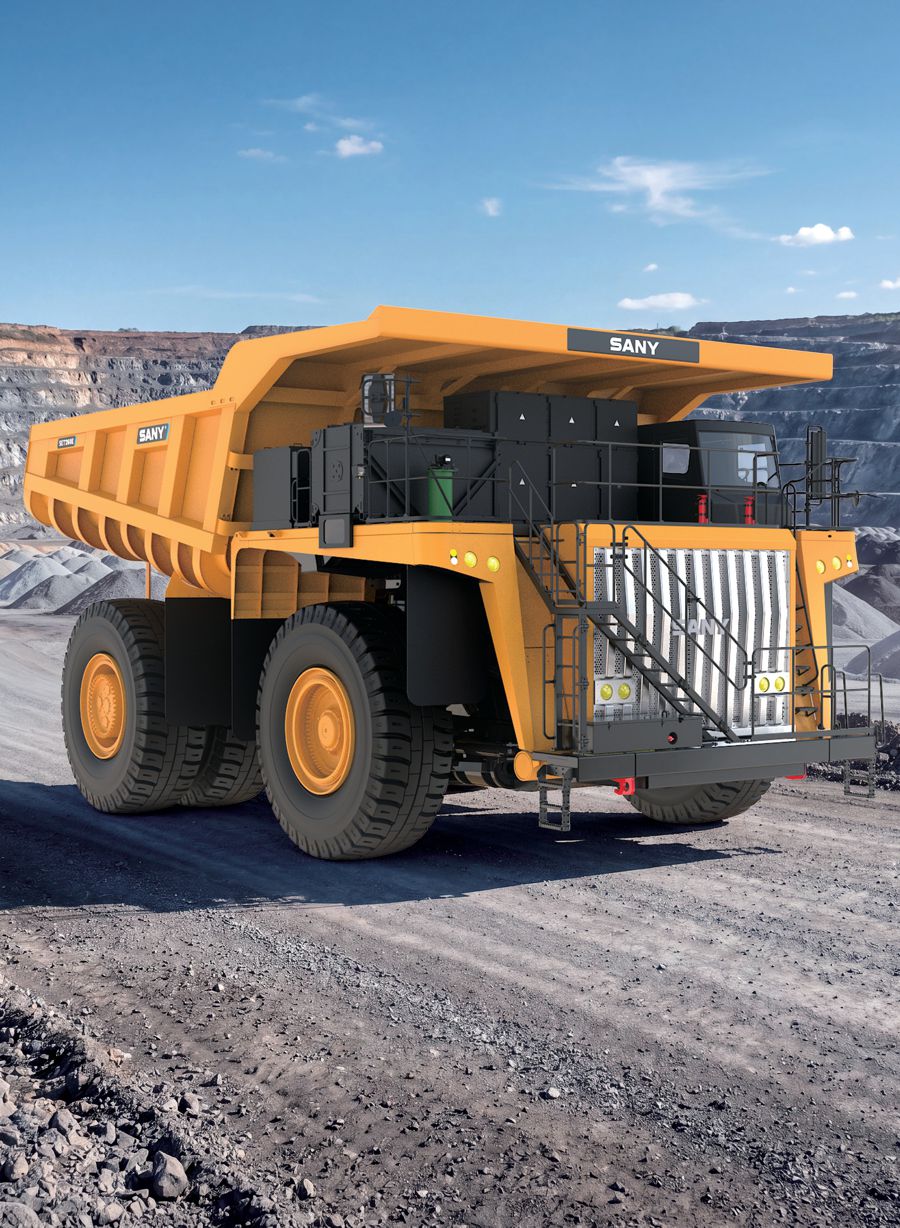
The SET260E will make its first public appearance at bauma CHINA, introducing a battery-electric mining truck designed to carry a 240-tonne payload without a diesel engine. SANY describes it as the world’s largest-payload battery-electric mining truck, placing the machine at the upper end of an equipment category in which electrification has been particularly challenging.
At the centre of the truck is a 4,130 kWh lithium iron phosphate battery operating on a 1,500-volt electrical platform. It delivers at least 2 MW of traction power, with SANY reporting more than six hours of hauling between charges. Electric braking provides more than 3 MW of continuous braking capability, combining regenerative energy recovery with resistor braking when required.
The charging specification is equally ambitious. According to SANY, the battery can be replenished from 10 to 90 per cent in approximately 30 minutes using equipment capable of delivering up to 9 MW. Supplying electricity at that rate requires substantial infrastructure, particularly at mines operating multiple trucks that may need charging within the same production cycle. Grid connections, substations, charging installations and potentially on-site energy storage become part of the equipment planning process.
The Global Mining Guidelines Group is developing guidance for introducing battery-electric vehicles into surface mining, addressing operational readiness, charging infrastructure, energy demand and the consequences for productivity. These considerations become more demanding as vehicle size and power requirements increase, especially at remote mines where electrical distribution capacity may already be constrained.
SANY is developing supporting energy and power equipment alongside its electric machinery, although the SET260E’s stated endurance and charging performance remain manufacturer specifications. Sustained operation under production conditions will provide the more useful evidence, with haul-road gradients, payloads, temperatures and charging availability all influencing fleet productivity.
Autonomous Haulage Without the Driver’s Cab
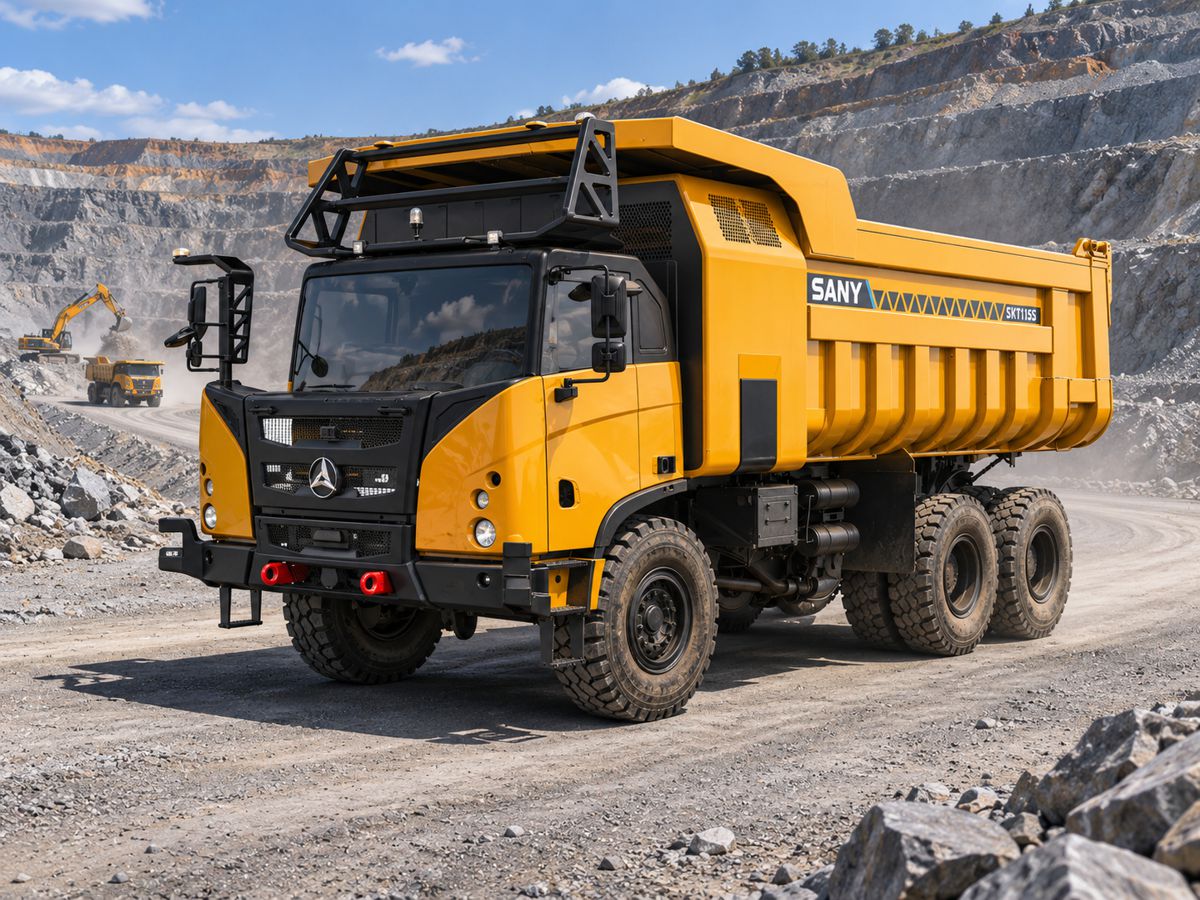
Alongside the SET260E, SANY will introduce the SKT165Ei, a 100-tonne battery-electric wide-body mining truck designed from the outset for autonomous operation.
The SKT165Ei has no driver’s cab, allowing the vehicle’s structure and layout to be developed around its load-carrying requirements rather than those of a conventional operator compartment. SANY claims that removing the cab improves the payload ratio by 12 per cent, although the company has not provided the comparison baseline in its exhibition specifications.
An 800-volt electrical platform powers the truck’s 900 kW rated drivetrain, which can deliver up to 1,480 kW at peak output. Its fast-charging battery can reportedly be recharged in less than 35 minutes, while an autonomous haulage system manages loading, transporting and dumping through integrated vehicle controls and cloud-based dispatch.
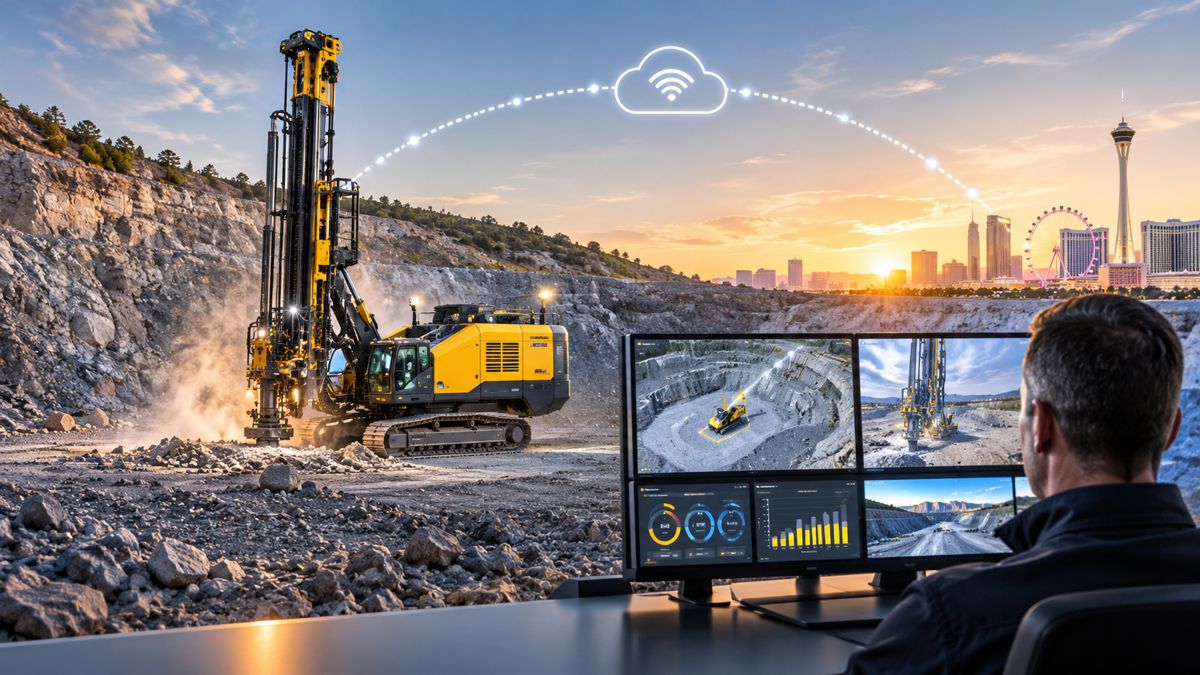
The machine has also been designed to continue its operating cycle when network coverage is weak, an important consideration for large open-pit mines where excavation depth, changing terrain and the movement of working faces can interfere with communications infrastructure.
SANY’s SKT115Ei applies similar technology in the 70-tonne payload category, combining LiDAR, cameras, radar and satellite positioning to maintain awareness of its surroundings. Its perception system provides more than 150 metres of forward detection, while smaller obstacles can reportedly be identified from 40 metres away. GNSS, inertial navigation and LiDAR data are combined to maintain centimetre-level positioning, with the system switching between positioning methods when satellite signals become unreliable.
Reliable autonomous haulage requires more than accurate navigation. The trucks must operate alongside loading machinery, maintenance personnel and conventional vehicles, while responding to changing haul routes and unexpected obstructions. Vehicle-to-vehicle communications, local perception systems and coordinated dispatch all contribute to keeping the production cycle operating safely when conditions change.
Designing trucks without a cab also creates opportunities to reconsider vehicle dimensions, weight distribution and component accessibility. Those benefits will need to be balanced against maintenance requirements, emergency recovery arrangements and the practicalities of integrating purpose-built autonomous machines into existing mining fleets.
Electric Excavators Move into Heavy Production
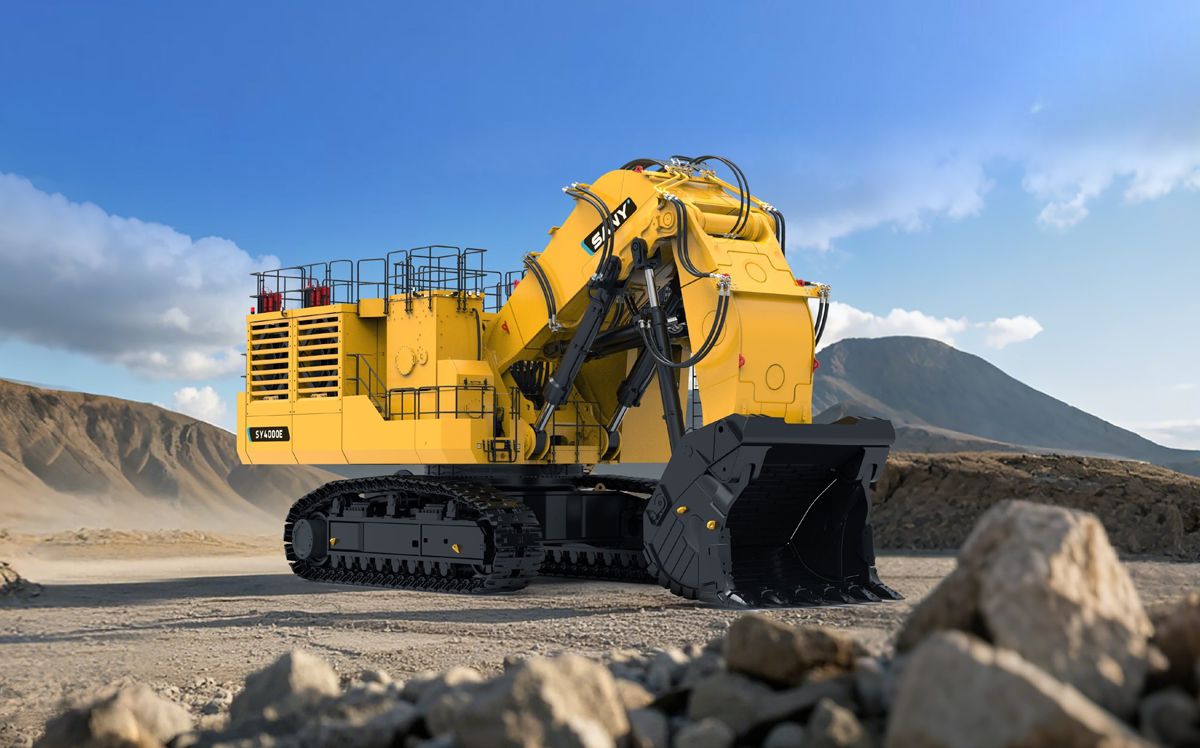
Electric excavators will form another substantial part of SANY’s exhibition, led by the SY4000E, a 410-tonne mining machine equipped with a 22 m³ bucket.
Its hydraulic system is powered by two independently driven 700 kW electric motors, providing a combined output of 1,400 kW. SANY states that the excavator can continue operating if one motor becomes unavailable, offering a degree of operational redundancy, although the available performance under single-motor operation has not been specified.
The machine incorporates electronically controlled hydraulics capable of delivering flows of up to 6,000 litres per minute, together with assisted digging, payload measurement and machine monitoring systems. A 3D-assisted digging function provides centimetre-level positioning accuracy, while electronic fencing, pedestrian detection and camera systems support operation around personnel and other equipment.
Rather than carrying a large traction battery, the SY4000E draws electricity from an external supply. SANY includes cable reels, junction boxes, cable-handling vehicles and associated power equipment within its proposed operating arrangement, allowing the excavator to work continuously in production areas where access to a suitable electrical connection can be established.
Cable-fed equipment is well suited to operations where excavators remain within a defined working area for extended periods, although cable management introduces its own engineering and safety requirements. As the excavation face moves, the electrical supply and supporting equipment must be repositioned without interrupting production unnecessarily or exposing cables to damage from other machinery.
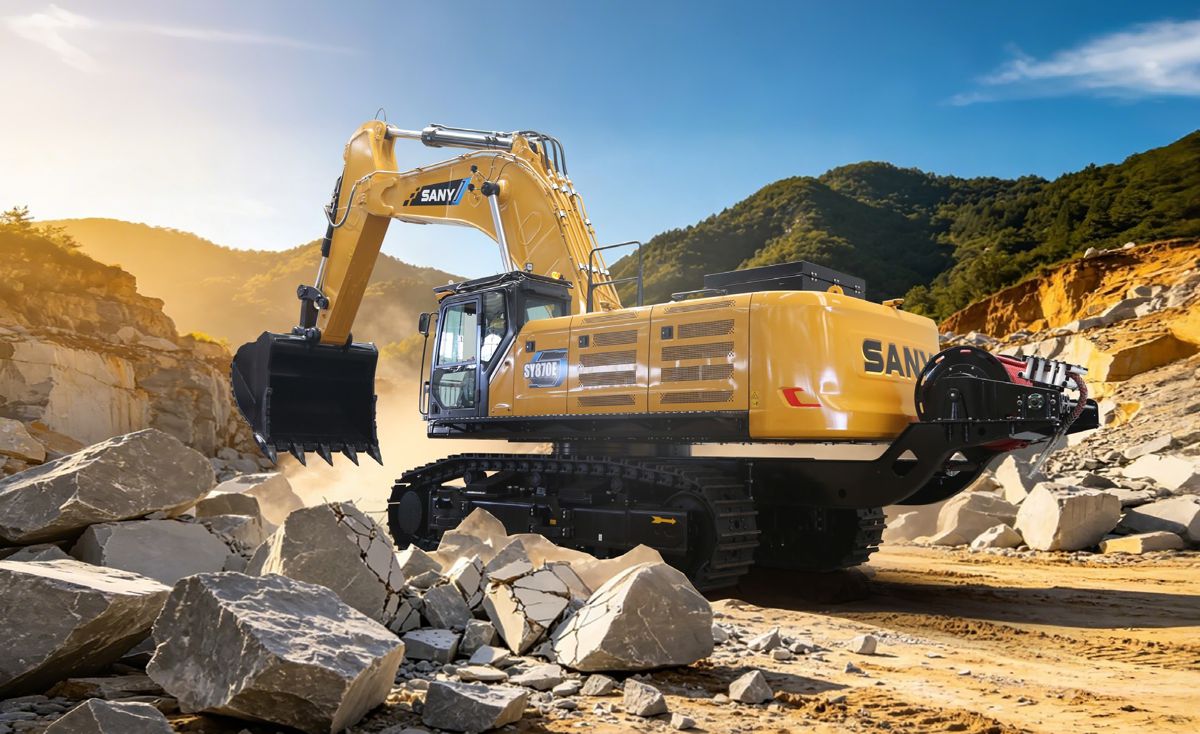
SANY’s smaller SY870E dual-power excavator takes a different approach, combining cable-fed operation with an optional 207 kWh battery. The battery-equipped version can travel more than two kilometres independently when relocating between working areas, while a spring-loaded reel manages up to 35 metres of power cable during connected operation.
These configurations address different mining requirements. A large excavator working continuously at a fixed loading point can benefit from direct electrical supply, while machines moving frequently between excavation faces need greater flexibility. SANY’s electric excavator range accommodates both operating patterns without requiring every machine to carry sufficient battery capacity for an entire working shift.
Electric Lifting Equipment Takes on Major Construction Work
SANY’s SCC3200T-EV electric crawler crane brings battery power into the 320-tonne lifting category, with the manufacturer describing it as the world’s largest-capacity intelligent all-electric crawler crane.
The lattice-boom machine uses a 352 kWh battery and ten coordinated electric motors to power its working functions. SANY specifies more than 12 hours of battery operation, with an optional range extender supporting longer working periods. Its main boom reaches 87 metres, while real-time centre-of-gravity detection and ground-pressure calculations provide information for managing lifting operations.
Energy recovery from the winches allows some of the power involved in lowering operations to be recovered, and SANY reports average electricity consumption as low as 24 kWh per hour under suitable working conditions. Actual endurance will vary with load weights, lifting frequency, boom configuration and the proportion of time spent positioning or waiting between lifts.
Crawler cranes are an interesting application for electrification because their energy demands differ considerably from those of heavy haulage vehicles. Many lifting operations involve short periods of intensive movement separated by longer intervals of preparation, positioning and waiting, allowing battery capacity to be managed across a working shift.
SANY will also display the SAC40000T all-terrain crane, a nine-axle machine with a maximum rated lifting capacity of 4,000 tonnes. Developed particularly for wind energy installation, the crane combines substantial lifting capability with a wheeled carrier intended to negotiate restricted access roads, tight bends and mountainous terrain.
The manufacturer specifies lifting performance of 320 tonnes at a 21-metre radius to a 120-metre hub height, or 200 tonnes at a 30-metre radius to a 185-metre hub height, depending on configuration. These operating figures provide a more useful indication of its wind turbine installation capabilities than the headline maximum lifting capacity alone.
The SAC40000T remains diesel-powered, demonstrating the continuing role of conventional propulsion in specialist applications where extreme lifting requirements, mobility and site conditions create different engineering demands.
Autonomous Paving Moves Beyond the Demonstration Stage
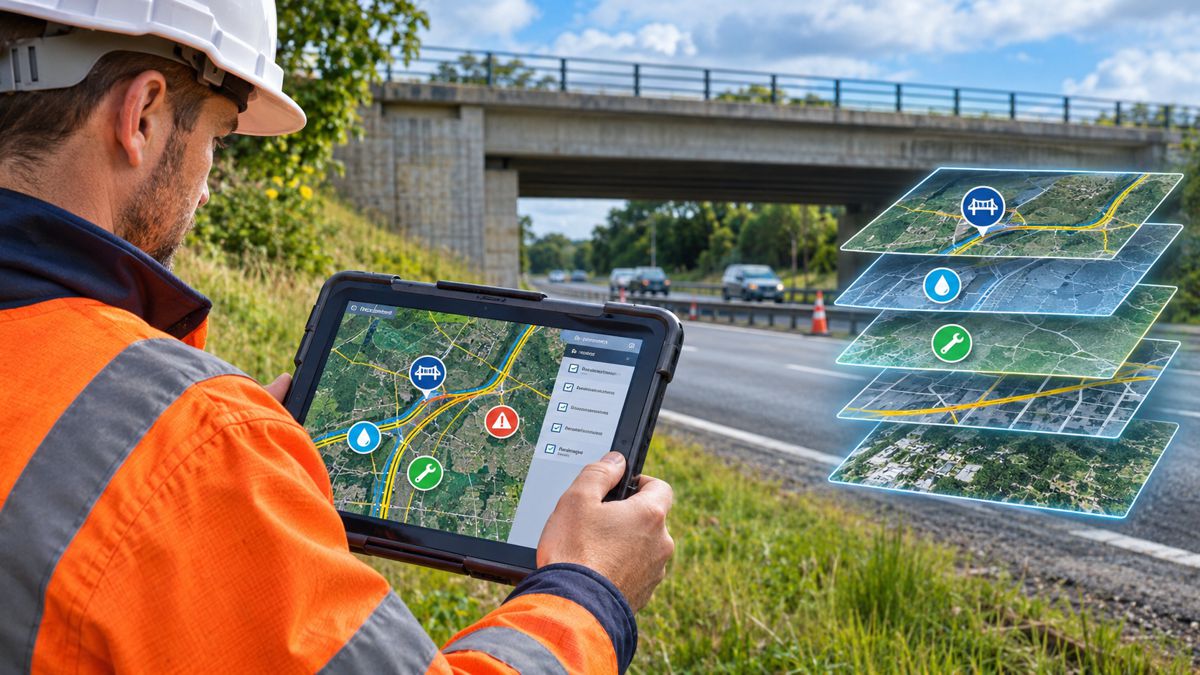
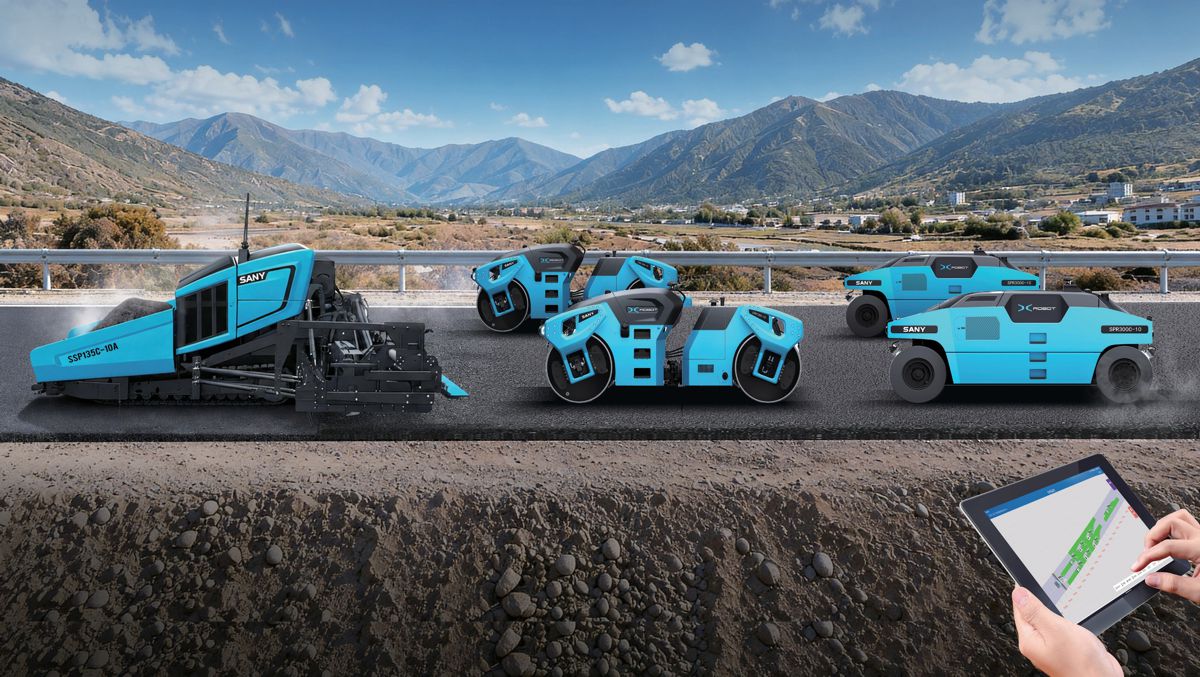
For road construction, one of SANY’s most relevant exhibits is its cab-less autonomous paving and compaction fleet, which coordinates asphalt pavers and rollers through a shared operating platform.
SANY states that one supervisor can manage up to 15 machines using a tablet, with the equipment following coordinated working patterns and automatically adjusting its movements as paving progresses. Unlike several of the machines making their public debut, the manufacturer says its autonomous paving technology is already being used on road projects in China.
The system combines automatic path tracking, coordinated machine movements, obstacle detection and compaction monitoring. SANY specifies path-tracking accuracy within three centimetres and communication latency of no more than 20 milliseconds, while compaction passes and pavement temperatures are mapped and recorded in real time.
Achieving uniform asphalt compaction requires careful coordination between the paver and rollers, particularly while the material remains within its appropriate temperature range. Rollers must follow suitable patterns, maintain consistent coverage and avoid unnecessary overlaps while ensuring edges receive adequate attention. Variations in timing, machine speed and operator technique can affect the finished pavement.
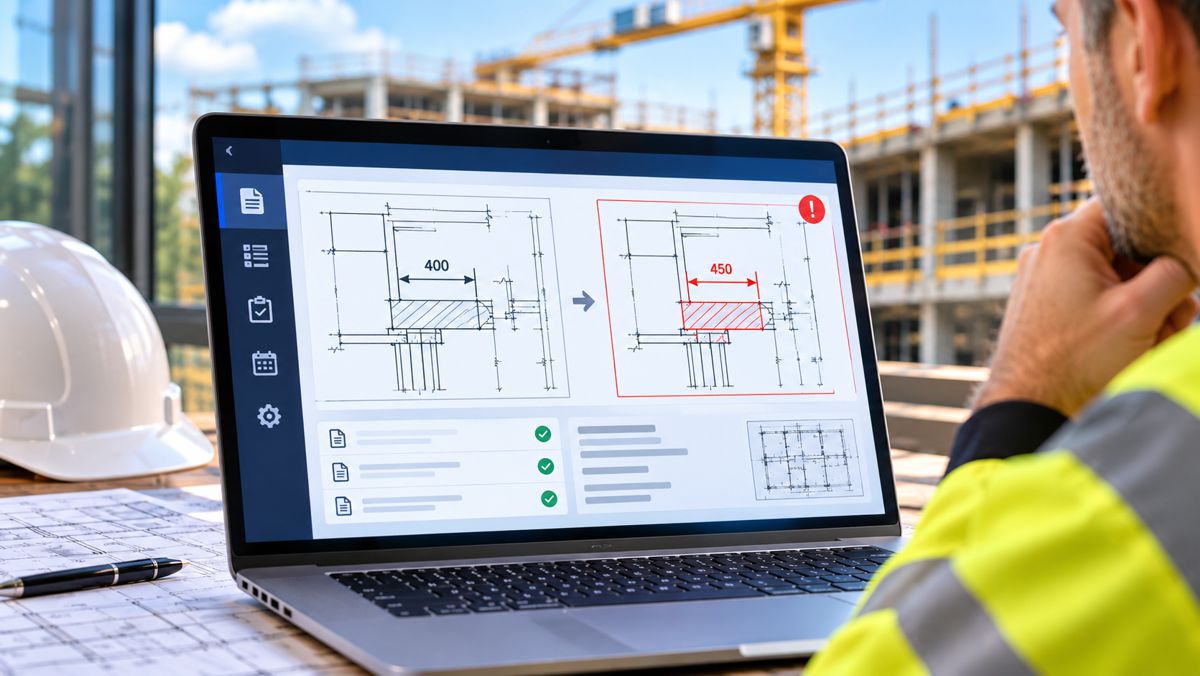
Coordinated autonomous equipment offers a means of making these operations more repeatable, with the supervisory system maintaining machine spacing, tracking compaction activity and recording information for construction quality checks. Digital records of temperature and roller coverage may also provide additional evidence during pavement acceptance, although their use will depend on project specifications and the verification requirements of the highway authority.
Practical deployment still depends on reliable positioning, obstacle detection and effective site management. Asphalt delivery vehicles, construction personnel and other machinery must be accommodated without disrupting the paving sequence, while supervisors remain responsible for responding to unexpected conditions.
The decision to exhibit machines without conventional operator compartments indicates how SANY is developing equipment specifically around autonomous operation, rather than simply adding automatic controls to existing designs. Eliminating the cab changes the machine layout and places greater emphasis on remote supervision, accessible maintenance systems and dependable safety controls.
Elsewhere in its road machinery range, SANY will present the STR50E battery-electric tandem roller, a 4,750 kg machine equipped with a 60 kWh battery. The manufacturer reports approximately eight hours of operation per charge and a fast-charging time of around 60 minutes.
The roller combines electric propulsion and vibration with regenerative braking, independent control of the front and rear drums and optional intelligent compaction monitoring. Its comparatively modest energy requirements make it suitable for examining the practical advantages of battery operation on municipal road projects, particularly where charging can be arranged between shifts or during scheduled breaks.
Power Supply Becomes Part of the Equipment Package
SANY’s exhibition extends beyond electrically powered machines to the infrastructure needed to keep them operating. Among the supporting equipment is the BEHG4180A mobile energy storage unit, which provides a stated capacity of 4,180 kWh and is intended for construction sites and industrial locations with limited access to grid power.
Mobile storage can help operators manage electricity availability, support temporary charging installations and reduce reliance on permanent connections during the early stages of a project. Its contribution depends on both stored energy and the rate at which that energy can be delivered, particularly when supplying high-power equipment.
A storage system with a capacity of 4,180 kWh, for example, cannot automatically be assumed capable of supplying a 9 MW charger. Discharge ratings, charging architecture, thermal management and electrical protection must all be compatible with the equipment being supported.
The distinction becomes increasingly relevant as electric construction machinery moves into heavier applications. A small municipal roller may be charged using relatively conventional equipment, while a large mining fleet can require dedicated high-voltage infrastructure, energy management systems and carefully scheduled charging periods.
Electrical engineering group ABB has similarly identified charging arrangements, fleet management, mine planning and working practices as connected elements of mining electrification. Introducing battery-electric equipment can require changes to the operating system of a mine, particularly where charging schedules must be coordinated with production targets.
SANY is positioning itself to supply several components of that system, including electric excavators, haul trucks, mobile energy storage and supporting power equipment. Integration may simplify some aspects of procurement and technical coordination, although buyers will still need to establish how the various systems perform together, what infrastructure must be supplied locally and how maintenance responsibilities are allocated.
Forty Years of Manufacturing and International Expansion
SANY’s exhibition also reflects the development of a company founded in Lianyuan, Hunan, in 1986, which has subsequently established an international presence across construction machinery, mining equipment, concrete technology and industrial equipment.
The company’s first exports were motor graders shipped to Morocco in 2002, followed by a period of international expansion that included the acquisition of German concrete machinery manufacturer Putzmeister in 2012. That transaction extended SANY’s manufacturing capabilities and global presence in the concrete equipment market, while its wider operations continued to develop across excavators, cranes and other heavy machinery.
Headquartered in Changsha, SANY now reports sales and service coverage across more than 180 countries and regions. According to the company’s exhibition material, group sales reached US$21.9 billion in 2025, while three of its manufacturing facilities have been recognised through the World Economic Forum’s Global Lighthouse Network.
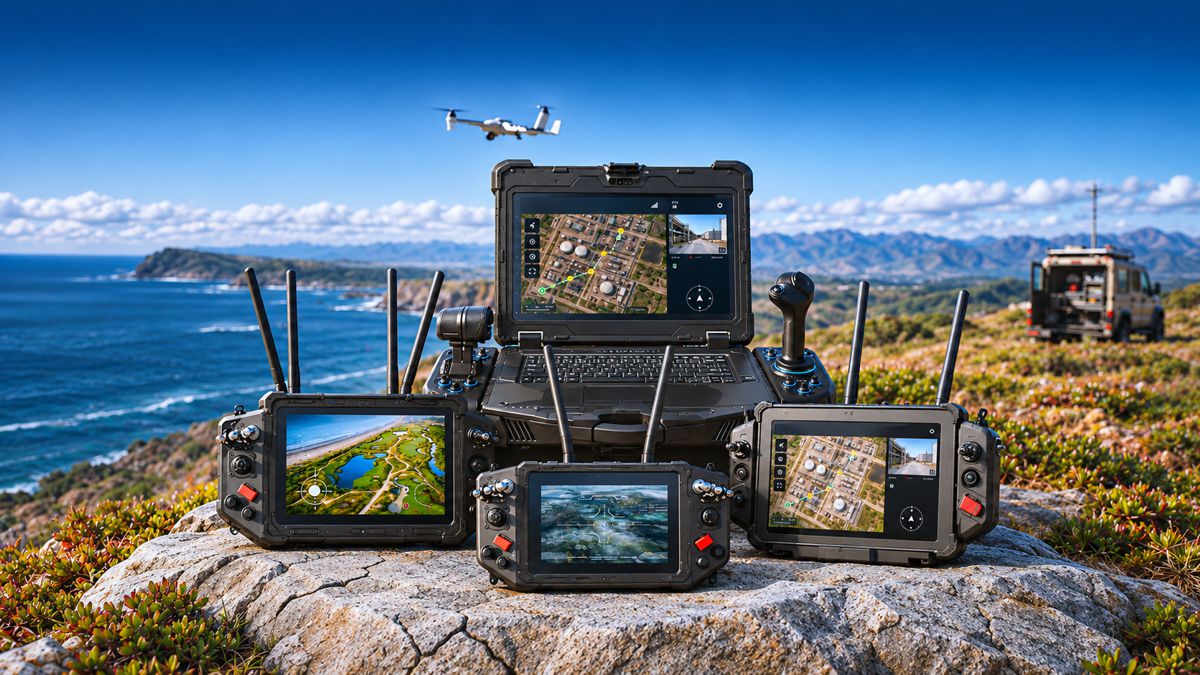
The company’s stated priorities are globalisation, digitalisation and decarbonisation, with industrial artificial intelligence becoming a further area of investment. At bauma CHINA, Hall E3 will be dedicated to intelligent equipment and the systems used to dispatch, coordinate and supervise machines operating without personnel on board.
International customers will judge these developments against established equipment purchasing considerations, including parts availability, local technical support, operator training, software maintenance and long-term residual values. Electric and autonomous machinery introduces additional responsibilities involving battery systems, high-voltage safety and specialist servicing, making the strength of the supporting dealer and maintenance network particularly important.
From Individual Machines to Integrated Operations
SANY’s bauma CHINA presentation brings together machinery at different stages of development, from newly introduced heavy mining equipment and purpose-built autonomous vehicles to roadbuilding technology that the company says is already operating commercially.
Its engineering approach also reflects the different demands placed on construction and mining machinery. Battery-electric systems provide flexibility for mobile equipment, cable-fed machines can support continuous excavation, hybrid drivetrains offer another route for high-energy applications, and autonomous controls are increasingly influencing how vehicles are designed.
The economics will vary considerably between operating environments. A municipal contractor using a small electric roller faces very different infrastructure and productivity considerations from a mining company introducing a fleet of 240-tonne battery-electric haul trucks. Autonomous machinery adds another layer of requirements involving supervision, communications, site safety and the integration of conventional equipment.
As bauma CHINA 2026 opens in Shanghai, SANY’s largest-ever exhibition will provide a substantial demonstration of the machinery and supporting systems it is developing for these markets. The larger test will take place away from the exhibition halls, where contractors and mine operators will assess the technology through productivity, reliability, energy costs and performance over the working life of the equipment.
Key Industry Questions
- When and where is SANY exhibiting at bauma CHINA 2026? SANY will exhibit at the Shanghai New International Expo Centre from 24 to 27 November 2026. Its displays will cover mining, construction, roadbuilding, lifting and industrial equipment, including electric and autonomous machines.
- What is the payload capacity of SANY’s SET260E mining truck? The SET260E has a rated payload of 240 tonnes and uses a 4,130 kWh lithium iron phosphate battery operating on a 1,500-volt electrical platform.
- How quickly can the SET260E be recharged? SANY claims a charging time of approximately 30 minutes from 10 to 90 per cent using equipment capable of delivering up to 9 MW. Actual performance will depend on the charging installation and operating conditions.
- What makes the SKT165Ei autonomous mining truck different? The 100-tonne battery-electric truck has been designed without a driver’s cab. Autonomous controls and cloud-based dispatch manage loading, hauling and dumping operations, with the vehicle designed to continue working during periods of weak network coverage.
- Can SANY’s autonomous roadbuilding machinery operate commercially? SANY states that its coordinated autonomous paving and compaction technology is already being used on road projects in China. The system allows one supervisor to oversee up to 15 machines.
- What is the lifting capacity of SANY’s electric crawler crane? The SCC3200T-EV has a maximum rated lifting capacity of 320 tonnes, an 87-metre main boom and a 352 kWh battery. SANY reports more than 12 hours of operation under its stated working conditions.
- Does SANY offer cable-powered electric excavators? Yes. Its range includes the 410-tonne SY4000E mining excavator and the SY870E dual-power machine, which combines cable-fed operation with an optional battery for travelling between working areas.
- What infrastructure is needed for large electric mining equipment? Requirements can include high-capacity electrical connections, substations, high-power charging equipment, energy storage, cable-management systems and electrical safety provisions. The installation depends on fleet size, working schedules and the available power supply.
Strategic Takeaways
- High-capacity battery-electric mining equipment places electrical distribution, charging availability and energy management at the centre of fleet planning.
- Purpose-built autonomous machines allow manufacturers to reconsider conventional vehicle layouts, while increasing the importance of integrated controls and dependable supervision.
- Cable-fed, battery-electric and hybrid powertrains will continue to serve different applications according to energy demand, mobility requirements and working conditions.
- Autonomous paving offers opportunities for more consistent machine coordination, repeatable compaction patterns and detailed digital construction records.
- Equipment manufacturers are increasingly combining machinery with power infrastructure and digital operating systems, making integration and long-term technical support important parts of the purchasing decision.