Quectel Takes 100 TOPS Edge AI into Industrial Robotics and Inspection
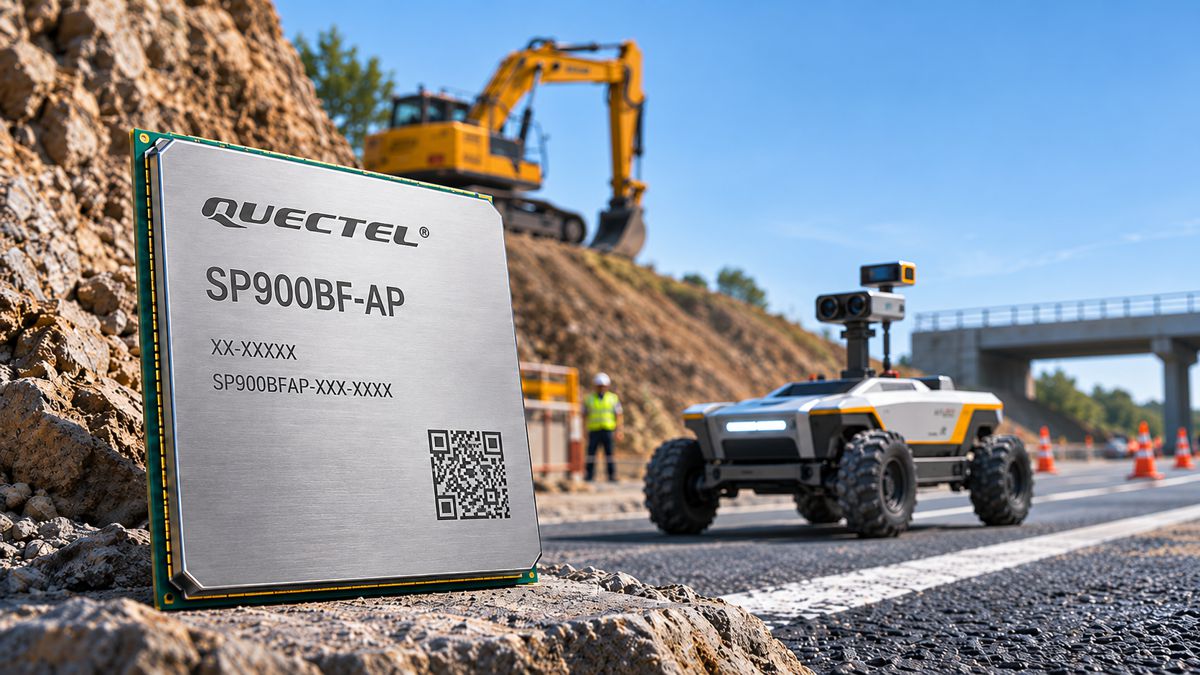
Industrial equipment manufacturers are gaining access to substantially more artificial intelligence processing power in a compact module designed for integration into robots, inspection equipment and embedded control systems. Quectel Wireless Solutions has introduced the SP900BF-AP, combining Qualcomm’s Dragonwing IQ-9075 processor with up to 100 trillion AI operations per second of on-device computing capability.
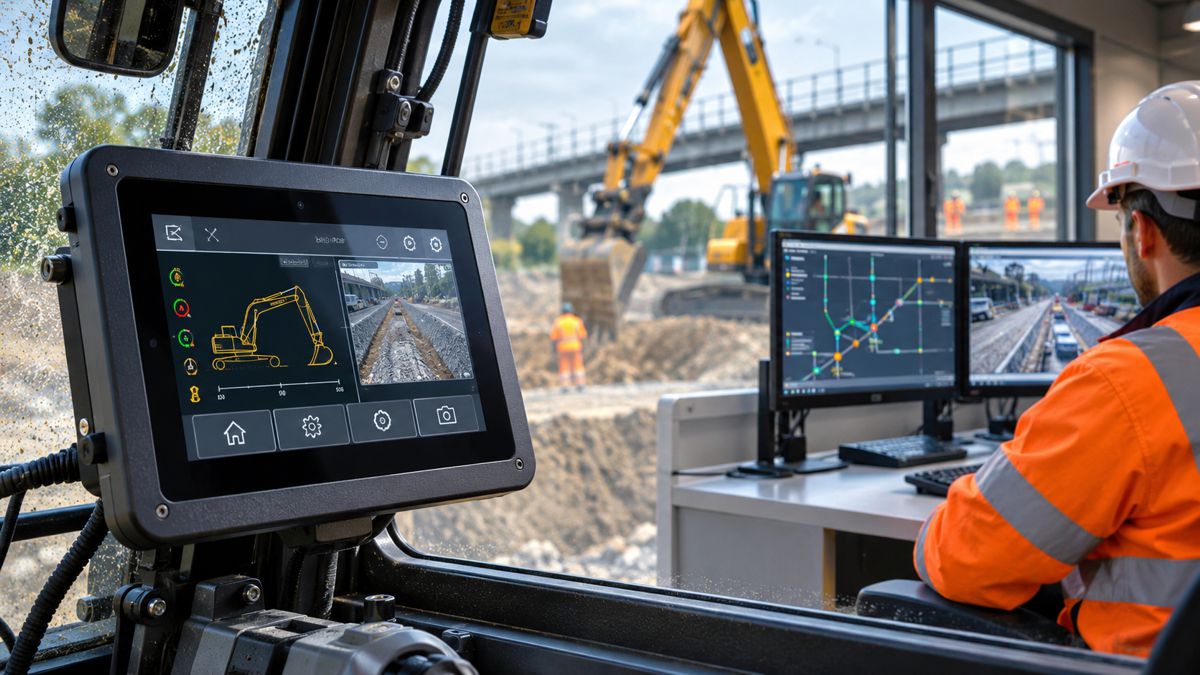
For construction machinery, autonomous site equipment and infrastructure inspection systems, the technology offers the prospect of analysing camera feeds and sensor information directly onboard the machine. A road inspection vehicle collecting thousands of images, for example, could identify suspected surface defects as it travels, rather than transferring every image to a remote server for processing. Such applications require additional hardware, software and validation, but the processing capacity is becoming available in a format suitable for industrial integration.
Quectel has completed key technical validation and is making engineering samples available to selected customers. The announcement concerns an embedded computing component rather than a finished industrial product, with equipment manufacturers responsible for developing applications and establishing performance in their intended operating environments.
Briefing
- Quectel’s SP900BF-AP delivers up to 100 TOPS of on-device AI processing using the Qualcomm Dragonwing IQ-9075.
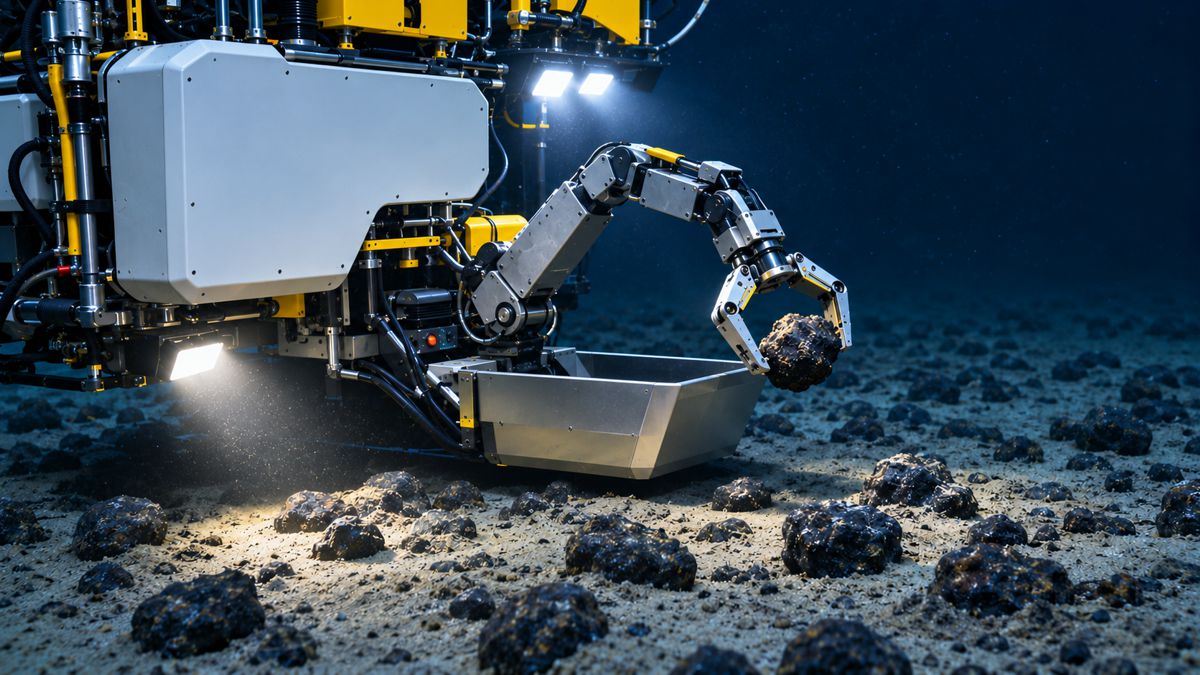
- The module targets autonomous robotics, computer vision, industrial inspection and edge AI gateways.
- Memory configurations extend to 36 GB LPDDR5X, alongside storage options reaching 256 GB UFS.
- The 65 mm square module is specified for operation between -40°C and +85°C, with a proposed product lifecycle of up to ten years.
- Engineering samples are available to selected customers, while Ubuntu and Yocto Linux software support remains under development.
Taking AI Processing Closer to the Equipment
Industrial AI applications increasingly involve interpreting information from cameras, sensors and control systems. An autonomous inspection robot needs to identify obstacles while navigating its surroundings, whereas an automated production system might analyse several video streams to detect defects or unusual operating conditions.
Sending this information to remote computing infrastructure introduces requirements for communication bandwidth, network reliability and data management. Transmitting high-resolution video continuously can be expensive, particularly when equipment operates across large construction sites, transport corridors or locations with limited cellular coverage.
Local AI processing allows images and sensor readings to be analysed within the equipment itself, with selected results, alerts or supporting evidence transmitted elsewhere. Network connections remain useful for fleet management, reporting and coordination between machines, but they need not carry every frame of video to a remote processing service.
Quectel has designed the SP900BF-AP around this approach, identifying autonomous mobile robots, industrial inspection systems and edge gateways among its principal applications. The module provides computing resources for demanding machine-vision workloads and appropriately configured language and vision-language models, allowing manufacturers to develop systems around the processing requirements of individual applications.
The advertised 100 TOPS represents a peak AI computing specification rather than a guarantee of application throughput. Actual performance depends on model architecture, numerical precision, memory requirements, software optimisation and thermal conditions inside the finished equipment.
A Compact Platform for Machine Vision
The ability to process information from multiple cameras is central to many autonomous and inspection applications. A mobile robot, for instance, may need to observe its surroundings while identifying objects, estimating distances and navigating through changing conditions.
Quectel specifies support for four-camera applications, opening possibilities for systems that combine different viewing angles or carry out three-dimensional perception tasks. The underlying Qualcomm Dragonwing IQ-9075 processor also incorporates image-processing and video-processing resources intended for demanding industrial workloads.
The module combines an eight-core Qualcomm Kryo CPU operating at up to 2.36 GHz with an Adreno 663 GPU, Hexagon digital signal processing resources and dedicated neural processing hardware. General application software can run on the CPU, while graphics, signal processing and AI inference are assigned to specialised components within the processor architecture.
Measuring 65 mm × 65 mm × 4.55 mm, according to Quectel’s published product specifications, the SP900BF-AP is intended for integration into equipment where space for electronics is limited. The complete assembly must still accommodate power management, cooling, sensors and other supporting components, particularly where AI processing runs continuously.
Memory configurations reaching 36 GB and storage options up to 256 GB provide capacity for embedded operating systems and locally deployed AI models. Larger models may require compression or quantisation to operate efficiently within the available resources, while applications involving multiple video streams must balance processing demands against power consumption and heat generation.
Applications in Construction and Infrastructure
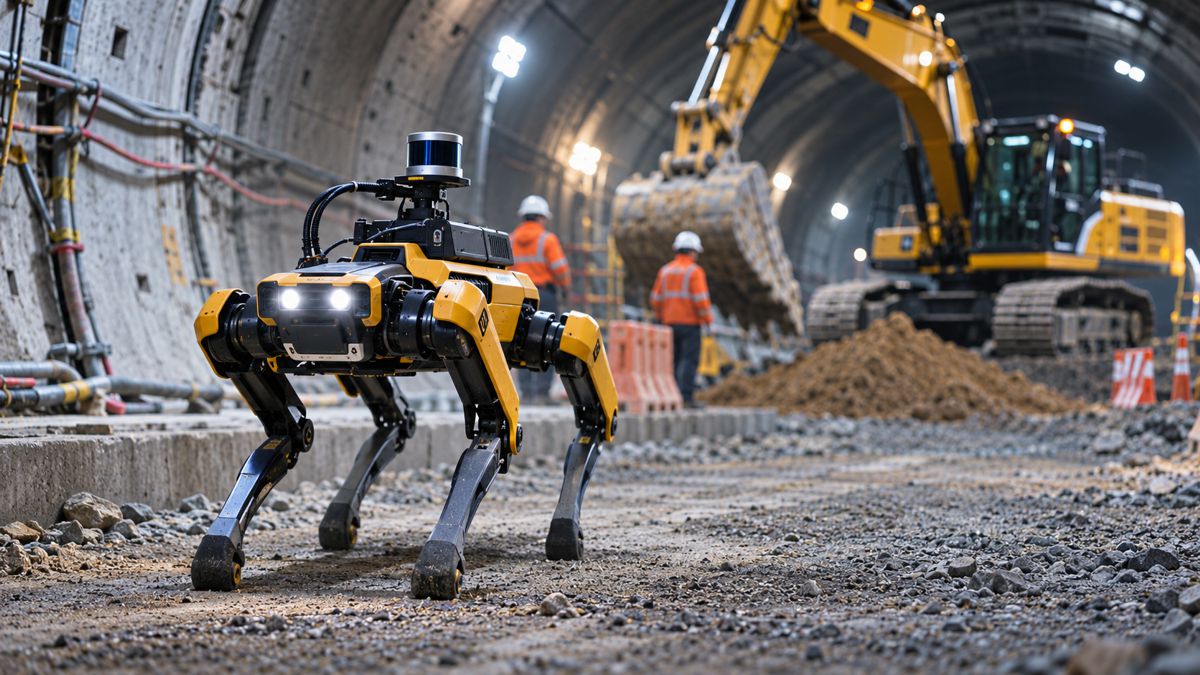
Construction sites present difficult operating environments for autonomous equipment. Routes change, temporary obstacles appear and machinery operates alongside workers, vehicles and materials that may be moving throughout the day. Camera-equipped robots need to interpret these surroundings while maintaining sufficient processing capacity for navigation and other assigned tasks.
Embedded AI hardware could support robotic platforms carrying out site surveys, monitoring repetitive operations or examining work areas for visible changes. In manufacturing environments, similar technology could be used for automated inspection of precast concrete elements, fabricated steel components or other products assessed against defined visual criteria.
Road and railway inspection provide further possibilities. Mobile systems equipped with cameras and positioning equipment can collect substantial quantities of imagery, much of which requires processing before maintenance engineers can use it. An onboard AI platform could classify images during collection, identify suspected defects and associate findings with the recorded location for subsequent review.
The approach could also be applied to construction machinery operator-assistance systems. Cameras observing blind spots, proximity hazards or changing ground conditions can provide information to software designed to assist operators. Where those functions influence safety-related decisions or machine controls, the complete system requires appropriate engineering safeguards, testing and validation against applicable requirements.
These applications remain prospective uses of the computing technology. Quectel has not announced a construction machinery customer, completed infrastructure trial or independently verified field-performance results associated with the SP900BF-AP. Detection accuracy and operational reliability would depend on the finished equipment, its sensors, application software and the conditions in which it is deployed.
Running Larger AI Models Locally
Alongside conventional image recognition, the processor is intended to support more complex artificial intelligence models capable of interpreting visual information and natural-language instructions.
Quectel identifies model families including Qwen, DeepSeek, Gemma and LLaVA as candidates for local deployment. These include language and vision-language architectures that could support interfaces allowing operators to ask questions about machine status, inspection findings or information collected by connected sensors.
An industrial inspection system, for example, could combine visual defect detection with a language interface to help an engineer locate relevant observations or produce a preliminary summary of recorded findings. Developing such a system would involve connecting the AI model to reliable information sources, defining its permitted functions and checking the accuracy of generated responses.
Qualcomm’s underlying processor platform is designed for demanding industrial AI workloads, with different configurations providing 50 or 100 TOPS of computing capacity. The availability of that processing power within an embedded module reduces some hardware development requirements, although model selection, memory management and inference optimisation remain substantial engineering tasks.
For equipment manufacturers, the ability to run suitably optimised models locally also creates opportunities to maintain AI functionality in locations where network access is intermittent. Central systems can still receive reports and selected inspection data when connectivity becomes available, without every processing task depending on a remote service.
Industrial Reliability and Long-Term Support
Construction machinery and industrial inspection systems may remain in service for many years, making component availability an important consideration during equipment development. Manufacturers need access to replacement parts, compatible software and technical support throughout the life of their products, particularly where electronic assemblies are integrated into expensive or specialised machinery.
Quectel is positioning the SP900BF-AP around a product lifecycle of up to ten years. Long-term module availability can reduce the likelihood of manufacturers having to redesign an electronics assembly because a processor or embedded component has been discontinued, although software maintenance and security support remain separate considerations.
The module has a specified operating-temperature range of -40°C to +85°C. Qualcomm publishes additional semiconductor temperature ratings for the IQ-9075 processor, but these should not be confused with the environmental limits of the complete Quectel module or the finished equipment.
For machinery working outdoors, thermal management must accommodate solar heating, enclosed electrical compartments and sustained processing loads. A processor analysing several video streams continuously may generate considerably more heat than one handling occasional inspection tasks, placing different demands on cooling arrangements and power management.
The SP900BF-AP provides PCIe, USB 3.1, UART, SPI and I²C interfaces, allowing manufacturers to integrate peripheral electronics and appropriate communications hardware. Cellular or Wi-Fi connectivity can be added according to deployment requirements, while the module’s interface architecture supports connections to the sensors and supporting systems used in industrial equipment.
Quectel is also developing support for Ubuntu and Yocto Linux, both established environments for embedded software development. Manufacturers evaluating engineering samples will need to assess the maturity of the software stack, available development tools and long-term update arrangements before committing to production designs.
From Processing Power to Operational Equipment
The SP900BF-AP has been developed through cooperation between Quectel and Qualcomm Technologies, combining the IQ-9075 processing platform with a module architecture intended to simplify electronics integration for equipment manufacturers.
Qualcomm’s broader industrial computing ecosystem includes other module and development-board implementations based on the same processor family. Manufacturers therefore have a growing selection of integration formats, with dimensions, software maturity, peripheral connectivity and component availability influencing hardware selection alongside processing performance.
“The value of AI must ultimately be proven on the industrial front line,” said Raymond Wang, Product Head, Smart, Quectel Wireless Solutions. “We are delivering more than a high-performance module: we are providing a complete, ready-to-use edge intelligence solution that helps customers bypass complex low-level development and accelerate their AI-driven transformation.”
Engineering samples are now available to selected customers for evaluation and joint development, although Quectel has not announced general production availability or public pricing. The next stage will involve integrating the processor with sensors, software and supporting electronics, then establishing whether the resulting systems can sustain their intended workloads within realistic power and temperature limits.
For construction machinery and infrastructure inspection manufacturers, the immediate opportunity is to evaluate how much intelligence can be brought directly into the equipment. The engineering challenge is to make that processing dependable through long operating shifts, changing temperatures and the unpredictable conditions of industrial work.
Key Industry Questions
- What is the Quectel SP900BF-AP? It is an embedded smart module based on Qualcomm’s Dragonwing IQ-9075 processor, designed to provide local AI computing for industrial equipment, robots and edge processing systems.
- What does 100 TOPS mean? TOPS stands for trillion operations per second. It measures peak AI processing capability rather than the speed or accuracy that an individual application will necessarily achieve.
- Can the module operate without an internet connection? AI models developed for local execution can process information without continuous internet access. Remote monitoring, software updates and other connected services may still require network connectivity.
- Could the module be integrated into construction machinery? Yes, its industrial design and interfaces make it a candidate for embedded machinery applications. Integration would require supporting hardware, software development and validation for the intended operating conditions.
- Can it detect road defects or construction hazards? The hardware could support applications developed for those purposes. Detection performance would depend on the sensors, AI models, training data and validation procedures used in the finished system.
- Does the processor support large language models? Yes. The Qualcomm platform supports locally deployed, appropriately optimised language and vision-language models, subject to available memory, processing capacity and software compatibility.
- What temperatures can the SP900BF-AP withstand? Quectel specifies a module operating-temperature range of -40°C to +85°C. The complete equipment must be engineered to maintain acceptable component temperatures under its intended operating conditions.
- When will the SP900BF-AP be commercially available? Engineering samples are available to selected customers, but Quectel has not confirmed a general production release date in its launch announcement.
Strategic Takeaways
- Local AI processing can reduce the amount of video and sensor data that industrial equipment needs to transmit over external networks.
- Processing throughput, cooling requirements and software optimisation will influence practical performance beyond the advertised 100 TOPS specification.
- Construction and infrastructure inspection applications depend on the quality of sensors, training data and validation procedures developed around the hardware.
- Long-term module availability can reduce component obsolescence risks for machinery manufacturers supporting extended equipment lifecycles.
- Engineering samples allow manufacturers to begin prototype development, although production readiness and application-specific performance have yet to be demonstrated.