






Will Orbital Computing Disrupt the Global Data Centre Construction Boom?
The world’s largest hyperscale computing companies are expected to spend more than US$700 billion in capital expenditure during 2026, with data centre development accounting for much of that investment. Across the construction industry, this is driving demand for specialised industrial buildings, electricity generation, transmission networks and advanced mechanical infrastructure.
Many of these facilities will be expected to generate commercial returns for decades. Yet, while construction programmes gather momentum on Earth, SpaceX, Google and competing aerospace developers are exploring an alternative infrastructure model that could eventually challenge some of the assumptions underpinning those investments.
The International Energy Agency’s October 2026 report, Powering Artificial Intelligence, examines the growing pressure that computing infrastructure is placing on electricity networks, energy prices and environmental resources. Earlier projections published by the agency anticipate global data centre electricity consumption increasing from 485 TWh in 2025 to approximately 950 TWh by 2030.
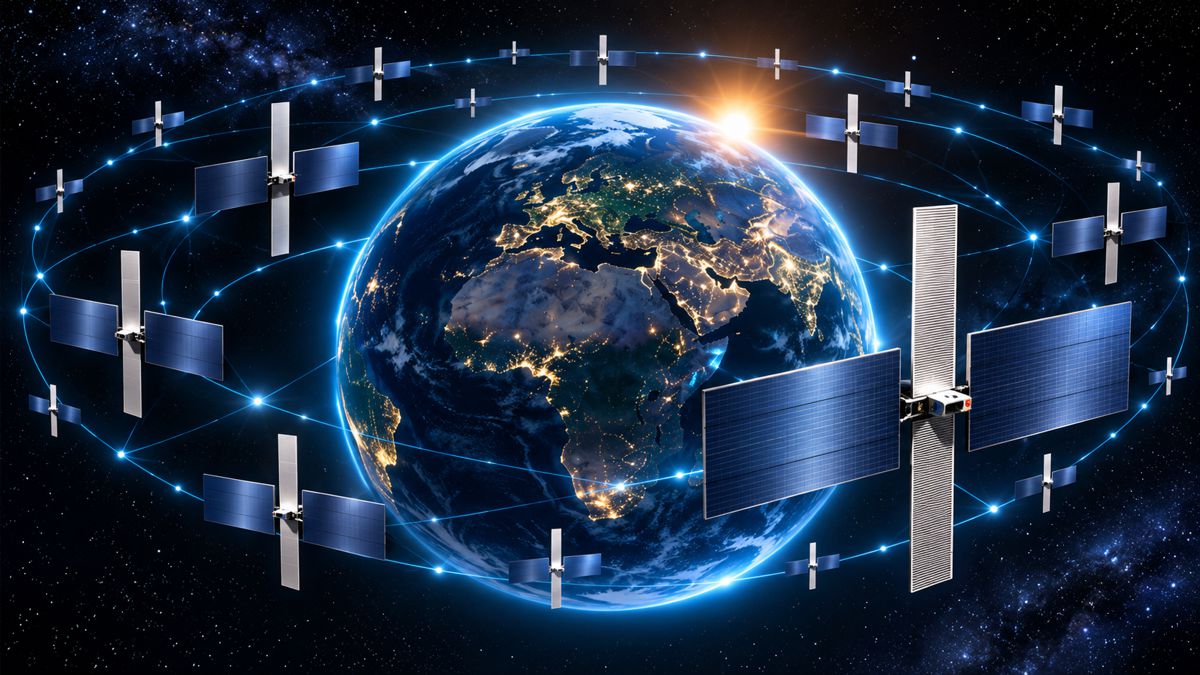
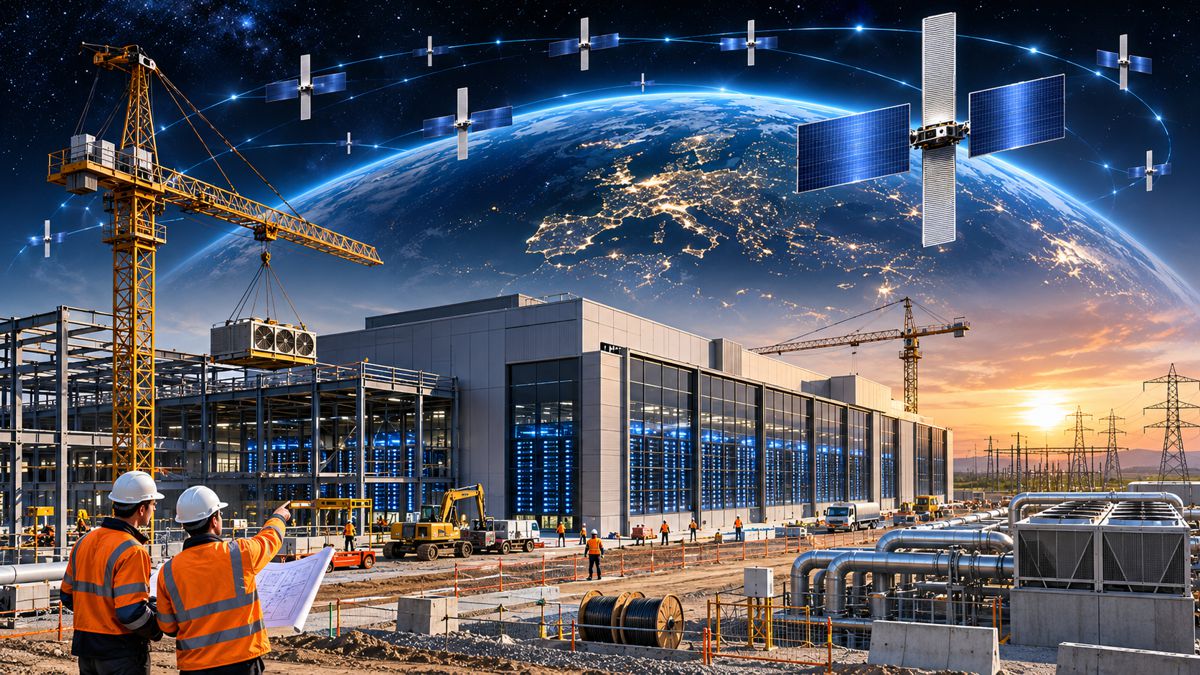
Orbital computing offers a radically different approach, bringing together solar generation, advanced processors, optical communications and reusable launch vehicles. Although its commercial viability remains to be demonstrated at scale, the technology is developing within the anticipated operational lifespan of the terrestrial infrastructure currently under construction.
The immediate outlook for data centre construction remains exceptionally strong. Over longer investment horizons, however, the possibility of commercially competitive computing infrastructure in space introduces new considerations for developers, contractors, energy companies and infrastructure investors.
Briefing
- Capital expenditure by the world’s largest hyperscale computing companies is expected to exceed US$700 billion in 2026, with data centre development accounting for much of the investment.
- Global data centre electricity consumption is projected to almost double between 2025 and 2030, reaching approximately 950 TWh annually.
- More than 80% of data centre capacity under construction in North America’s primary markets was already committed during the first half of 2026.
- SpaceX is seeking authorisation for up to one million orbital computing satellites, potentially establishing a competing infrastructure model for selected workloads.
- Cheaper computing could stimulate additional demand while opening construction markets in aerospace manufacturing, launch infrastructure and permanent orbital facilities.
An Infrastructure Boom Built Around Electricity
The expansion of artificial intelligence has created a construction market in which access to electricity can be more valuable than access to land. Developers increasingly begin their search for suitable locations by examining transmission capacity, substations and available generating resources before progressing to conventional site selection.
Data centre campuses are consequently becoming integrated industrial developments, incorporating dedicated substations, extensive electrical distribution systems, backup generation, cooling installations and supporting utility infrastructure. Where existing electricity networks cannot accommodate projected demand, developers are investigating dedicated generating facilities and alternative power supply arrangements.
The JLL 2026 Global Data Centre Outlook reports that average global data centre construction costs increased from US$7.7 million per megawatt in 2020 to US$10.7 million in 2025, with a further increase to US$11.3 million forecast for 2026. Applying that indicative benchmark to a 100 MW facility produces a construction cost exceeding US$1 billion, although the total investment will depend on the scope of the development, computing equipment and associated infrastructure.
Demand remains exceptionally strong across established markets. According to CBRE’s North America Data Center Trends H1 2026, vacancy across primary markets stood at a record low of 1.4%, despite substantial additions to available capacity. Approximately 80.4% of capacity under construction had already been committed to customers, compared with 74.3% a year earlier.
These figures suggest that much of the immediate construction programme is responding to established commercial demand rather than speculative expectations alone. Contractors, mechanical and electrical engineers, equipment manufacturers and infrastructure investors are benefiting from a market where customers are securing computing facilities before their construction has been completed.
The Emergence of Orbital Competition
As explored in SpaceX Starmind and the Rise of Computing Infrastructure in Space, SpaceX is seeking to extend the manufacturing, launch and communications capabilities established through Starlink into space-based artificial intelligence computing.
The company’s January 2026 application to the US Federal Communications Commission outlines a proposed constellation of up to one million computing satellites. The figure represents a regulatory application rather than an approved deployment programme, but it provides an indication of the scale at which SpaceX is considering the opportunity.
Google’s Project Suncatcher is investigating distributed computing architectures involving closely coordinated satellite formations, while Blue Origin, Starcloud and Chinese aerospace developers are pursuing competing approaches. Experimental computing hardware is already operating in orbit, providing practical experience of the radiation, thermal management and communications challenges associated with the technology.
The industrial attraction is relatively straightforward. Solar generation can take place directly alongside computing equipment, without conventional electricity grid connections, extensive terrestrial development sites or evaporative cooling infrastructure. Carefully selected orbital configurations can provide extended periods of sunlight, while improvements in reusable launch vehicles offer the prospect of reducing the expense of delivering equipment into orbit.
The resulting facilities would still require considerable capital investment, although expenditure would be distributed differently. Spacecraft structures, launch services, photovoltaic arrays, thermal radiators and optical communications systems would assume many of the functions currently performed by buildings, electricity networks and terrestrial mechanical infrastructure.
Comparing Two Infrastructure Models
Terrestrial data centres benefit from established construction supply chains, accessible maintenance facilities and the ability to replace equipment throughout a building’s operational life. Their computing hardware can be upgraded without reconstructing the facility, while electrical and mechanical systems can generally be inspected, repaired or renewed by maintenance engineers.
Orbital facilities offer access to solar energy and avoid several terrestrial development constraints, but must operate within an environment characterised by radiation exposure, thermal extremes and limited physical accessibility. Waste heat must ultimately be radiated into space, requiring carefully engineered thermal management systems and substantial external radiator surfaces.
| Infrastructure Requirement | Terrestrial Data Centres | Orbital Data Centres |
|---|---|---|
| Land and structures | Development sites and specialised buildings | Spacecraft structures and orbital capacity |
| Electricity | Grid connections or dedicated generation | Solar generation and energy storage |
| Cooling | Air, liquid and evaporative systems | Closed-loop cooling and thermal radiators |
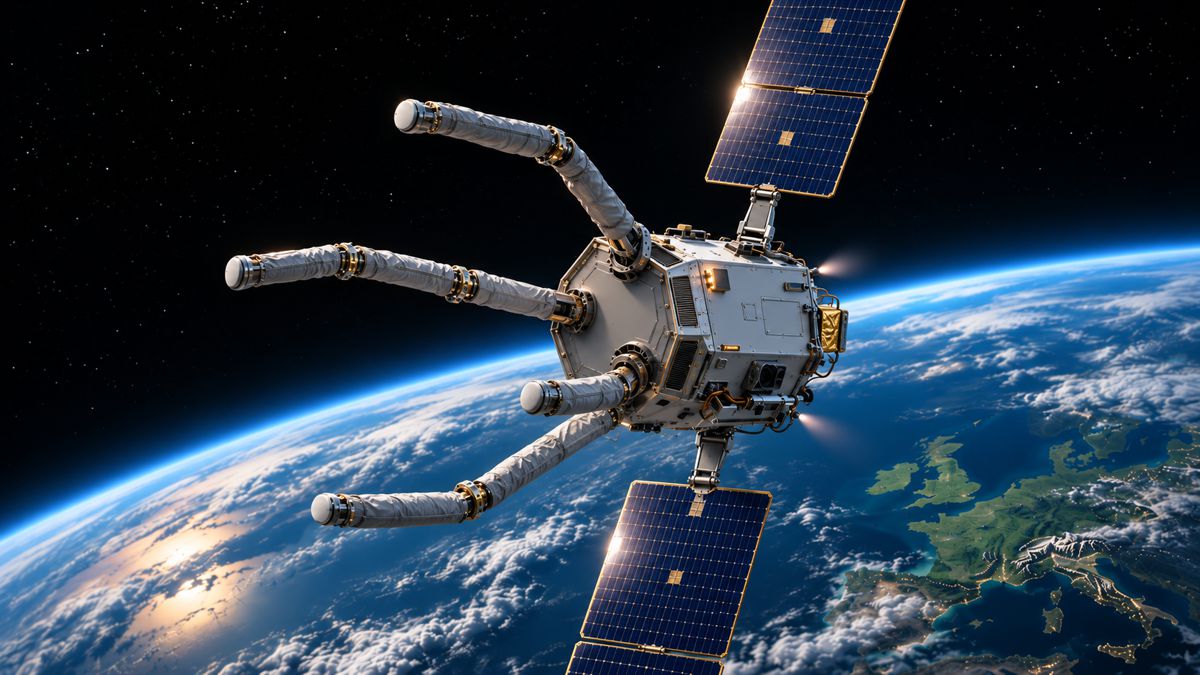
| Maintenance | Direct equipment access | Remote diagnostics and potential robotic servicing |
| Hardware replacement | Established equipment supply chains | Launch services and orbital logistics |
| Communications | High-capacity fibre networks | Optical satellite links and ground stations |
| Environmental exposure | Weather, flooding and local hazards | Radiation, solar storms and orbital debris |
| Expansion | Additional buildings and utility infrastructure | Additional satellites or modular orbital platforms |
Commercial competitiveness will depend on the type of computing workload, energy costs, equipment reliability and the complete lifecycle cost of delivering useful computational services. Neither environment offers an inherent advantage across every application.
Launch Economics and the Speed of Deployment
The expense of transporting equipment into orbit remains one of the principal barriers to commercial space-based computing. Every processor, solar panel, radiator, structural component and electrical system must be manufactured and launched before the facility can begin generating revenue.
Reusable launch vehicles have already altered the economics of satellite deployment, while SpaceX’s Starship programme aims to deliver considerably greater payload capacity and launch frequency. Dependable, high-volume heavy-lift operations would expand the range of industrial infrastructure that can be economically deployed beyond Earth.
Research published through Google’s Project Suncatcher suggests that launch prices approaching or falling below US$200 per kilogram could bring annualised launch expenditure per unit of power into a range comparable with certain terrestrial data centre electricity costs. The comparison addresses only part of the overall economics and does not establish that an orbital facility would be cheaper to construct or operate than its terrestrial equivalent.
Spacecraft manufacturing, communications, financing, radiation protection, equipment degradation, utilisation rates and replacement costs must all be incorporated into a meaningful assessment. The commercially relevant measure will be the cost of delivering reliable, useful computation throughout the operational life of the infrastructure.
A substantial reduction in launch costs would nevertheless alter the investment equation, particularly where terrestrial facilities face expensive electricity connections, supply shortages or lengthy development delays. Orbital computing need not achieve cost parity across the entire global market before attracting customers, provided it offers a competitive alternative for particular applications.
The speed of deployment may become equally important. Developing a terrestrial data centre can involve years of land acquisition, planning approvals, utility negotiations, construction and commissioning. Individual projects can encounter delays unrelated to the availability of computing equipment or the strength of customer demand.
If high-volume satellite manufacturing and frequent heavy-lift launches become commercially established, adding orbital computing capacity could begin to resemble an industrial production process. Standardised spacecraft could be manufactured continuously and deployed incrementally as demand develops, potentially shortening the period between committing capital and generating revenue.
Orbital developments would still depend on launch availability, manufacturing capacity, spectrum allocation, regulatory approvals and dependable spacecraft operations. However, their expansion would be governed by a different combination of constraints, allowing computing providers to diversify some of the development risks currently associated with terrestrial construction.
Which Computing Workloads Could Move into Orbit?
Digital services have widely varying requirements for communications latency, data accessibility, physical security and coordination between processors. Some applications are naturally suited to distributed computing, while others depend on maintaining extremely close connections between equipment and users.
Satellite-generated information provides an obvious early market. Earth observation spacecraft collect substantial volumes of imagery and sensor data, much of which must be transmitted to terrestrial facilities before analysis. Processing information in orbit offers opportunities to reduce communications requirements and accelerate applications involving infrastructure monitoring, agriculture, disaster response and environmental assessment.
Selected AI inference services and scientific simulations may also benefit from independently executable workloads that can be allocated across distributed computing resources. Large-scale AI training presents a more demanding proposition because individual accelerators can require continuous, exceptionally high-bandwidth communications. Closely coordinated satellite formations and optical networking are among the technologies being investigated to address these requirements.
Financial trading, local industrial automation and real-time autonomous machinery control are likely to retain substantial advantages from computing resources located close to users. Government and commercial information may also be subject to jurisdictional, security and data sovereignty requirements that influence where processing can take place.
A future computing economy could therefore incorporate several complementary layers. Local edge computing would support immediate operational decisions, terrestrial data centres would accommodate workloads requiring established networks and accessible equipment, while orbital facilities would process applications suited to their energy resources and communications characteristics.
The Risk of Stranded Data Centre Assets
Infrastructure investors frequently assess developments over periods extending considerably beyond the commercial lifespan of the equipment operating within them. A data centre building, electricity substation or dedicated power station may be expected to generate returns for decades, while its original computing processors may become commercially obsolete within a comparatively short period.
The ability to replace computing equipment has historically protected the long-term value of terrestrial facilities. The emergence of a competing infrastructure model introduces the possibility that customers could eventually choose to locate some of their replacement computing capacity elsewhere.
Consider a hypothetical US$5 billion data centre campus developed around long-term demand for large-scale AI computing. Its investment might encompass land, specialised buildings, dedicated electrical infrastructure and extensive mechanical systems, with financial returns dependent on maintaining occupancy, competitive pricing and customer commitments.
If orbital computing providers subsequently develop the capacity to deliver equivalent services at significantly lower lifecycle costs, the terrestrial facility may remain technically operational while becoming less commercially competitive. Reduced expectations for future occupancy or rental growth could affect asset valuations well before the original equipment reaches the end of its operational life.
Orbital infrastructure would not need to replace terrestrial data centres entirely to influence investment returns. A relatively modest reduction in expected demand growth could affect projects financed on the assumption that computing capacity will remain scarce.
The exposure would vary considerably across the assets supporting each development.
| Asset | Long-Term Commercial Considerations |
|---|---|
| AI processors | Rapid technological obsolescence and declining equipment value |
| Specialised cooling systems | Adaptability to changing processor densities and cooling requirements |
| Data centre buildings | Future customer demand and the practicality of alternative uses |
| Dedicated power stations | Availability of alternative electricity customers |
| Substations and grid connections | Potential value to other industrial developments |
| Fibre communications networks | Ability to serve diversified commercial and industrial applications |
| Industrial development land | Location, permitted uses and access to established infrastructure |
Long-term leases, power purchase agreements and committed customer contracts can provide substantial protection, although they cannot eliminate every commercial risk. Contract duration, renewal provisions and counterparty financial strength will influence how the consequences of technological change are distributed between infrastructure owners, computing companies and energy suppliers.
Facilities serving diversified customers, offering strong communications connectivity or located close to established industrial markets may retain considerable advantages. Developments designed around narrowly defined, energy-intensive computing workloads could be more exposed if those applications become commercially attractive in orbit.
A Greater Exposure Across Energy Infrastructure
The investment implications extend well beyond data centre buildings. Anticipated computing demand is encouraging expenditure on electricity generation, transmission networks, substations, energy storage and supporting utility infrastructure, much of which requires lengthy development programmes.
The IEA’s Key Questions on Energy and AI examines how technology companies are securing future electricity supplies through agreements involving renewable energy, natural gas, nuclear generation and other technologies. These commitments are helping to create new markets for energy infrastructure and encouraging investment in generating technologies that might otherwise struggle to attract early customers.
Nuclear power provides a particularly interesting example. Technology companies have expressed substantial interest in small modular reactors and other advanced nuclear technologies, with some agreements intended to support future data centre expansion. Such facilities require considerable engineering, regulatory and financial commitments before electricity generation can begin.
The development timescales for nuclear infrastructure may extend across several generations of computing hardware and aerospace technology. If orbital computing becomes competitive during that period, some of the assumptions used to justify dedicated generating facilities could warrant reassessment before the original investments have been recovered.
The same consideration applies to gas-fired power stations, renewable energy developments and other generating facilities constructed primarily around anticipated AI demand. Long-term electricity purchase agreements may protect revenues during their contractual periods, but the availability of alternative customers will influence the resilience of those investments when agreements expire.
Diversified electricity infrastructure is better placed to accommodate changing patterns of demand. Generating facilities and transmission networks capable of serving manufacturing, transport electrification, residential growth and other industrial users can retain substantial commercial value even if the anticipated expansion of AI computing differs from original forecasts.
Orbital computing does not invalidate the investment case for nuclear energy or other terrestrial electricity generation. It reinforces the advantages of developing energy infrastructure capable of serving multiple markets throughout an operational life that may extend far beyond the technology cycles of its original customers.
Cheaper Computing Could Stimulate Even Greater Demand
The history of digital technology provides a compelling counterargument to the prospect of declining terrestrial data centre construction. Improvements in computing efficiency and reductions in processing costs have repeatedly encouraged the development of new applications, expanding overall demand for digital services.
Personal computers did not eliminate centralised computing infrastructure, while mobile devices and cloud computing established new markets alongside existing technologies. Each generation of computing has broadened the range of activities that can be economically supported by digital systems.
Contemporary developments in artificial intelligence demonstrate a similar pattern. The IEA identifies rapid improvements in energy efficiency per AI task alongside continuing growth in aggregate electricity consumption. Individual computations are becoming more efficient, but the volume and complexity of computing activity continue to expand.
This relationship is associated with the Jevons paradox, in which improvements in resource efficiency can stimulate additional demand sufficiently to increase overall consumption. Such an outcome is not inevitable, although the history of digital infrastructure offers numerous examples of falling costs enabling new applications.
Abundant computing capacity could substantially change the economics of engineering and construction. Designers might evaluate thousands of structural alternatives before selecting a preferred configuration, while materials scientists could investigate extensive combinations of chemical compositions before undertaking physical experiments.
Infrastructure operators could maintain continuously updated digital twins of entire cities, transport networks and electricity systems. Autonomous machinery, industrial robotics, personalised medicine and automated scientific discovery could generate computing requirements that are difficult to anticipate using today’s applications.
Much of the potential demand for these services is currently constrained by processing costs, availability and technical limitations. Removing some of those constraints may create markets that existing infrastructure forecasts only partially capture.
The construction industry could consequently experience substantial growth across both terrestrial and orbital computing markets. Even if space-based facilities eventually accommodate a significant proportion of global computing demand, the resulting expansion of digital services may sustain extensive construction programmes on Earth.
Designing Terrestrial Data Centres for an Uncertain Future
The prospect of orbital computing adds another dimension to an established challenge for data centre developers: designing buildings and infrastructure capable of accommodating technologies that may change considerably throughout their operational lives.
Earlier generations of data centres were generally designed around relatively modest equipment densities and conventional air cooling. The expansion of high-performance AI computing has introduced much greater electrical loads and increasing demand for direct liquid cooling, requiring different approaches to mechanical services, electrical distribution and equipment layouts.
Facilities designed around a single generation of computing technology can become expensive to upgrade. Accessible service routes, adaptable structural arrangements, modular electrical systems and flexible cooling installations allow operators to accommodate changing equipment requirements without extensive reconstruction.
Phased construction offers additional commercial protection. Campuses incorporating independently expandable electrical and mechanical infrastructure can be developed incrementally, allowing individual buildings to be commissioned as customer commitments materialise. This reduces the exposure associated with completing an entire development around demand that may not arise for several years.
Adaptability also extends beyond the computing buildings themselves. Grid connections, substations, industrial land and supporting utilities may retain commercial value independently of the original data centre operation, particularly in locations where alternative industrial customers face similar infrastructure constraints.
Repurposing specialised facilities is not necessarily straightforward. A building designed around dense server installations may require considerable modification before accommodating another industrial activity, while planning restrictions and the configuration of its services may limit alternative uses.
Designing for flexibility cannot guarantee that infrastructure will retain its value indefinitely. It can, however, provide owners with more options when computing technology, customer requirements or the geography of infrastructure investment changes.
Where Construction Expenditure Could Migrate
Even an extensive orbital computing industry would remain dependent on considerable terrestrial infrastructure. Semiconductor fabrication plants, satellite manufacturing campuses, launch vehicle factories, spaceports, ground communications stations and specialised testing facilities would all require substantial construction and industrial investment.
Manufacturing thousands of computing satellites annually would involve sophisticated production facilities capable of assembling lightweight structures, photovoltaic arrays, thermal radiators, optical communications equipment and radiation-tolerant electrical systems. The supporting supply chain would create demand for clean manufacturing environments, automated assembly buildings, logistics centres and specialist engineering laboratories.
Launch infrastructure would also require extensive civil engineering works. Spaceports supporting frequent heavy-lift operations would depend on transport connections, utility networks, propellant production or storage facilities and associated maintenance buildings.
The composition of construction expenditure could gradually change as orbital computing develops.
| Established Construction Markets | Potential Emerging Markets |
|---|---|
| Terrestrial data centre campuses | Satellite manufacturing campuses |
| Electricity substations and utilities | Spacecraft power system production facilities |
| Industrial cooling installations | Advanced radiator and thermal system factories |
| Fibre communications networks | Optical communications ground stations |
| Industrial logistics centres | Aerospace logistics and launch support facilities |
| Modular industrial buildings | Robotic orbital assembly infrastructure |
| Equipment maintenance facilities | Spacecraft servicing and recovery systems |
Terrestrial computing would remain essential for managing satellite constellations, coordinating workloads, storing information and supporting communications networks. Ground-based data centres could become increasingly integrated with orbital facilities, acting as regional processing centres, communications gateways and backup computing resources.
Regions with established aerospace manufacturing, launch services and advanced engineering capabilities could benefit from these changes. The development of orbital computing may redistribute construction expenditure across geographical markets and infrastructure categories without necessarily reducing its overall scale.
Taking Construction Beyond the Earth’s Surface
The longer-term construction opportunities become particularly interesting when orbital computing develops beyond individual satellites. Integrated spacecraft carrying their own processors, solar arrays and cooling equipment provide a practical route to incremental deployment, although replacing entire satellites whenever their computing hardware becomes obsolete could prove economically inefficient.
Permanent orbital facilities incorporating shared power generation, electrical distribution, thermal management and communications infrastructure would offer an alternative. Replaceable computing modules could be delivered to established platforms, allowing processors to be upgraded independently of the structures and services supporting them.
Constructing these facilities would require capabilities extending beyond conventional satellite manufacturing, encompassing large deployable structures, modular mechanical connections, automated assembly systems and precision robotic handling equipment designed to operate under microgravity conditions.
Companies experienced in modular construction, industrial automation, digital twins, remote maintenance and advanced materials already possess many of the underlying engineering disciplines. Adapting their technologies to space would require extensive qualification, but the emergence of a dependable orbital construction market could provide opportunities for businesses traditionally associated with terrestrial infrastructure.
Power generation, communications, robotic servicing and industrial logistics facilities initially established to support computing infrastructure might subsequently serve scientific installations, automated manufacturing platforms and other commercial activities. Construction would begin to play a more direct role in developing the industrial environment beyond Earth.
Three Possible Futures for Computing Infrastructure
The pace at which orbital computing develops will depend on several technologies progressing together. Affordable launch services would have limited commercial value without reliable computing hardware, efficient thermal management and dependable communications, while impressive technical demonstrations cannot establish an industry without commercially viable operating costs.
If these challenges prove difficult to resolve at scale, orbital computing may remain concentrated around satellite operations, scientific research and specialised applications. Terrestrial facilities would continue to accommodate the overwhelming majority of global computing demand, with limited competition from space-based infrastructure.
A more extensive hybrid market could emerge if improvements in launch economics and spacecraft manufacturing establish commercially competitive services for selected applications. Computing providers might allocate workloads according to communications requirements, energy costs, equipment performance and operational resilience, combining the advantages of terrestrial facilities and orbital networks.
The most ambitious development path would involve dependable heavy-lift launch services, radiation-tolerant computing hardware and robotic maintenance establishing space-based facilities as competitive alternatives for substantial AI workloads. Developers considering major investments could begin comparing terrestrial campuses with orbital infrastructure, changing the distribution of capital expenditure across construction, energy and aerospace markets.
There is currently insufficient evidence to assign reliable dates or market shares to these possibilities. Demand for computing capacity may continue growing substantially under all three scenarios, with the principal differences concerning where infrastructure is developed, how it is powered and which industries capture the associated investment.
A Construction Market With More Than One Frontier
The data centre construction boom is creating assets whose commercial lives may extend well beyond the technologies that originally justified their development. As orbital computing progresses, infrastructure owners will need to consider how their investments might perform in a market where processing capacity can be developed across several different operating environments.
There is little immediate reason to expect space-based computing to undermine the extensive construction programmes already underway. Customer commitments, limited available capacity and continuing growth in artificial intelligence provide a substantial foundation for near-term terrestrial investment.
Over the lifespan of the infrastructure currently being built, however, lower launch costs, improved semiconductor reliability, advanced cooling technologies and robotic maintenance could establish orbital computing as a commercially significant industry. Developers committing capital today have an opportunity to incorporate that possibility into their approach to infrastructure design, financing and expansion.
For the construction industry, the prospect need not represent a threat. Orbital computing would itself require extensive manufacturing facilities, launch infrastructure, communications networks and eventually permanent industrial structures in space. Meanwhile, cheaper and more accessible computing could generate additional demand for terrestrial facilities that is difficult to envisage today.
The present data centre construction boom may therefore represent the early stages of a much larger infrastructure programme. Its defining challenge will be building facilities capable of remaining commercially valuable as the geography, technology and economics of computing continue to evolve.
Key Industry Questions
- Will orbital computing reduce demand for terrestrial data centre construction? Significant near-term displacement appears unlikely because orbital computing remains at an early stage of commercial development. Over longer periods, competitive space-based services could influence where selected computing workloads are hosted and where new infrastructure is developed.
- Could terrestrial data centres become stranded assets? Facilities could experience commercial obsolescence if competing technologies offer substantially lower lifecycle costs or demand falls below the assumptions used to finance construction. Adaptable infrastructure and diversified customers may help reduce these risks.
- When could orbital data centres become commercially competitive? There is no established timetable. Competitiveness will depend on launch costs, manufacturing, computing hardware reliability, radiation protection, thermal management, communications and maintenance economics.
- Could orbital computing be deployed faster than terrestrial facilities? Potentially. High-volume satellite manufacturing and frequent launches could allow computing capacity to be expanded incrementally without conventional land acquisition or grid connection programmes. Regulatory approvals, manufacturing and launch availability would introduce different development constraints.
- Which computing workloads are best suited to orbital infrastructure? Satellite imagery processing, selected AI inference services, independent scientific simulations and workloads that can be distributed without intensive communications between processors are promising early applications.
- Will orbital computing affect investment in terrestrial electricity generation? Substantial migration of computing capacity into space could influence longer-term electricity demand projections. Dedicated generating facilities serving individual data centre campuses may be more exposed than diversified electricity networks serving multiple industries.
- Could orbital computing increase overall demand for computing services? Lower computing costs could stimulate new applications across engineering, scientific research, healthcare, robotics and manufacturing. Overall demand may grow sufficiently to support extensive terrestrial and orbital infrastructure simultaneously.
- How can data centre developers protect long-term infrastructure investments? Modular design, phased construction, adaptable cooling systems, flexible electrical infrastructure, committed customer contracts and diversified markets can help facilities accommodate changing technologies and commercial requirements.
- Will orbital computing create new opportunities for construction companies? Potential markets include satellite manufacturing facilities, spaceports, ground communications infrastructure, advanced industrial buildings and, over longer periods, modular orbital structures and robotic construction systems.
- Could orbital and terrestrial data centres operate together? Hybrid computing networks could distribute workloads between terrestrial and orbital facilities according to cost, communications requirements, energy availability, data accessibility and operational resilience.
Strategic Takeaways
- Infrastructure investors should distinguish rapidly evolving computing hardware from the longer-lived buildings, energy infrastructure and mechanical systems supporting it.
- Orbital computing could compete for future investment through deployment speed, energy availability and lifecycle economics, without needing to replace terrestrial infrastructure entirely.
- Diversified electricity infrastructure, phased construction and adaptable facility designs can provide greater resilience against changing computing markets.
- Lower processing costs could stimulate sufficient additional demand to sustain construction growth across both terrestrial and orbital computing markets.
- Supporting orbital computing could establish substantial new construction opportunities, extending from aerospace manufacturing and spaceports to permanent industrial infrastructure in orbit.
Exploring the Next Frontier of Infrastructure
As space evolves into an increasingly important environment for commercial and industrial development, Highways.Today explores the engineering, technological and economic opportunities shaping the future of infrastructure beyond Earth in this three-part editorial series:
- Cleaning Up Space to Protect the Infrastructure We Depend On – Exploring space debris removal, robotic servicing, asset lifecycle management and the emerging orbital maintenance industry.
- SpaceX Starmind and the Rise of Computing Infrastructure in Space – Examining solar-powered orbital data centres, competing technologies, engineering challenges and the prospects for permanent industrial infrastructure in space.
- Will Orbital Computing Disrupt the Global Data Centre Construction Boom? – Investigating the implications for terrestrial construction markets, energy infrastructure, long-term investment and the emergence of a hybrid computing economy.
Together, these features explore how the construction and engineering industries could help establish, maintain and expand the next generation of industrial infrastructure, both on Earth and beyond.