Robotics and Artificial Intelligence Summit Heads to Milan in April 2027
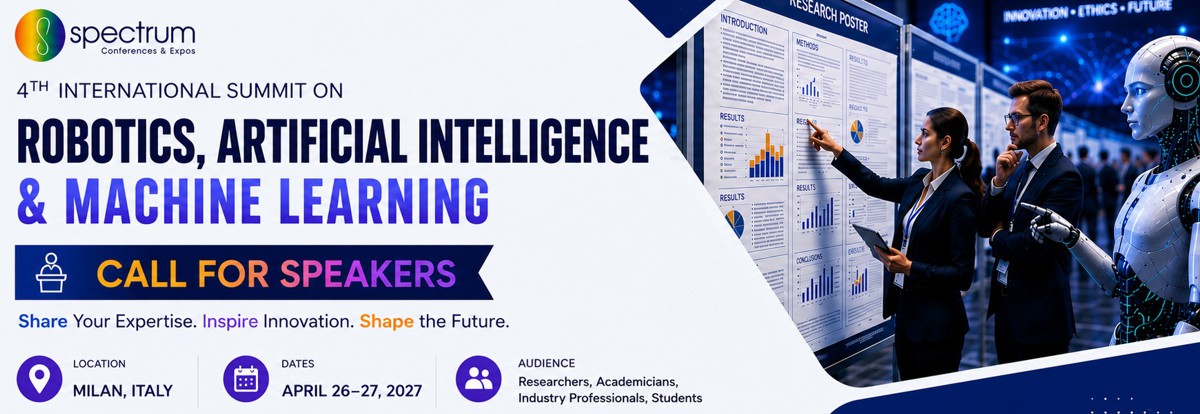
The fourth International Summit on Robotics, Artificial Intelligence & Machine Learning (ISRAI2027) will take place in Milan, Italy, on 26–27 April 2027, bringing together researchers, engineers and technology developers working across autonomous systems, intelligent automation and industrial applications.
Organised by Spectrum Conferences, the two-day event will examine developments in robotics, machine learning, computer vision, generative AI and human-machine interaction, with a scientific programme covering applications in manufacturing, transportation, healthcare and other technology-intensive sectors.
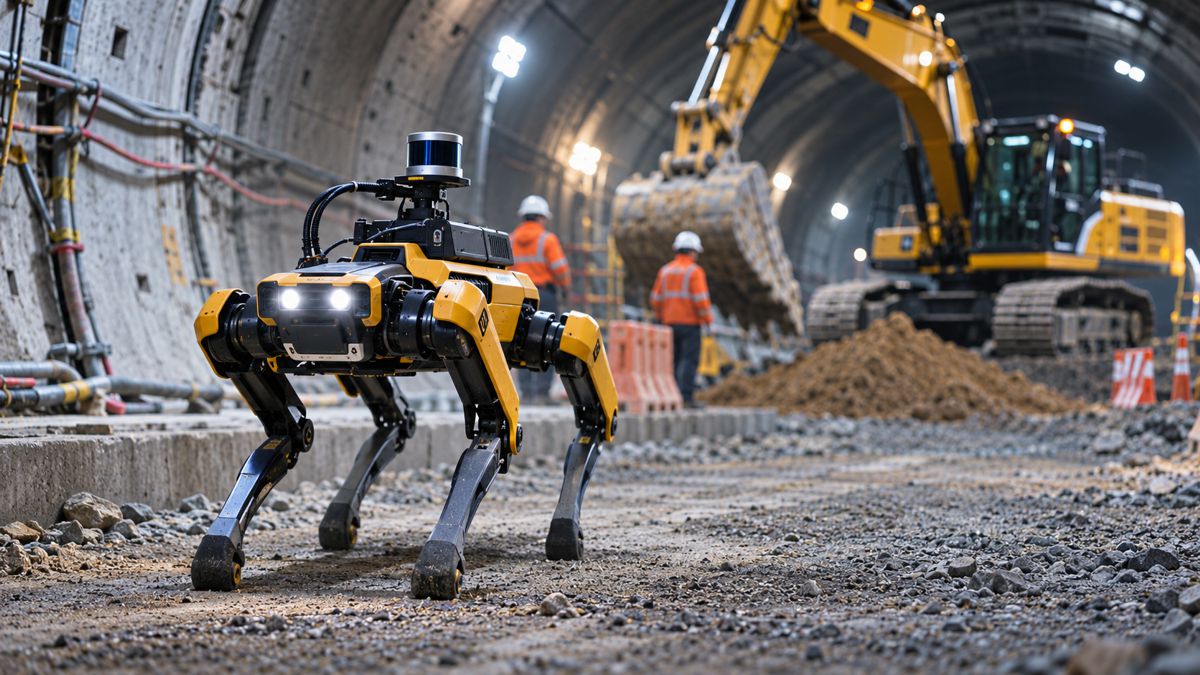
For construction and infrastructure professionals, several of these disciplines are becoming increasingly relevant to equipment operation, structural inspection, material handling and automated manufacturing. Robotics has long been established in controlled industrial environments, but transferring similar capabilities to construction sites presents a different set of engineering problems. Variable ground conditions, changing work areas, mobile machinery and the presence of personnel demand systems that can interpret their surroundings and operate reliably beyond the predictable routines of factory production.
Briefing
- ISRAI2027 will take place in Milan, Italy, on 26–27 April 2027.
- The fourth edition will cover robotics, artificial intelligence, machine learning and intelligent automation.
- Scientific tracks include computer vision, autonomous systems, industrial robotics and smart manufacturing.
- More than 600,000 industrial robots were installed worldwide in 2025, bringing the operational stock to approximately five million units.
- The programme includes scientific presentations, technical discussions and opportunities for international research collaboration.
Robotics Beyond the Factory Floor
Industrial robotics has developed into a substantial international market. According to the International Federation of Robotics (IFR), factories installed more than 600,000 new industrial robots worldwide during 2025, an increase of 11% on the previous year. The global operational stock reached approximately five million units, more than double the number recorded seven years earlier, with Asia accounting for much of the recent expansion.
These figures largely reflect industries where production processes can be standardised and machines operate within defined working areas. Automotive manufacturing, electronics production and metal fabrication provide conditions in which robotic systems can repeat tasks with high levels of consistency. Construction is less predictable, with machinery and personnel frequently moving between activities, materials varying in shape and condition, and the physical working environment changing as a project progresses.
The difference is evident in the adoption of professional service robots. The IFR’s World Robotics 2025 Service Robots report recorded growing demand for automation in logistics and transportation, where autonomous mobile robots can move goods through warehouses and distribution facilities along established routes. Construction and demolition robotics remained a comparatively small segment, despite growth in reported deployments during 2024.
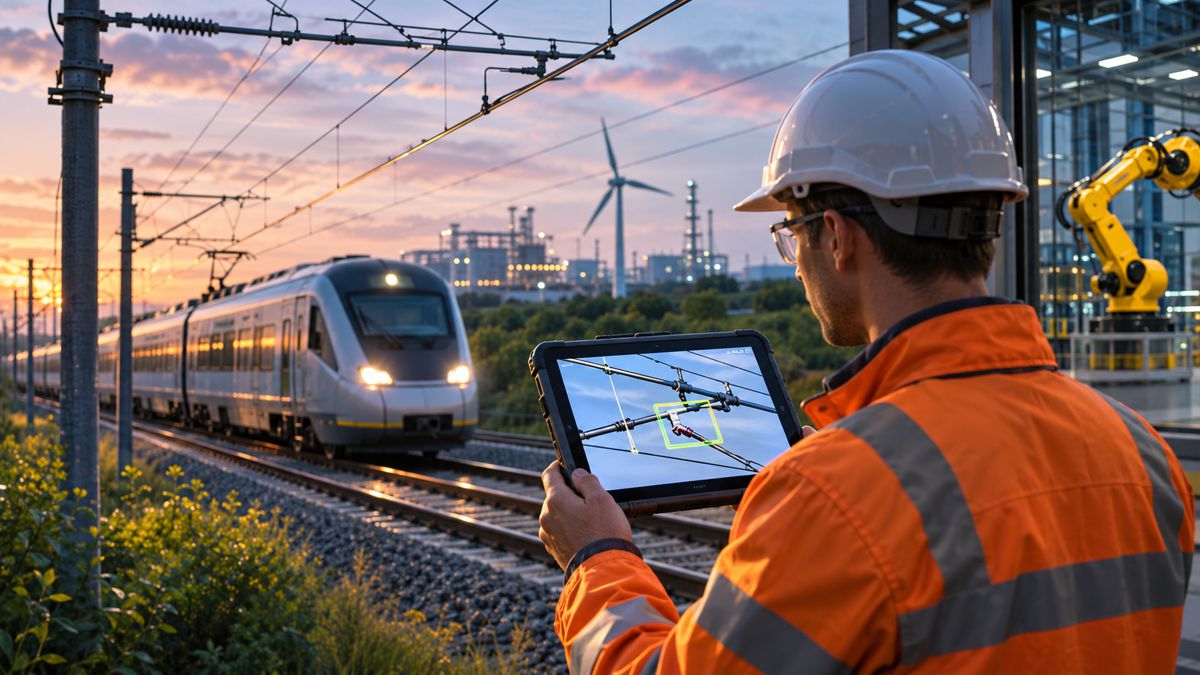
Nevertheless, technologies developed for industrial automation provide a foundation for applications beyond manufacturing. Robotic manipulation, machine vision, sensor fusion and autonomous navigation are already relevant to equipment guidance, automated component production, infrastructure inspection and the movement of materials around industrial facilities. The engineering challenge lies in adapting these capabilities to operations where the environment cannot be completely controlled.
Artificial Intelligence and Autonomous Systems
Several of the scientific tracks announced for ISRAI2027 address the technologies that enable machines to interpret their surroundings and respond to changing conditions. Deep learning, computer vision, autonomous robotics and intelligent decision systems are closely connected, particularly where machinery must recognise objects, establish its position and execute movements without continuous direct control.
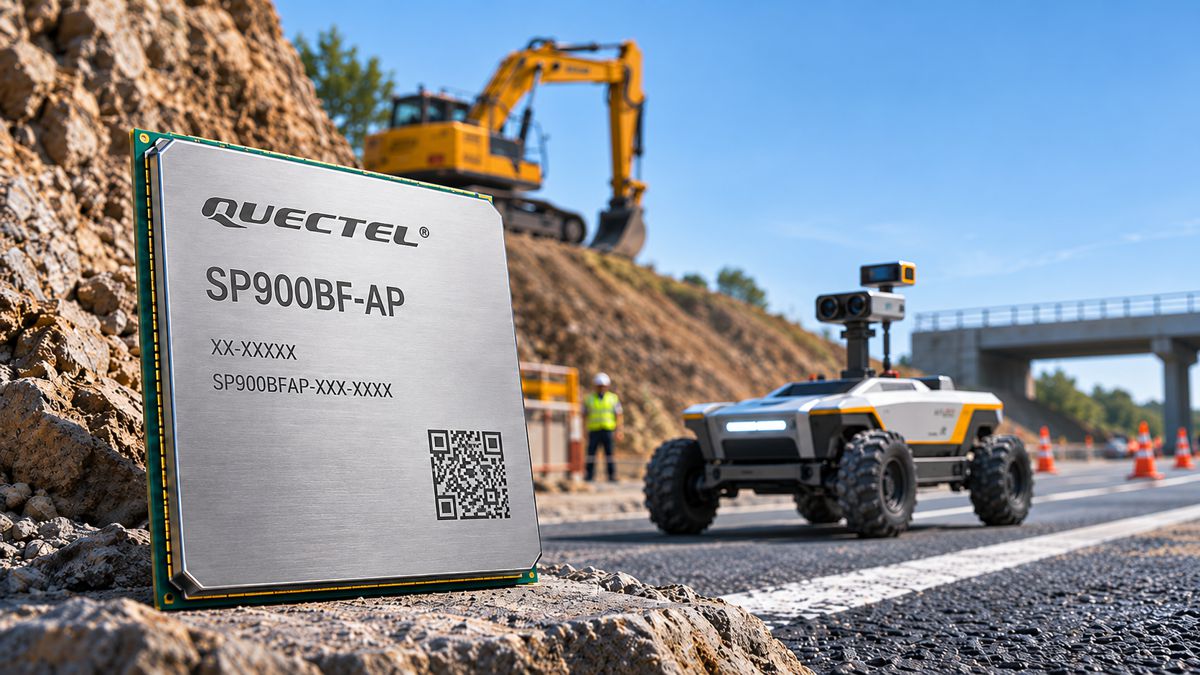
Computer vision is already finding applications across infrastructure engineering, from identifying defects in road surfaces and structures to monitoring site progress and detecting hazardous interactions between equipment and personnel. Camera-based systems can recognise patterns and objects within images, while additional sensors provide distance, movement and positional information. Combining these inputs allows more sophisticated interpretation of the working environment, although performance remains sensitive to lighting, dust, vibration and the quality of the information used to train the system.
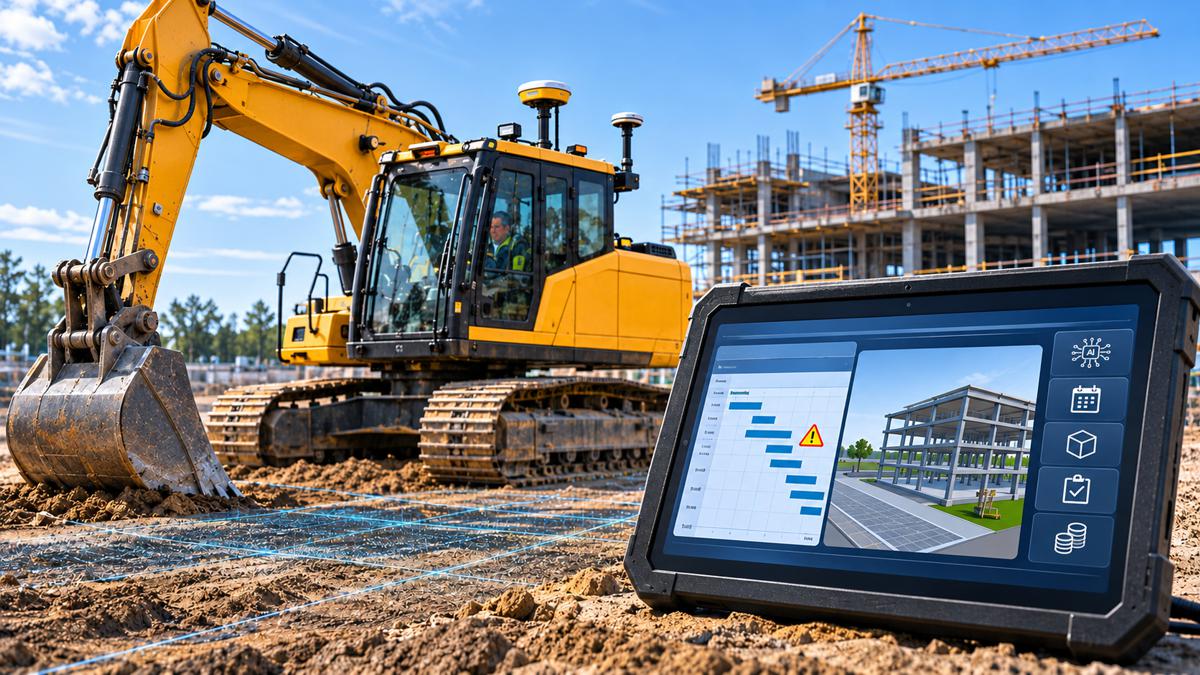
Autonomous construction machinery presents a more demanding application of these capabilities. A machine operating around workers and other equipment must maintain an accurate understanding of its position, recognise unexpected obstacles and remain within defined safety limits. Navigation systems may combine satellite positioning, inertial measurement, lidar, cameras and other sensors, with software processing the information to support machine movement and task execution.
Human-robot interaction, another of the conference’s research themes, becomes particularly relevant when automated equipment operates alongside people. Operators need to understand what a machine is doing, when intervention is required and how control can be transferred safely between automated and manual operation. The design of these interactions affects training, supervision and the practical acceptance of robotic systems in working environments.
Generative AI and large language models form a different part of the technical picture. Their potential applications include engineering document analysis, maintenance assistance, technical information retrieval and support for planning activities, where the immediate task involves processing information rather than controlling physical machinery. Integrating these systems with industrial equipment introduces further questions about data quality, software reliability and the authority given to automated recommendations.
Industrial Automation and Smart Manufacturing
Milan provides a relevant European setting for a conference examining robotics and industrial automation. Italy remains the European Union’s second-largest market for industrial robot installations after Germany, although demand weakened during 2025. The IFR recorded approximately 7,800 new installations in Italy, an annual decline of 11%, against a background of continued global market growth.
The country’s established manufacturing industries provide a substantial base for robotic applications, particularly in metalworking, machinery production and industrial component manufacturing. Similar technologies can support the production of precast concrete, fabricated steelwork and modular construction components, where repeatable processes and controlled working conditions make automation easier to introduce than on conventional building sites.
Automated cutting, welding, handling and assembly systems are already well suited to production environments with consistent component dimensions and established manufacturing sequences. Artificial intelligence can extend these capabilities through visual quality inspection, condition monitoring and process optimisation, allowing equipment to respond to information gathered during production rather than relying exclusively on predetermined instructions.
For construction product manufacturers, the economics of automation are closely tied to production volumes, component standardisation and equipment utilisation. A robotic installation may deliver reliable performance when producing large quantities of similar components, while frequent changes in geometry, materials or production requirements can increase programming and integration costs. Investment decisions therefore depend on the characteristics of individual operations as much as the technical capabilities of the machinery.
Safety and European Regulation
The conference programme also includes responsible AI, explainable systems and cybersecurity, reflecting the growing attention being given to the reliability and accountability of intelligent technologies. These subjects are particularly relevant to machinery operating around people and to systems involved in transportation or critical infrastructure.
In Europe, the regulatory framework has continued to develop through the EU Artificial Intelligence Act, which began applying in stages. Most of its general provisions became applicable in August 2026, while revised implementation arrangements establish later dates for certain high-risk applications. Requirements covering high-risk AI systems in specified areas under Annex III are scheduled to apply from 2 December 2027, with provisions concerning high-risk AI systems associated with regulated products under Annex I following on 2 August 2028.
The classification of an AI-enabled machine depends on its intended purpose, function and relationship with applicable product legislation. Consequently, manufacturers developing autonomous equipment or AI-based safety functions must assess the regulatory position of each system rather than assuming that all intelligent machinery falls within the same category.
Technical validation remains essential regardless of the regulatory classification. Equipment intended for industrial or construction environments must be evaluated under realistic operating conditions, including situations involving sensor limitations, communications failures, unexpected obstacles and human intervention. For autonomous systems, reliable behaviour when something goes wrong can be as important as performance during normal operation.
Research Programme and Conference Registration
ISRAI2027 is designed to provide a forum for presenting original research and exchanging technical experience between universities, research institutions and industrial technology developers. The announced programme includes keynote lectures, scientific presentations, technical discussions, panel forums and poster sessions, with opportunities for researchers and industry professionals to establish international collaborations.
The scientific tracks extend across robotics and intelligent systems, artificial intelligence, machine learning, computer vision, natural language processing, autonomous automation, industrial manufacturing, healthcare applications and intelligent transportation. Researchers are invited to contribute work for oral or poster presentation, with accepted abstracts intended for inclusion in conference proceedings. Selected papers may also be considered for publication through partnered peer-reviewed journals, subject to their respective editorial and review processes.
The organisers provide an online abstract submission facility, although prospective contributors should confirm the current submission arrangements and deadlines directly. The conference is open to researchers, academics, engineers, scientists, technology developers, industry professionals and students, with registration and programme information available through the official website.

Key Industry Questions
- When and where will ISRAI2027 take place? The fourth International Summit on Robotics, Artificial Intelligence & Machine Learning is scheduled for 26–27 April 2027 in Milan, Italy. The organisers provide venue and registration information through the official conference website.
- What subjects will the conference cover? The scientific programme includes robotics, machine learning, deep learning, computer vision, generative AI, autonomous systems, intelligent manufacturing, cybersecurity and human-robot interaction.
- Is ISRAI2027 relevant to the construction industry? Although it is not a construction-specific conference, several of its research themes have applications in construction machinery, infrastructure inspection, automated manufacturing and industrial robotics.
- How does artificial intelligence support autonomous construction equipment? AI can assist with object recognition, navigation, sensor interpretation and automated decision-making. These capabilities are typically combined with positioning systems, machine controls and safety functions appropriate to the equipment and its operating environment.
- Why is robotics adoption more difficult on construction sites than in factories? Construction sites involve changing layouts, variable materials, uneven terrain and interactions between machinery and personnel. These conditions make it more difficult to standardise operations and maintain predictable working environments.
- What are the main applications of computer vision in infrastructure engineering? Applications include surface defect detection, structural inspection, site progress monitoring, equipment guidance and recognition of potentially hazardous interactions between machinery and workers.
- How does the EU AI Act affect robotic equipment? The Act establishes requirements for specified AI systems according to their intended use and legal classification. Certain high-risk systems are subject to additional obligations, with implementation dates extending into 2027 and 2028.
- Can researchers submit papers or abstracts to ISRAI2027? The organisers provide an abstract submission process for oral and poster presentations. Researchers should confirm current deadlines and publication arrangements directly through the conference website.
Strategic Takeaways
- Industrial robotics provides an established technical foundation: Experience in manufacturing offers proven approaches to machine vision, robotic manipulation and automated production that can be adapted for other operating environments.
- Construction automation requires greater environmental adaptability: Changing site conditions and interactions between workers and machinery increase the demands placed on sensing, navigation and equipment control.
- Computer vision offers applications without complete machine autonomy: Inspection, defect recognition and progress monitoring can be implemented independently of fully autonomous construction equipment.
- Automation economics remain application-specific: Component standardisation, production volumes, integration costs and equipment utilisation influence whether robotic systems are commercially viable.
- Regulation and technical validation are becoming closely connected: Autonomous equipment developers must address functional safety, system reliability and the legal classification of AI-enabled products.