






PeroCycle Advances Industrial Carbon Recycling with St Helens Pilot Reactor
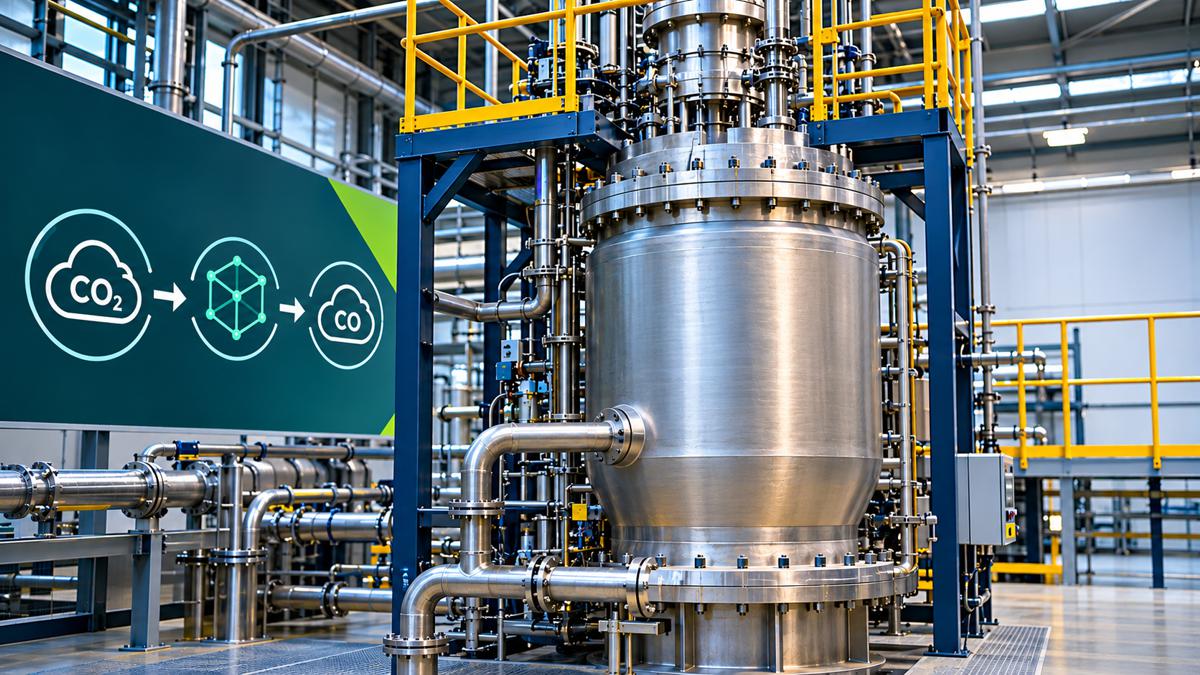
A two-tonne pilot reactor planned for St Helens, Merseyside, will provide an industrial testing ground for technology designed to convert carbon dioxide from energy-intensive manufacturing into reusable carbon monoxide. The project brings together University of Birmingham spin-out PeroCycle and industrial research organisation Glass Futures, with pilot testing scheduled throughout 2027.
The technology has been developed primarily for steelmaking, where carbon monoxide plays an essential role in converting iron ore into metallic iron. PeroCycle aims to recover carbon dioxide from industrial operations and convert it back into a useful reducing gas, potentially reducing the consumption of fresh carbon-based materials. Laboratory research has established the underlying chemical process, but its performance under sustained industrial operating conditions remains to be demonstrated.
The St Helens programme will examine both the catalytic reaction and the practical requirements of manufacturing the specialist material in larger quantities. It forms part of a wider development programme that envisages substantially larger carbon recycling facilities, including installations capable of treating thousands of tonnes of carbon dioxide annually.
Briefing
- PeroCycle and Glass Futures plan to test a two-tonne pilot reactor in St Helens during 2027.
- The technology uses perovskite-based materials to convert captured CO₂ into reusable carbon monoxide.
- University of Birmingham research has modelled potential steelmaking emissions reductions approaching 90%.
- The pilot programme will investigate catalyst manufacturing, reactor performance and industrial operating conditions.
- Engineering partnerships support plans for a future demonstration plant treating 20,000 tonnes of CO₂ annually.
Recycling Carbon Within Steelmaking
Conventional blast furnace steelmaking depends on carbon-rich materials such as coke to remove oxygen from iron ore. Carbon monoxide is central to this process, reacting with iron oxides to produce metallic iron while generating carbon dioxide. Much of that carbon dioxide eventually leaves the production system as an emission, contributing to the substantial carbon footprint associated with primary steel production.
PeroCycle’s approach is to recover some of that carbon dioxide and convert it back into carbon monoxide for reuse. The recycled gas could replace part of the conventional carbon input, reducing the requirement for fresh reducing agents while allowing existing blast furnace infrastructure to remain operational.
The underlying research was developed by Professor Yulong Ding and Dr Harriet Kildahl at the University of Birmingham. Their work uses a crystalline material with a perovskite structure that participates in a reversible chemical looping process. During carbon dioxide conversion, the material transfers oxygen from the gas into its crystal structure, producing carbon monoxide. A subsequent regeneration stage restores the material for another reaction cycle.
Although commonly described as a perovskite catalyst, the material also performs an oxygen-carrier function. Its ability to undergo repeated changes in chemical state without losing the properties required for efficient conversion is fundamental to the proposed industrial process.
The original research examined reaction conditions at approximately 700–800°C, below the temperatures associated with some conventional carbon dioxide conversion methods. However, the operating temperature of the conversion reaction should not be confused with the energy requirements of the complete industrial system, which would include gas capture, preparation, regeneration and heat management.
The Birmingham researchers modelled a modified blast furnace steelmaking process in which carbon recycling could reduce emissions by nearly 90%. That figure represents the potential performance of the proposed system under modelled conditions, rather than an emissions reduction achieved at a commercial steelworks.
For steel producers operating expensive blast furnace assets, the attraction is the possibility of introducing carbon recycling without replacing the entire production route. The practical feasibility will depend on how effectively the additional equipment can be integrated with existing gas handling, heat recovery and production systems.
Industrial Testing at Glass Futures
The partnership was initially announced in September 2026, when PeroCycle and Glass Futures signed a memorandum of understanding covering catalyst development, industrial testing and scale-up. A subsequent announcement on 9 November confirmed plans for the two-tonne pilot reactor and a testing programme extending through 2027.
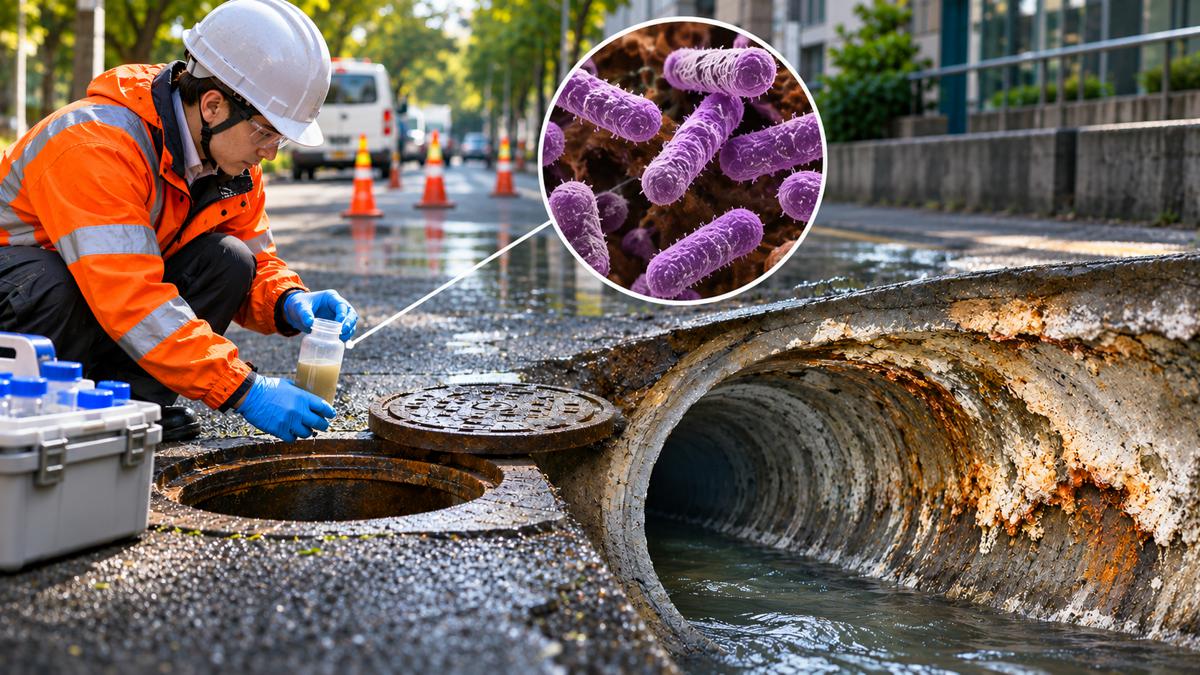
Glass Futures operates a 165,000 sq ft research and manufacturing facility in St Helens, equipped with industrial furnaces, materials processing equipment and instrumentation for investigating different fuels and gas compositions. Its experimental glass furnace, which was lit in June 2025, provides an industrial operating environment where emerging technologies can be evaluated without the immediate demands of continuous commercial production.
The facility also offers material blending, high-temperature processing and gas testing capabilities. These are particularly relevant to PeroCycle because the characteristics of the gas entering a carbon recycling reactor can vary significantly between industrial applications, while the physical properties of the catalyst must remain consistent as manufacturing moves beyond laboratory batches.
Grant Budge, Chief Executive of PeroCycle, explained the technical objectives: “The lab-based prototype demonstrated performance in optimal conditions. We now need to validate both the catalyst and the reactor in high temperature, industrial conditions, and Glass Futures can provide the clean and varied gas supply that is needed for this. We will also be benchmarking and reviewing formulation and structure of the catalyst, which can be produced on-site using Glass Futures’ material blending and furnace facilities.”
The partners describe the installation as a two-tonne pilot reactor, although the announcement does not specify whether this refers to equipment mass, catalyst loading or another design parameter. Its carbon dioxide processing capacity has not yet been disclosed, and no independently validated industrial throughput or operating cost has been published for the proposed installation.
Catalyst Manufacturing and Reactor Performance
A material that performs reliably in laboratory experiments must withstand considerably more demanding conditions when introduced into industrial equipment. Repeated temperature changes, variations in gas composition and prolonged reaction cycles can affect chemical performance, while impurities in industrial gas streams may introduce additional challenges depending on the catalyst formulation and treatment arrangements.
Reactor design adds another layer of complexity. Gas must pass through or around the active material in a controlled manner, with sufficient contact time for the required conversion to take place. Heat transfer, pressure losses and temperature distribution become increasingly significant as equipment dimensions increase, particularly where the process involves alternating chemical reactions.
Manufacturing the perovskite material consistently is equally important. Laboratory preparation methods may produce excellent results in small quantities but become less practical when industrial production requires larger batches, predictable physical properties and controlled manufacturing costs. Glass Futures’ blending and furnace facilities will allow PeroCycle to examine different formulations and production methods alongside the reactor trials.
The original Birmingham research reported that the material retained its stability during more than a month of laboratory testing. Although encouraging, that result does not establish its expected service life in an industrial reactor, where mechanical handling, gas contaminants and repeated thermal cycling may create different operating conditions.
The energy balance will also influence commercial performance. Converting carbon dioxide into carbon monoxide requires energy, even when the chemical reaction can proceed at relatively moderate industrial temperatures. Recovering useful heat from existing manufacturing processes could improve the economics, but the complete system must consume sufficiently little energy, and displace enough conventional carbon input, to deliver a worthwhile reduction in overall emissions.
These engineering considerations are closely connected. Catalyst durability influences replacement costs, reactor configuration affects energy consumption, and the quality of the incoming gas determines the amount of preparation required before conversion. The St Helens programme will provide an opportunity to investigate them together rather than as separate laboratory problems.
Engineering Partnerships and Commercial Development
PeroCycle was established in 2025 through the University of Birmingham and venture builder Cambridge Future Tech, working in collaboration with mining group Anglo American. The venture was created to commercialise the carbon recycling technology developed by Ding and Kildahl, with particular emphasis on its potential application to existing steelmaking infrastructure.
In August 2025, the company announced the opening of a £4 million seed funding round to support its development programme. The fundraising initiative accompanied the appointment of Grant Budge as Chief Executive, bringing commercial experience in carbon capture and utilisation to the emerging business. A subsequent university announcement in October described a £4.5 million fundraising programme, including an initial £1.5 million target, but did not confirm completion of the entire raise.
PeroCycle has also expanded its industrial engineering relationships. In July 2026, it announced partnerships with PKU Pioneer and io consulting, bringing gas separation, process engineering and systems integration expertise into the development programme.
PKU Pioneer specialises in industrial gas separation and purification, capabilities that could be particularly useful when preparing carbon dioxide-rich gas streams for conversion and handling the resulting process gases. Io consulting is supporting pilot engineering and is expected to undertake front-end engineering design and owner’s engineer responsibilities for a proposed demonstration plant treating 20,000 tonnes of carbon dioxide annually.
The company’s longer-term development pathway includes a first-of-a-kind commercial facility designed to treat two million tonnes of carbon dioxide per year. These are proposed future capacities rather than commissioned installations, and progression towards them will depend on pilot results, detailed engineering and investment decisions.
The scale of the planned developments also places the St Helens programme in perspective. Moving from laboratory equipment to an industrial pilot is an essential step, but treating millions of tonnes of carbon dioxide annually would require a much larger integrated system, with substantial gas handling, heat management and supporting infrastructure.
Steel producers already have several decarbonisation routes available, including increased scrap recycling through electric arc furnaces, hydrogen-based direct reduction and carbon capture and storage. Their suitability depends on local energy supplies, raw materials, existing plant configuration and capital investment requirements.
PeroCycle’s proposed commercial advantage is its compatibility with established blast furnace operations. Steelmakers with relatively modern assets may be reluctant to replace them prematurely, particularly where access to low-carbon electricity or suitable hydrogen infrastructure remains limited. A carbon recycling system capable of reducing emissions while retaining existing production equipment could therefore appeal to operators seeking an intermediate route towards lower-carbon steelmaking.
The company has also begun examining potential deployment with industrial customers. In May 2026, it announced a feasibility assessment with Jindal Steel in Oman, focused on integrating carbon recycling technology with steel manufacturing operations at the Port of Duqm. Such studies can help establish site-specific engineering requirements before investment in demonstration or commercial equipment.
Applications Beyond Steelmaking
Carbon monoxide has established uses in chemical manufacturing and other industrial processes, including applications where it serves as a reducing agent or chemical feedstock. This creates potential opportunities beyond ironmaking, although the economics of recycling carbon dioxide will vary according to gas composition, energy requirements and whether the resulting carbon monoxide can be consumed locally.
Glass Futures’ research facilities provide an opportunity to investigate some of these wider applications, particularly within high-temperature manufacturing. The organisation works across glass and other foundation industries, combining experimental furnace operations with materials development and industrial process research.
Justin Kelly, Chief Executive of Glass Futures, said: “Glass Futures helps innovative companies move from laboratory success to industrial-scale deployment. By supporting the demonstration of technologies that convert waste streams into usable fuels, we’re helping drive decarbonisation not only in glass, but across a range of energy-intensive materials sectors. PeroCycle’s technology is ready for the next stage of development, and our unique facilities, technical expertise and pilot-scale infrastructure will help accelerate that journey.”
Industrial applications outside steelmaking would require their own assessment of gas treatment, reactor integration and the market or operational value of the converted gas. Where carbon monoxide cannot be reused directly within a manufacturing process, additional storage, handling or downstream conversion could affect the commercial case.
From Pilot Reactor to Industrial Installation
The planned St Helens trials sit between a laboratory programme that has established the underlying chemistry and a commercial development strategy that envisages carbon recycling facilities operating at a much larger scale.
Durante 2027, the partners intend to investigate reactor performance, catalyst manufacture and operation under industrial conditions. The results will help determine the engineering requirements for subsequent installations, including material production methods, reactor configuration, energy demand and gas handling arrangements. Longer-duration testing will also be needed to establish maintenance requirements and the operating life of the catalyst.
For existing steelworks, the prospect of recovering carbon dioxide and returning it to the production process offers an alternative to some of the more disruptive approaches to decarbonisation. The chemistry has already produced encouraging laboratory results, but its commercial future will depend on whether those results can be reproduced economically at industrial scale.
The proposed two-million-tonne-per-year facility remains a considerable distance from the equipment being developed in St Helens. The 2027 pilot will be one of the first opportunities to establish how much of that distance can be covered through conventional industrial engineering and how much further development the carbon recycling process will require.
Key Industry Questions
- What is PeroCycle developing? PeroCycle is developing a chemical looping reactor system that converts captured industrial carbon dioxide into carbon monoxide, allowing the gas to be reused in manufacturing processes such as steelmaking.
- How does the perovskite material convert carbon dioxide? The material acts as an oxygen carrier during a reversible chemical reaction. It removes oxygen from carbon dioxide to produce carbon monoxide and is subsequently regenerated so that the conversion cycle can continue.
- Can the technology reduce steelmaking emissions by 90%? Research at the University of Birmingham has modelled potential reductions approaching 90% for a modified blast furnace steelmaking process. This remains a modelled result rather than demonstrated commercial performance.
- Where will the pilot reactor be tested? The pilot is planned for Glass Futures’ industrial research facility in St Helens, Merseyside, with testing scheduled throughout 2027.
- What does the two-tonne reactor designation mean? The announcement does not define the measurement. It should not be interpreted as a confirmed carbon dioxide processing capacity.
- Can PeroCycle’s technology be retrofitted to existing blast furnaces? Retrofit installation is a central objective of the technology. Practical feasibility will depend on the steelworks’ gas handling systems, operating conditions, energy integration and available space.
- Does carbon recycling eliminate the need for carbon capture? No. Carbon dioxide must first be recovered from industrial gas streams. The proposed system then converts it into a reusable gas rather than relying exclusively on permanent storage.
- What commercial-scale facilities are planned? PeroCycle’s development pathway includes a proposed plant treating 20,000 tonnes of carbon dioxide annually, followed by a potential first-of-a-kind commercial facility with a design target of two million tonnes per year.
- What are the main engineering challenges? Catalyst durability, manufacturing consistency, reactor heat transfer, gas purification, conversion efficiency and total energy consumption will all influence commercial feasibility.
Strategic Takeaways
- Retrofitting existing steelworks could offer a practical market. Carbon recycling may allow operators to reduce emissions without prematurely replacing expensive blast furnace infrastructure.
- Catalyst manufacturing will be as important as reactor performance. Consistent material quality, durability and replacement costs will influence whether the process can operate economically.
- Heat integration could determine overall efficiency. The ability to recover and reuse energy within industrial processes will affect both operating costs and emissions reductions.
- Gas treatment and systems integration remain substantial engineering requirements. Capturing carbon dioxide and returning converted gas to production must be incorporated into existing plant operations.
- Industrial pilot results will shape the next investment decisions. Larger demonstration facilities will require evidence of sustained performance, manageable maintenance costs and commercially viable operating conditions.