Japan’s Nittetsu Mining Targets Autonomous Quarry Haulage by 2033
Japan’s Nittetsu Mining is working towards autonomous operation of large dump trucks at its Torigatayama Quarry Complex in Kochi Prefecture by 2033, as the country’s mining industry confronts a growing shortage of experienced equipment operators.
The programme builds on unmanned truck trials already undertaken at one of Japan’s largest limestone operations, where enormous earthmoving machines transport millions of tonnes of material through a demanding mountain environment.
The plans, reported by Nikkei Asia in October 2026, concern a quarry capable of producing approximately 14 million tonnes of limestone annually. Nittetsu Mining has spent decades developing its extraction, crushing and material handling infrastructure, with autonomous haulage now emerging as another step towards maintaining production with a changing workforce.
Briefing
- Nittetsu Mining is targeting autonomous large dump truck operations by 2033 to address labour shortages.
- Its Torigatayama Quarry Complex has an annual limestone production capability of approximately 14 million tonnes.
- The operation uses 180-tonne-class dump trucks and wheel loaders with 19 m³ buckets to transport limestone to vertical crushing shafts.
- Unmanned dump truck trials were documented in the company’s 2024 Integrated Report.
- A ¥20 billion third vertical shaft and a 23.3 km conveyor system form part of the quarry’s extensive material handling infrastructure.
A Major Limestone Operation in Japan’s Mountains
Located in the Shikoku Mountains, approximately 45 kilometres west of Kochi city, Torigatayama has been producing limestone since 1971. The deposit contains more than one billion tonnes of high-quality material, supplying Japanese steel and cement producers alongside export customers in markets including Australia and Taiwan.
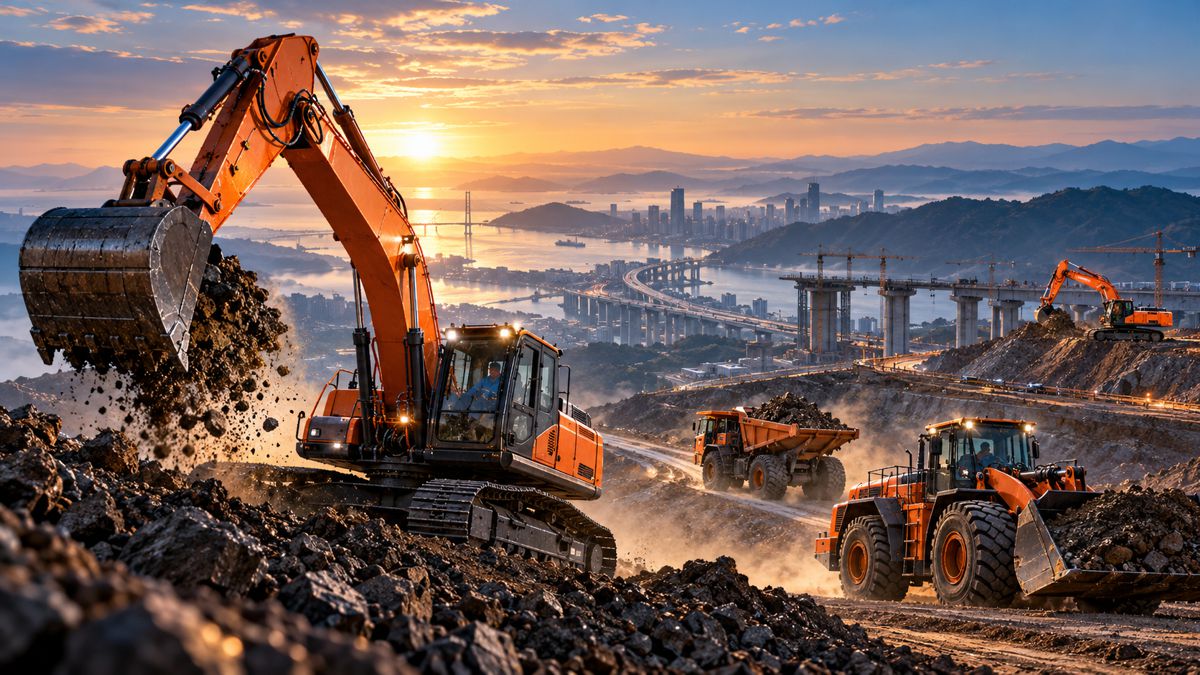
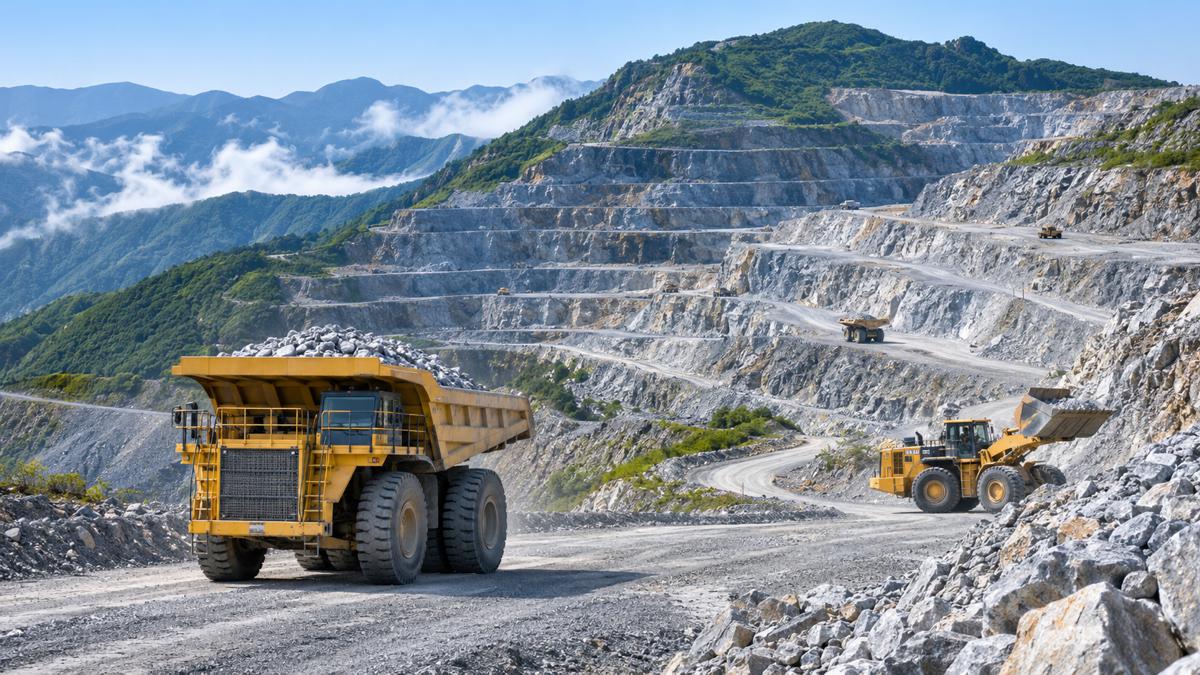
Extraction takes place at elevations exceeding 1,000 metres, where the mountain has been developed into an extensive series of working benches. The quarry’s operating face covers approximately 155 hectares, with mining generally undertaken using 15-metre benches. Following drilling and blasting, large wheel loaders fill rigid-frame dump trucks, which carry broken limestone to a series of vertical shafts.
Nittetsu Mining’s official quarry documentation describes 180-tonne-class dump trucks working alongside wheel loaders equipped with 19 m³ buckets. These machines operate in difficult mountain conditions, with annual rainfall typically between 3,000 and 5,000 mm, frequent mist and occasional winter snow accumulation.
The established loading and dumping locations provide a potentially suitable environment for autonomous haulage, although changing excavation layouts, steep terrain and restricted visibility present challenges for driverless operations. Any autonomous system must accommodate the movement of other machinery and personnel while maintaining the production cycles required by the quarry.
From Unmanned Trials to Autonomous Operations
The 2033 objective follows work that Nittetsu Mining had begun several years earlier. In its 2024 Integrated Report, the company identified workforce shortages resulting from Japan’s declining population as a long-term operational concern and confirmed that experimental trials involving unmanned dump trucks had started.
The report also described research into remotely operated heavy equipment, although it did not establish the level of autonomy achieved during the trials or identify a complete commercial haulage system.
Remotely operated machinery remains under direct human control, whereas an autonomous haul truck can navigate assigned routes, respond to obstacles and complete loading and dumping cycles without continuous driving input. At an operating quarry, this requires positioning and perception systems, reliable communications, traffic management and procedures for responding to unexpected equipment movements or changes in the working area.
Integrating those capabilities into an established production site is a considerable engineering exercise. Haul roads and loading points must be mapped and maintained, while interactions between autonomous trucks and manually operated machinery need to be managed safely. Weather conditions and road surfaces can also affect vehicle positioning, braking and obstacle detection.
Nittetsu Mining has not publicly established, in the material reviewed, which vehicles will be converted, which technology supplier will be involved or whether the eventual system will operate across the entire haulage fleet.
Building on Existing Mining Infrastructure
Autonomous truck development follows substantial investment in Torigatayama’s production infrastructure.
In June 2024, Nittetsu Mining completed its third vertical shaft after seven years of construction and an investment of approximately ¥20 billion. Measuring 283 metres deep and 10 metres in diameter, the shaft provides another route for limestone to enter the underground crushing and conveying network.
Rather than transporting material down the mountain by truck, the operation uses vertical shafts to transfer limestone from the working face to crushers below. The rock is reduced to pieces no larger than 80 mm before entering a long-distance conveyor system that carries it approximately 23.3 kilometres to coastal processing and shipping facilities at Susaki.
This arrangement confines much of the heavy truck movement to the extraction area, with electrically powered conveyors handling the longer journey towards the coast. It also reduces dependence on extended downhill haul roads, which would otherwise require considerably more vehicle movements and associated maintenance.
The conveyor system has another interesting characteristic. Several downhill sections use the gravitational energy of descending limestone to generate electricity, which can be used elsewhere within the operation.
Nittetsu Mining has also invested in centralised equipment monitoring, fibre-optic communications, drone inspections and AI-based image recognition to detect foreign material at its processing and shipping facilities. The company has identified further potential applications for image recognition, including detecting damage to conveyor belts.
Its 2025 Integrated Report identifies operational optimisation at Torigatayama as an ongoing priority, with work focused on improving technical capabilities, operating efficiency and working conditions. The quarry remains central to the company’s plans for stable limestone supply and improved production logistics.
Autonomous Haulage Moves into Limestone Quarries
Large mining companies have operated autonomous haulage systems for years, particularly at high-volume iron ore and copper operations where substantial truck fleets follow relatively predictable routes.
The technology is increasingly being adapted to limestone quarrying, where fleet sizes, production schedules and operating economics can differ considerably from those of major open-pit mines.
In May 2026, Caterpillar announced an agreement with Carmeuse to introduce Cat MineStar Command for hauling at the company’s Drummond Island limestone quarry in Michigan. The project involves integrating autonomous operation into a fleet of Cat 777 rigid dump trucks, supported by additional fleet management capabilities for loaders and other vehicles.
Such systems coordinate truck movements between loading points, haul roads and designated dumping locations. Vehicles receive assignments electronically and travel along controlled routes, while a central management system monitors their movements and interactions with other equipment.
The economics can be quite different from automating hundreds of trucks at a continuously operating mine. Quarry operators must assess the cost of vehicle conversion, communications infrastructure and system integration against the productivity gains available from comparatively small fleets.
The Carmeuse agreement provides a contemporary example of autonomous haulage entering limestone production, although it does not establish that Nittetsu Mining will use Caterpillar equipment or any particular commercial system.
Labour Availability and Quarry Economics
Japan’s demographic pressures provide the commercial backdrop to the Torigatayama programme. Maintaining a workforce capable of operating large specialist machinery in remote locations is likely to become increasingly difficult as experienced operators retire and the available pool of replacements contracts.
Autonomous haulage offers a way to reduce the number of people required to operate trucks continuously, but it does not eliminate the need for skilled personnel. Maintenance technicians, production controllers, equipment specialists and safety staff remain essential, while driverless systems introduce additional demands for communications, software support and technical supervision.
Productivity gains will depend on how reliably autonomous trucks complete their assigned cycles, how efficiently they interact with loading equipment and whether waiting times or unnecessary movements can be reduced. A system that performs well during controlled trials must also demonstrate that it can maintain production through changing weather, equipment maintenance and the normal disruptions of quarry operations.
At Torigatayama, the established material handling infrastructure provides a foundation for gradual implementation. Trucks operate between working faces and fixed vertical shaft locations, allowing autonomous haulage to be developed within a defined part of the production process rather than across the entire transport network.
The working faces will continue to advance, however, requiring haul routes and operating boundaries to be updated as extraction progresses. Driverless equipment must adapt to those changes without creating additional delays or compromising safety.
A Longer-Term Production Strategy
Torigatayama remains a central asset in Nittetsu Mining’s limestone business, which supplies raw materials essential to Japan’s steel and construction industries. The company’s management strategy places considerable emphasis on reliable production, improved logistics and the adoption of advanced technologies to maintain efficiency.
Its latest publicly available integrated reporting also identifies the need to improve operating margins through cost control, production improvements and the development of export markets. Recent investment in the third vertical shaft has strengthened the quarry’s material handling capacity, while the longer-term optimisation programme continues to examine how equipment and working practices can be improved.
The reported 2033 autonomous haulage target provides an extended period for testing, infrastructure development and potential fleet conversion. The eventual pace of deployment will depend on technical performance, safety requirements and the economics of operating driverless trucks alongside conventional equipment.
After more than five decades of production, Torigatayama already combines large-scale excavation with underground crushing, long-distance conveying and increasingly sophisticated monitoring systems. The trucks remain a critical connection between the working faces and the shafts that carry limestone down through the mountain.
For Nittetsu Mining, the next challenge is to automate that connection while keeping the quarry running, despite increasingly difficult conditions for recruiting the people who have traditionally driven its enormous machines.
Key Industry Questions
- What is Nittetsu Mining planning at Torigatayama? The company is reportedly targeting autonomous operation of large dump trucks by 2033, building on earlier unmanned vehicle trials and research into remotely operated heavy equipment.
- How much limestone can Torigatayama produce? The quarry has an annual production capability of approximately 14 million tonnes and supplies domestic and export markets.
- What size dump trucks operate at the quarry? Nittetsu Mining’s official documentation describes 180-tonne-class dump trucks loaded by wheel loaders with 19 m³ buckets.
- Has autonomous haulage already been tested? The company’s 2024 Integrated Report confirmed experimental unmanned dump truck trials, although detailed performance results and the level of autonomy achieved were not disclosed.
- Which autonomous haulage supplier will Nittetsu Mining use? A supplier has not been independently confirmed in the reviewed material, nor has the company detailed the proposed commercial fleet configuration.
- Why could Torigatayama be suitable for autonomous haulage? Its defined routes between excavation areas and fixed vertical shafts offer a potentially manageable operating environment, although changing working faces and difficult mountain weather remain challenges.
- What happens to limestone after the dump trucks unload it? Material enters vertical shafts, is crushed underground and travels approximately 23.3 kilometres by conveyor to coastal processing and shipping facilities.
- Are other limestone quarries adopting autonomous trucks? Yes. Caterpillar announced a May 2026 agreement to introduce its MineStar Command autonomous haulage system at Carmeuse’s Drummond Island quarry in Michigan.
- Will autonomous trucks eliminate quarry employment? They can reduce the requirement for continuous onboard driving, but operations still require maintenance, supervision, safety management and specialist technical support.
Strategic Takeaways
- Workforce resilience: Autonomous haulage could help established quarry operations maintain production as experienced equipment operators become harder to recruit.
- Infrastructure integration: Torigatayama’s fixed shaft locations and existing material handling network may support phased vehicle automation without wholesale replacement of production infrastructure.
- Operating conditions: Mountain weather, changing extraction faces and mixed equipment traffic will influence the reliability and safety of autonomous deployment.
- Commercial adoption: Quarry-scale autonomous systems must demonstrate practical value with smaller fleets and different operating patterns from major mines.
- Long-term investment: The 2033 target places truck automation within a wider programme of production modernisation and operational efficiency.