INTERMAT 2027 Positions Sustainability as Construction’s Commercial Imperative
The construction equipment industry has spent several years proving that its machines can run cleaner. The harder question, and the one that will decide how quickly emissions actually fall on European worksites, is who pays for the change and how the equipment reaches the operators who need it. That is the real subject of the special issue INTERMAT has just published ahead of its 2027 edition, titled “The construction industry rising to the challenge of sustainability”.
Read at face value it is a scene-setter for a trade show. Read commercially it is something more useful, a statement from the French equipment establishment about the financing, procurement and access mechanisms it believes will carry decarbonisation from pilot projects to standard practice.
That framing matters because the market backdrop is fragile rather than buoyant. European construction equipment sales rose by 4.6 per cent in 2025 according to the CECE Annual Economic Report 2026, a moderate rebound after the sharp contraction of 2024, with only 2 to 2.5 per cent growth expected in 2026 and that growth tied closely to public investment and the energy transition rather than a spontaneous recovery in private demand.
In an environment where buyers remain cautious and interest rates sit above pre-2022 levels, asking contractors to absorb the price premium of low-carbon machinery on their own balance sheets was never going to work. The special issue, produced with the five trade bodies C-MAT, EVOLIS, DLR, FFB and FNTP and drawing on their Sector Day discussions of 29 January 2026, effectively concedes the point and reorganises the transition around shared cost, shared risk and shared access.
Briefing
- INTERMAT’s 2027 special issue reframes construction decarbonisation as a question of economic viability, procurement and equipment access rather than technical feasibility, aligning the show with a European market that CECE expects to grow only 2 to 2.5 per cent in 2026.
- Rental and leasing now dominate the channel, with DLR chairman Philippe Cohet putting the leased share of machines at roughly 80 per cent, making rental companies the practical gatekeepers of how quickly electric and low-carbon plant reaches sites.
- The five federations have coordinated through the CINERGIC consortium to secure a 20 million euro public support envelope for electric machinery and standardised financing routes, treating the price gap as a collective problem rather than an individual buyer’s burden.
- The sector is backing a multi-energy strategy, pairing battery-electric compact machines with HVO biofuel for combustion engines, rather than committing to a single technology, a stance with direct consequences for fleet planning and residual values.
- A structural labour shortage sits alongside the energy challenge, with France reporting over 210,000 construction hires needed each year and close to three-quarters proving difficult to fill, positioning workforce transformation as central to INTERMAT 2027 rather than a secondary theme.
The Price Gap Is the Barrier That Actually Matters
Every serious conversation about cleaner construction equipment eventually arrives at the same obstacle, which is that low-carbon machines still cost more than their diesel equivalents to buy. The special issue is candid about this. Commitment to European carbon neutrality by 2050 is treated as settled, and the live question is how manufacturers, contractors, rental companies and suppliers reduce emissions and meet tightening regulation while continuing to produce and remain competitive.
That reframing is significant because it moves the debate away from aspiration and towards the mechanics of demand. If the cleaner option is the more expensive option, then demand has to be engineered rather than assumed, and the most powerful lever available is public procurement.
Public tenders that specify low-carbon solutions do something the market cannot do on its own. They create guaranteed volume for equipment that would otherwise struggle to compete on upfront price, which in turn gives manufacturers and rental firms the confidence to invest in fleets whose commercial case depends on regulatory pull rather than immediate cost parity.
This is where the economic pillar of the special issue connects to real balance sheets. The European regulatory framework, as the document acknowledges, adds administrative burden and shifts the internal balance of the sector, and it also rewards stability, because contractors and lessors will only commit capital to compliant machinery if the rules that make that machinery worth buying are predictable over the life of the asset.
Guillaume Schaeffer, director of the INTERMAT trade show, frames the event as the place to settle exactly these terms, describing it as an opportunity: “to share experiences, highlight existing solutions and, above all, identify the conditions under which they can be rolled out across the sector, with business models that are sustainable in the long term”.
Rental Has Quietly Become the Transition’s Delivery System
The single most commercially important line in the entire special issue is Philippe Cohet’s observation that around 80 per cent of machines are now leased. If that is broadly the shape of the market, then rental and leasing companies, not individual contractors, are the point at which decarbonisation decisions are actually made. A contractor renting a compact excavator for a six-week job does not choose the powertrain, the lessor does, when it decides what to put in its fleet.
That places the DLR membership and the wider rental sector in the position of gatekeeper for the transition, and it reframes the economics entirely, because the price premium of an electric machine is spread across many hirers and many jobs rather than landing on one buyer at the point of purchase.
This matters even more given how uneven the rental recovery looks. The European Rental Association and KPMG, presenting at the 2026 ERA Convention in Maastricht, forecast the French rental market to contract by around 1.5 per cent in 2026 after a flat 2025, while rental penetration continues to rise across Europe and southern markets such as Spain, Italy and Portugal grow strongly. A soft French market with rising penetration is precisely the environment in which lessors need certainty about which assets will hold their value.
Tightening Stage V emissions rules for non-road mobile machinery and the spread of urban low-emission zones are already pushing fleets to renew, and they carry a sharp commercial edge, because every diesel machine bought today risks becoming a stranded asset as compliance requirements harden. Rental absorbs that residual-value risk on behalf of the contractor, which is why the model is becoming the default route through which electric and HVO-capable plant reaches European sites, and why the health of the lessors matters as much as the ambition of the manufacturers.
Multi-Energy Pragmatism Is a Deliberate Commercial Choice
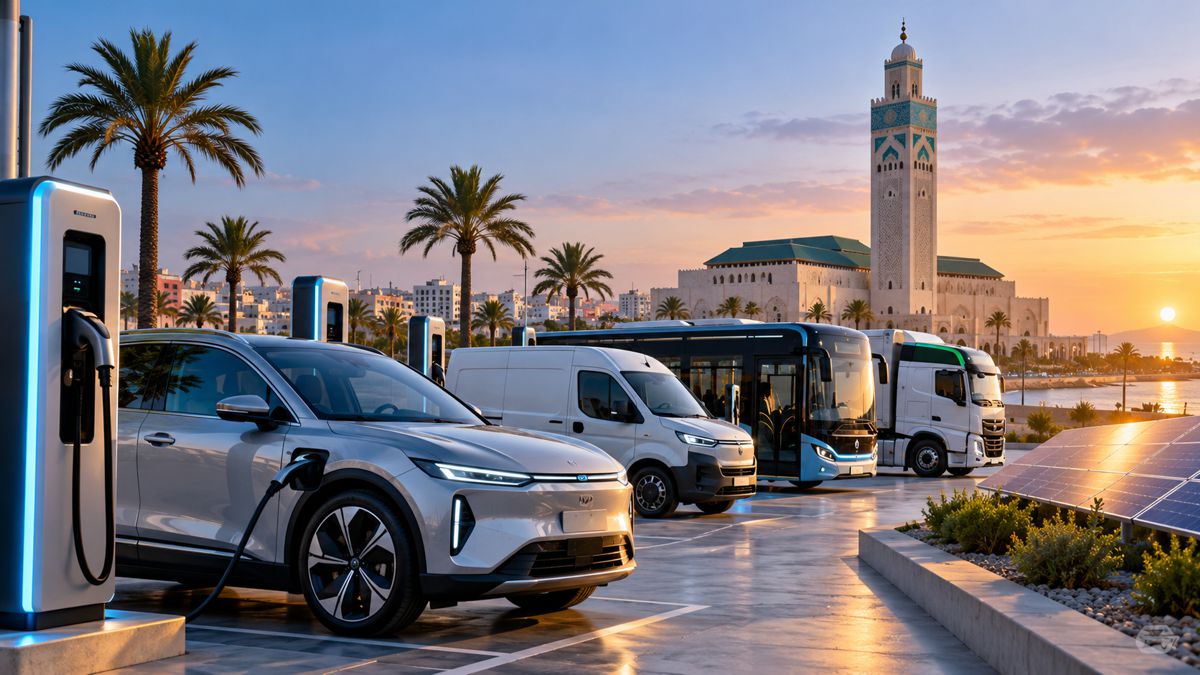
The environmental section of the special issue makes a decision that deserves more attention than it will probably receive, which is that the sector is explicitly rejecting a single-technology future in favour of a multi-energy approach. Electrification is advancing fastest in compact machines, where pilot projects show the technology is operationally viable and delivers the additional benefit of lower noise, an increasingly valuable attribute on urban and night-work sites.
Alongside it, HVO, or hydrotreated vegetable oil, is positioned as a credible and immediately available way to cut emissions from existing combustion engines without waiting for fleets to be replaced. The commercial logic is straightforward. Battery-electric handles the light end and the constrained urban applications, HVO decarbonises the large diesel installed base that cannot be electrified in the near term, and neither is asked to do the whole job.
Xavier Neuschwander, chair of the FNTP’s Technical and Innovation Committee, grounds this in supply reality, noting that: “Carbon-free energy sources remain scarcer than oil. This means sectors must be organised and decisions made based on applications.” That is a purchasing instruction as much as a technical observation, telling fleet managers to match energy source to use case rather than chase a universal solution.
Davy Guillemard, president of C-MAT, extends the point beyond hardware, observing that: “And environmental sustainability also depends on changing practices, such as driver assistance systems, eco-driving, usage rates, and managing idling”. His argument reframes emissions reduction as an operational discipline, not only a procurement decision, which is commercially important because idling management, higher utilisation and eco-driving improve margins on machines the contractor already owns or hires. For an industry watching its cost base carefully, efficiency gains that require no new capital are the most attractive kind, and they represent value that telematics and driver-assistance suppliers are well placed to capture.
CINERGIC and the Politics of De-Risking the Transition
What lifts this from an industry position paper to a working strategy is the CINERGIC consortium, the body through which C-MAT, DLR, EVOLIS, FFB and FNTP have coordinated their approach to on-site energy since INTERMAT 2024. The consortium exists to do what no single company can, which is to negotiate with public authorities as a unified voice and translate that dialogue into concrete financing.
It has already delivered results, helping to secure a 20 million euro public support envelope for electric machinery and working towards standardised Certificat d’Economie d’Energie financing routes that reduce the cost of putting an electric non-road machine to work. The French agency ADEME opened a call for projects on 30 June 2026 covering the purchase of new electric machines, the retrofit of existing ones and fixed or mobile charging infrastructure, which turns the political achievement into money contractors and lessors can actually apply for.
The strategic significance here is the model itself. A fragmented, capital-intensive sector facing an expensive transition has organised collectively to shift part of the cost onto public funding and to make the rules predictable enough to justify private investment. That is a template other equipment markets will study, because it addresses the core failure of technology-push decarbonisation, where the machines exist but the demand and the financing do not.
It also has a European dimension, with EVOLIS active in the CECE and FEM committees that shape construction and handling equipment policy across the bloc, and with public support increasingly attached to European-preference criteria. For manufacturers, that combination of subsidy and localisation signals where the protected demand will sit, and it rewards those with European production and compliant supply chains over those competing purely on imported price.
The Workforce Shortage Is the Constraint No Subsidy Can Fix
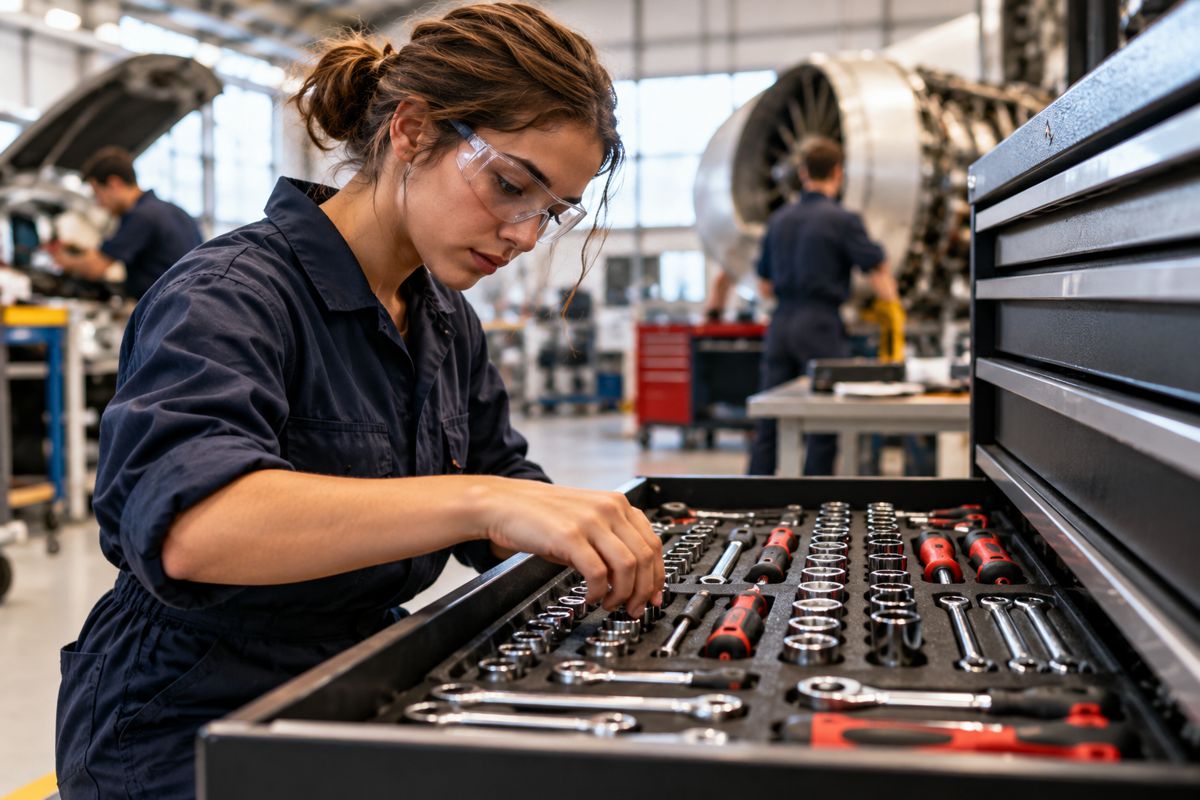
Financing and energy dominate the headlines, but the special issue is clear that the sector’s hardest long-term constraint is people. France alone needs over 210,000 new construction hires each year, and close to three-quarters of those roles are considered difficult to fill, a shortfall the document attributes not to a lack of opportunity but to an outdated perception of what the work involves.
Raising the number of women in construction is identified as a strategic priority where real progress is still required. This is not a soft issue sitting beside the commercial story, it is the commercial story, because electrified fleets, telematics and AI-enabled maintenance only deliver value if there are skilled people to operate and maintain them, and a labour shortage translates directly into project delays and bid inflation.
The response the sector describes is a genuine repositioning of the work rather than a recruitment campaign. Jean-Claude Fayat, first vice-president of EVOLIS and president of the FIM, argues that “To attract young people to these professions, we need to give a clearer picture of how they are changing. These are now more modern, less physically demanding jobs that value initiative and independence.” New technology is doing much of that repositioning, with AI opening the way to predictive maintenance applications that shift roles from manual intervention towards data-informed asset management.
Alongside changing the work, the sector is widening the door, and Sébastien Ramé, vice-president of UMGO-FFB, points to the value of that openness, noting that “Companies are much more open in their recruitment practices. We’re seeing people from different backgrounds join us as they change careers, and that’s a real asset to the sector.” Structured onboarding through the early years and more diverse recruitment are presented as the practical mechanisms, and the show itself is being used as a talent instrument through the INTERMAT Academy and a public opening day on Saturday 24 April 2027.
What INTERMAT 2027 Will Actually Put to the Test
The value of a trade show to the industry is not the machinery on the stands, it is whether the commercial models being talked about survive contact with real projects. On that measure, INTERMAT 2027, running from 21 to 24 April 2027 at Paris Nord Villepinte alongside the World of Concrete Europe, is shaping up as a validation venue rather than a showcase.
The financing routes CINERGIC has assembled, the multi-energy fleet strategy, the rental-led access model and the workforce repositioning all need evidence from live sites to move from policy to practice, and the special issue reads as an invitation to bring that evidence. Schaeffer describes the event as: “a key venue for scaling up: a space where solutions and innovations are showcased, compared and discussed collectively, with a view to clarifying the conditions for rolling them out”, which is a precise account of what the market still needs, namely the conditions rather than the concepts.
For construction professionals, infrastructure owners and investors, the practical reading is that the centre of gravity in equipment decarbonisation is moving towards whoever controls financing and fleet composition, and in a market where roughly four in five machines are leased, that increasingly means the rental sector and the public bodies writing tenders and subsidy rules.
The manufacturers who benefit will be those aligned with European-preference funding and capable of supplying both electric compact machines and HVO-ready combustion platforms, and the contractors who benefit will be those who treat energy choice as an application-by-application decision and squeeze efficiency from practices as well as hardware.
Schaeffer’s closing framing, that: “This broader perspective is essential for providing long-term support to the sector”, captures the deeper message of the special issue, which is that the transition will be won on financing, procurement and skills as much as on engineering, and that the industry has decided to organise around that reality rather than wait for the cost of clean machinery to fall on its own.
Key Industry Questions
- Why does INTERMAT’s special issue focus on financing rather than technology? Because the technology is largely proven and the barrier is cost and access. Electric compact machines and HVO-compatible engines already work on pilot sites, but low-carbon equipment still carries a purchase premium over diesel. In a European market that CECE expects to grow only 2 to 2.5 per cent in 2026, contractors cannot absorb that premium alone. The special issue therefore concentrates on the mechanisms that make cleaner machines commercially viable, including public procurement that specifies low-carbon solutions, subsidy envelopes that offset the price gap, and rental models that spread the cost. The underlying judgement is that decarbonisation now depends on demand engineering and financing design rather than on further technical breakthroughs.
- What is the CINERGIC consortium and why does it matter commercially? CINERGIC is a consortium formed by the French federations C-MAT, DLR, EVOLIS, FFB and FNTP to coordinate the sector’s approach to on-site energy and to speak to public authorities with one voice. It matters because it turns lobbying into money and rules. The consortium has helped secure public support for electric machinery, worked towards standardised energy-saving certificate financing, and contributed to the ADEME call for projects opened on 30 June 2026 covering new machines, retrofits and charging infrastructure. Commercially, it represents a model for de-risking an expensive transition collectively, shifting part of the cost onto public funding and improving the regulatory predictability that private investment in compliant fleets depends upon.
- How does the dominance of rental change the decarbonisation picture? If roughly 80 per cent of machines are leased, as DLR’s Philippe Cohet indicates, then rental companies rather than individual contractors decide which powertrains reach worksites. A contractor hiring a machine for a short job takes whatever the lessor has invested in, so fleet composition decisions made by rental firms determine the pace of electrification in practice. This concentrates influence and spreads cost, because the premium on an electric machine is recovered across many hires rather than borne by one buyer. It also loads residual-value risk onto lessors, who must judge which assets remain compliant as Stage V rules and low-emission zones tighten, making rental the practical delivery system for cleaner plant.
- What is the multi-energy approach and what does it mean for fleet planning? Multi-energy means the sector is deliberately backing several energy sources rather than committing to one. Battery-electric power is advancing fastest in compact machines and constrained urban applications, where it also cuts noise, while HVO biofuel decarbonises the existing diesel fleet without waiting for replacement. For fleet planners, this signals that energy choice should follow the application, matching electric to light and urban work and HVO to heavy combustion duties. It reduces the risk of betting on a single technology that later proves unsuitable, but it also complicates procurement, maintenance and training, because operators must manage mixed fleets, varied refuelling and charging needs, and different residual-value profiles across the same yard.
- Is the European construction equipment market strong enough to fund this transition? The market is recovering but remains fragile. CECE reported a 4.6 per cent rise in equipment sales in 2025 after the steep 2024 downturn, with 2026 growth projected at 2 to 2.5 per cent and dependent on public investment and the energy transition rather than private demand. The rental picture is uneven, with the European Rental Association forecasting a contraction in the French rental market in 2026 even as penetration rises elsewhere. This softness is precisely why collective financing and public support matter, because the sector cannot rely on strong organic growth to fund the switch to cleaner machinery, and predictable regulation and subsidy become essential to justify fleet investment.
- How significant is the construction labour shortage to these plans? It is a first-order constraint. France needs over 210,000 construction hires a year and struggles to fill close to three-quarters of them, a gap driven more by outdated perceptions than by a lack of roles. Cleaner, more digital equipment only delivers value if skilled people can operate and maintain it, so a persistent shortage undermines the return on electrified fleets and AI-enabled maintenance. The sector’s response involves repositioning the work as more modern and less physically demanding, widening recruitment to career-changers and under-represented groups including women, and using new technology such as predictive maintenance to change the nature of the roles. Workforce transformation is therefore treated as integral to the energy transition rather than separate from it.
- What role does public procurement play in creating demand for clean machinery? Public procurement is the strongest available lever for creating guaranteed demand. When tenders specify low-carbon solutions, they generate volume for equipment that would otherwise struggle to compete on upfront price, giving manufacturers and rental firms the confidence to invest in compliant fleets. This converts a regulatory target into a commercial market. Because much public support is increasingly tied to European-preference criteria, procurement also shapes where that protected demand sits, favouring suppliers with European production and compliant supply chains. For infrastructure owners and public bodies, it means their tender specifications now function as industrial policy, directly influencing which technologies scale and how quickly the equipment fleet decarbonises.
- What should manufacturers and contractors take from the run-up to INTERMAT 2027? They should read the special issue as a map of where value and influence are concentrating. Manufacturers positioned to supply both electric compact machines and HVO-ready combustion platforms, and aligned with European-preference funding, are best placed to capture subsidised demand. Rental companies are becoming the decisive channel and should plan fleets around residual-value risk as compliance tightens. Contractors should treat energy choice as an application-by-application decision and pursue efficiency gains from eco-driving, idling management and higher utilisation, which improve margins without new capital. All parties should engage with the financing routes CINERGIC has opened, because the commercial advantage in this transition will accrue to those who use the available public support fastest.
Strategic Takeaways
- Control of equipment decarbonisation is shifting towards whoever holds financing and fleet composition, which in a market where roughly four in five machines are leased increasingly means rental companies and the public bodies writing tenders and subsidy rules.
- The commercial winners among manufacturers will be those able to supply both battery-electric compact machines and HVO-ready combustion platforms while aligning with European-preference funding, rather than those competing on imported price alone.
- CINERGIC demonstrates a repeatable model for expensive industrial transitions, using collective negotiation to move part of the cost onto public funding and to secure the regulatory predictability that private fleet investment requires.
- Residual-value risk on diesel assets is becoming a live commercial factor as Stage V rules and low-emission zones tighten, making rental the preferred route for contractors to avoid stranded machinery and placing that risk squarely on lessors.
- The construction labour shortage is the constraint no subsidy can resolve, so the return on electrified and digital fleets will depend on the sector’s success in repositioning the work and widening recruitment, making workforce strategy inseparable from energy strategy.