Miller Plant Invests in Smarter Cat Earthmoving Fleet
Miller Plant Ltd has committed £1.7 million to a seven-machine Caterpillar fleet for civil engineering and infrastructure work across north-east Scotland, combining additional earthmoving capacity with onboard safety, grading and fleet-management technology.
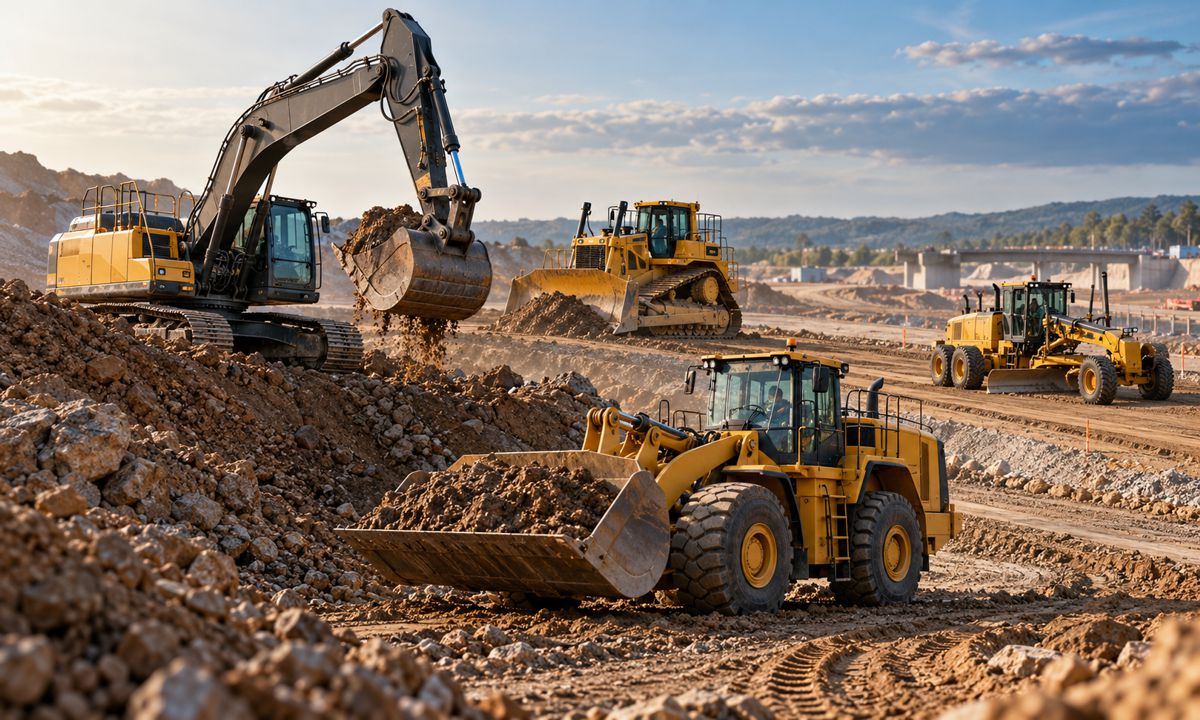
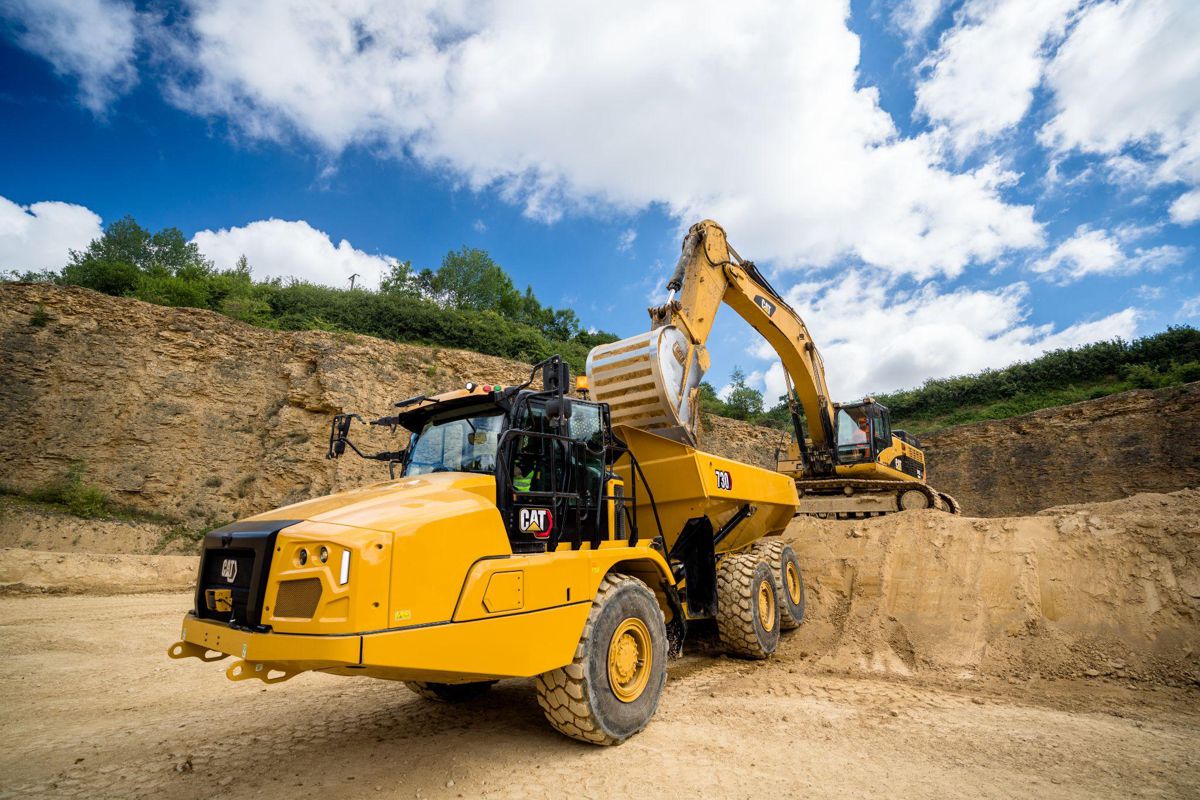
The Inverurie-based contractor’s order from Finning UK & Ireland includes a Cat 966 XE medium wheel loader, Cat 340 and Cat 330 hydraulic excavators, CS13 and CS16 vibratory soil compactors, and two of the first new-model Cat 730 articulated trucks delivered in the UK.
The articulated trucks are the most interesting part of the package. Caterpillar began production of its next-generation 730 in January 2026 following a wider redesign of its articulated truck range, combining a redesigned dump body and revised operator environment with increasingly active machine-control systems.
For a contractor handling bulk earthworks, crushing, haulage and aggregate supply, the investment extends beyond additional digging, loading and hauling capacity. Grade, stability, fuel consumption, idle time and maintenance can increasingly be monitored or assisted electronically across the fleet.
Briefing
- Miller Plant has invested £1.7 million in seven new Caterpillar machines supplied by Finning UK & Ireland.
- The fleet includes two of the first next-generation Cat 730 articulated trucks operating in the UK.
- The 730 has a rated payload of 28 tonnes and incorporates Dynamic Rollover Protection alongside Stability Assist.
- Cat 330 and 340 excavators have been specified with 2D Grade Assist and E-Fence technology.
- VisionLink connectivity across the fleet will provide information covering location, operating hours, fuel consumption, idle time and machine condition.
A New Generation of Articulated Truck
Caterpillar announced its next-generation articulated truck range in September 2025, with the 730 scheduled as the first model to enter production in January 2026. The 28-tonne payload machine uses a Cat C13B engine and incorporates a redesigned dump body, touchscreen controls and a collection of automatic and assisted functions intended to improve operation and reduce exposure to common articulated-truck risks.
Among them is Dynamic Rollover Protection, which monitors lateral acceleration associated with high-speed cornering. When the system detects conditions indicating increased rollover risk, it can issue visual and audible warnings, reduce fuel input and automatically apply the service brakes.
It works alongside Caterpillar’s Stability Assist technology, which monitors tractor, trailer and grade angles and can prevent or stop body hoisting when the machine is outside defined parameters. Stability on an articulated truck is influenced by several interacting factors, including tractor articulation, trailer position, ground slope, body position and speed during hauling and tipping operations.
Miller Plant managing director Ian Miller said the company had deliberately selected the new trucks for their combination of productivity, operator and safety technology: “We have invested in Cat 730s as they come with the added benefit of smart technology that is designed to maximise productivity, operator comfort and safety while working in demanding applications. With the addition of Cat Object Detect with Stability Assist, our trucks will be able to warn operators if the machine is nearing its tipping threshold and the Dynamic Roll Protection will actively reduce fuel and apply brakes when cornering too fast.
“Our significant investment from Finning will support our commitment in providing our customers with modern machines that deliver the highest performance standards in a sustainable and safe way.”
Technology Across the Fleet
The investment extends beyond the articulated trucks. Miller Plant’s Cat 330 and 340 excavators are equipped with 2D Grade Assist and E-Fence, bringing machine guidance and electronically defined operating boundaries into everyday excavation work.
Rather than relying entirely on the operator to reproduce a required grade through repeated checking and correction, machine assistance can help maintain the specified profile through the excavation cycle. E-Fence allows operating limits to be established around the excavator, restricting movement beyond predetermined boundaries.
The Cat 966 XE wheel loader introduces another element of the operating-cost equation. Miller highlighted its idle-management capability as particularly relevant to reducing fuel consumption: “All our new Cat machines will go on to support major civil and infrastructure projects across the North-East and we are looking forward to seeing the efficiency and productivity benefits the integrated technology brings. We are particularly looking forward to using the advanced idle management system on the Cat 966 XE wheel loader as it will help to reduce fuel consumption and costs for our customers – an essential feature in today’s economic climate.”
The 966 XE uses Caterpillar’s continuously variable transmission rather than a conventional powershift arrangement, while its connected systems allow operating and maintenance information to feed into the wider fleet-management environment.
Turning Machines into Fleet Data
All seven machines are equipped with VisionLink, giving Miller Plant a common platform through which equipment location, utilisation, service requirements and operating information can be monitored.
Depending on machine configuration, the system can provide data covering operating hours, location, idle time, fuel utilisation and machine condition. On the new 730, connected systems can also transmit diagnostic and productivity information, while Stability Assist events can be recorded for subsequent review.
Idle-time reporting can identify machines spending excessive periods running without productive work, while service and diagnostic information can help maintenance teams respond to developing faults. Location and utilisation records also give fleet managers a clearer picture of how heavily individual machines are being deployed.
For Miller Plant, the purchase continues a relationship with Finning stretching back more than 30 years. The fourth-generation family business provides bulk earthworks, contract crushing, plant hire, haulage and aggregate supply, allowing the new equipment to move between different projects and applications rather than being tied to a single contract.
The Changing Earthmoving Fleet
A £1.7 million plant purchase remains fundamentally an investment in physical capacity. Excavators have to move material, loaders have to fill trucks, compactors have to achieve the required ground conditions and articulated trucks have to carry payload. Increasingly, however, more technology sits between the operator and those tasks.
Grade assistance can reduce repeated manual correction, while electronic boundaries constrain machine movement and stability systems monitor conditions developing around the truck. At fleet level, telematics adds another layer, recording how equipment is actually being used rather than leaving utilisation to be inferred largely from engine hours.
The latest Cat 730 pushes machine assistance further because Dynamic Rollover Protection can move beyond warning the operator and intervene through the powertrain and braking system when excessive lateral acceleration is detected. These remain assistance systems rather than substitutes for correct machine operation, but they demonstrate how electronic control is becoming embedded in equipment that was once overwhelmingly mechanical and hydraulic.
Miller Plant’s new fleet still earns its keep by digging, loading, compacting and hauling material. Increasingly, those machines also measure how they are being operated, help control the work they perform and intervene when operating conditions move outside defined limits. The £1.7 million investment shows how much technology has quietly become part of buying heavy equipment.
Key Industry Questions
- What has Miller Plant invested in? The company has spent £1.7 million on seven Caterpillar machines supplied by Finning UK & Ireland, including excavators, compactors, a wheel loader and two articulated trucks.
- What is the payload of the new Cat 730? Caterpillar rates the latest 730 at 28 tonnes.
- How does Dynamic Rollover Protection work? The system monitors lateral acceleration. If conditions associated with excessive cornering speed create increased rollover risk, it can warn the operator, reduce fuel input and apply the service brakes.
- How is Stability Assist different? Stability Assist monitors tractor, trailer and ground angles and can prevent or stop body hoisting when operating conditions move outside defined parameters. Dynamic Rollover Protection addresses rollover risk associated with excessive lateral acceleration during travel.
- What does Cat 2D Grade Assist do? It provides machine assistance during excavation to help operators maintain the required grade more consistently and reduce unnecessary passes.
- What is Cat E-Fence? E-Fence allows electronic operating boundaries to be established around an excavator, restricting movement into predetermined areas.
- What information can VisionLink provide? Depending on machine configuration, the connected platform can provide information including location, operating hours, idle time, fuel use, maintenance requirements, machine status and diagnostic information.
- When did production of the next-generation Cat 730 begin? Caterpillar scheduled production of the next-generation 730 to begin in January 2026.
Strategic Takeaways
- Miller Plant’s investment combines additional earthmoving capacity with machine-control, safety and fleet-management technology across several equipment types.
- Active safety systems on the new Cat 730 can move beyond operator warnings towards limited machine intervention.
- Connected fleet data allows utilisation and idle time to be measured across machines performing very different jobs.
- Grade assistance and electronic operating boundaries can improve consistency while providing additional support to operators.
- The arrival of some of the UK’s first next-generation Cat 730s gives Miller Plant early operational experience with Caterpillar’s latest articulated-truck architecture.