Every Innovation Starts with a Problem
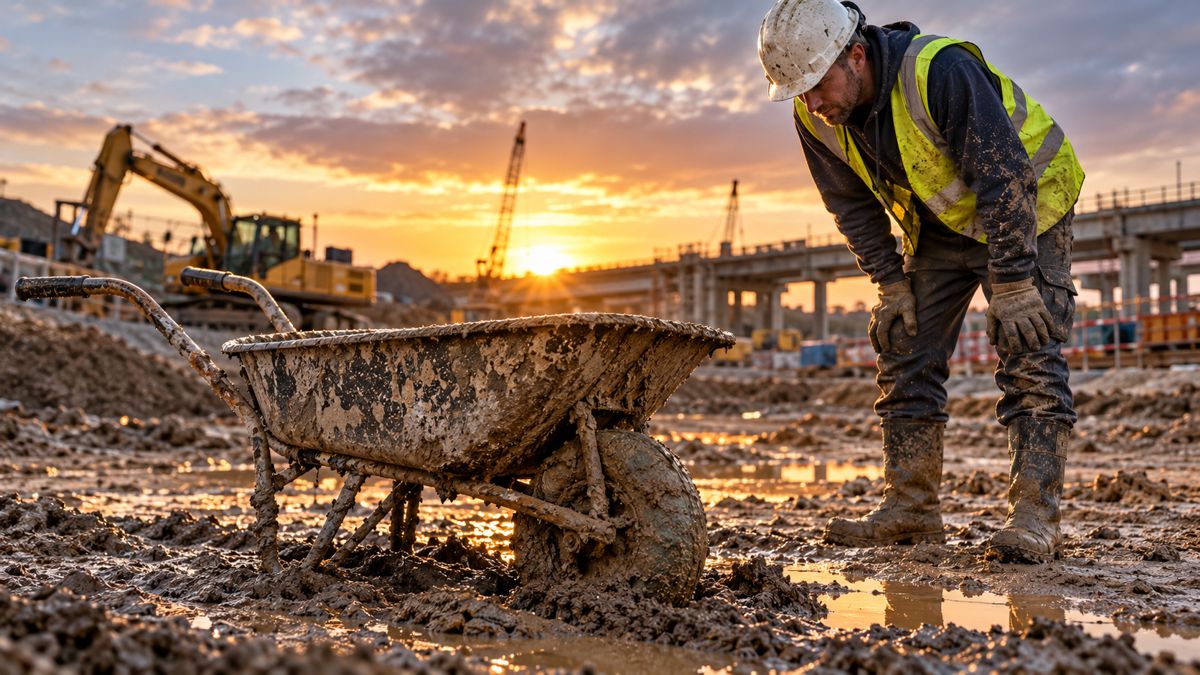
A conventional wheelbarrow seems a remarkably simple piece of equipment. It has a tray, two handles, a supporting frame and a wheel. Its basic design has survived for centuries, yet anyone who has pushed one across wet ground, struggled to keep it balanced or tried to scrape hardened cement from its tray will recognise its shortcomings.
In the early 1970s, a young designer named James Dyson encountered precisely these frustrations while renovating his home in the English countryside. The narrow wheel sank into soft ground, the metal body was awkward to empty and wet cement stuck to its sides. Rather than accepting these inconveniences as unavoidable characteristics of a familiar tool, Dyson began investigating alternatives.
Already trained at the Royal College of Art and experienced in product design, Dyson had the skills to pursue something more ambitious than a minor modification. His resulting Ballbarrow replaced the conventional wheel with a large pneumatic sphere that spread the load over a wider surface. A moulded plastic body reduced weight and made cleaning easier, while changes to the supporting structure addressed problems of balance and manoeuvrability.
The Ballbarrow became a commercial product in the 1970s, long before Dyson established the appliance business for which he is now internationally known. Its development, documented in Dyson’s own account, began with a familiar piece of construction equipment that had proved frustrating to use.
There are countless similar inconveniences across construction sites, equipment workshops, quarries and infrastructure maintenance operations. Most never lead to commercial products or attract public recognition. They are tolerated, worked around or gradually accepted as unavoidable characteristics of the job, even where a better approach might be possible.
Briefing
- James Dyson developed the Ballbarrow in the 1970s after experiencing the limitations of conventional wheelbarrows, replacing the narrow wheel with a pneumatic ball.
- Leeds bricklayer Joseph Aspdin patented Portland cement on 21 October 1824, although further developments in manufacturing were necessary to produce the modern material.
- Japanese manufacturer MAX introduced a battery-powered reinforcement tying tool in 1993. Subsequent improvements increased rated battery endurance from approximately 360 ties per charge in 1998 to 4,000 in 2017.
- NIOSH researchers evaluating reinforcement work on the Springfield Interchange found that powered tying was twice as fast as manual tying with pliers during the study.
- Value stream mapping on a structural steel erection project helped cut its projected duration from 65 to 52 days, although the work still exceeded the original 45-day programme.
Invention, Innovation and Improvement
Innovation is frequently associated with sophisticated machinery, artificial intelligence, robotics and digital construction platforms. These technologies can deliver substantial improvements, but technological complexity is a poor measure of an idea’s usefulness.
A redesigned lifting attachment that eliminates an awkward manual operation might have a greater practical effect on a particular construction project than an expensive software platform. Changes to material handling, equipment positioning or the sequence of work can sometimes achieve more than purchasing additional machinery.
An invention introduces something new, while innovation involves putting a new or significantly improved approach into practical use. Continuous improvement generally concerns smaller, successive changes to established processes, although the boundaries overlap when familiar technologies are adapted to different materials, operating conditions and working methods.
A faster installation method has limited value if it increases defects, creates unsafe working conditions or demands additional maintenance throughout the asset’s life. Changes that appear beneficial in isolation can also affect other activities, particularly where several contractors, machines and work sequences depend on one another.
The improvement might involve a completely new device, the adaptation of an existing technology or something as straightforward as removing an unnecessary operation. Its practical value becomes apparent when the change is put to work.
Operators, Mechanics and Engineers
Construction businesses invest considerable resources in engineering design, equipment procurement and project planning. Nevertheless, the people who interact with the resulting systems every day often encounter difficulties that were not apparent when those systems were specified.
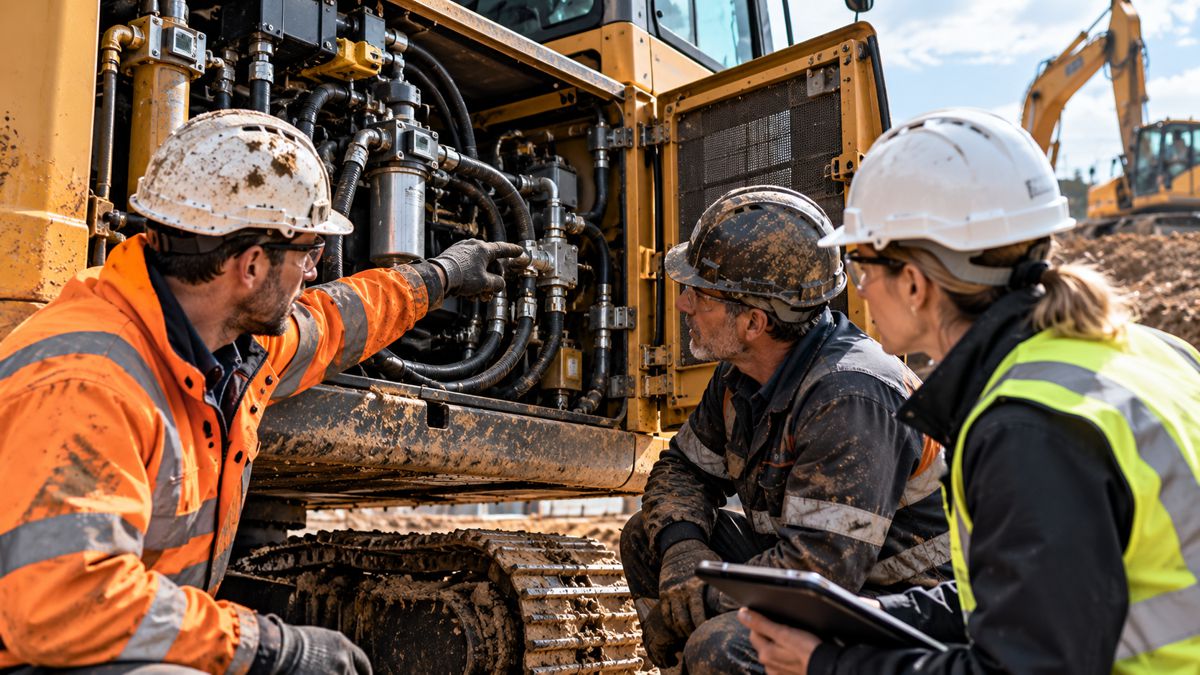
A plant operator gradually learns how machinery behaves with different materials and ground conditions. Maintenance technicians discover components that are awkward to reach, weaknesses that emerge after hundreds of operating hours and servicing procedures that consume more time than necessary. Experienced tradespeople become familiar with installation details that are difficult to construct, even when they appear straightforward on drawings.
Much of this knowledge is acquired through repetition, comparison and the informal exchange of experience between colleagues. It may never appear in specifications or operating manuals, particularly where workers have developed practical ways of compensating for shortcomings.
An operator might identify the circumstances in which an attachment repeatedly fails, but investigating the forces involved and establishing a safe modification requires engineering analysis. A mechanic may understand precisely why a component is difficult to service, while the designer must consider packaging, structural requirements, manufacturing costs and the reliability of the complete machine.
Operational experience establishes how equipment behaves in service, engineering investigates the causes, and testing determines whether a proposed improvement performs as intended. Bringing these perspectives together requires opportunities for practical knowledge to reach the people responsible for design and technical decisions.
Joseph Aspdin and Portland Cement
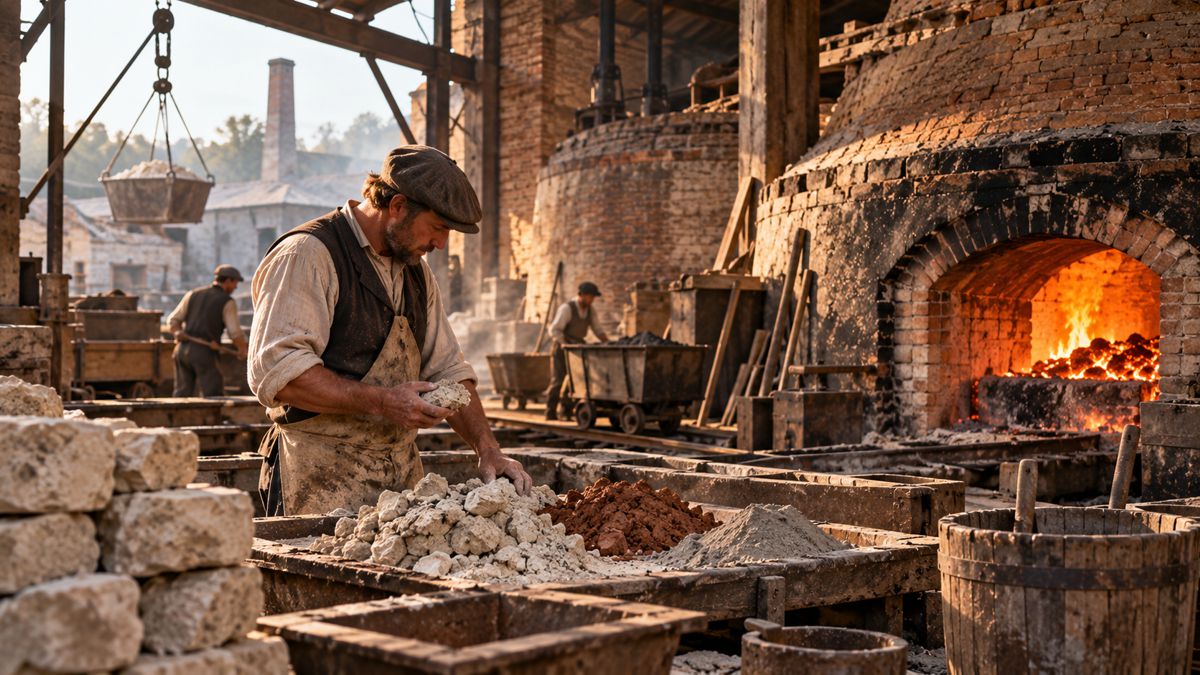
On 21 October 1824, Joseph Aspdin, a bricklayer from Leeds in England, received a patent for a material he called Portland cement. The name referred to its resemblance to Portland building stone, rather than the geographical origin of its ingredients.
Aspdin was working at a time when builders, engineers and manufacturers were experimenting with hydraulic binders capable of hardening under conditions where conventional lime mortars performed poorly. His experiments involved preparing and heating combinations of limestone and clay to produce an artificial cementitious material.
The patent became an important milestone in the development of the modern cement industry, although the familiar story of a single inventor discovering Portland cement conceals a considerably longer history.
Research published by the Mineral Products Association in its bicentenary history of Portland cement describes earlier work by engineers and manufacturers including John Smeaton, Louis Vicat and James Frost. Aspdin’s own patent omitted significant processing details, while subsequent developments in firing temperatures, kiln technology and manufacturing methods helped establish the material produced today.
His practical knowledge of building materials contributed to the development of a new binder, but creating a reliable industrial product required further experimentation, scientific understanding and manufacturing expertise.
Two centuries later, cement producers are investigating alternative binders, supplementary cementitious materials and lower-carbon production processes. The objectives have changed, but the practical demands remain considerable. Materials must be produced economically, handled and placed reliably, and achieve specified performance over their intended service life.
The development of Portland cement involved successive experiments and improvements rather than a single discovery that arrived fully formed. Some of the advances emerged as manufacturers learned more about the material and developed equipment capable of producing it consistently, gradually establishing a manufacturing process that could support construction on an industrial scale.
Questioning Established Methods
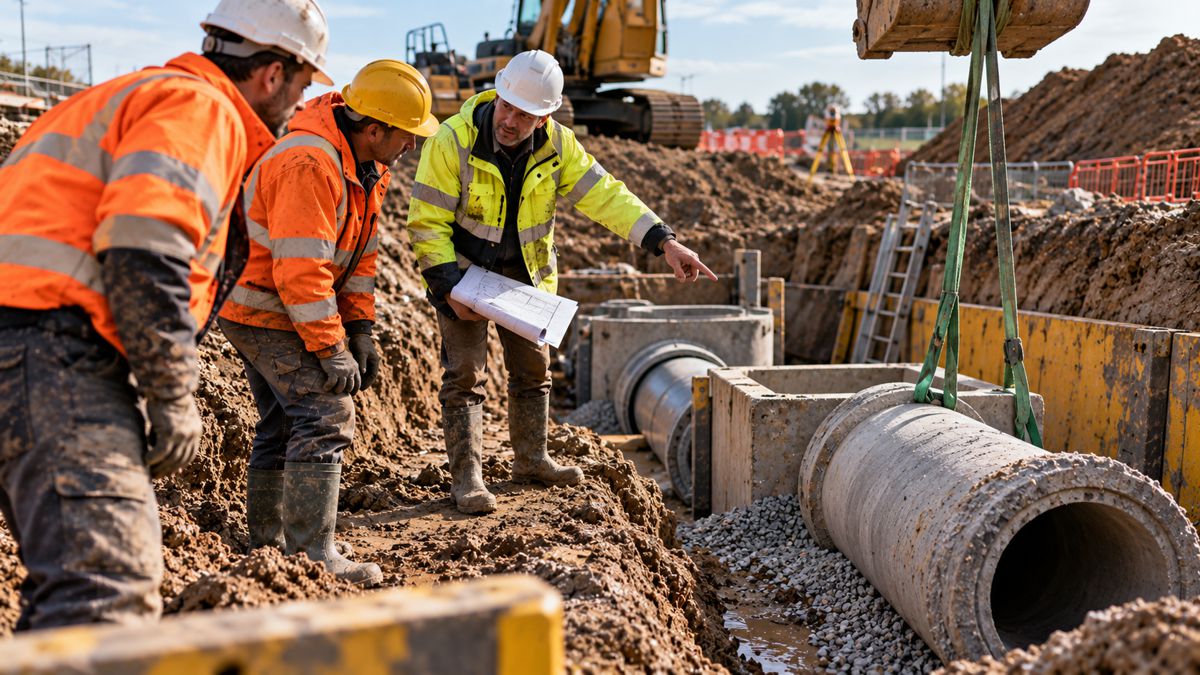
Established construction procedures offer familiarity, predictable costs and a degree of certainty in an industry where mistakes can have serious consequences. Specifications define how work must be performed, contracts allocate responsibilities and engineering standards provide safeguards against unacceptable risks.
These arrangements are necessary, but they can also make alternatives difficult to investigate. A method may have been developed to address a problem that no longer exists, while an equipment choice might reflect purchasing decisions made years earlier. Processes originally designed around paper records sometimes survive almost unchanged after their information has been transferred to digital systems.
There can be a substantial difference between how a task is described in a method statement and how it is actually completed. Workers encounter site conditions, equipment limitations and practical complications that are difficult to anticipate during planning, and experienced crews often develop informal approaches to managing those difficulties.
Some apparent inefficiencies have entirely legitimate explanations. An awkward installation method may reflect structural requirements, an equipment limitation could be necessary for stability, and a seemingly excessive inspection procedure might exist because of a previous failure.
Understanding these constraints is essential before proposing changes. An improvement that requires an unapproved alteration to lifting arrangements or temporary works cannot be justified simply because it saves time.
Other problems may arise from the interaction between activities rather than the performance of any individual machine or worker. Examining the complete operation can reveal opportunities that remain hidden when each task is considered separately, particularly where delays have become an accepted feature of the programme.
Powered Reinforcement Tying
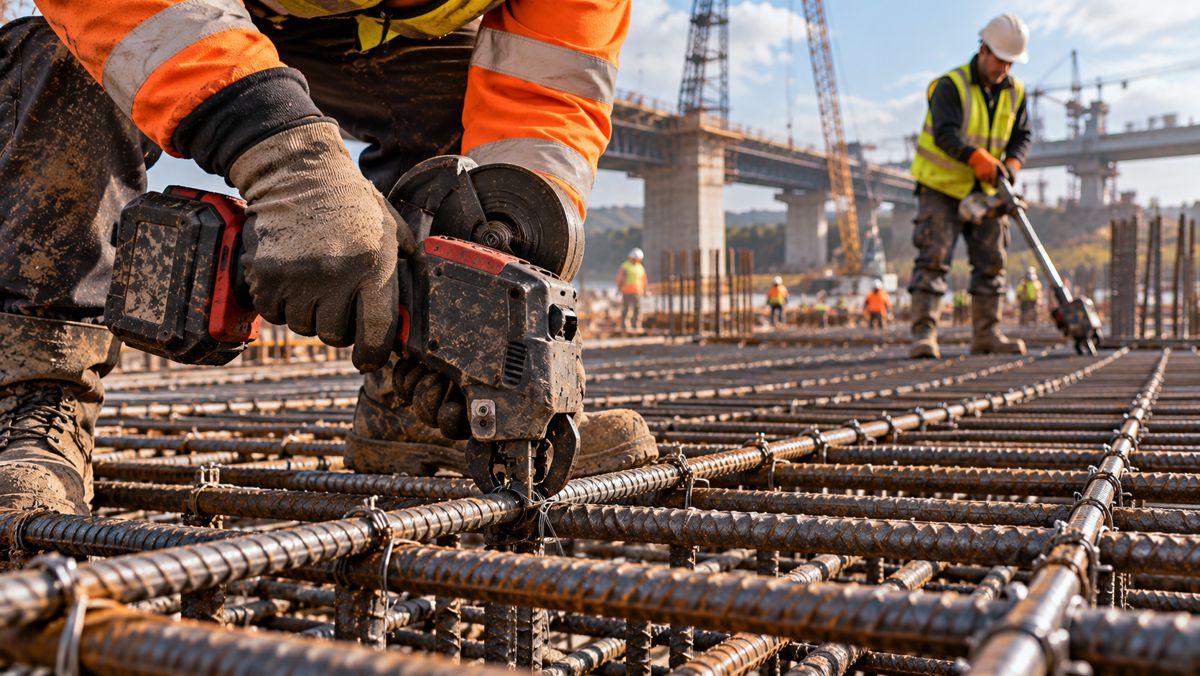
On reinforced concrete projects, workers routinely secure intersecting steel bars with wire before concrete is placed. Traditionally, the operation involves using pliers to pull, wrap, twist and cut the wire around each intersection, often while bending over reinforcement mats or reaching into confined positions.
The individual operation is relatively straightforward. The physical demands become more apparent when the same movements are repeated hundreds or thousands of times during a working day.
Japanese manufacturer MAX introduced a battery-operated reinforcement tying tool to its domestic market in 1993. The equipment mechanised the operation of feeding, wrapping, twisting and cutting wire around reinforcement intersections, replacing repetitive manual movements with a powered mechanism.
According to the manufacturer’s documented product history, the RB392 model arrived in the United States in 1998 with a 9.6V nickel-cadmium battery rated for approximately 360 ties per charge. Later generations benefited from improvements in battery technology, including a lithium-ion model rated for around 2,000 ties in 2009 and another capable of approximately 2,600 in 2015. By 2017, the RB441T was rated for 4,000 ties per charge, alongside changes to tying speed and wire handling.
The commercial development of the tool continued over more than two decades, with successive improvements to the electrical and mechanical systems. Its practical value had already attracted interest from construction contractors concerned about the physical demands of reinforcement work.
In 2003, Genesis Steel Services requested an evaluation from the United States National Institute for Occupational Safety and Health (NIOSH). The company was a subcontractor on the Springfield Interchange Improvement Project in Virginia, where it was installing reinforcement for the bridge carrying westbound Interstate 495 traffic onto southbound Interstate 95.
The bridge deck required more than two million wire ties, with workers spending considerable time fastening reinforcing bars by hand, an operation involving repeated wrist and forearm movements and prolonged bending. NIOSH investigated three methods: conventional pliers, a battery-powered tying tool and a powered tool fitted with an extension handle that allowed workers to operate while standing upright.
The findings, documented in the agency’s Health Hazard Evaluation of Genesis Steel Services and its later publication, Reducing Work-Related Musculoskeletal Disorders among Rodbusters, showed that powered tying reduced repetitive hand and wrist movements. Workers completed twice as many ties with the powered tool as they did with pliers during the study.
The extension handle required the least deep forward bending of the methods investigated. Workers, however, had little opportunity to familiarise themselves with the attachment before the evaluation and sometimes held it too far from their bodies, increasing the demands on their arms and shoulders. They rated their perceived effort with the extension handle much the same as with conventional pliers, despite the improvement in working posture. NIOSH also noted that powered tying tools could experience wire jams, short battery life and mechanical problems, while their inability to produce certain types of ties restricted their suitability for some applications.
The evaluation was commissioned by a contractor concerned about its workforce rather than by the equipment manufacturer. It examined an existing commercial product under actual construction conditions, identifying measurable benefits alongside limitations that would need to be considered before adopting the equipment more widely.
Learning from Other Industries
Construction has never developed its technology entirely independently. Its machinery, manufacturing methods and management systems have absorbed ideas from agriculture, mining, aviation, logistics, automotive engineering and industrial production.
Hydraulic systems, diesel engines, satellite positioning, laser measurement and automated controls all have histories that extend well beyond contemporary construction applications. Their usefulness on site emerged through adaptation to different operating requirements.
Dyson’s Ballbarrow used a large pneumatic sphere to distribute weight across soft ground. The principle was subsequently adapted for the Trolleyball, a boat-launching trolley that could move across sand without its wheel sinking into the surface.
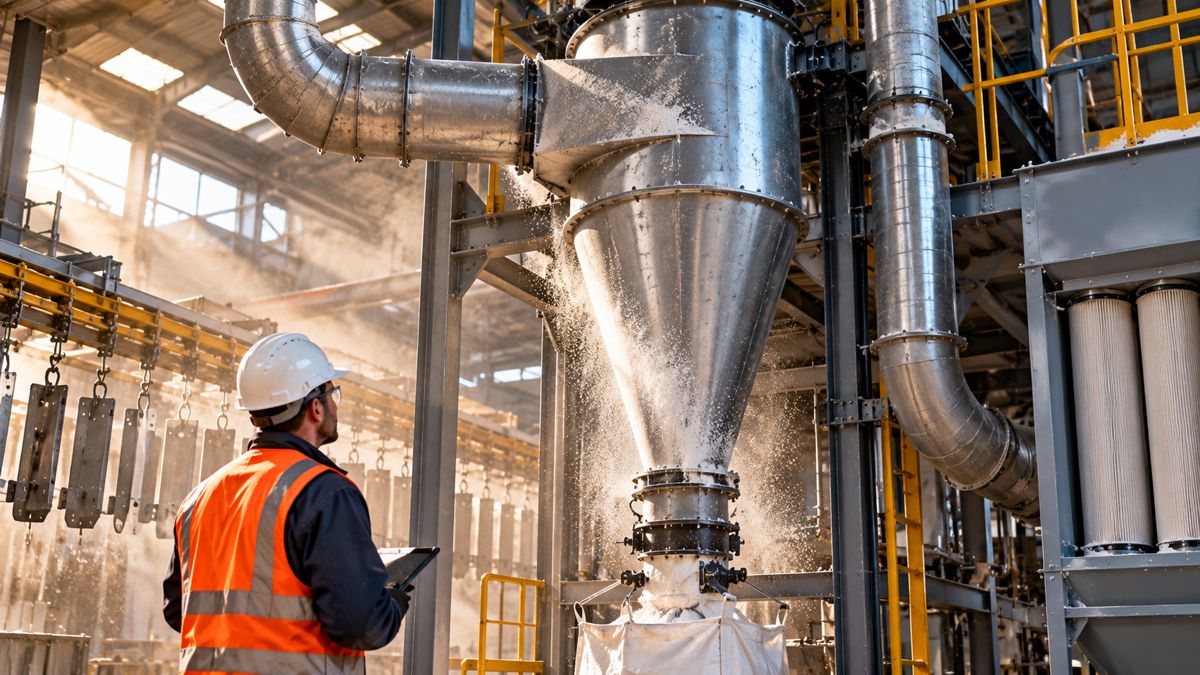
Another idea emerged during the Ballbarrow years. Dyson encountered an industrial cyclone dust-separation system at a sawmill and subsequently applied the principle to the powder-coating operation in his factory. The existing filtration arrangement repeatedly clogged with excess powder, interrupting production and wasting material.
A cyclone offered a way to separate the powder from the air without relying on the same type of filter. Dyson eventually recognised that a comparable arrangement might address the problem of clogged bags in domestic vacuum cleaners, connecting two very different products through a practical manufacturing difficulty. His published history traces the progression from the Ballbarrow factory to the development of the cyclonic vacuum cleaner.
Established technologies can often be adapted to unfamiliar applications, although transferring a successful approach between industries requires care. Equipment that operates reliably in a controlled factory may encounter very different demands on an exposed construction site, where weather, changing ground conditions, temporary access and interactions between contractors complicate operations.
Research has become considerably more accessible. Patent databases, engineering publications, manufacturer documentation and online technical resources allow individuals to investigate how comparable problems have been addressed elsewhere. Digital modelling and simulation provide additional ways of exploring concepts before physical components are manufactured.
Artificial intelligence can assist with preliminary research, identifying related technologies and organising possible approaches. It can also produce convincing but technically incorrect explanations, overlook important design constraints and suggest solutions that are already well established.
Understanding the operating conditions, investigating previous attempts and recognising technical limitations remain necessary before an attractive possibility can be treated as a credible engineering concept. The resources available for exploring ideas have expanded considerably, but the evidence still needs to withstand independent scrutiny.
Sequencing and Lean Methods
Improving construction performance does not always require modifying the equipment or materials used on site. The organisation of work itself can create considerable opportunities.
Manufacturing has spent decades developing methods to identify delays, unnecessary movement, excessive inventories, quality failures and activities that consume resources without contributing directly to the finished product. These approaches have increasingly influenced construction through lean construction and related production-management techniques.
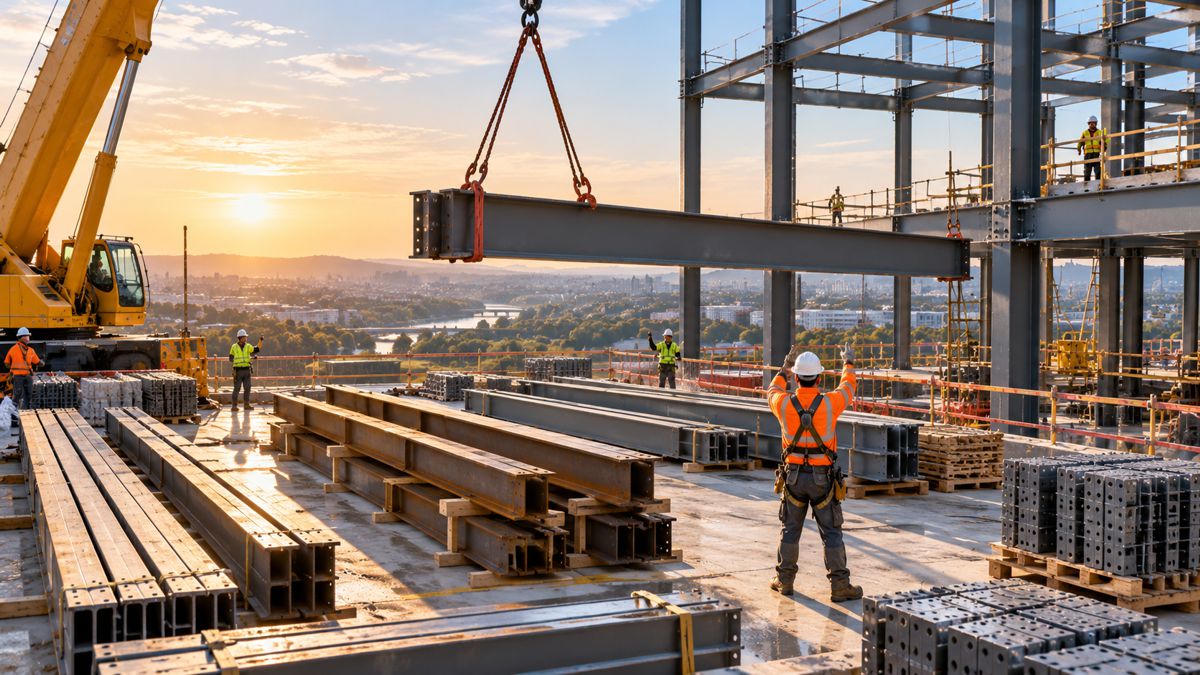
A study by Prasanna Venkatesan Ramani and Laxmana Kumara Lingan, published in Engineering, Construction and Architectural Management, examined the erection of approximately 1,600 structural steel members. Researchers found that poorly organised material stacks made components difficult to identify and retrieve, while a waterlogged pit and an obstructing tree restricted crane movements around the site.
The original programme allowed 45 days, but accumulated delays had extended the projected completion period to 65 days. Researchers used value stream mapping to examine the operation, identifying approximately 17 working days lost through unnecessary material handling and transport delays.
The recommendations included arranging steel members in erection sequence, improving the crane access route and removing an obstruction. Following implementation, the project finished in 52 days, recovering 13 days against the revised forecast but exceeding the original programme by seven days. The published research attributed the improvement to changes in site logistics and the organisation of existing activities.
Comparable operational constraints are familiar throughout infrastructure construction. Asphalt paving depends on coordination between production, haulage, laying and compaction, while earthmoving performance is influenced by excavator capacity, truck availability, haul distances and disposal arrangements. Increasing the capacity of an individual machine may achieve little if other parts of the operation cannot keep pace.
The structural steel project required no new lifting technology or specialist machinery. Workers needed to find the correct components, move them to the required location and erect them safely, but the site arrangements were making those ordinary operations unnecessarily difficult. Better organisation allowed the existing equipment and workforce to recover some of the time that had been lost.
Testing the Problem
Construction workers encounter frustrations every day, but not every inconvenience requires a new tool, product or working method. Some arise only under unusual circumstances, while others already have effective solutions that are unavailable, poorly understood or unsuitable for a particular project.
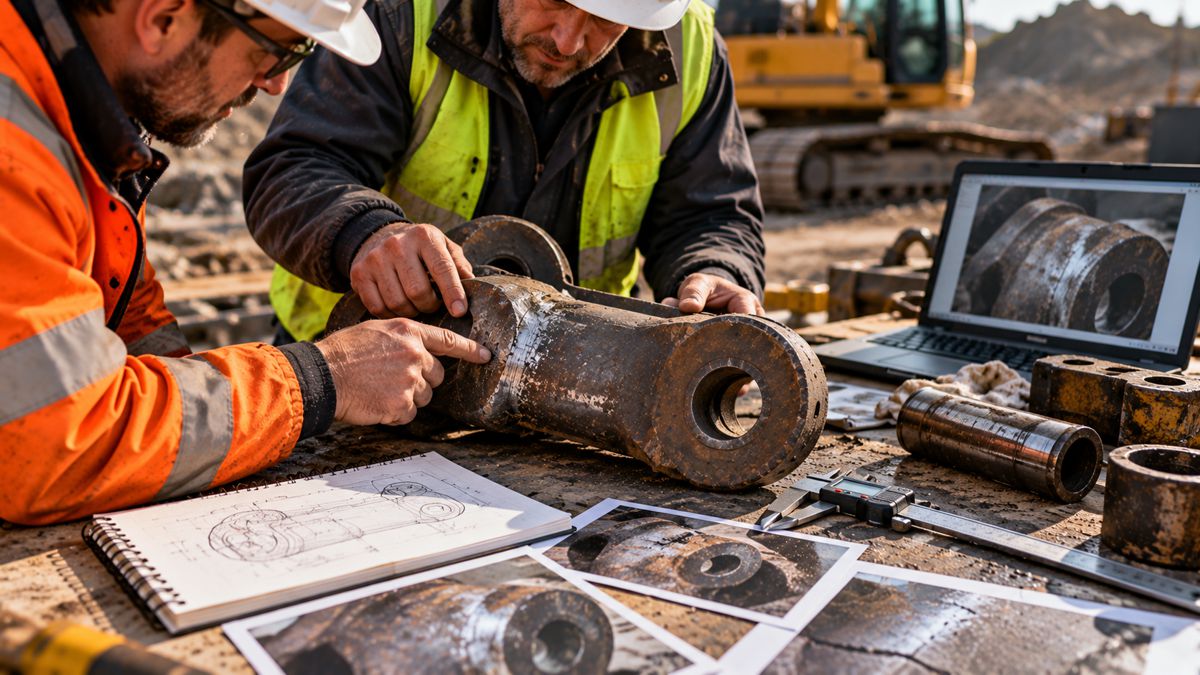
The frequency and consequences of a problem offer a useful starting point. A difficulty encountered repeatedly during every shift may justify attention even if each occurrence causes only a minor delay. A problem encountered once during a specialist operation could be equally important if the consequences are expensive or potentially dangerous.
Experienced workers often develop informal workarounds, adjusting their movements, tools or working arrangements to compensate for design limitations. These adaptations can reveal where an existing system falls short, particularly when the same workaround appears across several sites or equipment fleets.
Evidence becomes increasingly important when an improvement will require investment or cooperation from other organisations. Records of equipment failures, material waste, repeated handling or the time taken to complete an operation provide a stronger basis for further investigation than a general belief that something could be improved.
It is also worth examining what has already been tried. Commercial products, patent records, technical literature and techniques used in other industries may provide an existing answer or explain why earlier attempts proved unsuccessful.
A promising idea can introduce complications of its own. A lighter tool may generate greater vibration, a redesigned component could be easier to install but more difficult to inspect, and an alternative material might offer attractive initial costs while creating durability or compatibility problems.
Early investigation is therefore concerned with establishing the nature of the difficulty and whether an improvement is worthwhile. Detailed engineering, prototyping and testing come later, once there is a sound basis for pursuing a possible solution.
Organisational Barriers
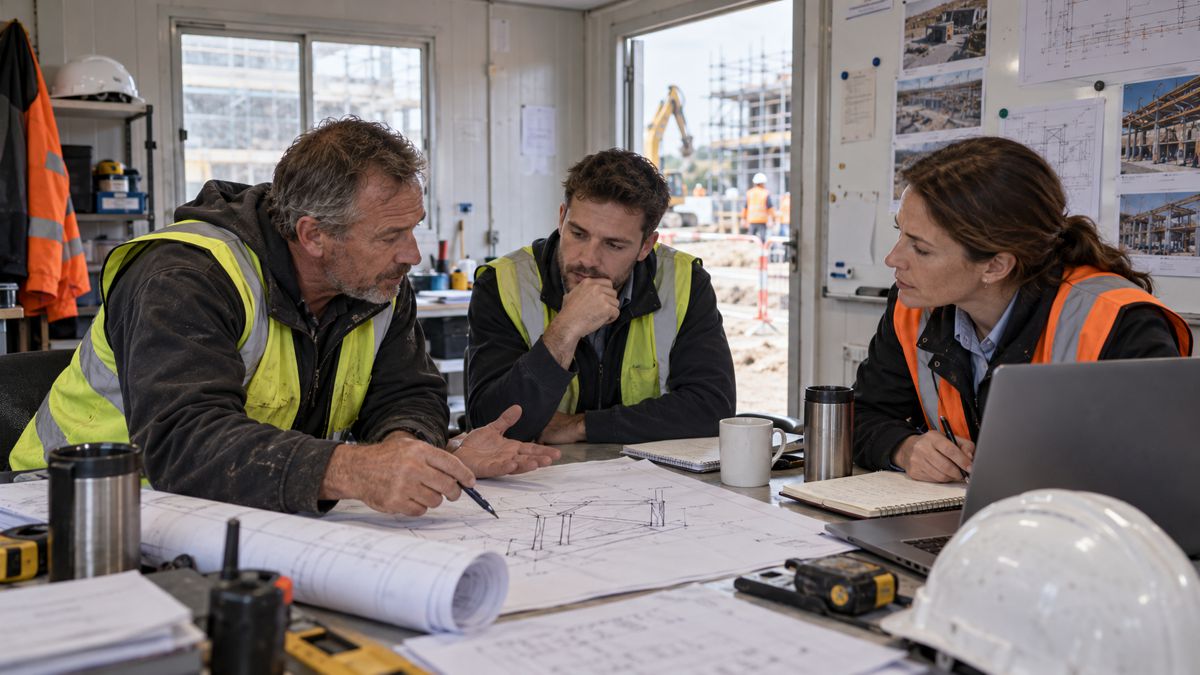
Project teams operate under pressure to meet programmes, control expenditure and satisfy contractual obligations. Supervisors are expected to deliver work using established resources, while employees may have little opportunity to investigate alternatives during a demanding working day.
Organisational hierarchy creates another obstacle. Junior staff may hesitate to challenge established procedures, and equipment operators can reasonably assume that design concerns belong to manufacturers or engineering departments. Knowledge accumulated through daily work may consequently have limited influence over decisions about equipment, processes and investment.
There is also a longstanding perception that construction workers are reluctant to accept new technology. Research suggests a more complicated picture.
A study published in the Journal of Building Engineering examined the preferences of 160 respondents recruited from construction sites in the Netherlands. Researchers used online stated-choice experiments to investigate attitudes towards new forms of project information provision, including applications associated with Building Information Modelling and augmented reality.
The findings indicated a willingness to consider new technologies, particularly where adequate guidance was available. Because the research examined stated preferences rather than observing long-term adoption on site, it did not establish how readily workers would use those systems in practice. Nevertheless, the findings complicate the assumption that resistance to technological change is an inherent characteristic of the construction workforce.
The way an improvement is introduced can influence whether it is accepted. Unfamiliar systems require explanation, training and practical support, while proposals that affect established methods need appropriate technical evaluation.
Companies seeking employee suggestions must also be prepared to consider them properly. A proposal involving equipment modification may require engineering assessment, while an alternative construction method could need client approval or changes to specifications.
Not every suggestion will be feasible. Some may duplicate existing products, introduce unnecessary complications or fail to justify the investment required. Explaining these limitations is more constructive than allowing proposals to disappear without acknowledgement.
There is little value in encouraging workers to suggest improvements if the organisation has no capacity to investigate them. Practical experience can contribute to better design and working methods, but turning that knowledge into an operational change requires people with the authority, technical expertise and resources to act.
From Observation to Opportunity
An idea may begin with somebody noticing a recurring difficulty, recognising a pattern and becoming interested in whether it can be addressed. The observation itself may seem unremarkable, particularly where the same problem has troubled colleagues for years.
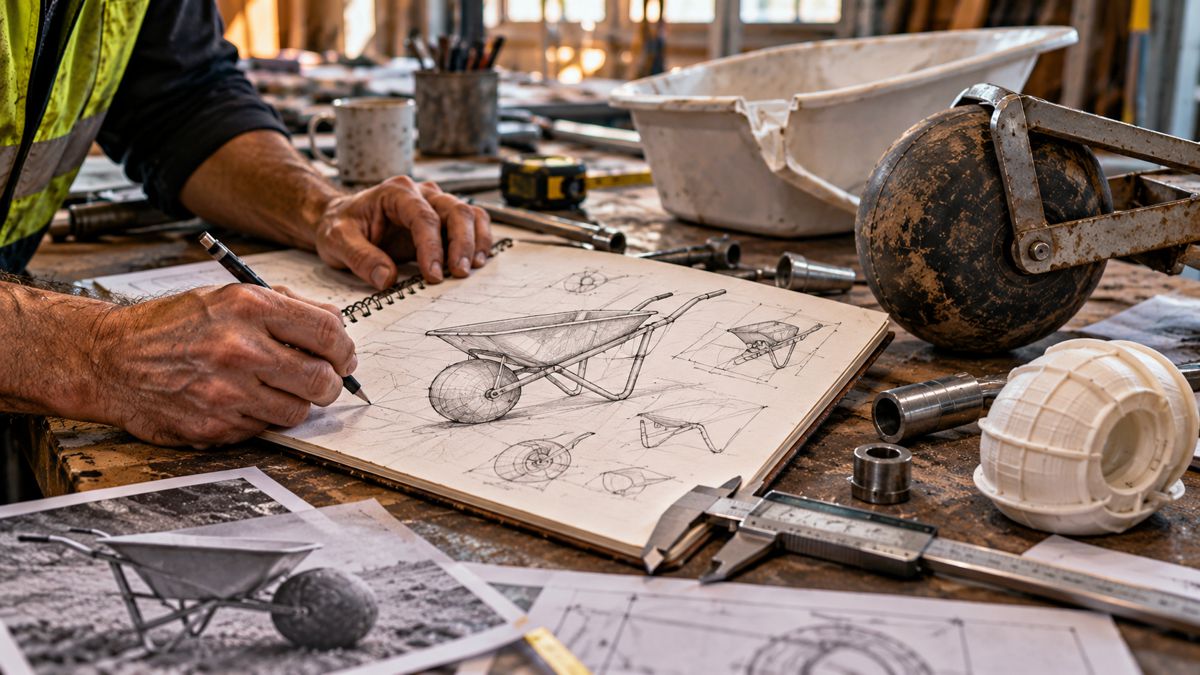
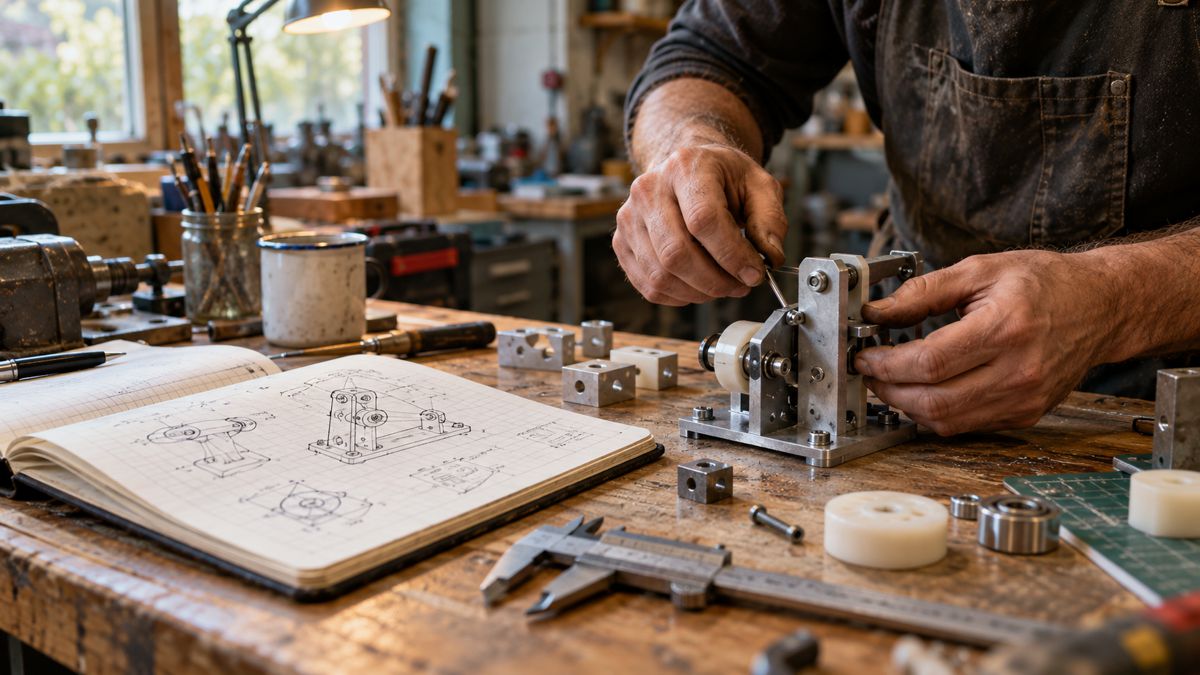
A written note, a photograph or a rough sketch may be sufficient to begin investigating it. Comparing observations with colleagues, reviewing existing products and recording the circumstances in which a difficulty occurs can gradually establish whether there is a worthwhile opportunity.
There are limits to how openly potentially valuable concepts should be discussed. Employment agreements, confidentiality obligations and intellectual property ownership may become relevant, particularly where an idea has been developed through work or with company resources. These matters deserve attention before detailed designs are disclosed outside the appropriate organisation.
Developing a concept also becomes more demanding as it progresses. Materials must be selected, loads understood, components manufactured and the finished arrangement assessed for reliability and safety. What began as a simple observation can eventually require considerable engineering expertise, financial resources and cooperation from other businesses. Many ideas are dismissed long before reaching that stage, sometimes without the original problem ever being properly investigated.
Dyson had already developed considerable design experience when he began working on the Ballbarrow, but his first concern was familiar to anyone who had struggled to push a loaded wheelbarrow across soft ground. He was not the first person to experience that frustration, and almost certainly not the first to wonder whether the equipment could be improved. He was prepared to pursue the possibility and develop it into a working product.
The construction industry contains people with comparable knowledge of the machines, materials and operations they encounter every day. Some will already have developed informal improvements, while others may have ideas that remain in notebooks, conversations or the back of their minds.
Not every observation will lead to an invention, and many worthwhile improvements will never become commercial products. There is nevertheless a considerable difference between accepting a problem as an unavoidable part of the job and investigating whether a better approach is possible.
The Ballbarrow’s subsequent commercial history would prove far more complicated than its initial development, while another problem encountered during the same period would eventually lead Dyson into an entirely different industry. Innovation rarely follows a straight line from idea to success.
The next feature in Highways.Today’s From Idea to Impact series will examine what happens once an idea begins to take shape, exploring how sketches, engineering design, digital modelling, 3D printing and physical prototypes can help turn an initial observation into something that can be tested.
Key Industry Questions
- What is the difference between invention and innovation in construction? Invention concerns the creation of something new, while innovation involves applying a new or improved approach to achieve practical value. An established technology adapted to a construction application can therefore represent an innovation without being a completely new invention.
- Can construction workers without formal engineering qualifications develop valuable innovations? Yes. Practical experience can reveal equipment limitations and operational problems that are not obvious during design. Ideas involving structural performance, mechanical systems or safety-critical operations still require appropriate engineering assessment.
- How can contractors identify opportunities for innovation on site? Repeated delays, material waste, equipment failures, awkward maintenance and informal workarounds are useful starting points. Recording their frequency and consequences helps establish whether an improvement deserves investigation.
- Why do inefficient working methods persist in construction? Established methods may be embedded in specifications, training, contractual arrangements or procurement decisions. Some restrictions protect safety and quality, while others remain because alternatives have not been properly evaluated.
- Does innovation always require investment in new technology? No. Changes to work sequencing, material handling, maintenance access and equipment deployment can improve performance without developing or purchasing new machinery.
- How can an individual establish whether an idea is worth pursuing? The initial assessment should examine the scale and frequency of the problem, existing alternatives, likely benefits and practical constraints. Developing a detailed solution becomes more worthwhile once the underlying requirement has been established.
- What role can artificial intelligence play in early-stage construction innovation? AI can assist with preliminary research, technical information gathering and exploring potential approaches. Its outputs require independent verification, particularly where engineering accuracy, safety or intellectual property are involved.
- How can construction businesses encourage employee-led innovation? Accessible reporting channels, constructive feedback, technical evaluation and appropriate management support can help convert operational observations into improvements. Suggestions should be assessed consistently, including those that prove unsuitable.
Strategic Takeaways
- Battery technology drove substantial improvements in powered reinforcement tying. Rated output rose from approximately 360 ties per charge using nickel-cadmium batteries in 1998 to 4,000 using lithium-ion technology by 2017. An established tool can improve considerably through advances in its supporting components.
- The Springfield Interchange evaluation was commissioned by a contractor rather than an equipment manufacturer. Construction businesses can generate independent evidence about existing products by evaluating their performance under actual working conditions.
- The extension handle reduced deep forward bending during reinforcement tying, yet workers rated the physical effort much the same as when using pliers. Limited familiarisation with new equipment can complicate early assessments, even where measurable ergonomic improvements are achieved.
- The structural steel erection project recovered 13 days through changes to material organisation and crane access but still finished seven days beyond its original programme. Recovering lost time and meeting the original programme are different measures of performance.
- Joseph Aspdin’s original Portland cement patent omitted important processing details, and subsequent developers established the manufacturing methods needed to produce a reliable industrial material. Recognising an opportunity and developing a commercially viable solution may require different expertise and contributions over time.