Jacobs to Support AEP’s $37 Billion US Energy Transmission Expansion
American Electric Power (AEP) has appointed Jacobs to coordinate the delivery of transmission infrastructure projects across seven eastern US states, as the utility prepares to invest $37 billion in expanding and modernising its electricity network over the next five years.
The agreement covers Indiana, Michigan, Ohio, Kentucky, Tennessee, West Virginia and Virginia, bringing engineering, project management, land services and environmental planning into an integrated delivery arrangement. Work is already underway, with activity expected to increase as AEP advances its transmission portfolio.
The appointment comes alongside a substantial expansion of AEP’s capital investment programme, which now stands at $100 billion through 2031. The utility has also selected WSP to support transmission projects across its western region, establishing separate regional delivery partnerships as it responds to rising electricity demand.
Briefing
- Jacobs has secured a five-year integrated transmission delivery appointment covering seven eastern US states.
- AEP plans $37 billion in transmission investment within a wider $100 billion capital programme through 2031.
- WSP has separately been appointed to support transmission projects across four western states.
- Jacobs will lead a team including ORC, GFT and RC Commonwealth, with PA Consulting supporting innovation initiatives.
- Engineering, permitting, right-of-way acquisition and construction coordination will form central elements of the delivery programme.
A Larger Capital Programme
AEP’s latest investment plans provide the commercial context for the Jacobs appointment. Announced alongside the utility’s third-quarter financial results on 28 October 2026, the revised programme increases planned capital expenditure from approximately $78 billion to $100 billion, with transmission investment rising from $33 billion to $37 billion.
The utility expects to allocate a further $36 billion to electricity generation and approximately $22 billion to distribution infrastructure. Its transmission rate base, the regulated value of assets used in calculating permitted returns, is projected to approach $70 billion by 2031, nearly double its current level.
The expansion reflects a substantial increase in anticipated electricity demand. AEP reported 15 gigawatts of new load commitments during the third quarter, bringing its expected incremental contracted load to 84 gigawatts by 2031. These commitments are supported by executed electricity service agreements or letters of agreement, although the timing and network requirements of individual developments will depend on their eventual implementation.
Data centres, advanced manufacturing facilities and other large electricity consumers feature prominently in the utility’s long-term planning. Their requirements extend beyond generating capacity to the transmission lines, substations and network reinforcement needed to deliver electricity across established and developing industrial areas.
The wider challenge is reflected in the US Department of Energy’s 2026 draft National Transmission Needs Study, which identifies growing electricity demand, network constraints and congestion among the factors shaping future transmission requirements. For utilities managing geographically extensive networks, the pace of investment is increasingly tied to their ability to develop and deliver multiple infrastructure projects concurrently.
Regional Transmission Delivery
AEP is dividing responsibility for supporting its expanding transmission portfolio between major engineering partners operating across different parts of its network.
Alongside Jacobs’ eastern region appointment, WSP announced on 29 October that its US business had been selected as a strategic transmission delivery partner for AEP’s western region. That agreement covers Texas, Oklahoma, Arkansas and Louisiana, extending the regional partnership approach across another substantial part of the utility’s operating territory.
The appointments establish relationships intended to support portfolios of projects rather than isolated engineering commissions. Transmission schemes at different stages of development can require similar specialist resources, particularly in route planning, environmental assessment, engineering design and construction management. Maintaining regional delivery teams allows those activities to be coordinated across successive projects while retaining familiarity with the utility’s technical standards and operating procedures.
The arrangements also place substantial responsibility on the delivery partners. Engineering programmes of this scale involve overlapping schedules, changing site conditions and approval processes that vary between states and individual projects. Consistent project controls may improve coordination, but the practical performance of each regional arrangement will depend on the progress of the schemes it supports.
Neither appointment establishes how much of AEP’s $37 billion transmission capital programme will pass through the respective delivery arrangements. The figure represents planned investment in transmission infrastructure across the utility’s system, rather than the contract value awarded to Jacobs or WSP. Financial terms for the appointments have not been disclosed.
Coordinating Delivery Across Seven States
Jacobs’ responsibilities extend from early project development through engineering and construction programme management. Its scope includes project controls, engineering and design, siting, public outreach, right-of-way services and environmental planning, bringing together several activities that can otherwise be managed through separate contracts and organisations.
Transmission projects require considerable preparation before construction equipment arrives on site. Route selection must account for existing infrastructure, land ownership, terrain, environmental constraints and the location of substations. Easements and access rights must be secured, while engineering designs have to accommodate local ground conditions and the technical requirements of the wider electricity network.
These activities frequently overlap, with changes to a proposed route potentially affecting surveys, environmental assessments, land negotiations and engineering work already underway. Coordinating them across several projects requires consistent scheduling, design procedures and cost controls, particularly where individual schemes are progressing through different approval stages.
Jacobs will lead an integrated team comprising ORC, GFT and RC Commonwealth. According to the appointment announcement, the participating companies bring experience in AEP’s design standards, nationwide right-of-way services, engineering and programme delivery. PA Consulting, which is part of Jacobs, will contribute to innovation initiatives associated with the utility’s longer-term objectives.
The precise division of responsibilities between the participating companies has not been detailed publicly, nor has AEP released a project-by-project breakdown of the eastern region portfolio.
Jacobs Chair and CEO Bob Pragada said: “Growing electricity demand is driving significant investment in the transmission infrastructure needed to support reliable, resilient energy systems. Our integrated delivery model will help AEP standardize and scale project delivery across its growing portfolio, advancing performance across critical transmission projects.”
Engineering and Construction Challenges
The territory covered by the Jacobs agreement encompasses markedly different operating environments, from the mountainous terrain of Appalachia to established industrial centres, agricultural areas and urban corridors. Transmission development across such a varied region demands flexibility in engineering design, construction access and site management.
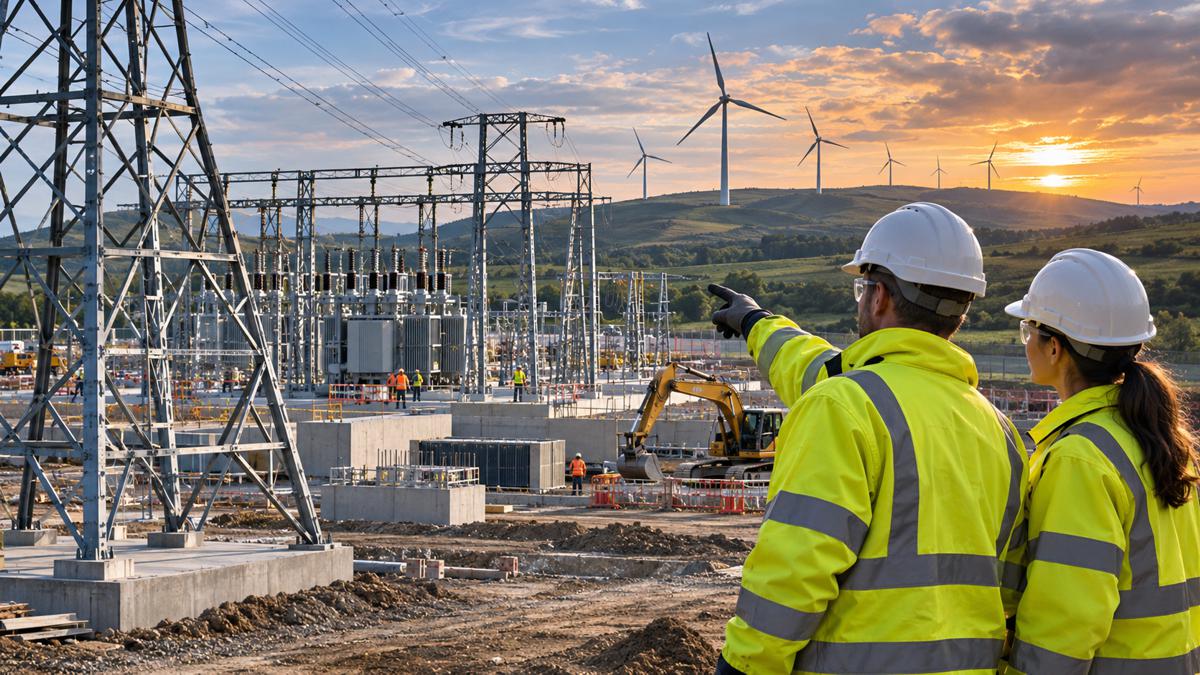
Overhead line construction can involve extensive geotechnical investigations, access road preparation, foundation works, tower or pole erection and conductor installation. Ground conditions influence foundation selection and construction methods, while terrain and environmental restrictions determine how equipment and materials can be brought to individual sites.
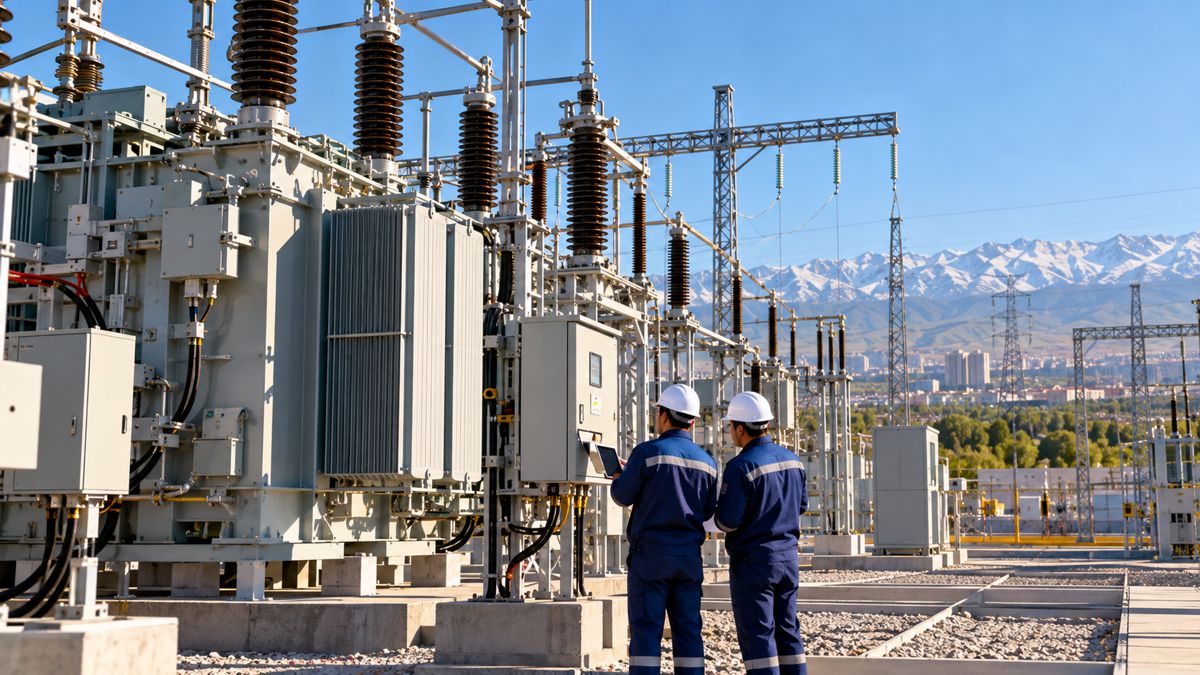
Substation development introduces a different set of requirements, frequently involving substantial civil works, structural foundations, high-voltage equipment installation and carefully sequenced commissioning. Where existing substations or transmission corridors are being upgraded, construction teams must also work around operational infrastructure, with planned outages coordinated to maintain electricity supply.
The availability of major electrical equipment presents another consideration. Transformers, switchgear and other specialist components often require lengthy procurement and manufacturing periods, making early equipment specification and purchasing important parts of programme planning. A delay in a critical component can affect installation and commissioning even where the associated civil works are substantially complete.
Land acquisition and permitting can exert an equally strong influence on construction schedules. A transmission route may cross numerous privately owned properties, public land and environmentally sensitive areas, with different consultation, approval and access requirements along its length. Projects cannot necessarily proceed according to engineering readiness alone.
The integrated delivery arrangement allows Jacobs and its partners to coordinate these activities within a common programme structure, although it does not eliminate the underlying constraints. The appointment announcement contains no quantified construction savings or schedule reductions, and individual project outcomes will depend on the circumstances of each scheme.
Jacobs’ Position in Energy Infrastructure
The AEP agreement adds to Jacobs’ existing portfolio of electricity transmission and major energy infrastructure programmes across North America.
Its work includes serving as Owner’s Engineer for the proposed Project Hostos high-voltage direct current subsea interconnector between Puerto Rico and the Dominican Republic, as well as supporting the Bonneville Power Administration’s Grand Coulee Modernization Program.
While these projects differ considerably in their technical requirements, both involve coordinating specialist engineering expertise within complex electricity infrastructure programmes. The AEP agreement extends that experience into a regional delivery role covering multiple transmission schemes over a five-year period.
Such appointments can provide a more continuous workload than individual design contracts, with engineering teams remaining involved as projects move between development, approvals and construction. They also require consultancies to manage resources across simultaneous assignments while accommodating changes in the owner’s investment priorities and delivery schedules.
For Jacobs, the eastern region programme offers a substantial long-term engagement with the largest electricity transmission system operator in the United States. AEP, meanwhile, gains access to an established engineering team supported by specialist partners already familiar with elements of its network and technical requirements.
From Capital Plans to Construction
AEP’s enlarged investment programme will require a sustained pipeline of engineering, land development, equipment procurement and construction activity through 2031. Transmission alone accounts for more than a third of its planned capital expenditure, with projects progressing against growing demand for specialist electrical equipment, experienced contractors and skilled technical personnel.
The Jacobs and WSP appointments provide regional delivery structures for that workload, allowing AEP to advance projects across different parts of its network while maintaining oversight of its overall investment programme.
Jacobs begins its five-year appointment with engineering, route development, environmental approvals and construction preparation forming part of the immediate workload. Individual schemes will progress according to their technical and regulatory requirements, with the pace of delivery also dependent on equipment availability, contractor capacity and access to suitable construction resources.
AEP has committed substantial capital to meeting future electricity demand. Converting those commitments into operating transmission infrastructure will require years of coordinated engineering and construction across a network extending through much of the United States.

Key Industry Questions
- What has Jacobs been appointed to deliver for American Electric Power? Jacobs will provide integrated programme delivery services for transmission infrastructure projects in AEP’s eastern region, including project management, engineering, siting, environmental services and right-of-way support.
- Which US states are covered by the Jacobs agreement? The appointment covers Indiana, Michigan, Ohio, Kentucky, Tennessee, West Virginia and Virginia.
- How much is AEP investing in electricity transmission? AEP plans approximately $37 billion in transmission investment within its expanded $100 billion five-year capital programme through 2031.
- Is the Jacobs contract worth $37 billion? No. The $37 billion represents AEP’s planned transmission capital expenditure across its network. The financial value of Jacobs’ professional services agreement has not been disclosed.
- Why are utilities using integrated programme delivery models? These arrangements allow infrastructure owners to coordinate multiple projects using common engineering standards, project controls, scheduling procedures and specialist resources.
- What are the main challenges in delivering large transmission programmes? Common challenges include permitting, securing rights-of-way, environmental assessments, complex ground conditions, specialist equipment procurement, contractor availability and coordinating construction around operational electricity networks.
- Which companies are supporting Jacobs on the programme? Jacobs will lead a team including ORC, GFT and RC Commonwealth, while PA Consulting will contribute to innovation initiatives.
- Is WSP involved in AEP’s transmission expansion? Yes. WSP USA has separately been appointed as a strategic delivery partner for AEP’s western region, covering Texas, Oklahoma, Arkansas and Louisiana.
- What is driving AEP’s increased electricity infrastructure investment? AEP has identified growing contracted electricity demand, particularly from large industrial and commercial customers, alongside reliability and network modernisation requirements, as major drivers of its expanded investment programme.
Strategic Takeaways
- Regional partnerships provide continuity across large project portfolios. AEP’s separate appointments of Jacobs and WSP establish delivery arrangements that can support successive transmission schemes rather than relying exclusively on individual commissions.
- Early project development will influence construction schedules. Route selection, permitting, environmental approvals and right-of-way acquisition must be coordinated before many transmission works can proceed.
- Engineering capacity is becoming an important delivery constraint. Sustained investment in electricity networks requires specialist design, project controls and construction expertise across several simultaneous programmes.
- Capital commitments do not guarantee immediate construction activity. The progression of individual schemes remains dependent on approvals, equipment procurement, contractor availability and site-specific engineering requirements.
- Transmission expenditure is rising alongside electricity demand. AEP’s planned $37 billion investment reflects the scale of network development required to support its growing portfolio of contracted electricity loads.