INTERMAT 2027 Looks Beyond the Machine
When INTERMAT returns to Paris in April 2027, some of the most consequential developments on display may be considerably less conspicuous than the machines occupying the demonstration areas.
Predictive maintenance, equipment utilisation, energy management, operator assistance, software, financing and lifecycle services are changing how contractors calculate the value of construction equipment. Electrification remains part of that transition, but it now sits alongside hydrogen, renewable fuels, automation, artificial intelligence and increasingly sophisticated conventional machines.
Guillaume Schaeffer will oversee his first INTERMAT as Event Director against that background. Appointed in March 2025, he came to the role with an unusual combination of industrial and commercial experience, having spent much of his earlier career with TotalEnergies before joining exhibition organiser Comexposium in 2022.
INTERMAT is still fundamentally a construction equipment exhibition, but the definition of construction equipment is becoming harder to contain within the machine. Software influences productivity, data affects maintenance and utilisation, energy infrastructure can determine whether an alternative-power machine is practical, while rental and financing can influence whether contractors can adopt new technology at all.
INTERMAT 2027, running at Paris Nord Villepinte from 21 to 24 April, is being structured around that broader picture. The organisers are planning for 1,200 exhibitors across five areas covering New Technologies & Energies; Earthmoving, Demolition & Transport; Roads, Materials & Foundations Industries; Building, Civil Engineering & Concrete Industry; and Lifting & Handling.
Highways.Today spoke with Schaeffer about where construction is heading towards 2030, the increasingly complicated economics of machinery, the practical limits of electrification, the arrival of AI and autonomous equipment, China’s growing equipment manufacturers, Africa’s infrastructure market and why a physical exhibition still has a role when almost every machine specification can be found online.
Briefing
- Guillaume Schaeffer became Director of INTERMAT in 2025 and will oversee the exhibition’s 2027 edition in Paris.
- INTERMAT 2027 is scheduled for 21 to 24 April at Paris Nord Villepinte, with 1,200 exhibitors expected.
- Sustainability is being treated across environmental, economic and social dimensions, with equipment economics and productivity forming part of the discussion.
- AI, automation, electrification, hydrogen, HVO, IoT, BIM, drones and 3D printing will feature within the exhibition’s technology programme.
- The 2027 edition will include the first INTERMAT African Summit alongside INTERMAT Demo, the Innovation Awards, Start-up Village, INTERMAT Academy and World of Concrete Europe.
Construction Towards 2030
You are taking the helm of INTERMAT at a time when the construction industry is changing remarkably quickly. What do you see as the biggest forces reshaping the industry between now and 2030?
Between now and 2030, construction will undergo several fundamental shifts: the decarbonisation of jobsites, the drive for greater productivity, the growing role of digital technologies and AI, and changing skills requirements, all against a backdrop where financing and competitiveness remain critical.
What is particularly significant is that these issues can no longer be addressed separately. New technology will only achieve widespread adoption if it solves a real problem, makes economic sense and is accessible to the companies expected to use it. It is this convergence of technology, energy, economics and people that will reshape industry over the coming years.
This is also how we have built INTERMAT 2027. Sustainability will be addressed through its environmental, economic and social sustainability dimensions, while our five hubs of expertise: New Technologies & Energies; Earthmoving, Demolition & Transport; Roads, Materials & Foundations Industries; Building, Civil Engineering & Concrete Industry; Lifting & Handling, will bring together the equipment, technologies, energy solutions and services through which these transformations are already taking shape.
From Machines to Systems
Construction exhibitions have traditionally been places where manufacturers launch new machines. As equipment becomes increasingly defined by software, connectivity, automation and data, how does the role of a major exhibition such as INTERMAT need to change?
Machines obviously remain at the heart of INTERMAT, but they are now part of a much broader ecosystem that includes software, data, energy, maintenance and services. The role of an exhibition must evolve accordingly.
Simply unveiling a new product is no longer enough. Professionals need to understand how it works, see it in action and assess what it can bring to their business. This is why demonstrations, user feedback and direct exchanges between manufacturers, contractors and technology providers are becoming so important.
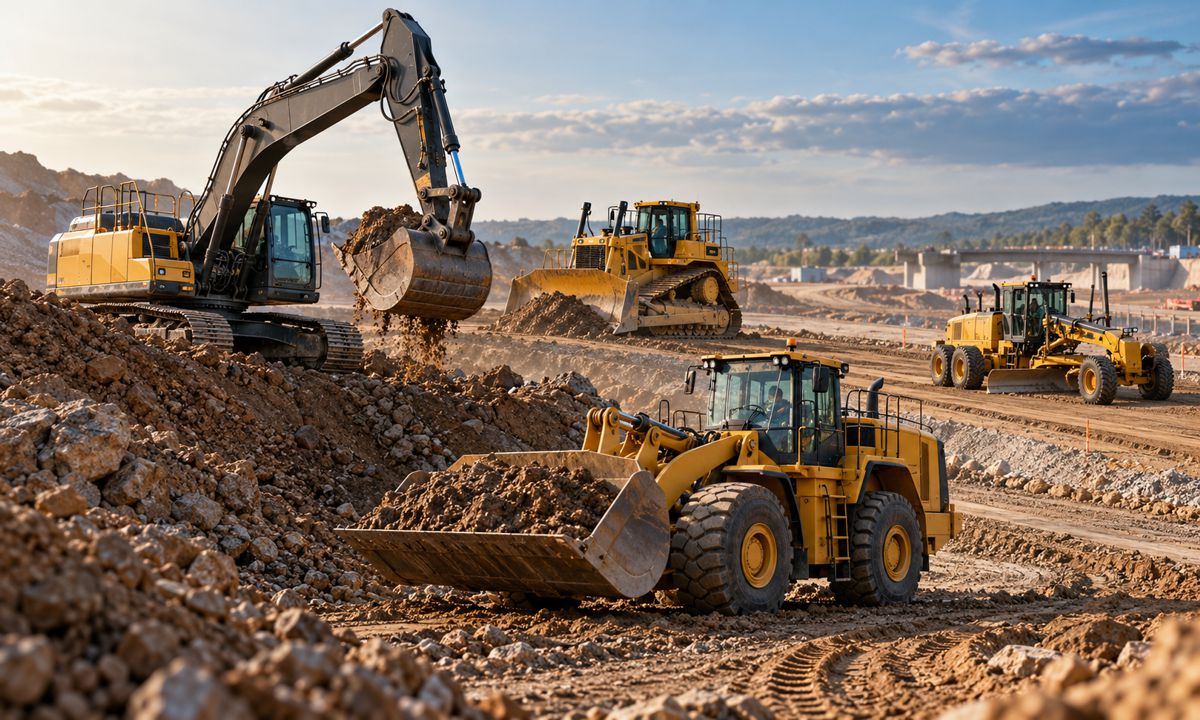
As technology develops at an increasingly rapid pace, INTERMAT also has a role to play in helping professionals make sense of these advances and assess their real value. This is reflected in the way we are building the 2027 edition, which will bring together 1,200 exhibitors. INTERMAT Demo will allow professionals to see equipment operating in real-life conditions, while the INTERMAT Innovation Awards will highlight some of the most significant advances shaping the sector. The Start-up Village will also provide a window onto emerging technologies and new solutions. Together, these formats help visitors move beyond the promise of innovation and understand what it can deliver on the jobsite.
The Economics of Sustainability
INTERMAT 2027 is positioning sustainability as a driver of performance rather than simply an environmental obligation. Are contractors and equipment manufacturers now beginning to make the business case for sustainability as strongly as the environmental case?
The question is no longer simply how to reduce emissions, but how to finance that transition without compromising productivity or competitiveness. Total cost of ownership, energy consumption, utilisation rates, maintenance, rental and return on investment are becoming increasingly important in investment decisions.
That is precisely why INTERMAT 2027 addresses sustainability through three dimensions: environmental, economic and social sustainability. A solution can only be truly sustainable if it is also viable and effective over the long term.
The exhibition gives manufacturers, contractors, rental companies and other industry players an opportunity to compare solutions and discuss the conditions required to deploy them at scale. These topics will also be addressed at the INTERMAT Forum and World of Concrete Europe Forum, with contributions from manufacturers as well as construction companies sharing their experience.
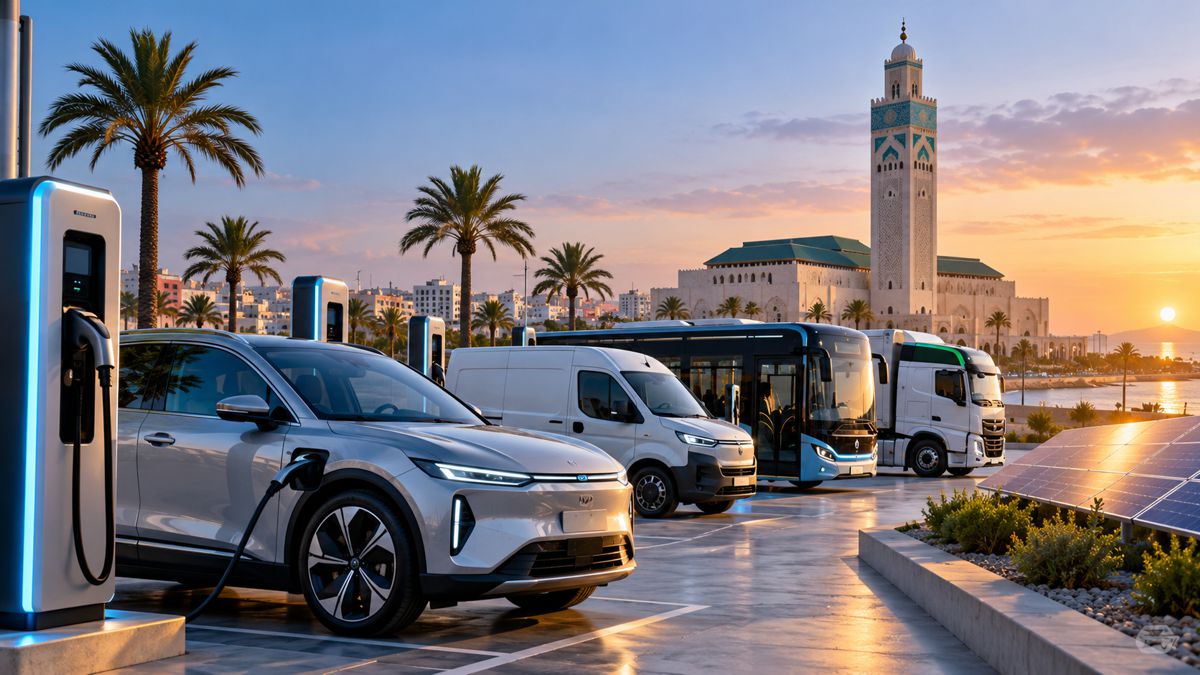
A machine can perform technically and still face adoption barriers if charging, fuel availability, utilisation, residual value or acquisition cost makes it difficult to justify within a contractor’s fleet. That is one reason the industry’s energy transition increasingly looks less like a replacement cycle and more like diversification.
AI, Robotics and Autonomous Equipment
Artificial intelligence and autonomous equipment are moving rapidly from demonstrations towards practical deployment. How prominent do you expect AI, robotics and autonomy to be at INTERMAT 2027, and where do you believe the industry is actually making progress?
AI and automation will be among the major developments visible at INTERMAT 2027. AI is already making progress in areas such as design, manufacturing and predictive maintenance, with very tangible potential to deliver meaningful improvements in productivity, safety and working conditions.
Robotics and autonomous equipment are at different levels of maturity depending on the application. The important question now is which technologies are genuinely ready to deliver value on the jobsite.
INTERMAT will give professionals the opportunity to make that assessment for themselves. New Technologies & Energies will be one of the five hubs of expertise at INTERMAT 2027, where visitors will be able to discover the latest developments in areas such as electrification, hydrogen, IoT, BIM, drones and 3D printing. The Start-up Village will complement this offer by bringing emerging solutions and the companies developing them into direct contact with potential users.
A Multi-Energy Equipment Market
Electrification has dominated much of the discussion around construction equipment in recent years, but hydrogen, alternative fuels and increasingly sophisticated conventional powertrains remain part of the picture. Do you expect the industry to converge around particular technologies, or are we heading towards a much more diverse energy landscape?
We are clearly moving towards a multi-energy landscape. The applications, machine sizes, available infrastructure and jobsite constraints are simply too diverse for a single technology to meet every need.
Electrification is already well suited to certain categories of equipment, while biofuels such as HVO can help reduce emissions from part of the existing combustion-engine fleet. Hydrogen also has potential for specific applications, although technical and economic barriers remain.
So, the real question is not which technology will win, but which energy source makes the most sense for each application. This diversity will be visible at INTERMAT, particularly within the New Technologies & Energies hub, where professionals will be able to compare the different solutions available to them.
A compact machine working predictable hours in an urban environment faces a very different energy problem from heavy equipment operating remotely, continuously or with high power demands. Infrastructure outside the machine increasingly becomes part of the equipment decision.
Innovation That Pays Its Way
One of the challenges facing contractors is separating genuinely useful innovation from technology that looks impressive but does little to improve productivity. What technologies are you seeing that you believe could materially change construction economics over the next few years?
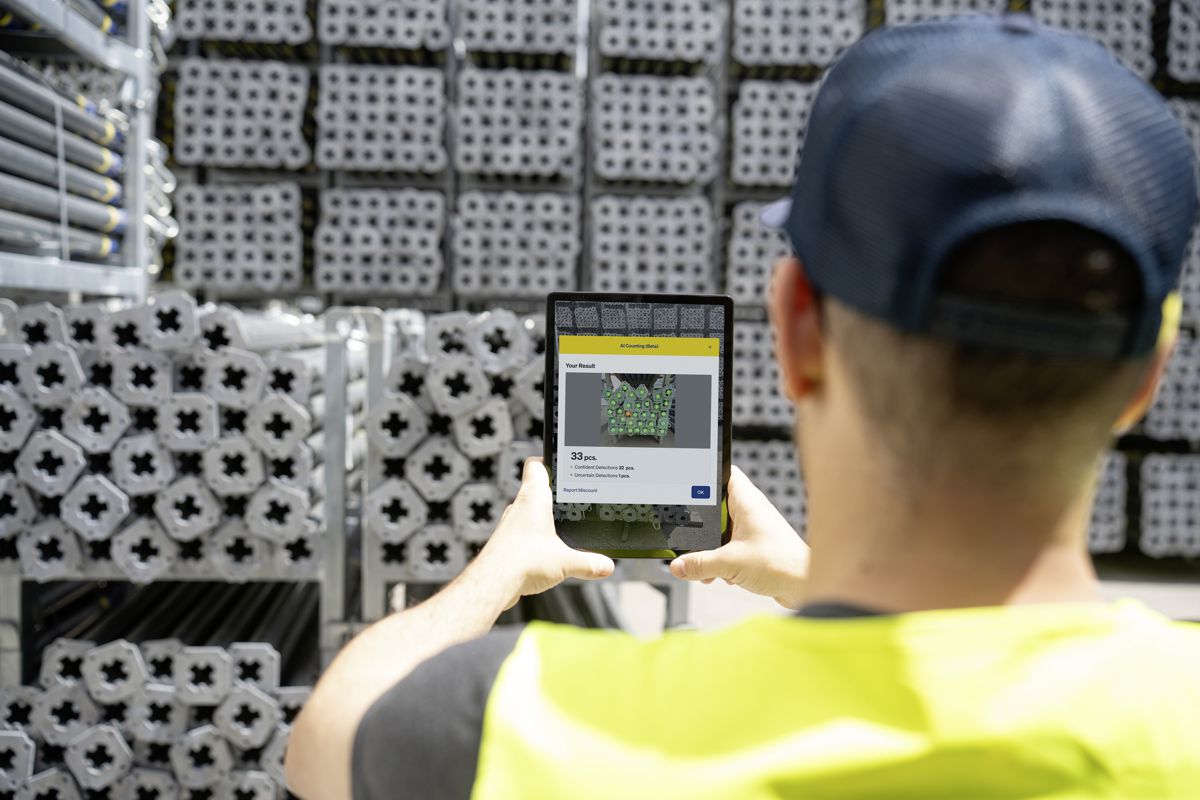
The innovations with the greatest impact will not necessarily be the most spectacular. Predictive maintenance that prevents machine downtime, digital tools that improve equipment utilisation, operator assistance systems that reduce fuel or energy consumption, or better energy management can all have a direct impact on operating costs.
We also need to look beyond technology itself. Rental, services, maintenance and equipment upgrades are changing the economics of equipment ownership and use.
This is precisely what visitors will be able to see at INTERMAT: the latest developments presented by exhibitors, with a strong focus on solutions that can be applied to real-world construction challenges. The show gives exhibitors a platform to showcase these developments, while enabling professionals to discover, compare and assess the innovations they could adopt in their own operations. Bringing manufacturers, technology providers and end users together is particularly valuable in that respect, because it allows innovation to be confronted directly with operational needs.
Predictive maintenance, operator assistance and utilisation software may lack the spectacle of an autonomous prototype, but relatively small improvements multiplied across a large fleet can materially affect operating costs. Equipment manufacturers are consequently competing across a larger part of the machine’s working life.
Africa and Infrastructure Growth
INTERMAT is launching its first African Summit in 2027. Why has Africa become such an important part of the show’s international strategy, and where do you see the greatest opportunities for construction and infrastructure businesses on the continent?
INTERMAT already attracts 150,000 professionals from more than 130 countries, with 25% of our visitors and 68% of our exhibitors coming from outside France. We are also developing strong relationships across Africa, including Egypt, Côte d’Ivoire, Senegal, Kenya, Nigeria, South Africa, Morocco, Algeria and Tunisia.
Africa is a key market for the construction industry, with strong long-term growth prospects and major needs in infrastructure, mobility, energy, housing and urban development. Meeting these needs also raises important questions about financing, equipment, skills, technology transfer and industrial cooperation.
We are seeing growing interest from African companies in technological innovation, low-emission equipment and solutions that improve jobsite productivity. Paris is also a natural crossroads between Europe, the Mediterranean and Africa, which puts INTERMAT in a strong position to connect African businesses and decision-makers with manufacturers and solution providers from around the world.
This is the purpose of the first INTERMAT African Summit, taking place on the morning of Thursday 22 April 2027. It will bring together public decision-makers, industry leaders, manufacturers, investors and experts to discuss major infrastructure projects and development prospects up to 2050, as well as financing, technology transfer, training and industrial cooperation.
The summit takes the discussion beyond equipment sales. Financing, skills, technology transfer and industrial cooperation will influence how quickly new equipment and construction technologies can move into practical deployment across very different African markets.
China’s Global Equipment Manufacturers
Chinese construction equipment manufacturers have expanded rapidly into international markets and are becoming increasingly sophisticated competitors. How is that changing the global equipment market, and do you expect their presence at European exhibitions such as INTERMAT to continue growing?
The equipment market is becoming increasingly global and competitive, and the rise of Chinese manufacturers is a clear illustration of that. We can see it at INTERMAT: LiuGong, SANY and Sunward have already confirmed their participation in 2027, alongside major international manufacturers such as Ammann, Fayat, Haulotte, Hitachi, JCB, Kobelco, Komatsu, Liebherr, Manitou, Volvo Construction Equipment, Wacker Neuson, Wirtgen and Yanmar.
That diversity matters. Our role is not to judge the competition, but to give professionals the opportunity to compare equipment, technologies, performance and services. As the market becomes more global, bringing these different offers together is an increasingly important part of the value of an international exhibition such as INTERMAT.
The competitive question extends beyond specifications and purchase price. Dealer networks, parts availability, finance, residual values, digital platforms and lifecycle support all become part of the comparison as manufacturers expand into new markets.
Beyond the Machine Sale
The construction equipment industry is increasingly moving beyond selling machines towards services, software, subscriptions, financing and lifecycle support. How is INTERMAT adapting to represent this broader construction technology ecosystem?
This is a major shift because the value of a piece of equipment is no longer defined by the machine alone. Increasingly, it depends on how it is used throughout its lifecycle: energy consumption, maintenance, software and data, financing, services and ultimately its utilisation rate.
INTERMAT is evolving to reflect that broader ecosystem. Our five expertise hubs already go well beyond machines themselves, bringing together equipment, technologies, energy solutions and services. That expertise will be brought to life across different parts of the exhibition. The Start-up Village will showcase emerging solutions and new players, INTERMAT Demo will offer a hands-on view of technologies in real operating conditions, and the INTERMAT Forum and World of Concrete Europe Forum will provide a broader perspective on economic, technological and structural changes shaping the industry.
There is also a strong connection with sustainability. Using equipment more efficiently, extending its working life through maintenance or upgrades, or making new technologies more accessible through rental can be just as strategic as developing the technology itself.
The traditional machine sale is not disappearing, but more of the commercial relationship can continue after delivery through maintenance, connectivity, software, upgrades, finance and other services. Machine performance remains fundamental, while the organisation supporting it can increasingly influence the economics over several years of operation.
Skills for a Different Industry
Skills remain one of construction’s biggest constraints, while automation is simultaneously changing the type of people the industry needs. What role can events such as INTERMAT play in attracting the next generation of engineers, operators and technology specialists?
As technology changes, so do the skills the industry needs. Electrification, digitalisation, AI and automation are changing the roles of operators, technicians and engineers. But they can also help us change perceptions of construction, because the industry is far more technology-driven than many young people still realise.
INTERMAT Academy will help build stronger connections between schools, young people, companies and professional organisations. More broadly, we want INTERMAT to give new audiences a clearer view of what construction careers look like today, the technologies they increasingly involve and the opportunities they offer. Changing perceptions of the industry is an important part of attracting the skills it will need tomorrow.
Automation does not remove the skills problem so much as change it. Electric powertrains, high-voltage systems, sensors, machine control, telematics and software create different maintenance and operational requirements, while construction increasingly competes for people whose skills are equally attractive to manufacturing, automotive, energy, robotics and technology companies.
Why Meet in Person?
Manufacturers can now launch products globally without hiring an exhibition hall. Buyers can compare specifications, watch demonstrations and contact suppliers without leaving their desks. Physical events therefore have to provide something harder to digitise.
Major international exhibitions themselves face competition for people’s time and marketing budgets. What does a physical event have to deliver today that manufacturers, contractors and buyers simply cannot obtain online?
Digital platforms are highly effective for discovering a machine, reviewing specifications or watching a product presentation. What they cannot replicate is seeing that machine perform in real conditions, comparing several solutions in a short space of time and speaking directly with the people who can help move a project forward.
That concentration is the real strength of a physical event. In 2027, we expect 1,200 exhibitors and 150,000 visitors. For four days, INTERMAT will bring together manufacturers, construction companies, rental companies, distributors, technology providers and professional organisations from around the world. For a visitor, being able to access that ecosystem in one place is a considerable saving of time.
But bringing people together is no longer enough. A show also must help them make decisions and do business. That is where demonstrations are particularly powerful: you can discuss technology on a stand and then see how it performs. And through our Business Meetings programme, we also want to make it easier for the right buyers and suppliers to find each other.
Machines are also becoming harder to judge from a specification sheet. Software integration, operator assistance, visibility, control response, noise, charging arrangements and the practical behaviour of automated functions can be difficult to understand from published figures alone.
The machine demonstration, one of the oldest features of an equipment exhibition, may become more useful rather than less.
Something Visitors Can Use
When visitors leave INTERMAT 2027, what would you like them to have discovered that they did not expect to find when they arrived?
We want visitors to leave realising that the industry’s transformation is already much more tangible than they expected. We often talk about AI, decarbonisation, automation or new energy solutions as future developments, when in fact many solutions are already operational today.
And I hope they’ve discovered something they weren’t necessarily looking for. It could be a technology or a solution from the wide range of equipment and machinery showcased by exhibitors, a machine they saw in action in the demonstration areas, or even a new approach to concrete at the World of Concrete Europe trade show. Held alongside INTERMAT, World of Concrete Europe will take on a new dimension in 2027, bringing together more than 200 exhibitors and combining a dedicated exhibition, Concrete Demo and a Forum to showcase and discuss the latest innovations, applications and solutions shaping the European concrete industry.
We want people to leave with something they can act on: a solution they can implement, a partner they would not otherwise have met, or a clearer view of their next investment.
We look forward to welcoming the international construction industry to INTERMAT and World of Concrete Europe from 21 to 24 April 2027 at Paris Nord Villepinte.
That final point runs through much of Schaeffer’s view of INTERMAT 2027. Construction has no shortage of technology competing for attention. Contractors have rather less time for technology that cannot demonstrate a practical or economic return.
Bringing machines, energy systems, software, manufacturers, contractors, rental companies and emerging technology businesses together gives visitors the opportunity to make those comparisons themselves. For an equipment industry in which the machine is increasingly only one part of the purchasing decision, the exhibition is also having to look beyond the machine.
Key Industry Questions
- When and where is INTERMAT 2027? INTERMAT 2027 takes place from 21 to 24 April 2027 at Paris Nord Villepinte in France.
- Who is Guillaume Schaeffer? Guillaume Schaeffer is Event Director of INTERMAT. He was appointed in 2025 after joining Comexposium in 2022 and previously held industrial, commercial, marketing and communications roles, including at TotalEnergies.
- What will be the main theme of INTERMAT 2027? Sustainability is central to the 2027 edition, divided into environmental, economic and social dimensions rather than being treated solely as an emissions issue.
- How large will INTERMAT 2027 be? The organisers expect around 1,200 exhibitors and 150,000 visitors, with equipment and technology divided across five principal areas.
- Will autonomous construction equipment and AI feature at INTERMAT? Yes. AI, automation and related digital technologies are expected to feature prominently, particularly within the New Technologies & Energies area and Start-up Village.
- Is construction equipment moving entirely towards batteries? Not according to Schaeffer. He expects a multi-energy market in which batteries, HVO, hydrogen and conventional powertrains serve different applications according to machine size, duty cycle and available infrastructure.
- What is the INTERMAT African Summit? The first INTERMAT African Summit will take place on 22 April 2027 and will examine infrastructure development, finance, technology transfer, training and industrial cooperation across African markets.
- Why are equipment services becoming more important? The economics of a machine increasingly extend beyond its purchase price to utilisation, energy consumption, maintenance, software, data, financing, upgrades and lifecycle support.
- What is World of Concrete Europe? World of Concrete Europe runs alongside INTERMAT and will bring together more than 200 exhibitors in 2027, alongside Concrete Demo and a dedicated Forum.
Strategic Takeaways
- Construction equipment procurement is becoming a lifecycle calculation involving utilisation, energy, maintenance, software and finance alongside machine performance.
- Alternative power is developing as a multi-energy market because construction applications and operating environments vary too widely for a universal powertrain.
- Predictive maintenance, operator assistance and utilisation software can deliver meaningful economic gains without radically changing the machine itself.
- Global competition increasingly extends beyond hardware into dealer support, parts, finance, digital services and lifecycle relationships.
- Physical exhibitions increasingly have to justify themselves through demonstrations, direct comparison and commercially useful meetings rather than relying on product launches alone.