Develon Puts Machine Intervention and Electric Excavation to Work at steinexpo
Construction machinery safety systems are beginning to cross an important boundary. Cameras, radar and object detection have spent years giving operators more information about what is happening around a machine. Develon’s latest excavator technology goes further, allowing the machine itself to respond when a person or obstacle enters the danger zone.
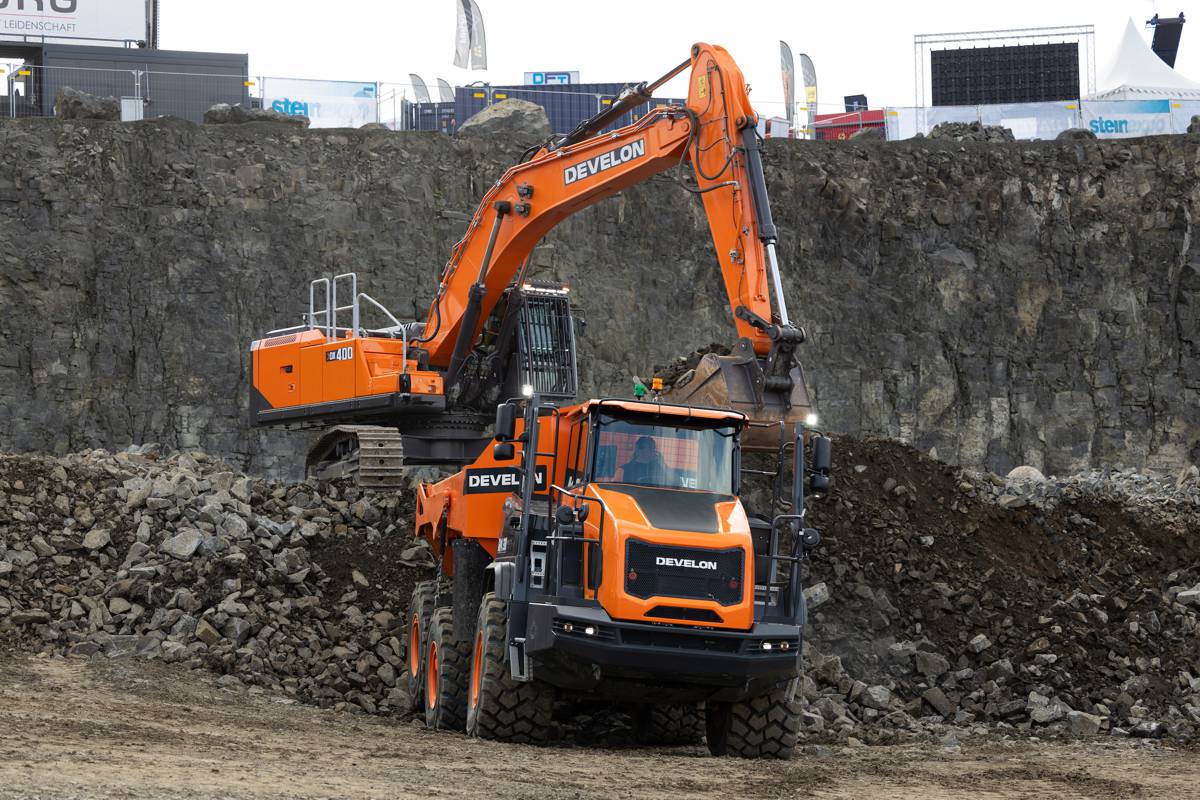
That capability was among the technologies demonstrated by Develon at steinexpo 2026 in Nieder-Ofleiden, Germany, where the company’s new DX360LC-9 crawler excavator appeared alongside quarry machines including the DX400HD-9 excavator, DL550-7 wheel loader and DA30-7 articulated dump truck. Steinexpo is held inside the working MHI basalt quarry rather than a conventional exhibition centre, allowing equipment to operate in conditions much closer to its intended environment.
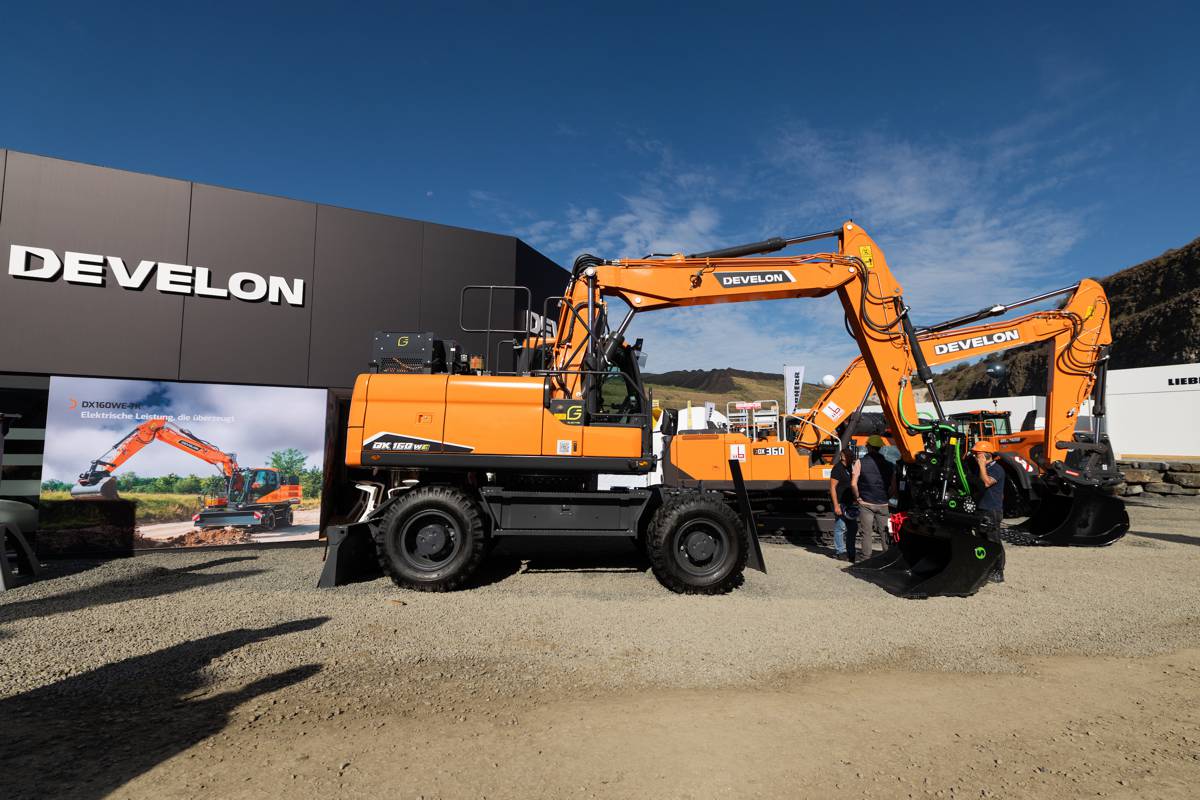
Develon also brought the 16.8-tonne DX160WE-7K electric wheeled excavator, rated for up to ten hours of operation. Its size takes battery power beyond the compact electric excavators that have dominated many early deployments.
Briefing
- Develon’s DX360LC-9 combines a 360-degree camera system, radar sensors and AI-based object detection with an integrated E-Stop function.
- The E-Stop system can automatically slow the excavator and bring it to a complete stop when detected people or objects enter defined proximity zones.
- The 37.2-tonne DX360LC-9 forms part of Develon’s new 9 Series crawler excavator range.
- The 16.8-tonne DX160WE-7K electric wheeled excavator offers a stated operating time of up to ten hours and uses a 105 kW permanent-magnet motor.
- Develon used steinexpo’s working quarry environment to demonstrate excavators, a wheel loader and an articulated dump truck under operating conditions.
Machine Safety and Operator Visibility
The DX360LC-9 is a 37.2-tonne crawler excavator powered by Develon’s DX08 engine, but some of its more interesting engineering sits around the machine rather than inside the powertrain.
Its Smart Around View Monitoring system combines six cameras, radar sensors and AI-based object detection to create a 360-degree view of the excavator’s surroundings. That addresses a familiar problem on large construction equipment: an operator may have excellent forward visibility from the cab while substantial parts of the working area remain obscured by the machine structure, counterweight or attachment.
The integrated E-Stop system adds an active response. When a person is detected, the operator receives visual and audible warnings. The system can then slow the machine as the separation distance closes and stop movement when the person enters the closest intervention zone.
That separates the technology from conventional reversing cameras and proximity alarms, which improve situational awareness but leave the response entirely with the operator. Automatic intervention provides another layer when visibility is poor, attention is divided or somebody unexpectedly enters the machine’s operating envelope.
It does not remove the operator from the safety chain, nor does it eliminate the need for segregation, site controls and competent operation. Heavy machinery works in environments containing moving vehicles, changing ground conditions, dust, obstructions and people whose movements cannot always be predicted. Automated detection therefore sits alongside established site safety rather than replacing it.
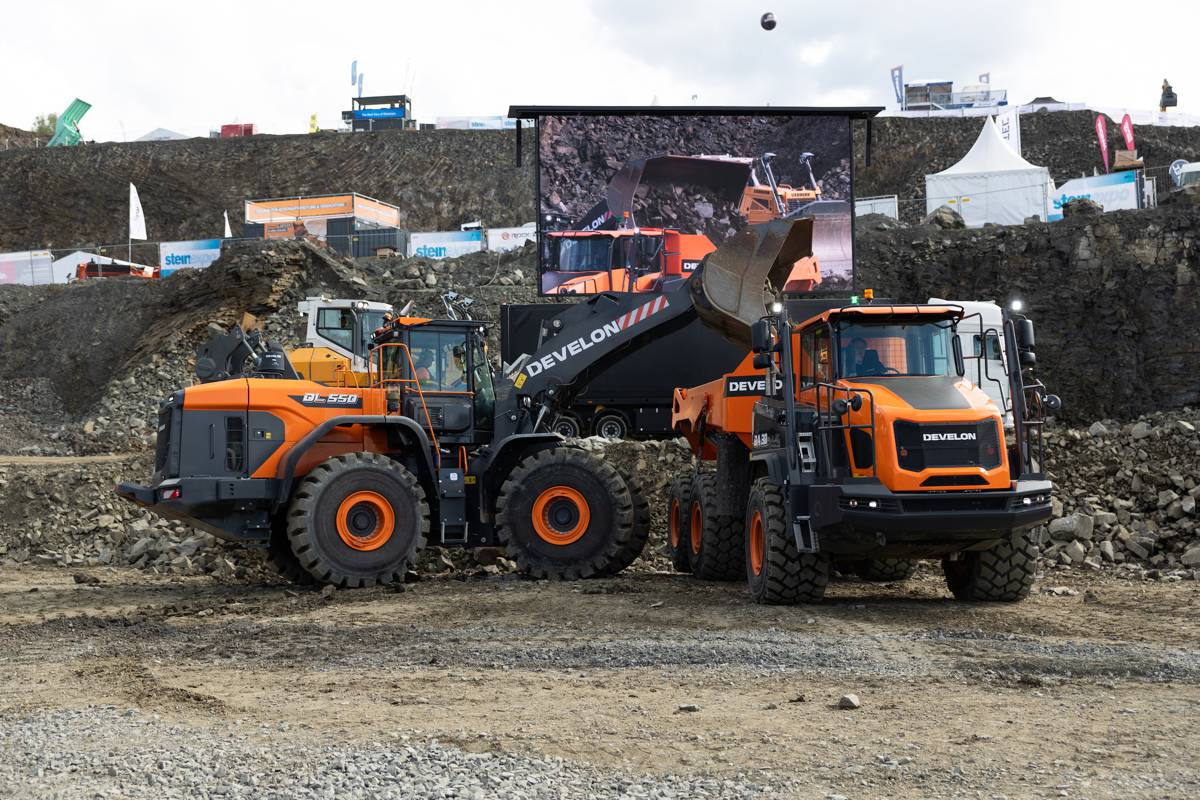
The DL550-7 wheel loader demonstrated another approach with Transparent Bucket 2.0, a camera-based system intended to give the operator a view of the area obscured by the raised bucket. Inside the 9 Series cab, Develon has also introduced a 12.8-inch split-screen monitor, while ambient lighting can adjust according to operating conditions to reduce glare during low-light work.
A system that produces excessive warnings, interrupts normal operation unnecessarily or buries useful information among alerts risks becoming an irritation rather than an aid. Develon said machine operators formed an important part of the Saturday audience at steinexpo, putting the new cab directly in front of people accustomed to spending full shifts in excavators and loaders.
“We’ve designed this spacious cab for maximum visibility,” said Jens Dullinger, Field Product Manager GSA at Develon. “A huge 12.8-inch split-screen monitor keeps key machine information at your fingertips and helps you stay informed throughout the day.”
Visibility is increasingly being created through a combination of glazing, camera coverage, radar, object recognition and software rather than through cab design alone. As these systems begin to intervene in machine movement, the quality of the operator interface becomes part of the safety architecture.
A 16.8-Tonne Electric Excavator
Elsewhere on the stand, the DX160WE-7K showed how far battery-electric construction equipment is moving beyond compact machines. The wheeled excavator weighs 16.8 tonnes and uses a 105 kW liquid-cooled permanent-magnet motor with a lithium iron phosphate battery.
Develon gives an indicative operating time of ten hours, although actual endurance will depend on the application, working cycle, attachment use and operating conditions. Charging options include onboard AC charging and DC fast charging, with Develon’s technical documentation giving a minimum DC fast-charging time of two hours at up to 180 kW.
Those figures put the machine within the working-day requirements of some applications where a defined duty cycle and suitable charging infrastructure are available. Wheeled excavators are particularly interesting in this respect because they are frequently used on urban works, utilities, road maintenance and other sites where noise and local exhaust emissions can matter alongside fuel consumption.
Develon says the response to the machine at steinexpo was strong enough to prompt a demonstration programme in Germany.
“The demand for the DX160WE–7K was so overwhelming that we are now taking the machine on a demonstration tour – particularly in southern Germany,” said Dullinger, adding: “The schedule is already well filled.”
A demonstration tour should provide something an exhibition cannot: prolonged exposure to real customer duty cycles. Ten hours on a specification sheet is useful, but fleet buyers will want to know what happens during repeated digging, lifting, travelling and auxiliary hydraulic use, how charging fits around working patterns, and whether the operating economics justify the change in powertrain.
Quarry Demonstrations
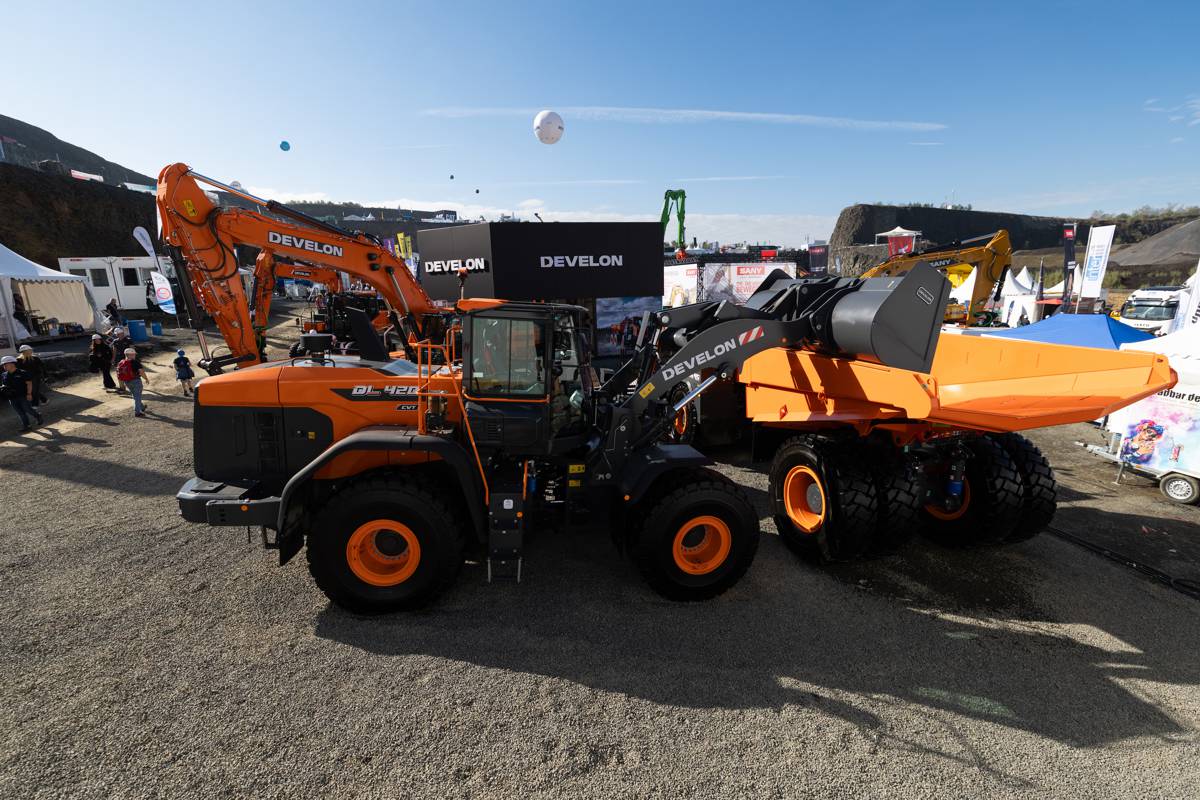
Steinexpo ran from 2 to 5 September at the MHI basalt quarry in Nieder-Ofleiden, with construction machinery and processing equipment demonstrated in the quarry itself. Develon operated three machines together in the general demonstration area: the DX400HD-9 crawler excavator, DL550-7 wheel loader and DA30-7 articulated dump truck.
The DA30-7 represented the more conventional heavy-duty end of the display. The 6×6 articulated dump truck received an updated cab earlier in 2026, including revised controls and a 12-inch touchscreen providing access to machine information, settings and camera views.
Diesel power and heavy mechanical engineering remain central to quarry production, while electronics are taking a larger role in visibility, operator assistance and machine control. Battery power is developing alongside them rather than replacing everything at once.
Steinexpo also came several years after the former Doosan Construction Equipment business adopted the Develon identity. The machinery now carries a more established brand than it did during the transition, leaving the equipment and technology to do more of the talking.
Cameras once gave operators another view and sensors added warnings. The latest systems are beginning to influence what the machine is allowed to do, while electric power is moving into equipment large enough to take on everyday infrastructure work. In a quarry filled with moving excavators, loaders, dump trucks and people, both developments are considerably easier to judge when the machinery is actually working.
Key Industry Questions
- How does Develon’s E-Stop system differ from a conventional proximity warning system? A conventional system primarily alerts the operator. Develon’s integrated system combines detection and warnings with automatic machine intervention, including slowing and stopping when defined proximity thresholds are reached.
- Does automatic E-Stop replace normal site segregation? No. Detection and intervention systems add another safety layer but do not replace traffic management, exclusion zones, operator training or established site procedures.
- What sensors are used by the DX360LC-9? Develon’s Smart AVM system combines six cameras, radar sensors and AI-based object detection to monitor the area around the excavator.
- How large is the DX360LC-9? The crawler excavator has an operating weight of approximately 37.2 tonnes and is powered by Develon’s DX08 engine.
- How long can the DX160WE-7K electric excavator operate? Develon states an indicative operating time of up to ten hours. Actual endurance depends on the machine’s workload and operating conditions.
- What powers the DX160WE-7K? It uses a 105 kW liquid-cooled permanent-magnet electric motor and a lithium iron phosphate battery system.
- Can the DX160WE-7K be fast charged? Yes. Develon’s technical documentation specifies DC fast charging at up to 180 kW, with a stated minimum charging time of approximately two hours.
- Where are electric wheeled excavators likely to be most useful? Applications with predictable duty cycles, available charging infrastructure and advantages from lower local emissions and noise are among the most practical early uses.
Strategic Takeaways
- Automatic machine intervention represents a more substantial safety development than simply adding further cameras or operator warnings.
- Sensor performance and false-intervention rates will be important considerations as active safety systems move into everyday fleet operation.
- A 16.8-tonne battery-electric wheeled excavator brings electrification into a machine class relevant to mainstream infrastructure and urban construction.
- Battery endurance needs to be considered against actual duty cycles rather than nominal working hours alone.
- Live demonstrations remain particularly valuable for technologies involving operator interaction, visibility, machine intervention and electric runtime.