ADB Invests $250m in Georgia’s Tbilisi Bypass to Strengthen Eurasian Trade
The Asian Development Bank’s approval of a $250 million loan for the Tbilisi Bypass Road reads, at first glance, as a congestion measure for a crowded capital. Placed against the freight flows now reshaping Eurasia, it is a more deliberate bet. The money targets one of the last weak links on the overland route that moves goods between Asia and Europe at a moment when the northern corridor through Russia is closed to Western shippers and the maritime route through the Red Sea and the Strait of Hormuz has become unreliable.
Georgia is currently the only land gateway from the Caspian to Europe operating at meaningful scale, and the drive through its capital has become one of the corridor’s more avoidable pinch points.
That distinction matters because trade routes are priced on their weakest segment. A container moving from Kazakhstan to Poland does not care that most of Georgia’s East-West Highway is modern and fast if the final approach forces trucks into urban traffic around Tbilisi. By financing an 18.9-kilometre, four-lane section that lifts long-distance freight clear of the city, the ADB is buying reliability rather than merely speed, and reliability is the attribute that shippers, insurers and logistics planners actually pay for when they decide which corridor to trust with time-sensitive cargo.
Briefing
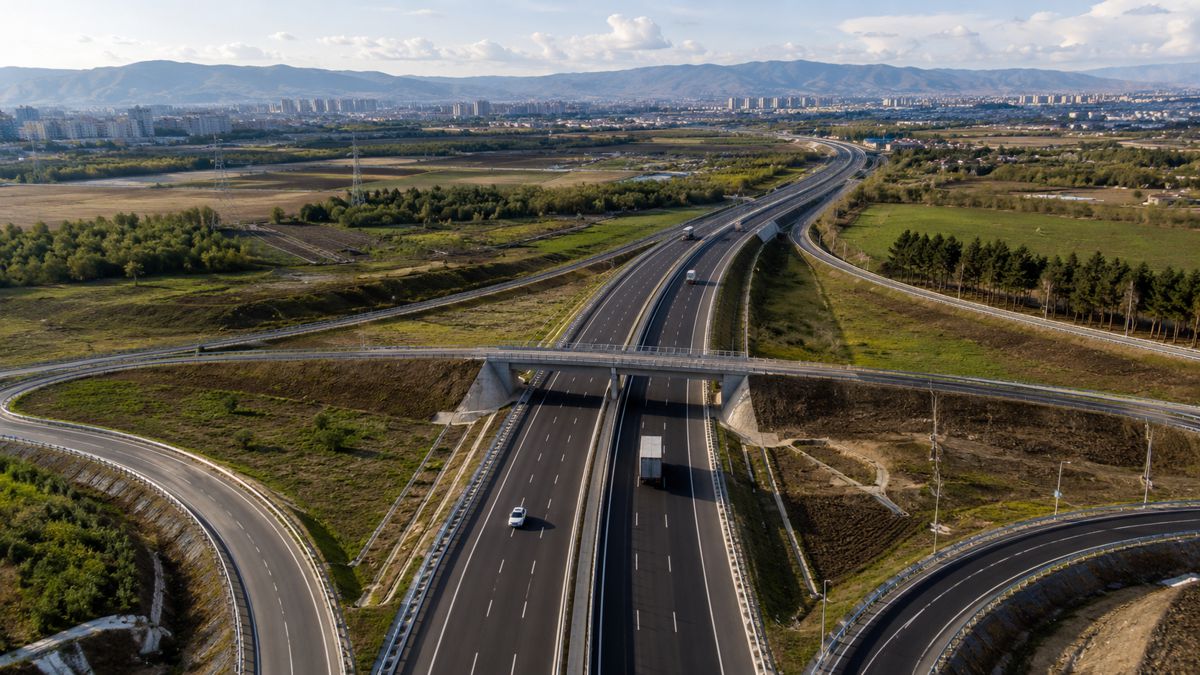
- The ADB has approved a $250 million loan for two sections of the Tbilisi Bypass, Lot 4 from Tbilisi Airport to Lochini and Lot 5 from Lochini to Rustavi, delivering 18.9 kilometres of four-lane highway on the East-West corridor.
- The bypass sits on CAREC Corridor 2 and the wider Middle Corridor, the Trans-Caspian route linking Central Asia and China to Europe through Azerbaijan, Georgia and Türkiye.
- Trans-Caspian cargo volumes rose by more than 63 percent in 2024 to about 4.1 million tonnes, while Middle Corridor rail freight climbed roughly 31.7 percent year on year in early 2026, driven by disruption on rival routes.
- The loan lifts ADB support for Georgia’s road network beyond $2.3 billion, part of nearly $6 billion in cumulative ADB financing to the country since 2007.
- The financed sections are scheduled to start in early 2027 and complete by the end of 2029, with the full 49-kilometre bypass targeted for 2030.
A Missing Link at the Corridor’s Most Congested Point
The two financed sections carry long-distance traffic from Tbilisi International Airport through Lochini and down to Rustavi, the industrial city south of the capital that anchors much of Georgia’s heavy manufacturing and metals output. This is not an abstract stretch of tarmac. It closes a gap in the East-West Highway where transit trucks currently mix with commuter and local movement, degrading journey times for everyone and adding cost and unpredictability to freight that is meant to be crossing the country as quickly as possible. Routing that traffic onto a dedicated four-lane alignment removes a friction point that has dogged the corridor for years.
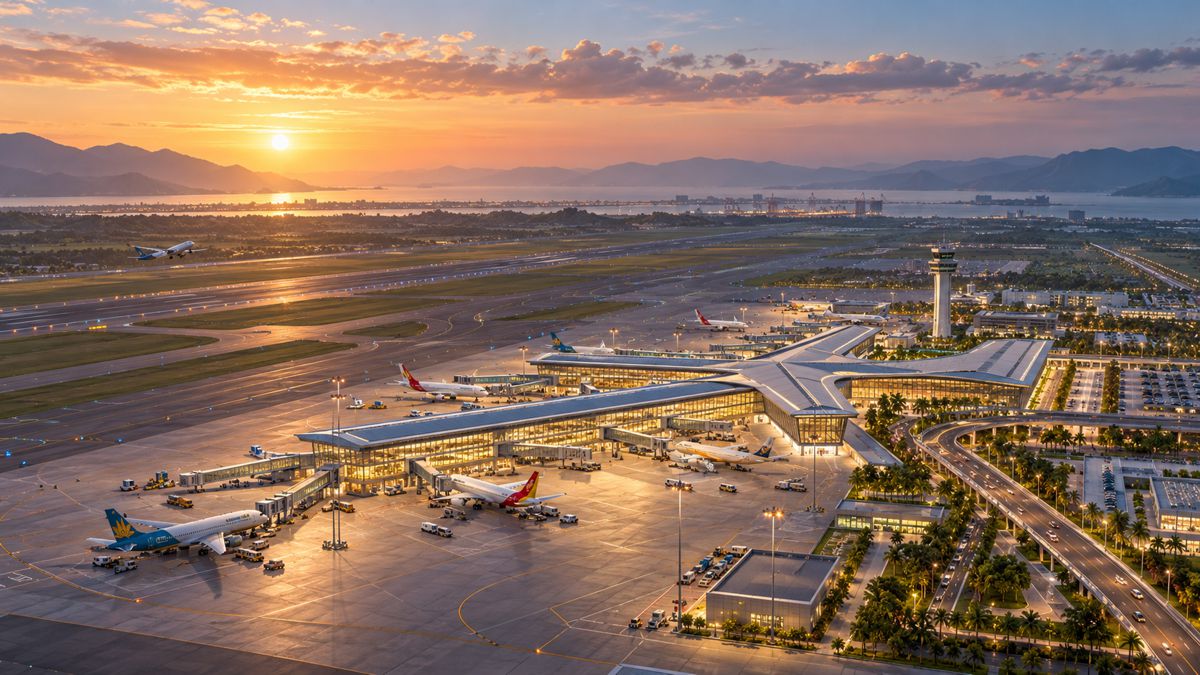
The location also links directly to Georgia’s growing logistics infrastructure around the capital’s eastern edge. A new dry port near Tbilisi Airport already connects road and rail freight with the Black Sea ports of Poti and Batumi, and the bypass gives trucks a faster route around the city to reach it.
That combination matters because the value of a dry port collapses if the roads feeding it are slow. Building the two together, road capacity and inland terminal, is how corridor economics are supposed to work, and it signals that Georgia is treating the bypass as part of a logistics system rather than a standalone piece of civil engineering.
The wider scheme is larger still. The full Tbilisi Bypass runs to roughly 49 kilometres, divided into several sections, with the ADB-financed Lots 4 and 5 scheduled to begin in early 2027 and reach completion by the end of 2029. Earlier sections are already moving, and the government has set 2030 as the target for the complete bypass.
Sequencing the work this way spreads procurement and construction risk while allowing each finished section to deliver benefit before the whole is complete, which is a sensible approach for a country running an unusually busy roads programme.
Why the Timing Works in Georgia’s Favour
The commercial case for this loan rests on where global freight is being forced to go. Since 2022, the northern corridor through Russia has been effectively off-limits for European and much Chinese-to-Europe cargo, pushing volume onto the Trans-Caspian route. More recently, instability around the Strait of Hormuz and the Red Sea has undermined confidence in the southern maritime option that handles a large share of oil and container trade.
The result has been a sustained pivot toward the Middle Corridor, and the numbers show it. Trans-Caspian cargo rose by more than 63 percent in 2024 to around 4.1 million tonnes, up from roughly half a million tonnes before the invasion of Ukraine, and Middle Corridor rail freight increased by about 31.7 percent year on year in the first two months of 2026.
Road haulage has followed the same trajectory. Kazakh operators have reported truck-volume increases of around a quarter in recent surges, and Georgia’s own transit tonnage across road, rail and air has been climbing steadily. This is the demand environment into which the bypass is being built, and it changes the calculation entirely. A road that removes a bottleneck in a stagnant market delivers modest returns.
The same road, built into a corridor experiencing double-digit annual growth and structural diversification away from competing routes, captures a share of traffic that is expanding and increasingly willing to pay for dependability.
Georgia’s strategic position sharpens the point. Until alternative alignments through southern Armenia become operational, the country remains the Middle Corridor’s sole overland gateway to Europe. That gives every improvement to Georgian road capacity outsized leverage over the corridor’s total performance, and it explains why multilateral lenders continue to concentrate capital here. The bypass is not competing for relevance; it sits on the one land route that currently has to work.
Financing Discipline and a Long Institutional Track Record
The ADB is not a newcomer to Georgian roads, and that history matters for how this loan should be read. The new commitment lifts the bank’s road-sector support past $2.3 billion, alongside sections of the East-West Highway, the Kobuleti and Batumi bypasses, the Kvesheti-Kobi mountain highway and the Batumi-Sarpi link to the Turkish border. Across all sectors, cumulative ADB project finance to Georgia since 2007 approaches $6 billion, making the bank one of the country’s largest multilateral partners. That depth of engagement means the institution is lending into a programme it knows intimately rather than a one-off project it has to learn from scratch.
The bank has stated that it supported the government through technical, economic, financial, environmental and social due diligence before approval, and the loan is framed within a five-year country partnership strategy aimed at turning Georgia into what the ADB describes as a green and inclusive regional gateway. “Georgia’s location at the crossroads of Asia and Europe gives it immense potential as a regional transport hub,” said ADB Country Director for Georgia Lesley Bearman Lahm, tying the bypass explicitly to the corridor thesis rather than to local congestion alone. “The Tbilisi Bypass will unlock that potential by easing congestion, and improving freight reliability. Through projects like this, we are turning our Country Partnership Strategy’s vision of a more connected, competitive Georgia into reality.”
The financing also fits a familiar co-investment pattern along the East-West corridor, where the ADB, the World Bank, the European Investment Bank and the Japan International Cooperation Agency have each funded different segments over more than a decade. That syndicated approach spreads risk and keeps a continuous pipeline of work in front of contractors, many of them Chinese firms that have delivered the corridor’s most demanding sections. The recent completion of the Rikoti Pass section, a complex mountain stretch finished at the end of 2025 after years of work, shows that the wider programme is capable of closing out hard projects, which strengthens confidence that the flatter bypass sections can be delivered to schedule.
From Congestion Relief to Lifecycle Economics
The benefits the ADB attaches to the scheme are worth translating into commercial terms rather than taking at face value. Shorter journeys for local and transit traffic reduce vehicle operating costs, which for a haulage business feeds straight into margin. Lower emissions matter increasingly for exporters shipping into a European market that is tightening its scrutiny of supply-chain carbon, and a faster, less congested route reduces fuel burn per tonne moved. Improved freight reliability lifts the value of everything travelling the corridor, from Georgian agricultural exports to transit containers, because predictable transit times allow tighter inventory planning and lower buffer stock.
Road safety carries a harder commercial edge than it is usually given credit for. Fatal and serious crashes close roads, delay convoys and raise insurance costs across a corridor, so a dual-carriageway alignment that separates fast transit traffic from local movement is as much a reliability investment as a humanitarian one. Tourism gains in the same way, since the bypass improves access without pushing more coaches and hire cars through the centre of the capital. For contractors and equipment suppliers, meanwhile, the scheme sustains demand for asphalt, aggregates, plant and telematics-equipped fleets in a market that has kept Georgian roadbuilders and their international partners busy for a decade and shows no sign of slowing.
The procurement implications extend beyond the immediate build. Georgia has some 389 kilometres of expressway already open, with further sections under construction, and its 2023 to 2030 transport and logistics strategy explicitly targets regional-hub status. That policy continuity gives suppliers a reason to invest in local capacity, batching plants, quarries and maintenance depots, rather than mobilising and demobilising for each contract. A steady, well-financed pipeline lowers the cost of doing business for everyone in the supply chain, and it is one of the quieter advantages of a multilateral-backed roads programme running at this scale.
The Constraint That New Roads Cannot Solve Alone
Confident analysis requires naming what the bypass does not fix, because that is where the next tranche of value and risk sits. The Middle Corridor’s tightest constraint is not Georgian road capacity but Caspian and Black Sea port throughput. Analysts have repeatedly flagged that existing Georgian port capacity is close to its ceiling, and the long-delayed deep-water port at Anaklia, intended to give the corridor a container terminal capable of matching demand, remains unresolved. Baku’s Alat port and the Baku-Tbilisi-Kars railway are both scheduled for major capacity expansion, but until those upgrades land, the maritime and rail interfaces will govern how much traffic the corridor can actually absorb.
This is not a reason to discount the bypass; it is a reason to read it correctly. Clearing the road bottleneck now ensures that when port and rail capacity does expand, the overland leg through Georgia will not become the new constraint. Corridors improve one segment at a time, and the sequencing question for investors and operators is where the binding limit will move next. On current evidence it moves to the ports, which is precisely where private capital and further multilateral attention are likely to concentrate over the remainder of the decade. Firms positioning for the corridor’s growth should be watching terminal capacity, customs digitalisation and Caspian shipping tonnage at least as closely as they watch highway construction.
The direction of travel is nonetheless clear. The World Bank’s assessment of the corridor set out a goal of tripling freight volumes and halving transit times by 2030, and the coordinated investment now visible across Kazakhstan, Azerbaijan, Georgia and Türkiye suggests the participating states take that ambition seriously. The Tbilisi Bypass is one verifiable, financed and scheduled step toward it, and its significance lies in being a concrete commitment at a time when much of the corridor’s promise still depends on projects yet to break ground.
Where the Commercial Advantage Concentrates Next
For industry leaders, the loan is a signal about where purchasing power and competition are heading along the Eurasian land bridge. The road side of the Middle Corridor is being de-bottlenecked faster than the maritime side, which means the near-term commercial opportunity for civil contractors, plant suppliers and materials producers remains strongest on the highway and inland-terminal segments running through Georgia and Azerbaijan. Companies already embedded in the East-West Highway programme, and those supplying the dry ports and logistics zones around Tbilisi and Rustavi, are best placed to capture the work that a growing, multilateral-backed pipeline generates.
The strategic reading for infrastructure owners and policymakers is that Georgia’s value proposition rests on remaining the corridor’s reliable overland link while others catch up on ports and rail. Every financed, on-schedule project such as this bypass reinforces that position and makes the country a more credible partner for the shippers and insurers who ultimately decide which route carries the cargo. The prize for Georgia is not the loan itself but the reputational and commercial standing that comes from delivering the corridor’s overland spine dependably, and that is a position the country is now, project by project, building the evidence to claim.
Key Industry Questions
- What is the Tbilisi Bypass Road and which sections is the ADB financing? The Tbilisi Bypass is a planned 49-kilometre motorway routing East-West Highway traffic around the Georgian capital. The ADB’s $250 million loan funds two sections totalling 18.9 kilometres of four-lane road: Lot 4 from Tbilisi International Airport to Lochini, and Lot 5 from Lochini to Rustavi, together with associated access and service roads. These financed sections are scheduled to start in early 2027 and complete by the end of 2029. Other sections of the bypass are being delivered separately, with the full scheme targeted for 2030. The project forms part of Georgia’s broader East-West Highway upgrade and sits on CAREC Corridor 2, the trade route connecting Central Asia with Europe.
- Why does a road around one city matter to international freight? Trade corridors are only as fast and reliable as their weakest segment. Long-distance freight crossing Georgia currently has to negotiate congestion around Tbilisi, which adds cost and unpredictability to journeys that are meant to be quick transit movements. Diverting that traffic onto a dedicated four-lane alignment removes a chokepoint that degrades performance for the entire route. Because Georgia is presently the only overland gateway from the Caspian to Europe operating at scale, improvements to its road capacity carry outsized influence over the whole Middle Corridor. Reliability, more than raw speed, is what shippers and insurers pay for when choosing which corridor to trust with time-sensitive cargo.
- How large is the Middle Corridor opportunity in traffic terms? The route has grown quickly. Trans-Caspian cargo volumes rose by more than 63 percent in 2024 to around 4.1 million tonnes, up from roughly half a million tonnes before Russia’s full-scale invasion of Ukraine. Middle Corridor rail freight increased by about 31.7 percent year on year in early 2026, and road hauliers in Kazakhstan have reported truck-volume rises of around a quarter during recent surges. The growth is driven by the closure of the northern route through Russia to Western shippers and by instability affecting Red Sea and Hormuz shipping. The World Bank has set out a target of tripling corridor freight and halving transit times by 2030.
- What is the ADB’s track record on Georgian roads? The ADB has supported Georgia since 2007 and is one of its largest multilateral partners, with nearly $6 billion in cumulative loans, grants and technical assistance. Road-sector support now exceeds $2.3 billion and includes sections of the East-West Highway, the Kobuleti and Batumi bypasses, the Kvesheti-Kobi mountain highway and the Batumi-Sarpi link to the Turkish border. This depth of engagement means the bank is lending into a programme it knows well. It also works alongside the World Bank, the European Investment Bank and JICA, which have each funded different corridor segments, spreading risk and maintaining a continuous pipeline of work.
- What commercial benefits does the bypass deliver beyond reduced congestion? The scheme lowers vehicle operating costs through shorter, less congested journeys, which feeds directly into haulage margins. It reduces emissions per tonne moved, a growing concern for exporters shipping into a carbon-conscious European market, and improves freight reliability, allowing tighter inventory planning. Better road safety carries commercial weight because serious crashes close roads and raise insurance costs across a corridor. Tourism benefits from improved access that avoids the city centre. For contractors and suppliers, the project sustains demand for asphalt, aggregates, plant and fleet technology within a roads programme that has kept the sector busy for a decade.
- What is the biggest remaining constraint on the corridor? Port and rail throughput, rather than Georgian road capacity, is the tighter limit. Existing Georgian port capacity is close to its ceiling, and the deep-water container port planned at Anaklia remains unresolved. Baku’s Alat port and the Baku-Tbilisi-Kars railway are both scheduled for major capacity expansion, but until those upgrades are delivered the maritime and rail interfaces will govern how much traffic the corridor can absorb. Clearing the road bottleneck now ensures the overland leg through Georgia will not become the constraint once port and rail capacity grows. The binding limit is moving toward the ports, which is where further investment and attention are likely to concentrate.
- Who stands to benefit commercially from the project? Civil contractors already working on the East-West Highway programme are well positioned, as are plant suppliers, materials producers and telematics providers serving Georgia’s active roads market. Firms supplying the dry ports and logistics zones around Tbilisi and Rustavi should gain from the combined road-and-terminal build. Chinese construction firms, which have delivered the corridor’s most demanding sections, remain prominent contractors. More broadly, exporters, freight operators, insurers and tourism businesses benefit from a more reliable route. Georgia itself gains reputationally, strengthening its standing with the shippers who decide which corridor carries their cargo.
- How does this fit Georgia’s wider infrastructure ambitions? Georgia already has around 389 kilometres of expressway open, with further sections under construction, and its 2023 to 2030 national transport and logistics strategy explicitly targets regional-hub status. The bypass is one financed, scheduled step within that strategy. Policy continuity of this kind encourages suppliers to invest in local capacity such as batching plants, quarries and maintenance depots rather than mobilising for individual contracts, lowering costs across the supply chain. The recent completion of the technically difficult Rikoti Pass section demonstrates that the wider programme can close out hard projects, which supports confidence that the flatter bypass sections can be delivered to schedule.
Strategic Takeaways
- The $250 million ADB loan is best understood as a Middle Corridor de-bottlenecking investment rather than a local congestion fix, targeting one of the last road constraints on the overland route between Asia and Europe.
- Corridor freight is growing at double-digit rates because of the closure of the northern Russian route and instability on Red Sea and Hormuz shipping, giving the bypass far stronger returns than a comparable road in a stagnant market.
- Georgia’s position as the corridor’s sole operational overland gateway to Europe gives every improvement to its road network outsized leverage, which is why multilateral capital keeps concentrating there.
- The tighter constraint is now port and rail throughput, not Georgian roads, so investors and operators positioning for corridor growth should watch terminal capacity, Caspian shipping tonnage and customs digitalisation as the next binding limits.
- Contractors, plant suppliers and materials producers already embedded in the East-West Highway programme are best placed to capture a growing, multilateral-backed pipeline, with the near-term opportunity strongest on highway and inland-terminal work.