Underground Storage Tank Removal: A Consideration for Every Transportation Infrastructure Project
Transportation infrastructure projects, from highway widenings to depot redevelopments to transit facility upgrades, frequently encounter a category of risk that has little to do with roadbeds, bridges, or traffic engineering: legacy underground storage tanks.
Decades of fueling operations at maintenance yards, former gas stations along transportation corridors, and equipment depots have left a substantial number of underground storage tanks buried across sites that are now being redeveloped or expanded for modern infrastructure use. For project planners and civil engineers, understanding when and how underground storage tank removal fits into a project timeline can prevent costly delays and unplanned environmental liability.
Why Legacy Tanks Keep Surfacing in Infrastructure Projects
Many underground storage tanks currently sitting beneath transportation-adjacent properties were installed decades ago, sometimes before modern tank construction standards, leak detection requirements, and record-keeping practices were in place.
As highway departments, transit authorities, and municipalities redevelop older maintenance facilities, acquire right-of-way through formerly commercial corridors, or expand depot and rail yard footprints, these legacy tanks frequently surface, sometimes quite literally, during site investigation or early excavation work.
The challenge is that many of these tanks were installed before comprehensive registration requirements existed, meaning current site owners or project managers may have little to no documentation confirming a tank’s presence, size, contents, or condition.
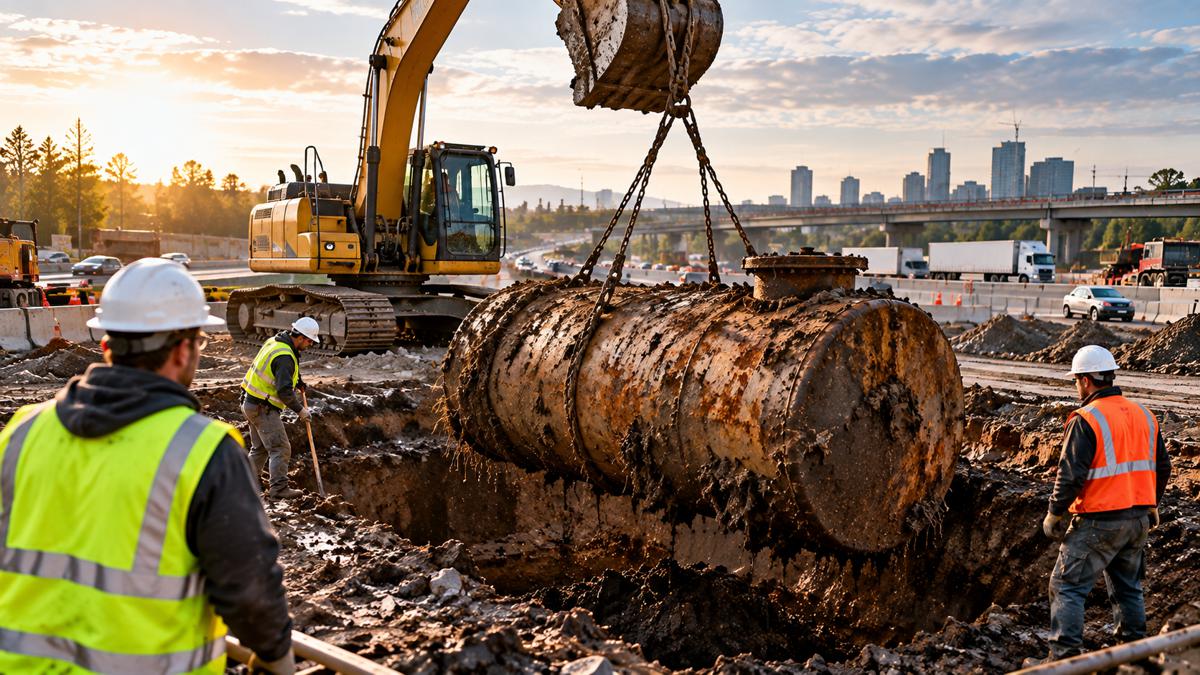
Discovering an undocumented tank mid-construction is one of the more disruptive events that can happen on an infrastructure project, since it typically triggers a full stop on nearby work while environmental assessment, regulatory notification, and removal planning take place.
The Case for Proactive Site Assessment
Given how common this scenario is, proactive underground tank investigation during the pre-construction phase has become an increasingly standard part of due diligence for transportation infrastructure projects, particularly those involving sites with any history of fueling operations, vehicle maintenance, or prior commercial use.
A thorough Phase I and, where warranted, Phase II environmental site assessment can identify the likely presence of underground tanks before they become an unplanned discovery during active construction.
This kind of upfront investigation pays for itself many times over on larger infrastructure projects, where a mid-construction stop-work order tied to an undocumented tank discovery can cascade into significant schedule delays, contractor claims, and budget overruns that dwarf the cost of proactive assessment.
What Underground Tank Removal Actually Involves
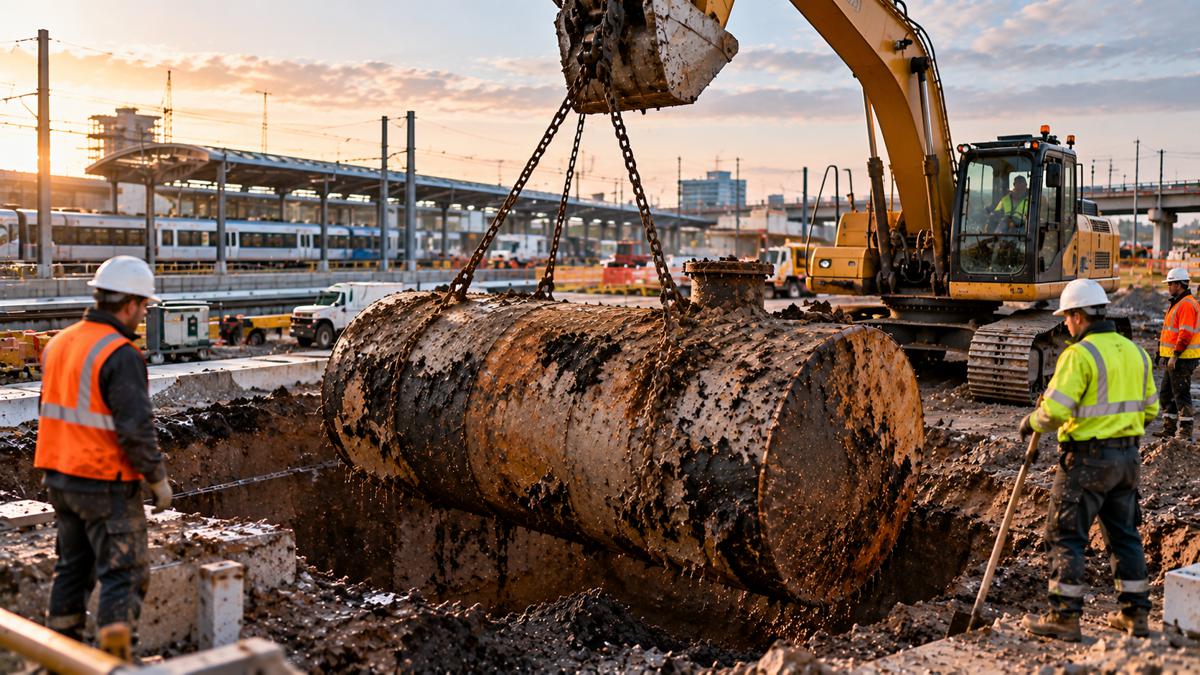
Removing an underground storage tank is a more involved process than excavating and hauling away a container. A properly executed removal typically includes assessing whether the tank still contains product or sludge that needs to be safely pumped out and disposed of before excavation begins, testing surrounding soil for contamination once the tank is exposed, and coordinating with local fire departments and environmental agencies, who are frequently involved in overseeing and permitting the removal process.
If soil contamination is identified, which is a meaningfully common outcome given the age of many legacy tanks, the project scope expands to include remediation, which can range from limited soil excavation and disposal to more extensive groundwater monitoring and treatment, depending on the extent of the release.
This is precisely why early identification matters so much for project planning: a removal that’s anticipated and scoped ahead of time is a manageable line item, while one discovered mid-project becomes an unplanned crisis affecting schedule, budget, and often multiple stakeholders simultaneously.
Coordinating Removal With Construction Sequencing
For infrastructure projects with tight construction sequencing, particularly highway and transit projects operating under lane closure permits, seasonal construction windows, or public disruption limits, coordinating tank removal timing matters as much as the removal itself. Ideally, tank removal and any associated remediation happen during early site preparation phases, before other trades and infrastructure elements are committed in the surrounding area.
Attempting to remove a tank after adjacent utilities, foundations, or paving have already been installed dramatically increases both cost and schedule risk.
Experienced removal contractors bring more than just excavation equipment to this process. Firms like CommTank specialize in underground storage tank removal across New England, bringing established working relationships with local fire departments and environmental regulators that materially speed up the permitting and inspection steps required before, during, and after removal, which matters considerably on projects operating under tight public infrastructure timelines.
Building Tank Assessment Into Project Planning
For engineers and planners scoping transportation infrastructure projects, a few practical steps help manage this risk category effectively. Site history review should specifically flag any prior fueling, vehicle maintenance, or fuel storage use, even decades in the past, since tank longevity means old use histories remain relevant.
Environmental due diligence budgets should account for the realistic possibility of tank discovery on sites with any relevant history, rather than assuming a clean site by default. And construction sequencing should build in appropriate buffer time for tank removal and potential remediation during early site work, rather than assuming this phase will proceed without complications.
Why This Matters for Public Infrastructure Timelines
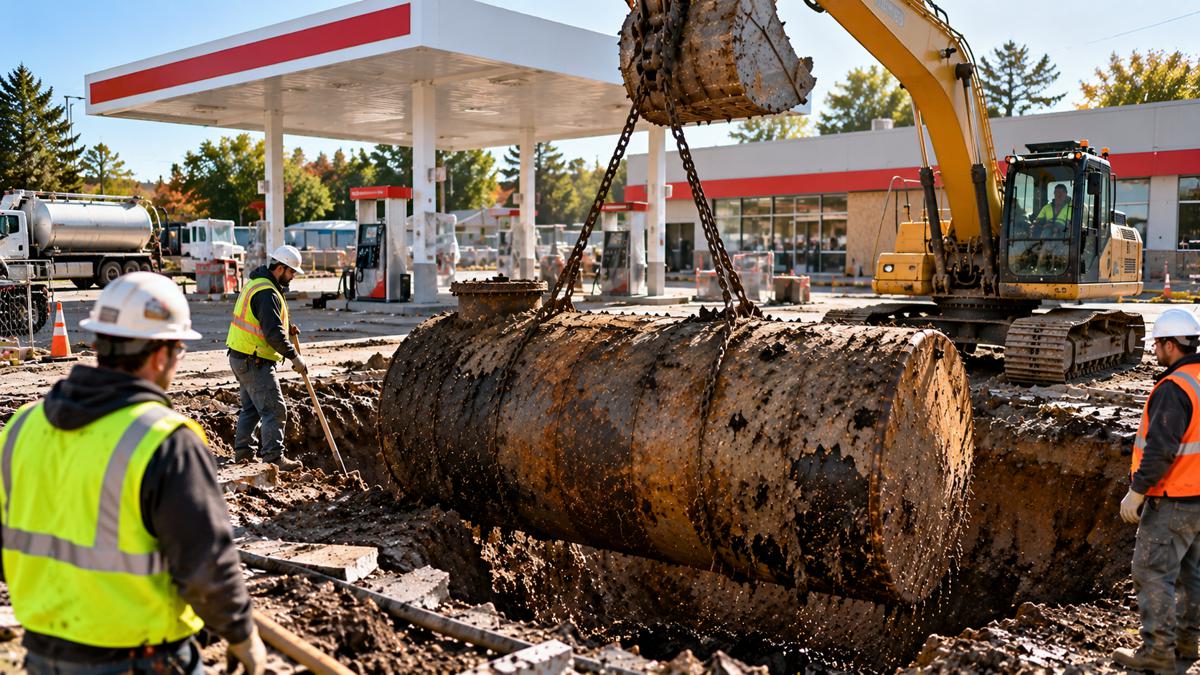
Transportation projects operate under a level of public scrutiny and schedule accountability that many other construction categories don’t face to the same degree. An unplanned underground tank discovery doesn’t just cost money; it can generate public criticism over project delays, complicate coordination with funding agencies operating on fixed grant timelines, and create ripple effects across interconnected project phases.
Treating underground storage tank assessment as a standard, proactive component of infrastructure project planning, rather than a reactive response to a construction-phase surprise, is one of the more effective ways engineering and project management teams can protect both budget and public trust.
Planning Ahead Protects the Whole Project
Legacy underground storage tanks are a persistent, largely invisible risk factor across transportation infrastructure work, particularly on sites with any history of fueling or vehicle maintenance operations.
Proactive site assessment, realistic budgeting for potential removal and remediation, and thoughtful construction sequencing together turn an unpredictable risk into a manageable, well-scoped part of the project plan.
For infrastructure teams that build this diligence into their standard pre-construction process, the payoff shows up in the form of projects that stay on schedule and avoid the kind of costly surprises that undocumented legacy infrastructure can otherwise cause.