Keeping Connected Construction Machinery Online Across Borders
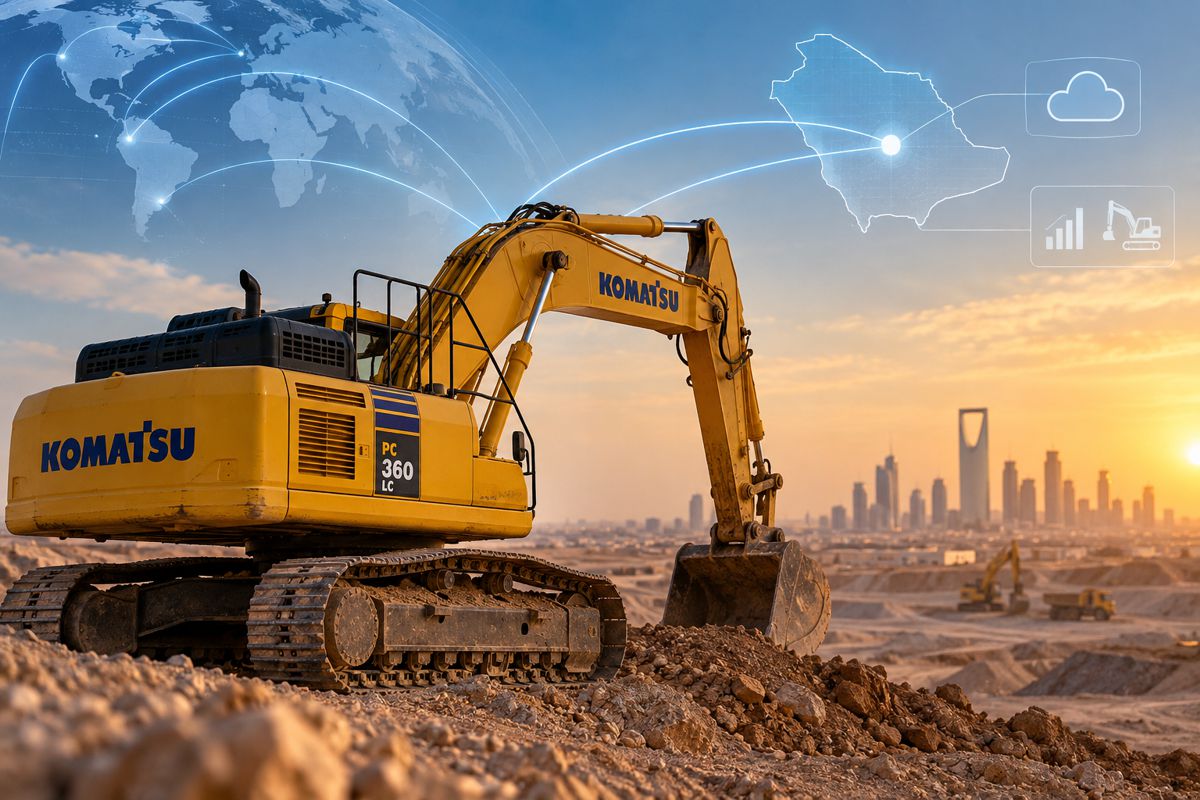
A Komatsu excavator working in Saudi Arabia presents few unusual mechanical challenges simply because it was built for an international market. Its diesel engine, hydraulic system and undercarriage do not particularly care which side of a national border they occupy. The communications equipment transmitting operating data from that machine is another matter.
Komatsu is introducing a new connectivity arrangement for construction equipment operating in Saudi Arabia through NTT DOCOMO BUSINESS and Saudi telecommunications operator stc group. The system provides local connectivity for Komatsu’s Komtrax telematics platform while addressing the telecommunications requirements governing connected devices within the Kingdom.
It is a relatively specialised piece of digital infrastructure behind a much larger development in construction machinery. Equipment manufacturers increasingly expect machines to remain connected throughout their working lives, providing operating hours, location, utilisation and maintenance information from jobsites that may be thousands of kilometres from the factory that built them.
The machine may be global. Its mobile connection remains local.
Briefing
- Komatsu is deploying locally supported IoT connectivity for construction equipment operating in Saudi Arabia.
- NTT DOCOMO BUSINESS designed the solution and provides end-to-end delivery, while stc group supplies local connectivity, SIMs and its Connectivity Management Platform.
- The arrangement supports Komatsu’s Komtrax telematics system while addressing Saudi telecommunications requirements.
- Saudi Arabia maintains specific regulations covering IoT services, SIMs and telecommunications providers.
- Emerging eSIM standards could make it easier to change network profiles remotely as connected machinery moves between markets.
Connecting Komatsu Equipment in Saudi Arabia
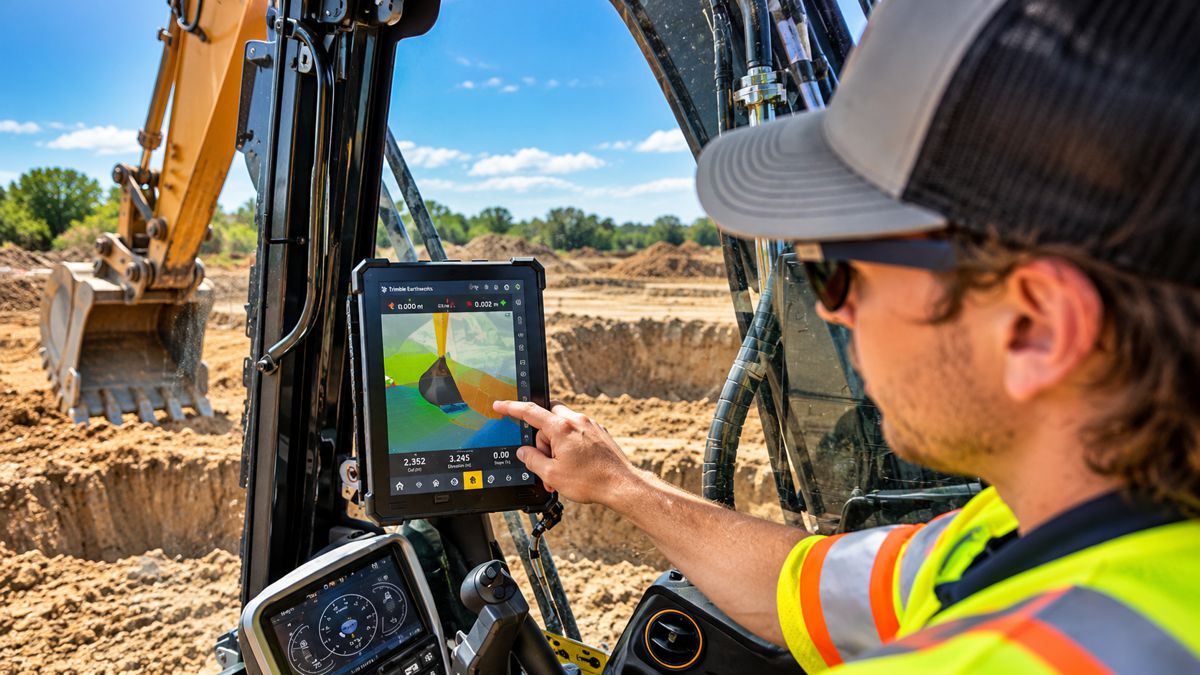
Komtrax wirelessly collects operational information from Komatsu construction equipment, allowing machines to be monitored remotely. Depending on the equipment and service configuration, telematics can support functions including machine monitoring, utilisation analysis and maintenance planning.
The Saudi arrangement changes the communications infrastructure beneath that service rather than the machinery itself. NTT DOCOMO BUSINESS is responsible for the overall solution design and delivery, with stc providing the in-country network connection, SIMs and Connectivity Management Platform.
The arrangement addresses a regulatory issue that becomes increasingly relevant as manufacturers deploy connected machinery internationally. Mobile communications rules are national, and some countries restrict long-term roaming or the permanent provision of telecommunications services by foreign operators without an appropriate local licence.
Saudi Arabia has a formal regulatory framework governing IoT services. The Communications, Space & Technology Commission adopted updated IoT regulations in July 2024 and also regulates IoT virtual network operators and the establishment and sale of SIM cards. Saudi telecommunications law gives the Commission authority over agreements involving international roaming and the use of SIM cards.
For a construction equipment manufacturer, a connectivity model that works when a machine leaves the factory cannot automatically be assumed to work unchanged everywhere that machine may eventually operate.
When the Machine Becomes a Connected Product
Construction telematics has evolved quietly from an equipment-tracking tool into part of the support infrastructure surrounding modern machinery.
A connected machine can provide information without waiting for someone on site to inspect it. Operating hours can feed maintenance schedules, utilisation information can reveal whether equipment is working or sitting idle, and diagnostic information can help identify developing problems before a technician reaches the machine.
For fleet operators managing hundreds or thousands of assets, the value comes partly from scale. A single machine producing data is useful. A fleet continuously producing comparable operating information creates a much richer picture of equipment utilisation and condition.
That depends on an unbroken chain extending well beyond the machine. Sensors and controllers generate the information, onboard communications hardware sends it, a mobile network carries it and cloud or manufacturer systems turn it into something an operator can use. Loss of a telematics connection does not normally stop a conventional excavator digging, but it can remove some of the digital services increasingly wrapped around the physical machine.
Komatsu does not need a different hydraulic system because an excavator is operating in Saudi Arabia. It may, however, need a different communications arrangement.
The Permanent Roaming Problem
International roaming provides an obvious way of connecting equipment deployed overseas. A device equipped with a SIM issued in one country can connect through a partner network elsewhere, much as a mobile telephone does when its owner travels abroad.
Industrial IoT equipment creates a different operating pattern because a construction machine might remain in another country for years rather than weeks. Connected vehicles, industrial equipment and other IoT devices can therefore create what is effectively permanent roaming, with a foreign SIM continuously using a domestic network.
Regulatory and licensing approaches differ between markets. NTT DOCOMO BUSINESS describes restrictions on long-term or permanent roaming by foreign operators as one of the complications facing companies deploying IoT services internationally. Its wider global IoT partnership with Airlinq is intended to provide access to local carrier arrangements where country-specific requirements make them necessary.
Saudi Arabia provides a practical example of the resulting architecture. Instead of expecting a foreign connection to remain permanently active, the Komatsu arrangement incorporates stc’s domestic network and SIM infrastructure while NTT DOCOMO BUSINESS provides the layer connecting that local service with the wider equipment connectivity model.
The physical machine remains part of a global product platform. The telecommunications connection is adapted to the country in which it operates.
Managing Thousands of Connections
Managing a few SIMs is straightforward. Managing tens of thousands means dealing with activation, suspension, billing, communications status, network failures and eventually decommissioning across large numbers of devices. Add different operators and regulatory regimes and the connectivity itself becomes an operational system.
Connectivity Management Platforms provide a control layer for those connections, allowing organisations to monitor and administer SIMs and network status without treating every connected device as a separate telecommunications account.
NTT DOCOMO BUSINESS is developing this model further with the Pro version of its docomo business SIGN service, scheduled for availability from March 2027. The company says the platform is intended to manage tens of thousands of IoT connections across domestic and international deployments, including SIM lifecycle management, monitoring and system integration.
Manufacturers produce equipment centrally but sell it into markets around the world, while individual machines may subsequently be exported, resold or transferred between projects. The communications system therefore has to accommodate a machine lifecycle that may be far less predictable than its original delivery destination suggests.
eSIM and the Next Connectivity Layer
The development of industrial eSIM technology could remove some of the physical constraints surrounding that process.
Traditional SIM arrangements can require different cards or configurations for different telecommunications providers. That is manageable during manufacture when the machine’s destination is known, but considerably less convenient when equipment is already operating thousands of kilometres away.
NTT DOCOMO BUSINESS says its forthcoming Pro service will support the GSMA’s SGP.32 standard for IoT eSIMs. This allows communications profiles to be delivered and changed remotely after a device has been manufactured and shipped. A connected product could therefore move to another supported network without someone physically replacing its SIM.
That does not eliminate national telecommunications regulation. NTT notes that the capability remains subject to regulatory restrictions in individual countries. It does, however, separate the communications identity of the machine from a permanently installed physical network card.
For construction equipment, that flexibility could be particularly useful. Machines commonly have much longer working lives than consumer electronics and frequently move through secondary markets. An excavator may begin its working life with a major contractor, pass through an auction several years later and eventually work in another country under an entirely different owner.
A communications system capable of being reconfigured remotely is better suited to that lifecycle than one permanently tied to the circumstances in which the machine left the factory.
Digital Infrastructure Around the Machine
Construction equipment has spent decades becoming progressively more electronic. Engine management, hydraulic control, grade systems, payload monitoring, positioning and machine control have all added digital layers to machines whose fundamental purpose remains physical work.
Once operating data is expected to reach fleet platforms, dealers, maintenance systems and manufacturers, telecommunications becomes part of the infrastructure supporting the equipment. That infrastructure is largely invisible until a machine reaches a market where the original connectivity arrangement no longer fits the local regulatory environment.
The Komatsu deployment shows how a global service architecture can sit above a local telecommunications layer, with the domestic operator providing the connection required within its own regulatory environment. The machinery and its telematics platform remain consistent while the underlying communications arrangement adapts to the market.
Construction equipment manufacturers have spent generations learning how to build machines capable of working almost anywhere in the world. The digital systems surrounding those machines are gradually acquiring the same capability, although crossing a border remains considerably easier for an excavator than it does for its SIM card.
Key Industry Questions
- What is Komtrax? Komtrax is Komatsu’s telematics and remote monitoring system for construction equipment. It wirelessly collects operational information from connected machines and makes that information available for remote monitoring and equipment management.
- Why does construction equipment need permanent connectivity? Telematics services depend on communications to transfer information such as machine status, operating data and utilisation information. Continuous connectivity allows those services to operate remotely without relying on manual collection from the machine.
- Why can’t manufacturers simply use international roaming? Some countries restrict long-term roaming or permanent telecommunications services supplied through foreign operators. Regulatory requirements vary by jurisdiction, so a roaming arrangement suitable for one country may not be appropriate in another.
- What does stc provide for the Komatsu deployment? According to the companies, stc provides local connectivity, SIMs and its Connectivity Management Platform, while NTT DOCOMO BUSINESS handles the overall solution design and end-to-end delivery.
- What is a Connectivity Management Platform? A CMP provides centralised administration of IoT connections and SIM information. It can be used to monitor connections and manage large numbers of deployed devices rather than administering each connection individually.
- Does changing the connectivity system alter Komtrax itself? The announced arrangement concerns the connectivity supporting Komtrax in Saudi Arabia. The underlying purpose of Komtrax as Komatsu’s machine telematics and monitoring system remains unchanged.
- Could eSIM make international equipment deployment easier? Potentially. IoT eSIM technology can allow communications profiles to be changed remotely without replacing a physical SIM, although deployments remain subject to telecommunications regulation in individual countries.
- Why is this relevant to used construction equipment? Construction machines frequently remain operational for many years and can change owners or countries. Connectivity that can be reconfigured during the equipment lifecycle is better suited to machines that move between fleets and markets.
Strategic Takeaways
- Connected machinery increasingly depends on telecommunications infrastructure that sits outside the traditional boundaries of equipment engineering.
- National communications regulation can affect how a manufacturer’s global telematics service is delivered without changing the machine or the service itself.
- Local carrier integration allows manufacturers to retain a common global equipment platform while adapting connectivity to individual markets.
- Connectivity management becomes progressively more important as manufacturers move from thousands to tens of thousands of connected assets.
- Remotely configurable eSIM technology is particularly well matched to long-lived construction equipment that may change owners, operators and countries during its working life.