How EPC Contractors Should Specify Solar Street Lighting for Road Infrastructure Projects
For EPC contractors, solar street lighting is not simply a lighting product to be purchased near the end of a road project. It is a complete off-grid infrastructure system that must be specified around road geometry, lighting performance, solar exposure, battery autonomy, pole design, installation conditions and handover documentation.
This is especially important for municipal roads, rural roads, public infrastructure schemes, industrial access roads, parking areas and development projects where the lighting system is expected to operate reliably for years with limited grid dependency and predictable maintenance requirements.
A weak specification can lead to more than poor illumination. It can cause early battery failure, insufficient lighting uniformity, unclear installation responsibility, approval delays and disputes during commissioning. For this reason, EPC teams need to define solar street lighting requirements as part of the engineering scope, not only as a product procurement item.
Why Solar Street Lighting Specifications Matter in EPC Road Projects
In many road and municipal lighting projects, the tender document may describe solar street lights in a simplified way: wattage, pole height, battery capacity and working hours. This is usually not enough for a reliable project outcome.
A solar street light must deliver lighting performance under real outdoor conditions. The system also needs to charge sufficiently during the day, manage stored energy at night, withstand local weather, fit the civil works design and provide documentation for project approval and handover.
For EPC contractors, a strong specification should answer practical engineering questions:
- What level of illumination is required for the road type?
- How wide is the carriageway or pedestrian area?
- What pole height and spacing are practical for the project layout?
- How many cloudy or rainy days should the system support?
- What dimming profile is acceptable for public road use?
- Who is responsible for the pole, foundation and installation interface?
- What documentation is required for tender approval, installation and commissioning?
When these details are not defined early, suppliers may quote very different systems under the same general description. This makes technical comparison difficult and increases the risk of selecting a system that looks competitive on price but is not suitable for the actual site conditions.
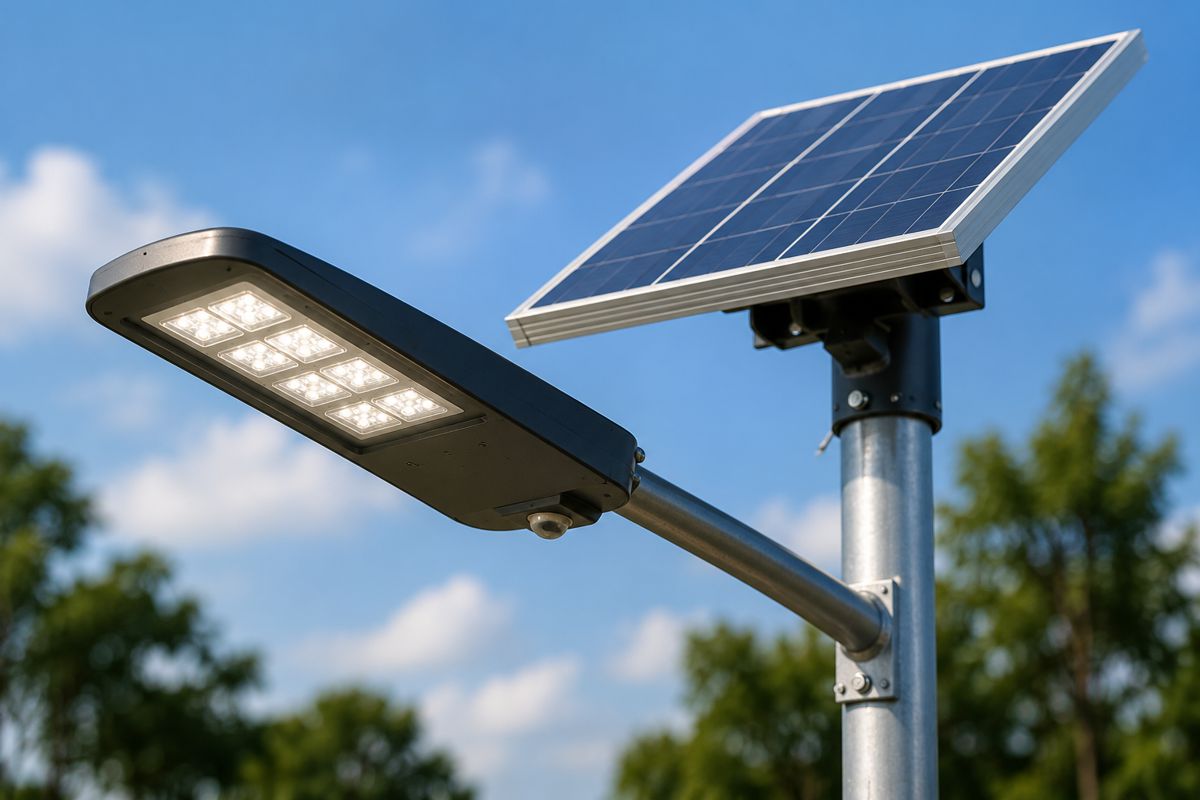
Solar Street Lighting Is a Complete Off-Grid System
A solar street light is not only an LED luminaire mounted on a pole. It is an integrated system that combines energy generation, energy storage, lighting control, structural support and installation requirements.
For large road and municipal projects, Sunlurio recommends evaluating solar street lighting systems as complete energy, lighting and mounting packages rather than comparing the luminaire alone.
A typical project specification needs to review the following components together:
- Solar panel capacity and orientation
- LED luminaire efficiency and optical distribution
- LiFePO4 battery capacity and cycle life
- MPPT or PWM charge controller
- Dimming and working profile
- Motion sensor logic, if required
- Pole height, arm length and bracket design
- Foundation and anchor bolt requirements
- Cable routing, connectors and protection
- IP rating, corrosion resistance and maintenance access
If one part of the system is undersized, the whole system may underperform. For example, a high-wattage luminaire will not improve project performance if the battery capacity, solar panel size or controller profile cannot support the required nightly operation.
This is why EPC specifications should avoid treating wattage as the main comparison point. In solar lighting projects, system balance is more important than a single component rating.
Road Conditions Should Define the Lighting Specification
The correct lighting specification should start with the road, not the product catalogue. Different roads require different pole arrangements, optical distributions and operating strategies.
A narrow rural access road, a municipal street, a pedestrian pathway and a wide industrial road will not need the same configuration. Even if the same luminaire wattage is used, pole height, pole spacing, road width, surface reflectance and traffic pattern can change the actual lighting result significantly.
EPC contractors should review:
- Road width and number of lanes
- Pole height and pole spacing
- Mounting side: single side, opposite side or staggered arrangement
- Traffic speed and vehicle type
- Pedestrian activity
- Road classification
- Target illuminance level
- Lighting uniformity
- Glare control
- Shading from trees, buildings or slopes
- Dust, coastal corrosion or high-temperature conditions
A practical specification should connect road conditions with lighting design requirements.
| Road Condition | Specification Item to Review |
| Wide carriageway | Pole height, outreach arm and optical distribution |
| High pedestrian activity | Uniformity, glare control and mounting height |
| Rural or remote road | Battery autonomy, anti-theft design and simplified maintenance |
| Shaded road section | Pole position, panel orientation and charging loss |
| Coastal or dusty area | Corrosion protection, IP rating and cleaning access |
| Intersections or crossings | Higher visibility, optical control and safety margin |
For infrastructure projects, a lighting simulation can help avoid assumptions. IES or LDT photometric files can be used in DIALux, Relux or similar tools to check whether the proposed configuration can meet the required road lighting performance before procurement.

Battery Autonomy and Dimming Profiles Should Be Reviewed Early
Battery autonomy is one of the most important parts of a solar street lighting specification. It should be reviewed before the final product selection, not after the order is placed.
A common mistake is to specify “12 hours lighting” without defining the lighting profile. A system operating at 100% brightness for 12 hours has a very different energy demand from a system using a staged dimming profile, such as higher brightness in the evening and reduced brightness during low-traffic hours.
A public road lighting specification should define:
- Required nightly working hours
- Brightness level during active traffic periods
- Dimming level during low-traffic periods
- Whether motion sensor boost mode is required
- Expected autonomy days during cloudy or rainy weather
- Local solar irradiation conditions
- Battery recovery expectations after poor weather
- Minimum acceptable lighting level for safety
For municipal roads, conservative sizing is often more appropriate than aggressive energy saving. A system that only works under ideal sunshine conditions may fail during rainy seasons, dusty periods or extended cloudy weather.
The operating profile should also match the road use. A quiet village road may accept a lower standby level with motion boost, while a public municipal road or main access route may require more stable lighting throughout the night.
Engineering Documents Are as Important as Product Datasheets
For EPC and municipal projects, product datasheets alone are rarely enough. Contractors usually need documents that support design review, tender submission, installation coordination and final handover.
This is where engineering support becomes part of the project value. Sunlurio’s engineering support for EPC and municipal lighting projects can include IES/LDT photometric files, DIALux or Relux simulation assistance, BOQ coordination, pole and foundation drawings, installation guidance and commissioning documentation.
Useful project documents may include:
- Product datasheets
- IES or LDT photometric files
- DIALux or Relux simulation support
- Pole and bracket drawings
- Foundation and anchor bolt drawings
- Wiring diagrams
- Installation manuals
- BOQ mapping
- Compliance sheets
- Warranty documents
- Commissioning checklist
- Maintenance instructions
These documents help EPC teams coordinate with consultants, project owners, municipal engineers and site installation teams. They also reduce ambiguity during procurement and commissioning.
If the project requires approval from a consultant, government agency or municipal authority, the lighting supplier’s documentation capability can be as important as the product itself.
Tender and Approval Documents Should Be Prepared Before Procurement
Tender and approval documents should not be left until the final procurement stage. By that time, the product selection may already be technically constrained, and missing documents can delay project approval.
A complete technical package may include product specifications, certificates, drawings, installation instructions, warranty terms and handover references. For larger projects, documentation also supports BOQ preparation, technical submittals and consultant review.
EPC contractors should confirm whether the supplier can provide:
- Technical submittal documents
- Datasheets for each major component
- Lighting simulation files or reports
- Certificates required by the project
- Pole and foundation drawings
- Installation guidance
- Controller and working profile information
- Warranty terms and exclusions
- Spare parts recommendations
- Commissioning and handover documents
These details are especially important when solar street lights are part of a public infrastructure project. The project owner may not only evaluate product appearance or nominal wattage, but also long-term reliability, maintainability and documentation quality.
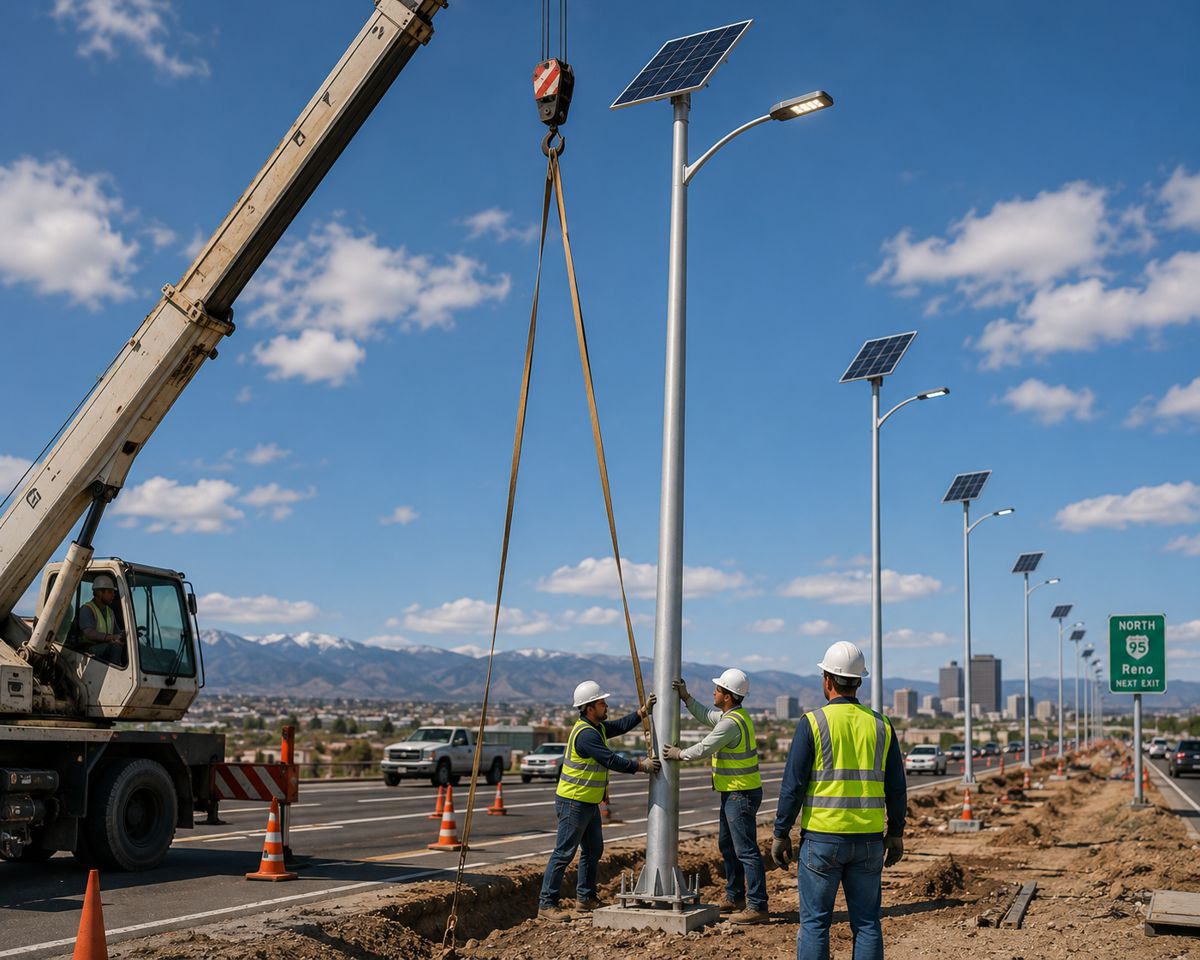
Common Specification Mistakes in Solar Street Lighting Projects
Solar street lighting projects often face problems not because the technology is unsuitable, but because the specification is incomplete or too focused on a single product parameter.
Mistake 1: Comparing Wattage Instead of System Performance
Wattage alone does not define lighting performance. LED efficiency, optical distribution, pole height, spacing and road layout all affect the final result. A lower-wattage system with better optics may perform better than a higher-wattage system with poor distribution.
Mistake 2: Undersizing the Battery
Battery capacity should be matched with the lighting profile, autonomy requirement and local weather conditions. An undersized battery may operate well during the first clear nights but fail after cloudy or rainy days.
Mistake 3: Ignoring the Dimming Profile
A solar street light should not be specified only by working hours. The brightness schedule determines actual energy consumption. Without a clear dimming profile, suppliers may quote systems with very different performance assumptions.
Mistake 4: Overlooking Shading and Panel Orientation
Trees, buildings, slopes and other obstructions can reduce solar charging. A road section with partial shading may need adjusted pole positions, larger panels or a different system layout.
Mistake 5: Separating Pole and Foundation Responsibility
The pole, bracket, anchor bolts and foundation must match the site conditions and wind load requirements. If responsibility is unclear, installation issues may appear during construction rather than during design review.
Mistake 6: Leaving Commissioning Requirements Undefined
A commissioning checklist helps confirm the controller profile, battery status, panel charging, night activation, wiring and final operating mode. Without commissioning requirements, project handover may depend only on visual inspection.
A Practical Specification Checklist for EPC Teams
Before finalizing a solar street lighting package, EPC contractors can use a simple checklist to review whether the specification is complete.
| Specification Area | What EPC Teams Should Confirm |
| Road layout | Road width, pole spacing, mounting height and intersections |
| Lighting performance | Lux level, uniformity, glare control and optical distribution |
| Energy system | Panel wattage, battery capacity and controller type |
| Autonomy | Rainy days, dimming profile and low-traffic operation |
| Structure | Pole material, galvanizing, wind load and foundation |
| Documentation | IES/LDT files, drawings, datasheets, certificates and BOQ support |
| Installation | Wiring method, connectors, foundation interface and maintenance access |
| Commissioning | Night activation, controller profile, charging status and handover checks |
This type of checklist helps EPC teams compare suppliers on project readiness, not only on unit price.
Solar Street Lighting can be a Reliable Solution
For EPC contractors, the strongest solar street lighting specification is not the one with the highest wattage or the lowest unit price. It is the specification that connects road conditions, lighting performance, solar energy sizing, installation responsibility and project documentation into one deliverable system.
Solar street lighting can be a reliable solution for road and municipal infrastructure projects when it is specified as a complete engineered system. By reviewing road geometry, autonomy, dimming profiles, structural requirements and handover documents early, EPC teams can reduce technical risk and improve long-term project performance.
A well-prepared specification also makes supplier comparison more meaningful. Instead of comparing isolated product claims, contractors can evaluate whether each proposed system is suitable for the road, the climate, the installation method and the approval process.