Europe’s Tower Builders are Competing on Data as Much as Steel
When EuroTeleSites reported the results of its first year running the Sitetracker Asset Lifecycle Management platform, the headline read like a routine software success story. The more interesting reading sits underneath it. Europe’s tower market is consolidating quickly, private infrastructure capital is paying premium multiples for portfolios that can prove their quality, and rating agencies are increasingly pricing these businesses on lease-up ratios, contract visibility and capital discipline rather than raw site counts.
In that environment the system that governs how a tower company plans, builds, operates and eventually retires its assets stops being a back-office convenience and becomes part of the asset base itself. EuroTeleSites, a listed pure-play operator with roughly 14,000 sites across six Central and Eastern European markets, offers an unusually clean case study in how that shift is playing out on the ground.
The commercial logic is straightforward once the sector context is in view. A TowerCo makes money by leasing passive steel and concrete to multiple tenants under long-dated, inflation-linked contracts, so its value rises with tenancy ratio, contract reliability and the speed at which it can bring new sites into service. Each of those levers depends on data quality and delivery consistency across markets.
A build programme that slips, a lease that is poorly documented, or a maintenance record that cannot be trusted does not simply cost time; it erodes the metrics on which the equity and the credit rating are priced. That is why an operational software deployment at a mid-scale operator in Vienna deserves the attention of anyone tracking where value is concentrating in digital infrastructure.
Briefing
- EuroTeleSites, listed on the Vienna Stock Exchange and backed by core shareholders América Móvil and Austrian state holding company OeBAG, operates around 14,000 tower sites across Austria, Bulgaria, Croatia, Slovenia, North Macedonia and Serbia.
- The company is directing roughly 25% of 2026 revenue into capital expenditure, with an unusually large construction programme tied to supporting anchor tenant A1 in meeting Austrian 5G coverage obligations in white-zone areas.
- One year into deployment, Sitetracker has become the single system of record linking operations, finance and contract management across all six markets, with standardised workflows and automated milestone tracking across thousands of active projects.
- Sitetracker, headquartered in Montclair, New Jersey, now serves more than 400 customers globally and counts Vodafone, Ericsson, Vantage Towers, EDOTCO and Telefónica among its infrastructure clients, alongside telecom-linked investors including Deutsche Telekom and NTT Docomo.
- Europe’s tower sector is consolidating, with Cellnex divesting national portfolios to private infrastructure funds at premium multiples, reinforcing the value of operators that can demonstrate clean data, high co-location and disciplined delivery.
The Consolidation That Makes Operational Discipline a Priced Asset
To understand why EuroTeleSites is investing in the software layer, it helps to look at what is happening to the businesses around it. The European tower market has spent the past decade separating passive infrastructure from the mobile operators that once owned it, and the independent, neutral-host model has been winning.
Cellnex, the region’s largest independent operator, now runs more than 175,000 sites across a dozen countries and has been actively reshaping its portfolio, selling its Austrian operations to Tele2 Group for around €130 million in early 2026 and offloading Irish and Nordic positions to private infrastructure funds at multiples well above its own trading level. Vantage Towers, carved out of Vodafone and now co-controlled with GIP and KKR, sits on close to 88,000 sites. The direction of travel is clear: passive infrastructure is being valued as a distinct asset class, and the buyers are patient, institutional and forensic about quality.
That scrutiny is precisely what raises the stakes on operational data. When a portfolio changes hands or refinances, the diligence turns on tenancy ratios, lease documentation, build-to-suit pipelines and the credibility of maintenance and decommissioning records. Consolidation also increases the premium on neutral-host sites, because merging operators want to eliminate duplicate masts and migrate onto shared infrastructure, which lifts co-location and improves the economics of every tower.
An operator that can evidence clean, standardised records across its estate is worth more, borrows more cheaply and integrates more smoothly than one relying on spreadsheets and local knowledge. For a listed company such as EuroTeleSites, whose credit standing was recently strengthened by a Fitch upgrade to BBB and a positive move from Moody’s, the quality of that operational spine feeds directly into the cost of capital.
A Heavy Build Year Running Through One System
The timing of EuroTeleSites’ Sitetracker deployment coincides with the most demanding phase of its investment cycle. The company is committing roughly a quarter of its 2026 revenue to capital expenditure, funding construction and upgrades across its footprint, with a larger than usual programme concentrated in Austria to help anchor tenant A1 fulfil 5G coverage obligations in sparsely served white-zone areas.
Third-party revenue grew by 32.5% year on year in the second quarter, and management has been candid that the current build weighting toward the anchor tenant may hold back short-term tenancy growth while creating the co-location headroom that pays off later. Running that volume of work across six regulatory jurisdictions without a common operating system would be an exercise in managed chaos.
Sitetracker’s role, on the evidence of the first year, has been to collapse that complexity into a single spine. The platform now brings operations, finance and contract management into one environment, with automated milestone tracking and real-time notifications keeping tenants, vendors and internal project teams aligned across thousands of concurrent projects. Standardised workflows across all six countries have replaced a patchwork of local processes, which matters when the same company is negotiating build-to-suit sites in Austria, adding capacity in Croatia and holding a second-place market position in North Macedonia.
Giuseppe Incitti, chief executive of Sitetracker, framed the pressure candidly, noting that “The tower sector in Central and Eastern Europe is undergoing rapid expansion, and operators like EuroTeleSites are under real pressure to deliver complex infrastructure programs at scale without sacrificing quality or visibility.” The value of a single system in that setting is less about any individual feature than about eliminating the gaps between markets where errors and delays usually breed.
Where Data Quality Becomes a Balance-Sheet Question
The most consequential effect of standardising the operating layer is financial rather than operational. A tower company’s revenue visibility rests on long-term lease contracts with annual inflation escalators, and its growth story rests on lifting the tenancy ratio, which stood at 1.28x at the end of 2024 and climbs each time a new tenant is added to an existing structure.
Every one of those variables lives or dies on data integrity. If lease terms, escalator clauses and co-location records are inconsistent across markets, the business cannot forecast reliably, cannot deleverage on schedule and cannot present the clean numbers that investors and rating agencies demand. Positive cash flow at EuroTeleSites is being directed toward reducing leverage, a goal that is far easier to hit when finance and field operations draw on the same real-time source of truth.
This is the strategic core of the announcement, and it is where the industry reading diverges from the software marketing. Contract management sitting inside the same platform as project delivery means that a milestone reached in the field can flow through to financial forecasting without manual reconciliation, tightening the link between physical progress and reported performance. Sitetracker’s own product direction reflects this, with its Finance Central capability designed to fold budgeting and cost forecasting into operational workflows.
Chief financial officer Lars Mosdorf placed the emphasis squarely on that combination of consistency and adaptability, observing that “Managing tower infrastructure across six markets, each with its own regulatory environment and operational complexity, requires a platform that can deliver consistency without sacrificing flexibility.” For a business measured on lease-up, cash generation and deleveraging, the operating system is now inseparable from the financial story.
Field Operations and the Long Life of Steel and Concrete
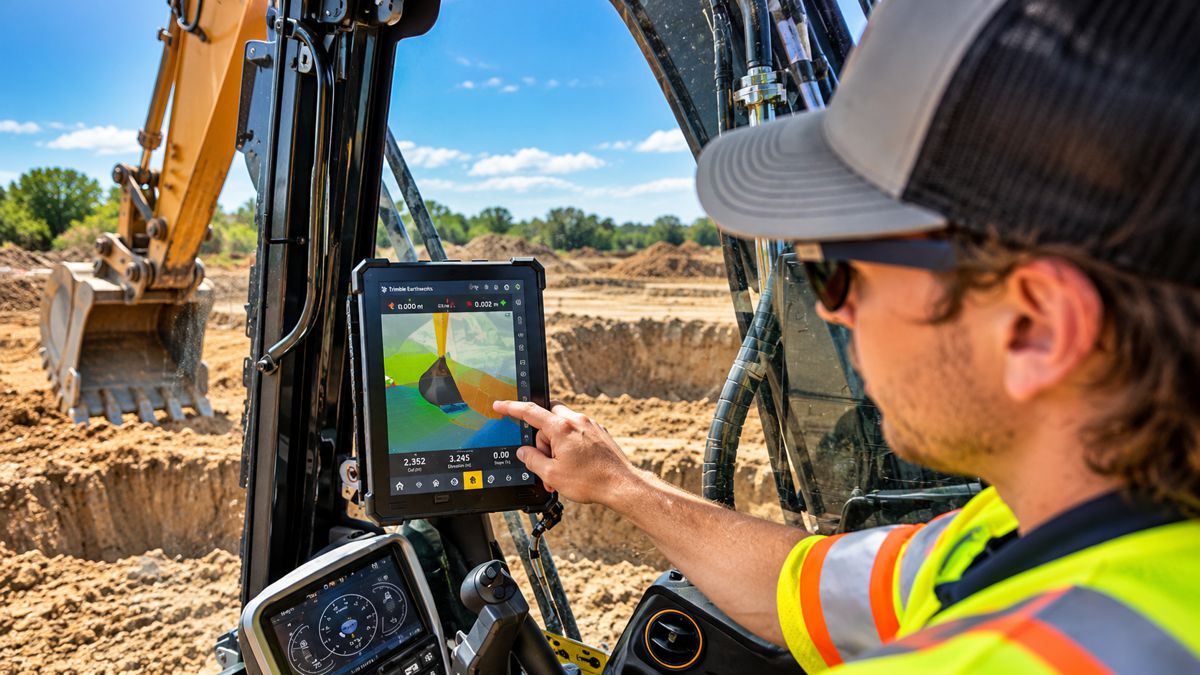
Tower assets are unglamorous and extremely long-lived, which changes what good software has to do. A mast built this year may stand for decades, accumulating tenants, equipment upgrades, structural modifications and maintenance interventions across its life before it is eventually decommissioned. Capturing that history accurately depends on the field, where crews now use mobile tools to log updates and upload site documentation in real time rather than filing paperwork days later.
That shift improves execution quality and reporting accuracy at the point where most infrastructure data is either created cleanly or lost, and it feeds a maintenance regime that mixes preventative and unplanned work to protect uptime across the estate.
The lifecycle framing also carries a sustainability dimension that is increasingly relevant to infrastructure investors. Because tower portfolios are dominated by steel and concrete, the environmental question is less about day-to-day emissions and more about material stewardship: extending asset life, managing upgrades efficiently and handling decommissioning responsibly at the end. A platform that tracks assets from deployment through maintenance to retirement gives an operator the records it needs to make those decisions on evidence rather than estimate.
For a company that markets itself on responsible, future-oriented operation, and whose six markets sit along the same Central and Eastern European corridor that carries much of the region’s road, rail and industrial investment, the ability to prove the full lifecycle of an asset is becoming a competitive credential in its own right.
The Vendor Layer Is Consolidating Too
While the tower operators consolidate, the software vendors serving them are quietly concentrating value of their own. Sitetracker has built a client base that reads like a roll-call of digital infrastructure, spanning mobile operators, tower companies including Vantage Towers and EDOTCO, utilities, renewables developers and EV charging networks, and it now supports more than 400 customers worldwide.
Its investor register is telling, with Deutsche Telekom and NTT Docomo among the backers, which signals that the operators themselves see strategic value in the tooling that runs their asset programmes. The company has also expanded by acquisition, absorbing FTC Solar’s ATLAS software platform in late 2024 to deepen its position in renewables project management, a reminder that the same lifecycle discipline sells across every category of distributed, repeatable infrastructure.
That breadth is significant for buyers weighing where to place a long-term operational bet. Asset lifecycle management sits in a competitive field that includes construction platforms such as Procore alongside a wider set of field-service and project tools, and the differentiator is increasingly the ability to unify finance, operations and field work rather than to excel at any single function.
For an operator running critical infrastructure across borders, switching costs are high and the platform effectively becomes embedded in how the business runs, which is why the vendor relationships tend to be measured in years and why incumbency compounds. The lesson for infrastructure owners in adjacent sectors, from utilities to transport, is that the software category serving distributed assets is maturing into something closer to essential plant than optional overhead.
What Industry Leaders Should Take From a One-Year Result
Stripped of the announcement framing, the EuroTeleSites result is a proof point for a broader thesis that applies well beyond telecoms towers. In any asset class built on high-volume, repeatable, geographically dispersed projects, standardisation is the precondition for profitable scale, and the operators that impose it early buy themselves optionality later.
A company that can present consistent data across six jurisdictions is better placed to refinance, to attract co-location, to satisfy a rating agency and, should it ever come to it, to be acquired at a full multiple. The same principle governs road maintenance networks, renewable portfolios, EV charging estates and water infrastructure, all of which share the tower sector’s core challenge of managing thousands of similar assets through long lifecycles across varied local conditions.
The practical implication for construction and infrastructure leaders is to treat the operating system as a strategic decision rather than a procurement afterthought. Mosdorf’s summary that the results “give us real confidence as we continue to grow” is measured rather than triumphant, and that restraint is the point; the return on this kind of investment shows up not as a single dramatic gain but as compounding advantages in speed, credibility and cost of capital.
For an industry where the physical assets change slowly and the competitive pressure is intensifying, the businesses that win are increasingly the ones that master their own data. EuroTeleSites has spent a year demonstrating what that looks like in practice, and the wider market would do well to read it as a signal rather than a footnote.

Key Industry Questions
- Why does asset lifecycle management software matter to a tower company’s valuation? Tower businesses are valued on tenancy ratios, contract visibility and disciplined delivery rather than raw site numbers, and every one of those metrics depends on data quality. A platform that keeps lease terms, escalators, co-location records and maintenance histories consistent across markets lets an operator forecast reliably, deleverage on schedule and present clean numbers to investors and rating agencies. When portfolios refinance or change hands, diligence turns on exactly this information. Poor records depress the price a buyer will pay and raise the cost of borrowing, while standardised, evidenced data supports higher multiples. In a consolidating market where private infrastructure funds pay premiums for quality, the operating system that governs the asset base has become part of the asset base.
- What is driving tower infrastructure growth in Central and Eastern Europe? The region combines relatively early-stage digital infrastructure with strong data growth, giving operators substantial room to expand. Rising mobile data consumption, 5G rollout and coverage obligations are pushing operators to add sites and load more tenants onto existing structures. EuroTeleSites is directing roughly a quarter of 2026 revenue into capital expenditure, with a large programme in Austria supporting anchor tenant A1 in meeting 5G obligations in poorly served white-zone areas. EU integration, foreign investment and industrial expansion reinforce the demand backdrop, while long-term contracts with inflation escalators give operators visible, growing revenue. The result is a market where scale, quality and speed of delivery all matter simultaneously, and where operators need the systems to manage complex programmes across multiple jurisdictions at once.
- How is consolidation reshaping the European tower market? Mobile operators have spent a decade separating passive infrastructure from their networks, and independent neutral-host operators have gained share as a result. Cellnex, the largest independent, has been reshaping its portfolio, selling its Austrian operations to Tele2 Group and divesting other national positions to private infrastructure funds at multiples above its own trading level. Vantage Towers, carved out of Vodafone, is now co-controlled with GIP and KKR. Consolidation raises the value of shared, neutral-host sites because merging operators eliminate duplicate masts and migrate onto common infrastructure, lifting co-location. For independent operators, the premium increasingly attaches to demonstrable quality, which places a direct commercial value on clean, standardised operational data.
- What does EuroTeleSites’ 2026 capital programme involve? The company is committing around 25% of 2026 revenue to capital expenditure, funding new construction and upgrades across its six markets. The largest concentration is in Austria, where an above-normal build programme supports anchor tenant A1 in meeting 5G coverage obligations in white-zone areas that networks are otherwise slow to reach. Management has acknowledged that weighting the build toward the anchor tenant may temporarily limit tenancy growth, while creating co-location headroom that generates additional revenue later. Third-party revenue grew 32.5% year on year in the second quarter of 2026. Positive cash flow is being directed toward deleveraging, a process supported by an improved credit profile following a Fitch upgrade and a positive rating move from Moody’s.
- Who competes with Sitetracker, and why do these relationships last? Sitetracker operates in asset lifecycle management, a field that overlaps with construction platforms such as Procore and a wider set of field-service and project management tools. Its differentiation rests on unifying finance, operations and field work in a single environment rather than excelling at one function alone. For operators of critical infrastructure spread across borders, switching costs are high because the platform becomes embedded in how the business runs day to day, which is why vendor relationships are typically measured in years. Sitetracker now serves more than 400 customers, counts telecom operators including Deutsche Telekom and NTT Docomo among its investors, and expanded into renewables project management by acquiring FTC Solar’s ATLAS platform in late 2024.
- Why does field data capture matter so much for infrastructure operators? The field is where most infrastructure data is either created cleanly or lost. When crews record updates and upload documentation on site in real time, the resulting records are accurate and immediately usable; when they file paperwork days later, detail degrades and errors accumulate. Mobile capture improves execution quality and reporting accuracy at source, and it feeds a maintenance regime that balances preventative and unplanned work to protect asset uptime. For long-lived assets such as towers, which may stand for decades while accumulating tenants and modifications, an accurate lifecycle record is essential for maintenance planning, structural decisions and eventual decommissioning. Reliable field data also underpins financial reporting, because physical progress can flow through to forecasting without manual reconciliation.
- What does the deployment tell operators in other infrastructure sectors? The core lesson generalises well beyond telecoms. Any business managing high volumes of similar assets through long lifecycles across varied local conditions faces the tower sector’s central problem, and that describes road maintenance networks, renewable portfolios, EV charging estates and water infrastructure alike. Standardising the operating layer early is the precondition for profitable scale and buys optionality later, whether the goal is refinancing, attracting tenants or achieving a full valuation on sale. The software category serving distributed assets is maturing into essential operational plant rather than optional overhead. Infrastructure owners weighing a platform decision should treat it as strategic, because switching costs are high and the operational advantages compound over years rather than appearing as a single gain.
- How does operational software affect a company’s cost of capital? Cost of capital reflects how confidently lenders and investors can assess an operator’s future cash flows, and that confidence rests on the reliability of its numbers. A tower company that can evidence consistent tenancy ratios, well-documented leases, dependable escalator clauses and credible maintenance records across every market presents lower perceived risk. That supports better credit ratings, cheaper debt and stronger equity valuations. EuroTeleSites is directing cash flow toward deleveraging while benefiting from an improved rating profile, and a single system linking finance to field operations makes both the deleveraging plan and the reporting behind it more robust. The connection is indirect but real: the more trustworthy the operational data, the more cheaply the business can fund its growth.
Strategic Takeaways
- In a consolidating European tower market where private capital pays premium multiples for quality, the software that governs asset data has become a priced part of the asset base, not a back-office cost.
- Operators managing heavy multi-country build programmes should treat a unified operating system as a precondition for profitable scale, because standardisation across jurisdictions is what protects delivery speed, tenancy growth and reporting integrity at once.
- The tightest commercial link runs from clean operational data to cost of capital: reliable tenancy, lease and maintenance records support stronger ratings, cheaper debt and higher valuations.
- The asset lifecycle software category is concentrating value of its own, with high switching costs, telecom-operator investors and acquisition-led expansion pointing to durable incumbency for the leading platforms.
- The model generalises across distributed infrastructure, so owners of road, water, renewable and EV charging estates should read the tower sector’s data discipline as a preview of their own competitive terrain.