Dutch Cycleways Face a New Test as Electric Mobility Changes the Traffic Mix
The Netherlands has spent decades building one of the world’s most mature cycling systems. The next challenge may be adapting that infrastructure to vehicles that still look broadly like bicycles, but no longer necessarily move, accelerate, weigh or occupy road space like them.
E-bikes, cargo bikes, fatbikes, speed pedelecs and other light electric vehicles are becoming increasingly visible on Dutch cycleways. Research led by Breda University of Applied Sciences (BUas) suggests these vehicles could eventually displace some car journeys, particularly where conventional cycling is less practical. The same research is exposing a more immediate question: whether infrastructure designed around relatively homogeneous bicycle traffic remains suitable when users travel at different speeds and on machines with different dimensions and handling characteristics.
It is a substantial network on which to test that proposition. Statistics Netherlands recorded 153,784 km of roads and paths accessible to cyclists in 2025, while cycling accounted for 27% of journeys made by Dutch residents in 2023. The scale of the network makes the Netherlands an unusually useful test case for a problem likely to confront other cities as electric cycle traffic grows.
Briefing
- The Dutch cycling network extended to approximately 153,784 km in 2025.
- BUas’s LEVERAGE project is examining LEVs, car use, traffic safety, user experience and their integration into mobility policy.
- A survey of nearly 2,000 residents found that 81% of households still owned a car, while only 4% regularly used LEVs other than e-bikes.
- BUas safety research found that legal fatbikes and other LEVs attracted greater visual attention, but predictable behaviour and legal speeds did not produce corresponding measurable feelings of stress or danger.
- Dutch design guidance has already been revised as cycleways accommodate greater traffic volumes and a wider range of vehicles.
A Different Kind of Cycle Traffic
The LEVERAGE research programme runs from 2024 to 2027 and brings BUas together with HAN University of Applied Sciences, Eindhoven University of Technology and public and private partners. Researchers are examining whether LEVs can influence car ownership and use, how they fit into multimodal transport, their effect on traffic safety and user experience, and how authorities might accommodate them through policy and infrastructure.
The attraction is straightforward. Electrification can make cycling viable over longer distances, while cargo bikes can absorb journeys involving children, shopping or equipment. Other compact electric vehicles occupy considerably less road and parking space than conventional cars, creating another option between the bicycle, public transport and the private car.
The evidence for large-scale car substitution, however, remains mixed. Nearly 2,000 residents in Noord-Brabant and the Arnhem-Nijmegen region participated in LEVERAGE research published in April 2026. E-bikes were already present in 44% of households, but other LEVs remained comparatively unusual, with only 4% of respondents using them regularly. Cars were still present in 81% of households.
Among frequent LEV users, around half reported reduced car use, while 43% of e-microcar users were considering owning fewer cars. Those findings show potential without establishing that a wholesale transition is already under way. Authorities therefore have to accommodate a changing vehicle mix while its eventual effect on car dependency remains uncertain.
Width, Speed and Behaviour
Conventional bicycles have historically presented road designers with a relatively narrow range of vehicle dimensions and operating characteristics. Electric mobility stretches those assumptions.
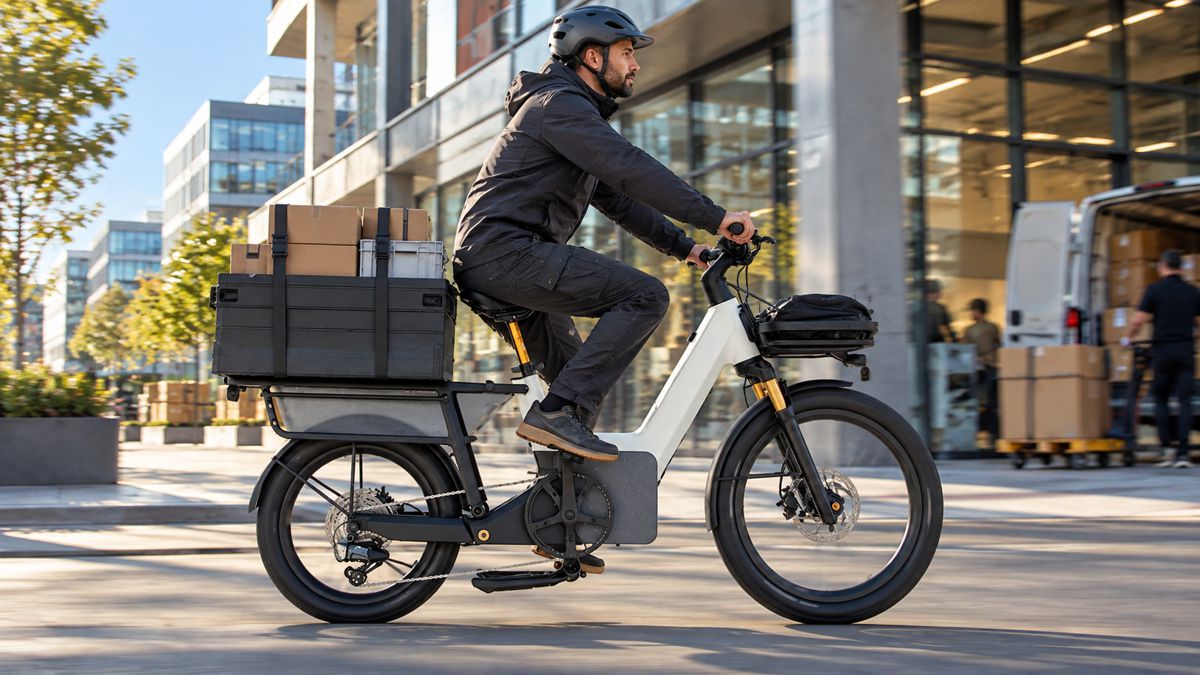
A cargo bike may be longer and wider. An e-bike allows riders to sustain speeds that might previously have required considerably greater fitness. Other vehicles introduce different acceleration characteristics, masses and dimensions. Put them together on a busy two-way cycleway and overtaking, meeting and manoeuvring space becomes increasingly important.
Dutch infrastructure guidance has already begun responding. CROW updated its recommendations for cycleway width after recognising that earlier guidance had been based partly on research from the 1980s and 1990s, before the current proliferation of cargo bikes, electric bicycles and speed pedelecs. Its updated guidance raised the minimum width considered necessary for two cyclists to ride safely and comfortably alongside one another to 2.30 metres.
The recommendations go considerably further for heavily used routes. Current CROW guidance gives an effective width of 2.90 metres for a one-way main cycling network and 4.00 metres for a two-way main route. For high-standard through-cycle routes, the corresponding figures rise to 3.60 metres and 4.80 metres. The guidance also calls for obstacle-free space of at least 0.50 metres alongside the path.
CROW notes that narrower cycleways carry greater safety risks, while additional width gives riders more room to avoid other users and the edge of the path. Speed differences and vehicle diversity also increase overtaking movements and potentially hazardous encounters.
Retrofitting that additional width into established urban streets is another matter. Space may have to be taken from footways, parking, landscaping, loading areas or motor-vehicle lanes. A shift towards smaller vehicles can therefore require substantial changes to streets originally divided into relatively simple categories of pedestrian, bicycle and motor traffic.
What Cyclists Actually Perceive
BUas has also approached the problem from the rider rather than the road.
Researchers used eye tracking, skin-conductance sensors and surveys to examine how cyclists respond to LEVs. Legal fatbikes and other light electric vehicles attracted more visual attention than conventional bicycles, but that additional attention did not automatically produce measurable stress or a feeling of danger when their users rode predictably and within legal speeds.
Paul van de Coevering, professor of Urban Mobility Planning at BUas, summarised the finding: “It is not the vehicle itself that creates danger, it is how it’s used.”
Participants who already held negative views of LEVs did not report unsafe experiences when encountering them being ridden calmly. Separated cycleways also consistently produced stronger feelings of safety.
Vehicle classification alone therefore provides only part of the safety response. A legal electric bicycle ridden predictably may present relatively little difficulty, while excessive speed or erratic overtaking can create conflict regardless of the technology involved. BUas’s work points towards age requirements, speed controls and predictable riding behaviour alongside infrastructure improvements rather than relying solely on restrictions on particular vehicle categories.
Adapting the Cycling Network
CROW already recognises that growing bicycle traffic and a greater diversity of electric vehicles place higher demands on cycle infrastructure. Widening is one response, but not the only one. Authorities can also consider alternative routes, redistribution of particular users and changes to the surrounding road environment where physical expansion is difficult.
For decades, much of cycleway engineering concentrated on separating vulnerable cyclists from faster, heavier motor vehicles. Electrification is now introducing meaningful differences in speed, mass and dimensions within the cycling network itself.
That problem extends beyond the Netherlands. Cities experiencing rapid growth in e-bikes, cargo bikes and other compact electric vehicles will face similar questions over width, overtaking space, junction geometry, parking and interaction with pedestrians. The Dutch network is encountering them early because cycling already carries a substantial share of everyday transport.
Cycleways built around yesterday’s bicycle population are already carrying a broader mixture of machines. Some corridors can be widened; elsewhere authorities will have to manage speeds, routes, junctions and vehicle interactions within constrained urban space.
The bicycle path is consequently becoming a piece of multimodal transport infrastructure in its own right. How the Netherlands adapts could provide useful evidence for cities elsewhere before their own electric cycle traffic reaches comparable density.
Key Industry Questions
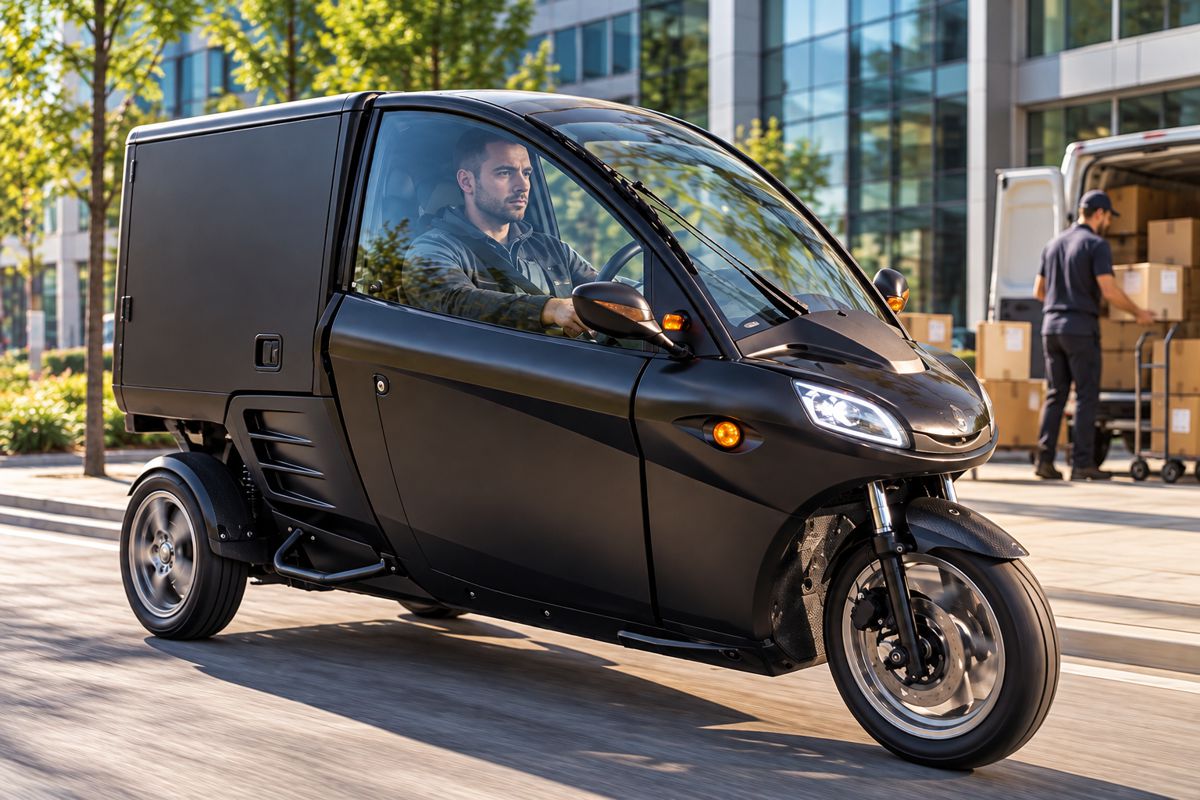
- What are light electric vehicles? LEVs cover a broad family of compact electrically assisted vehicles including e-bikes, cargo bikes, e-scooters and some microcars. Their legal classification and permitted operating space vary by vehicle and jurisdiction.
- Are LEVs already replacing cars in the Netherlands? Not at scale. LEVERAGE research found some reduction in car use among frequent LEV users, but 81% of surveyed households still owned a car and regular use of non-e-bike LEVs remained low.
- Why do LEVs create an infrastructure challenge? Different vehicle widths, masses and operating speeds increase the diversity of traffic using space historically designed primarily around conventional bicycles.
- Do fatbikes inherently make cyclists feel unsafe? The BUas research did not find that vehicle type alone determined perceived danger. Predictable behaviour and adherence to legal speeds were important factors in how cyclists responded.
- How wide should Dutch cycleways be? CROW recommendations vary according to route type, traffic direction and use. Current guidance ranges from a 2.30-metre minimum under specified conditions to substantially wider provision on main and high-standard through routes.
- Can existing cycleways simply be widened? Not always. In established urban areas, widening can compete with footways, parking, road lanes and other uses of limited public space.
- Could infrastructure changes encourage greater LEV adoption? Potentially. Safety, convenience and suitable infrastructure form part of the environment in which people decide whether a vehicle is practical, although the BUas research does not establish that infrastructure improvements alone will cause large-scale car substitution.
- Is the Dutch experience relevant outside the Netherlands? Yes. Cities experiencing rapid growth in e-bikes, cargo bikes and other compact electric vehicles face many of the same questions over speed differences, available space and interactions between users.
Strategic Takeaways
- Cycleway design increasingly has to account for differences in vehicle width, speed and operating characteristics rather than bicycle volumes alone.
- LEVs show potential to replace some car journeys, but current Dutch evidence does not support assuming rapid or wholesale car substitution.
- Infrastructure width becomes more consequential as traffic becomes more diverse and overtaking interactions increase.
- Behaviour and speed enforcement may be as important as vehicle classification in managing safety.
- Dutch design guidance provides an early indication of how mature cycle networks may need to adapt.