Komatsu to Acquire Roadtec and Carlson in $75m Road Construction Deal
Komatsu has agreed to acquire Astec Industries’ Roadtec road construction equipment business, including the Roadtec and Carlson brands, in a transaction valued at $75 million. The proposed acquisition will give the Japanese machinery manufacturer an established range of asphalt pavers, milling machines, material transfer vehicles and road stabilisation equipment, expanding its position in specialist road construction machinery.
The agreement brings together businesses with different strengths. Komatsu has extensive manufacturing, engineering and distribution capabilities across construction and mining equipment, while Roadtec and Carlson have developed specialist machinery and longstanding relationships with North American paving contractors. For Astec, the sale represents a decision to withdraw from an operation generating losses and concentrate investment on its remaining businesses.
The transaction is expected to close in the first quarter of 2027, with Komatsu identifying 1 January as its target date, subject to customary closing conditions.
Briefing
- Komatsu America has agreed to acquire Astec’s Roadtec business, including the Roadtec and Carlson brands, for an enterprise value of $75 million.
- The acquisition covers asphalt pavers, screeds, cold milling machines, material transfer vehicles and stabilisation equipment.
- Astec reports approximately $145 million in annualised revenue from the business being sold.
- Astec expects the divestment to improve its adjusted EBITDA margin by approximately two percentage points.
- Completion is anticipated in the first quarter of 2027, subject to customary closing conditions.
An Established Position in Asphalt Equipment
Komatsu’s acquisition adds several categories of specialist equipment used throughout asphalt paving and pavement rehabilitation. Rather than developing an entirely new machinery range, the company will acquire established products, engineering knowledge and an existing customer base.
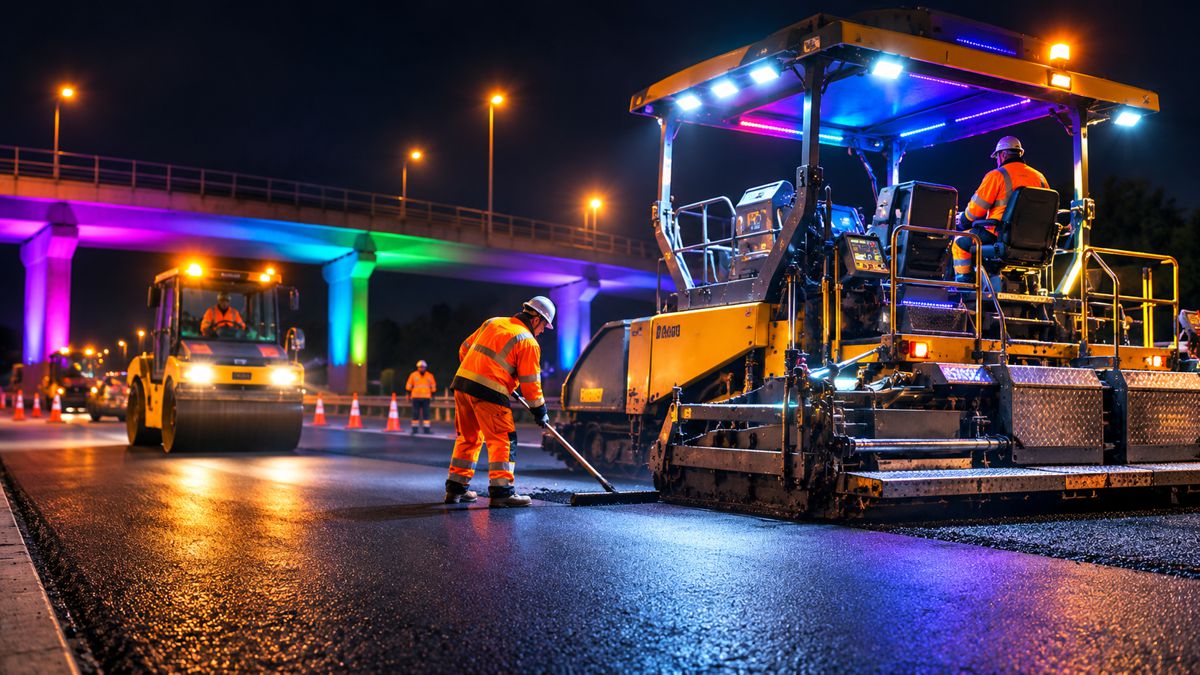
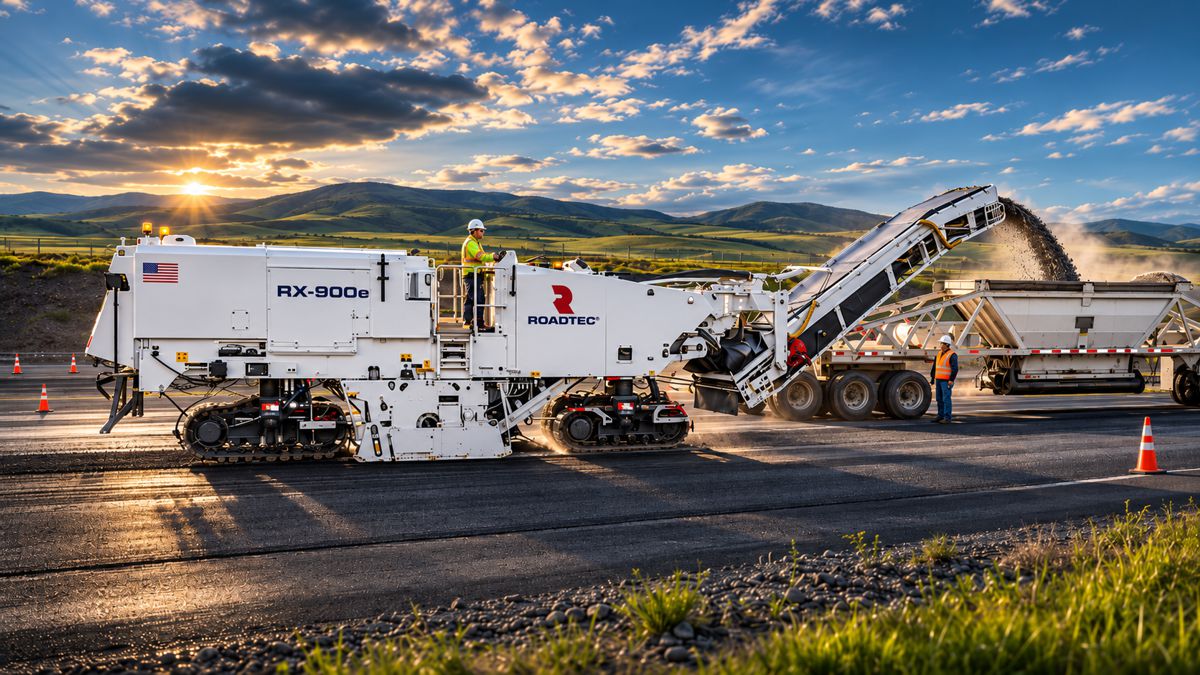
Roadtec has built its business around machines used in pavement construction, rehabilitation and maintenance. Its portfolio includes asphalt pavers, cold planers, material transfer vehicles and stabiliser-reclaimers, covering operations from removing worn pavement to placing new asphalt and rehabilitating existing road foundations.
The company’s Shuttle Buggy material transfer vehicles are particularly recognisable within the paving industry. These machines receive asphalt from delivery trucks before transferring it to the paver, providing intermediate storage and allowing material to be remixed before placement. Maintaining a consistent supply helps reduce interruptions to paving operations, while remixing can improve material uniformity and reduce temperature and aggregate segregation.
Material transfer equipment is already an established requirement in some American highway paving specifications. The Illinois Department of Transportation, for example, includes Roadtec Shuttle Buggy models on its qualified product list for hot-mix asphalt material transfer devices.
Carlson contributes specialist paving screeds and associated equipment. Screed performance plays a central role in asphalt placement, determining the initial profile and compaction of the material before rollers complete the process. Integrating that expertise alongside Roadtec’s pavers and supporting machinery gives Komatsu access to an established combination of paving technologies.
Komatsu already has considerable experience in road preparation and earthmoving through its graders, excavators, dozers and other construction machines. The acquisition extends its equipment portfolio further into pavement rehabilitation and asphalt placement, including machinery used repeatedly throughout the maintenance cycle of existing road networks.
Why Astec Is Selling
Astec has agreed to sell the business for an enterprise value of $75 million, subject to customary adjustments. The company expects approximately $65 million in combined cash proceeds and tax benefits, while removing an operation generating around $145 million in annualised revenue.
Despite that turnover, Roadtec has been generating operating losses. Astec expects the divestment to improve its adjusted EBITDA margin by approximately 200 basis points, equivalent to two percentage points, and to benefit annualised earnings per share.
The purchase price represents approximately 0.52 times the business’s reported annualised revenue. That comparison provides a measure of the transaction’s scale, although Roadtec’s operating losses mean revenue alone offers little indication of its underlying value or the investment Komatsu may need to improve profitability.
Astec’s third-quarter financial results, published on 5 November 2026, provide further context. The company reported revenue of $352.4 million, an increase of 0.7% year on year, alongside adjusted EBITDA of $18.9 million and a net loss attributable to controlling interest of $12.2 million. Although its order backlog increased by 49.2% to $670.5 million, higher material costs, delayed customer orders and pressure on manufacturing margins affected performance.
Management subsequently reduced its full-year adjusted EBITDA guidance from $160 million to $175 million to a revised range of $140 million to $150 million. Improving profitability therefore remains a central priority, and the Roadtec disposal allows Astec to concentrate resources on its asphalt production, aggregates processing, concrete equipment and related operations.
The sale also changes Astec’s longstanding Rock to Road proposition, under which the company has promoted machinery covering aggregate processing, asphalt production and pavement construction. Following completion, its specialist road paving and rehabilitation equipment will sit under separate ownership from the asphalt plants and materials processing machinery that remain within Astec.
Komatsu’s North American Ambitions
North America remains a major market for Komatsu, and the acquisition strengthens its position in a segment where established brands, technical support and service networks carry considerable weight.
Speaking about the proposed transaction, Rod Bull, CEO of Komatsu North America, said: “The proposed acquisition would strengthen our ability to serve this essential market by bringing together Komatsu’s capabilities with two established brands known for strong products, experienced people and longstanding customer relationships.”
Road construction equipment is typically purchased with expectations of long service lives, readily available replacement parts and specialist technical support. Contractors operating paving fleets require rapid assistance when breakdowns threaten production schedules, particularly when asphalt delivery arrangements and several interconnected machines are involved.
Roadtec and Carlson already have experience serving those requirements. Their customer relationships and application knowledge represent established capabilities that Komatsu can build upon, particularly during the early stages of integration.
The acquisition will also place Komatsu more directly alongside established road machinery manufacturers, including the Wirtgen Group, Caterpillar and BOMAG, across different sections of the paving and pavement rehabilitation market.
These manufacturers have developed machinery portfolios and specialist support networks over many years. Preserving the experience associated with Roadtec and Carlson will be important as Komatsu develops its position in a market where contractors often maintain established preferences for equipment, controls and servicing arrangements.
In its October 2026 financial presentation, Komatsu reported that North American demand for seven major categories of construction and mining equipment increased by 14% year on year during its second fiscal quarter. It projected growth of 5% to 10% for the full financial year, supported partly by rental, mining and energy-related demand.
Those figures do not represent a forecast for specialist asphalt machinery, which is influenced by different purchasing cycles. Highway construction programmes, resurfacing contracts and the condition of existing road networks all contribute to demand for paving and rehabilitation equipment. Government funding and contractor fleet replacement decisions can also produce substantial variations between markets and individual years.
The acquisition gives Komatsu access to that specialist market without waiting for a complete internal product development programme. It also brings responsibility for improving the financial performance of a business that its previous owner has elected to sell.
Manufacturing, Engineering and Product Development
Asphalt pavers must coordinate material feed, conveyor operation, augers, screed heating and paving speed while maintaining a consistent pavement profile. Cold milling machines combine demanding cutting operations with material removal, dust management and precise depth control. Stabiliser-reclaimers must operate reliably under changing ground conditions while processing existing pavement and underlying materials.
These machines depend on specialist engineering knowledge developed through extensive experience in road construction applications. Their operating requirements differ from those of general earthmoving equipment, particularly where consistent material handling, surface tolerances and continuous production determine the quality of the finished pavement.
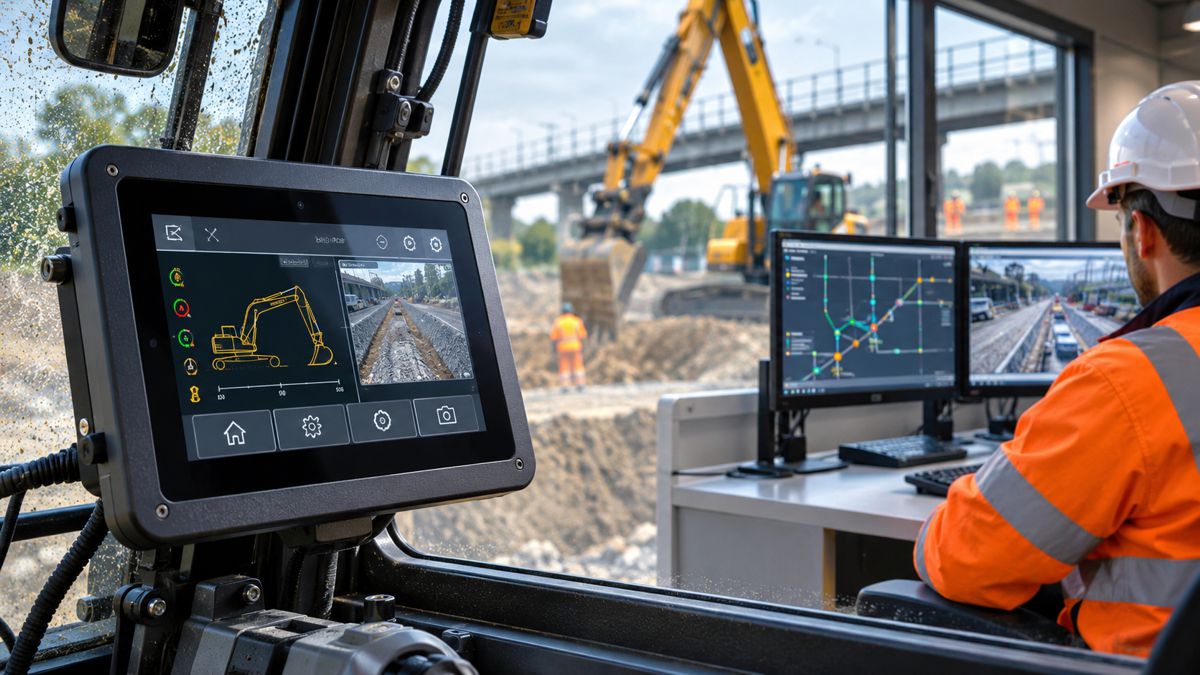
Komatsu already possesses experience in heavy-duty powertrains, hydraulics, electronic control systems and machine monitoring. These capabilities could support further development of Roadtec and Carlson products, particularly where component standardisation, manufacturing efficiency and digital machine systems offer practical advantages.
However, transferring technology between equipment categories requires careful engineering. Paving contractors value established machine behaviour, reliable controls and compatibility with existing working practices. Changes to machinery design need to preserve those characteristics while delivering improvements in performance, reliability or operating costs.
Takuya Imayoshi, President and CEO of Komatsu Ltd., described the acquisition as an investment the company had considered for some time: “Komatsu has long recognized the strategic importance of road construction equipment and has considered opportunities to expand in this market for many years.”
He also identified North America as a key market and outlined the potential to combine Roadtec’s and Carlson’s specialist knowledge with Komatsu’s manufacturing and engineering capabilities. The companies have not yet announced detailed commitments concerning factory investment, product development programmes or the future organisation of their operations.
Distribution and Customer Support
The handling of existing customers and distribution arrangements will be one of the practical questions following completion.
Specialist paving equipment requires product-specific servicing, experienced technicians and a reliable supply of components to support machines working long hours during relatively short construction seasons. A paver or milling machine taken out of service during an active project can disrupt several other machines, material deliveries and site personnel.
Komatsu operates an extensive dealer and customer support organisation, but that does not automatically mean Roadtec and Carlson equipment will move into every existing Komatsu dealership. Distribution rights, specialist service capabilities and existing commercial arrangements will need to be considered as the businesses are integrated.
Road construction machinery also presents particular aftermarket requirements. Components exposed to abrasive aggregate, high temperatures and continuous material movement must be inspected and replaced regularly, while equipment such as milling drums, cutting tools, conveyors and screed systems requires application-specific maintenance knowledge.
For contractors already operating Roadtec and Carlson machines, continuity of parts availability, warranty support and technical expertise will be immediate priorities. Existing machinery fleets will remain in service for years, and any transition in ownership or distribution will need to accommodate those customers alongside future equipment sales.
The Road Ahead for Komatsu and Roadtec
Komatsu intends to build on the established strengths of the Roadtec and Carlson businesses while applying its engineering, manufacturing and global capabilities to their development. The acquisition offers access to specialist machinery and established customer relationships, but the financial figures also reveal the work involved.
The $75 million enterprise value is relatively modest compared with Komatsu’s global operations, while the business’s annualised revenue of approximately $145 million demonstrates an established commercial footprint. Its operating losses, however, leave Komatsu with the challenge of improving manufacturing performance and profitability without undermining the products and support arrangements that customers already rely upon.
Astec will emerge from the transaction with a smaller revenue base and expects stronger operating margins, allowing management to direct resources towards its remaining equipment businesses. Komatsu will take ownership of specialist paving and rehabilitation machinery with potential applications beyond the North American market, although no detailed international expansion programme has been announced.
Completion is expected in early 2027. For Roadtec and Carlson customers, the first practical indications of Komatsu’s plans will come through decisions about product development, manufacturing, parts support and distribution. Those changes will determine how successfully the two American machinery brands fit into the wider Komatsu organisation.
Key Industry Questions
- What is Komatsu acquiring from Astec? Komatsu America has agreed to acquire Astec’s Roadtec road construction equipment business, including the Roadtec and Carlson brands, specialist machinery and associated operations.
- How much is Komatsu paying for Roadtec and Carlson? The transaction has an enterprise value of $75 million, subject to customary closing adjustments. Astec expects approximately $65 million in combined cash proceeds and tax benefits.
- Which machinery is included in the acquisition? The portfolio includes asphalt pavers, paving screeds, cold milling machines, material transfer vehicles and stabiliser-reclaimers used in road construction, resurfacing and rehabilitation.
- When will the acquisition be completed? Completion is expected in the first quarter of 2027, subject to customary conditions. Komatsu has identified 1 January 2027 as its target closing date.
- Why is Astec selling Roadtec? The business has been generating operating losses. Astec expects the sale to improve adjusted EBITDA margins and allow greater investment in its remaining asphalt, aggregates and concrete equipment businesses.
- Will Roadtec and Carlson continue as separate brands? Komatsu has indicated that it intends to build upon the established strengths of both brands. Detailed decisions regarding future branding, product development and operational integration have not yet been announced.
- Will existing Roadtec and Carlson dealers become Komatsu dealers? No comprehensive dealer transition has been announced. Existing distribution agreements, technical support capabilities and customer service arrangements will need to be addressed during integration.
- How will the acquisition affect the road machinery market? Komatsu will gain an established product portfolio in machinery categories served by manufacturers including the Wirtgen Group, Caterpillar and BOMAG. Its competitive position will depend on subsequent investment, product performance and distribution.
Strategic Takeaways
- Specialist capability without a lengthy development programme: Komatsu acquires established machinery and engineering expertise across paving, milling and pavement rehabilitation rather than building an equivalent product range internally.
- Profitability presents the central commercial challenge: The $75 million enterprise value must be considered alongside approximately $145 million in annualised revenue and a business that has been generating operating losses.
- Distribution will influence integration: Existing customers depend on specialist technicians, reliable parts availability and continuity of service arrangements throughout the operating lives of their machines.
- Astec is prioritising margin improvement: The disposal reduces revenue but is expected to strengthen profitability and free resources for the company’s remaining equipment operations.
- Roadtec and Carlson retain valuable application knowledge: Established products, customer relationships and experience in pavement construction provide Komatsu with capabilities that will need to be preserved as manufacturing and product development evolve.