Panasonic TOUGHBOOK 34 and G3 Bring Edge Computing Into the Field
Panasonic Connect has expanded its TOUGHBOOK range with two fully rugged 2-in-1 computers designed around a practical problem facing field organisations: the same computing platform increasingly has to work inside vehicles, beside infrastructure assets, across warehouses and workshops, and at locations where dependable connectivity cannot be assumed.
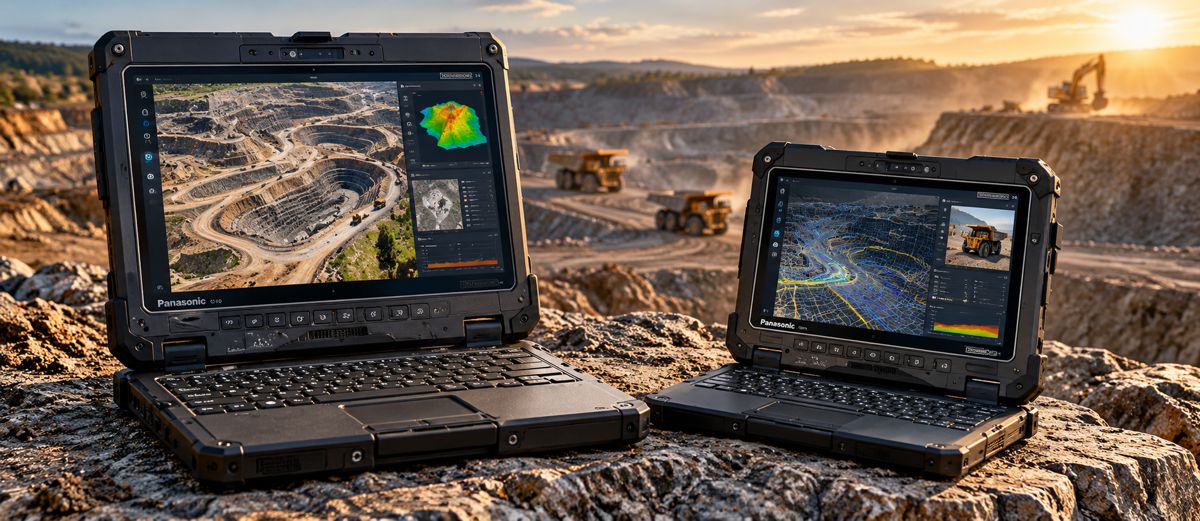
The new TOUGHBOOK 34 and TOUGHBOOK G3 approach that problem from different directions. The 34 uses a larger 12.4-inch display and offers four modular expansion areas, including two user-replaceable xPAK areas, while the G3 packages similar field-computing capabilities into a smaller 10.1-inch format intended for highly mobile and space-constrained work.
Behind the hardware is a broader change in what rugged computers are being asked to do. Field devices are moving beyond terminals used to access centrally hosted applications. Increasingly, they are expected to process data locally, support diagnostics, operate specialised equipment and continue functioning when communications with central systems become unreliable.
Panasonic’s relationship with Red Hat is relevant here. In May 2026, the companies announced a global collaboration integrating Red Hat Device Edge with TOUGHBOOK hardware for local processing, industrial automation and other edge workloads. Red Hat Device Edge is intended for resource-constrained equipment operating at the far edge, where power, connectivity and physical access to technical support may be limited. The TOUGHBOOK 34 is now certified for Red Hat Device Edge, while certification of the TOUGHBOOK G3 is in progress.
Briefing
- Panasonic Connect has launched the fully rugged 12.4-inch TOUGHBOOK 34 and compact 10.1-inch TOUGHBOOK G3.
- Both devices are aimed at field operations including utilities, public safety, government, warehousing, automotive diagnostics and mobile service.
- The TOUGHBOOK 34 provides four modular expansion areas, including two user-replaceable xPAK areas, while the G3 provides two expansion areas with configurable I/O.
- Intel Core Ultra processors provide the computing platform alongside 5G, private cellular connectivity and field-oriented battery configurations.
- The TOUGHBOOK 34 is certified for Red Hat Device Edge, extending its potential role from a rugged mobile computer to a locally capable edge-computing platform.
Two Form Factors for Field Operations
Rugged computing has always involved compromises between screen size, weight, battery endurance, physical protection and connectivity. A computer mounted in a utility vehicle has very different ergonomic requirements from one carried through an industrial plant, even when both organisations need to run the same applications.
Panasonic has therefore given the two machines distinct roles. The TOUGHBOOK 34’s 12.4-inch FHD+ display reaches a specified brightness of 1,000 nits, providing additional working area for maps, schematics, inspection records and diagnostic information. Panasonic says the larger screen reduces scrolling when displaying information-heavy applications, particularly in vehicles and command environments.
The G3 takes the opposite approach. Its 10.1-inch format is intended for workers who spend more time carrying the device or operating where space is restricted. Panasonic identifies public safety vehicles, federal field operations, warehouses and logistics as examples, although the same distinction applies readily to infrastructure inspection and mobile maintenance.
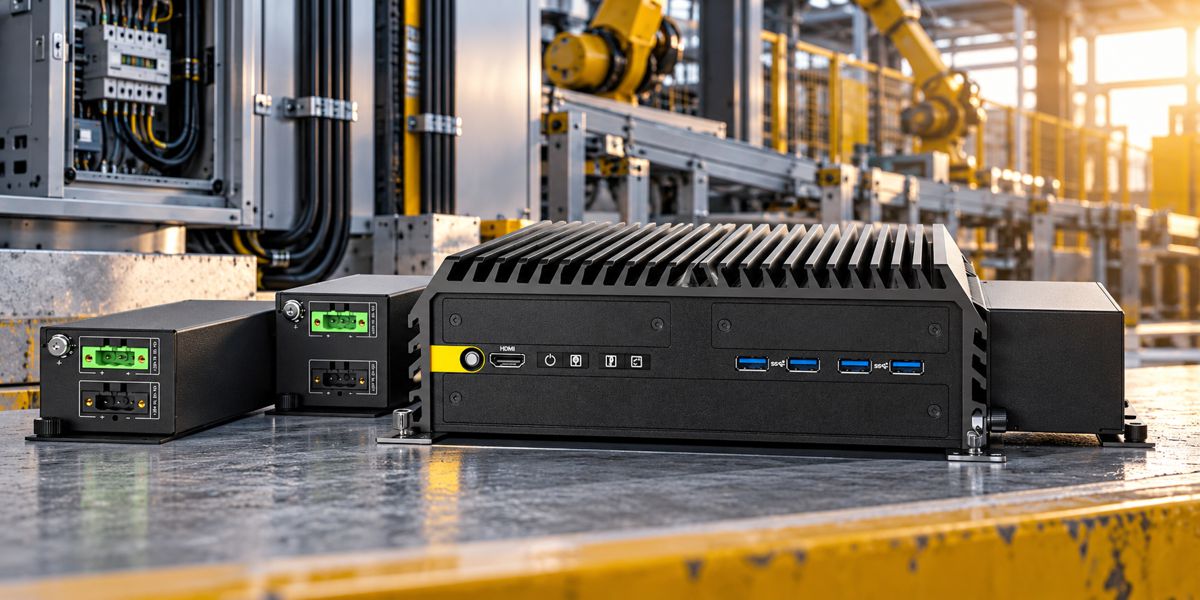
Modularity is important because industrial organisations routinely need computers to interface with equipment that does not follow consumer technology replacement cycles. Diagnostic ports, barcode readers, RFID equipment, specialist communications hardware and older peripherals can remain operational for years after mainstream laptops have abandoned the interfaces they use.
Configurable I/O can therefore allow an organisation to modernise its computing fleet without simultaneously replacing every peripheral, docking station or specialist device surrounding it. Panasonic also says the new machines retain backward compatibility with many previous-generation accessories, potentially reducing another source of cost during fleet replacement.
Computing at the Asset
Panasonic is positioning the new generation for edge computing and AI-capable workloads using Intel Core Ultra processors. Rather than simply providing more computing performance, that capacity allows more work to take place where field data is generated.
A technician inspecting a machine, electrical network, vehicle or infrastructure asset does not necessarily need every piece of raw information transmitted to a remote data centre before software can act on it. Some analysis can take place locally, reducing dependence on the quality and latency of the communications link.
Panasonic describes applications including advanced diagnostics and remote repair support for utilities and field-service organisations. The devices can also operate as connected diagnostic hubs in automotive maintenance, using configurable ports to communicate with legacy and contemporary diagnostic equipment.
This is where the Red Hat certification adds substance to the hardware story. Device Edge combines Red Hat Enterprise Linux with technologies designed to run containerised workloads on relatively constrained edge hardware, including equipment operating with limited or intermittent connectivity.
Construction compounds, road maintenance vehicles, utilities, quarries, rail corridors and remote assets are obvious environments for that model. They cannot always be treated as extensions of a climate-controlled corporate office with guaranteed high-speed connectivity.
Field Connectivity
Panasonic has equipped the new generation for environments where communications may move between public, private and local networks. The TOUGHBOOK 34 specification includes 5G Sub-6 support with eSIM, Wi-Fi 7 and Bluetooth 5.4, while Panasonic also identifies support for CBRS and Band 106 private cellular networks across relevant field applications.
Private wireless networks can be particularly useful on large industrial sites and infrastructure operations where organisations need communications across defined operational areas rather than relying exclusively on public cellular coverage.
Local processing provides another layer of resilience when those connections become constrained or temporarily disappear. That becomes more useful as field applications consume larger quantities of information from inspection imagery, mapping, equipment telemetry, asset records and AI-assisted diagnostics.
Ruggedness Still Comes First
None of that computing capability is particularly useful if the hardware cannot survive the working environment.
Panasonic’s formal specification table gives the TOUGHBOOK 34 an IP66 rating and lists MIL-STD-810H/461G testing. The machine is specified for operation between 14°F and 122°F, equivalent to approximately -10°C to 50°C, with storage between -4°F and 140°F. Panasonic also lists a five-foot drop rating when used with the keyboard and six feet in tablet mode.
Those specifications reflect the basic economics behind rugged computing. The comparison is rarely between the purchase price of a rugged machine and an ordinary laptop alone. Vehicle installation, downtime, support requirements, hardware failures and replacement cycles all enter the calculation when workers depend on the computer to do their jobs.
Battery design follows the same operational logic. The TOUGHBOOK 34 is rated at nine hours with a 40Wh battery and 18 hours when equipped with an optional second battery. The G3 offers 35Wh, 70Wh and 99Wh battery configurations, with Panasonic quoting up to 23 hours from the largest option. Hot-swappable configurations allow batteries to be changed without ending a working session, useful for equipment expected to remain operational across extended shifts.
Hardware Lifecycle
The launch also highlights a less visible challenge facing industrial IT departments. Software platforms, operating systems and AI workloads are changing rapidly, while rugged hardware is commonly purchased with the expectation that it will remain deployed for considerably longer than a consumer device. The surrounding infrastructure can last longer still.
Panasonic’s approach combines replaceable components, configurable expansion, docking compatibility, Windows support and an emerging Red Hat ecosystem. The TOUGHBOOK 34 can be supplied with Windows 11 Pro or Windows IoT, while its Red Hat Device Edge certification provides another route for organisations building Linux-based edge systems.
This matters particularly where the computer forms part of a larger installation. A device controlling specialist equipment, hosting an edge application or installed into a vehicle cannot necessarily be replaced simply because a new laptop generation has appeared. Docks, antennas, power supplies, peripherals, diagnostic equipment and specialist software can turn a seemingly straightforward hardware refresh into a much larger project.
The physical computer, operating system, applications, communications infrastructure and peripherals increasingly have to be considered as one operational system. In that environment, backward compatibility and modular expansion can be as relevant to lifecycle costs as processor performance.
Field Computing as Operational Infrastructure
Much of the everyday work performed by the TOUGHBOOK 34 and G3 will remain familiar: work orders, mapping, asset management, inspection records, inventory, diagnostics and communications. What is changing is how much computing can take place around those applications before information has to leave the field.
A computer carried by an engineer or installed inside a vehicle can communicate with central systems when connectivity permits, interact directly with local equipment and continue processing useful information when the network is constrained. As machinery, vehicles and infrastructure assets generate more data, rugged computers increasingly become part of the operational architecture surrounding them.
Panasonic’s TOUGHBOOK 34 and G3 have been designed for that environment, combining physical durability with modular interfaces, contemporary processors and support for increasingly capable edge workloads. The rugged computer is still expected to survive the jobsite. It is now being asked to do considerably more while it is there.
Key Industry Questions
- What are the main differences between the TOUGHBOOK 34 and TOUGHBOOK G3? The TOUGHBOOK 34 uses a larger 12.4-inch display and provides four modular expansion areas, while the G3 uses a more compact 10.1-inch format with two configurable expansion areas. The G3 is particularly suited to highly mobile and space-constrained operations.
- Where could these devices be used in construction and infrastructure? Potential applications include utility maintenance, field inspections, mobile workshops, fleet diagnostics, asset management, vehicle-mounted computing, warehousing, emergency response and remote infrastructure operations.
- What does edge computing add to a rugged PC? It allows applications and data processing to operate closer to the equipment or location generating the data, reducing the need to send everything to a remote cloud or data centre before it can be processed.
- Does the TOUGHBOOK 34 support Linux? Panasonic lists Windows 11 Pro and Windows IoT and says the TOUGHBOOK 34 is certified for Red Hat Device Edge. Certification of the TOUGHBOOK G3 is in progress.
- Why is modular I/O useful for industrial users? Industrial equipment can remain operational for many years and may depend on specialist or legacy interfaces. Configurable ports allow newer computers to work with existing equipment without necessarily replacing the surrounding hardware.
- Can the batteries be changed during operation? Panasonic offers hot-swappable battery configurations intended to support extended operation without shutting down the computer.
- What connectivity is available for field deployments? Depending on configuration and application, the range includes 5G, Wi-Fi, Bluetooth and support for private cellular networking.
- How rugged is the TOUGHBOOK 34? Panasonic’s specification table lists IP66 protection, MIL-STD-810H/461G testing and drop resistance of five feet with the keyboard or six feet when operating in tablet mode.
Strategic Takeaways
- Rugged computers are increasingly taking on local processing as well as traditional mobile computing workloads.
- Different form factors allow organisations to balance screen space, portability and vehicle installation requirements across field roles.
- Modular interfaces can extend the useful life of existing industrial peripherals, docks and diagnostic equipment.
- Local processing can reduce the dependence of data-intensive field applications on continuous network connectivity.
- Hardware lifecycle, software support and peripheral compatibility become more closely linked as rugged computers take on operationally critical workloads.