Beyond the Loader: The Automation Layer Now Deciding Underground Mining
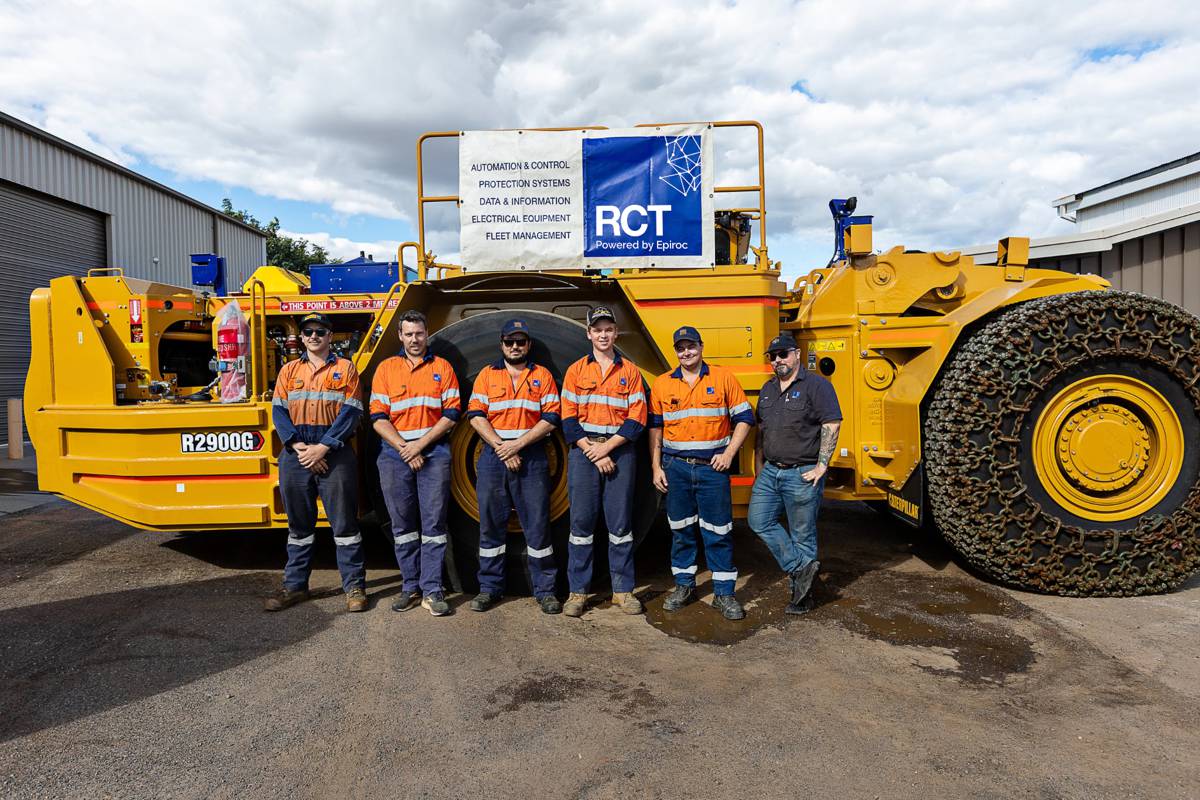
When RCT technicians commissioned the last Caterpillar R2900G ever sold, at a silver and lead operation in Queensland, the moment carried more weight than the retirement of a single machine. The loader in question, an NLK-specification unit, was the fourth of four new R2900G LHDs brought in to replace ageing iron on a site that has run RCT machine control for close to three decades.
What makes the milestone instructive is not the diesel loader itself, but the automation layer wrapped around it. That layer was supplied not by Caterpillar, but by RCT, an OEM-agnostic specialist now owned by one of Caterpillar’s direct competitors in underground mining, Epiroc.
That detail sits at the centre of a broader contest playing out beneath the surface of the world’s hard-rock mines. As the major equipment builders race to embed automation and electric drive into their newest machines, the question of who controls the intelligence on the loader, the OEM or an independent retrofitter, is becoming as commercially significant as the machine’s payload or fuel burn.
The final R2900G, kitted with RCT’s AutoNav and run from control rooms on surface and underground, is a compact illustration of where purchasing power and technical value are migrating in an industry that is decarbonising and automating at the same time.
Briefing
- The last Cat R2900G ever sold, an NLK-specification unit, was delivered to a Queensland silver and lead mine and fitted with RCT’s AutoNav multi-machine automation, with all four installations completed at RCT’s Mount Isa branch.
- Caterpillar has retired the diesel R2900G in favour of the diesel-electric R2900 XE, which carries a higher 18.5-tonne payload, roughly 20 per cent more productivity and lower emissions on the same proven platform.
- RCT, trading as RCT – Powered by Epiroc, was acquired by Epiroc in 2022, yet continues to sell automation on an OEM-agnostic basis, including onto Caterpillar loaders.
- The site has run RCT technology since the late 1990s, was among the first operations to adopt AutoNav, and upgraded to digital wireless communications around 18 months ago to improve reliability and visual clarity.
- Operators now control the loader fleet from AutoNav Centres on the surface and underground, removing crews from the cab and cutting exposure to underground hazards.
The End of a Diesel Workhorse
The R2900G earned its status the hard way, as a dependable mid-size loader that moved ore in hard-rock operations across the world for the best part of a generation. Danny Ballard, RCT’s Mount Isa Branch Manager, framed the final sale in plain terms. “All four installations were completed by RCT technicians at our Mount Isa branch, with the fourth loader, an NLK R2900G, being the last of its kind ever sold by Caterpillar,” he said, adding that “the R2900G model has been a prolific underground loader, and this final sale truly marks the end of an era.”
Caterpillar has already moved the market on. The diesel-electric R2900 XE, built on the same platform, is positioned as the direct successor, lifting payload to 18.5 tonnes against the R2900G’s 17.2 tonnes, improving breakout force by around a third and delivering roughly a fifth more productivity while trimming fuel burn through its switch reluctance electric drive. The shift from pure diesel to diesel-electric is not cosmetic.
It reflects the pressure operators face on ventilation cost, underground heat and greenhouse emissions, all of which bear directly on the economics of mining deeper and hotter ground. Retiring a diesel-dominant platform of this stature signals that automation readiness, a credible emissions pathway and data integration are no longer optional extras on an underground loader, but baseline expectations that now shape procurement decisions.
Why the Automation Layer Now Carries the Value
The most commercially revealing aspect of this deployment is who owns the automation. RCT, headquartered in Perth and selling into more than 70 countries, was acquired by Sweden’s Epiroc in 2022 in a deal that positioned Epiroc as a leading automation provider for underground loading and haulage as well as rock drilling. Crucially, Epiroc has kept RCT’s defining commercial trait intact.
The technology remains OEM-agnostic, able to automate a single machine or an entire mixed fleet regardless of the manufacturer, which is precisely why a fleet of Caterpillar loaders can run production under an automation system ultimately owned by a Caterpillar rival.
For mine operators, agnosticism is not an abstract virtue. Underground fleets are rarely single-brand, and the ability to run Cat, Epiroc and other machines on one common platform, controlled from the same surface and underground cabins, avoids the vendor lock-in that comes with factory-integrated systems.
Ballard pointed to exactly this when he described the offering as “OEM-agnostic, scalable, and adaptive,” and he cast the relationship as a long partnership rather than a one-off transaction, noting that “the site has been a loyal customer for many years, and we continue to work closely together as they invest further in automation.” The strategic consequence is that value in underground mining is steadily decoupling from the machine itself and attaching to the software and integration layer that sits on top of it, where switching costs, data and operator familiarity accumulate.
The Contest Between Retrofit and Factory-Fitted Autonomy
The equipment builders understand this, which is why each is working to keep the automation layer inside its own ecosystem. Caterpillar ships the R2900 XE ready for MineStar Command for underground, which scales from line-of-sight remote operation to full autonomy and is designed to bind machine, data and control into a single Cat stack.
Sandvik has pushed hardest on integrating automation and electrification together, pairing its AutoMine platform with battery-electric loaders such as the 18-tonne LH518iB, whose self-swapping battery is engineered to sidestep the charging downtime that has slowed wider BEV adoption underground. Epiroc, having bought RCT, now plays both games at once, selling its own automation alongside an agnostic alternative that will run happily on competitors’ machines.
This is where the final R2900G becomes a useful marker. An operator retrofitting RCT automation onto a diesel Cat loader is making a different bet from one buying a factory-automated, battery-electric machine outright. The retrofit route protects existing capital, extends the working life of proven diesel assets and preserves fleet flexibility, at the cost of the tighter integration and emissions gains that come with a purpose-built platform.
The native route front-loads investment and commits the operator more deeply to a single supplier, in return for cleaner drivetrains and factory-grade autonomy. Neither is obviously correct, and the balance depends on the ore body, mining depth, ventilation cost and how quickly a mine intends to decarbonise. What is clear is that the decision now turns on the automation and energy strategy rather than on the loader specification sheet alone.
Removing the Operator From the Cab
The operational logic driving all of this remains grounded in safety and utilisation. At the Queensland site, crews control the loader fleet from AutoNav Centres on the surface and underground, which takes operators out of the cab and away from the working face. Ballard set out the rationale directly, stating that “automating underground loaders significantly improves operator safety while delivering stronger business outcomes for the mine,” and adding that “when sites use our technology, operators are removed from harm’s way and placed into safer, more comfortable environments. That’s good for people and productivity.”
The productivity half of that statement is often underweighted. Taking the operator off the machine does more than reduce exposure to rockfall, dust, noise and diesel particulates. It allows a single operator to supervise several machines, keeps loaders working through blast windows and shift changes that would otherwise idle a manned unit, and lifts effective utilisation across the production cycle.
The site’s decision, roughly 18 months ago, to upgrade to RCT’s digital communications system, improving underground wireless capability, reliability and visual clarity, shows how central network performance has become to the model. Automation at scale is only ever as good as the communications backbone beneath it, and the migration from legacy analogue links to digital infrastructure is quietly one of the more consequential enabling investments an automating mine can make.
What Operators and Investors Should Take From It
For infrastructure and resource investors, the signal is that competitive advantage in underground mining is consolidating around automation platforms, communications networks and the integration skill to marry both to existing fleets. Epiroc’s acquisition of RCT was, in effect, a bet that agnostic automation would remain a distinct and defensible business even as OEMs integrated their own systems, and the continued sale of RCT technology onto Caterpillar machines suggests that bet is holding up.
For operators, the practical lesson is that fleet renewal can no longer be separated from automation and energy strategy, and that retaining the option to run mixed fleets under one control system carries a real, if hard to price, value.
The retirement of the R2900G will not be mourned for long, because its successor is faster, cleaner and more productive, and because the industry’s attention has already shifted to the layer above the machine. The more durable takeaway from this final unit concerns direction of travel.
Underground mining is becoming a business in which the loader is increasingly a commodity platform, and the differentiation, the margin and the strategic leverage sit in the automation and the network that let a fleet run itself. Operators who plan procurement, communications and workforce transition around that reality, rather than around the machine on the sales sheet, will be the ones best placed as the diesel-to-electric and manual-to-autonomous transitions accelerate.
Key Industry Questions
- Why was the last Cat R2900G fitted with a third-party automation system rather than Caterpillar’s own? Underground fleets are usually mixed-brand, and the Queensland site had run RCT machine control since the late 1990s, so operators already knew the AutoNav interface and controlled machines from established surface and underground cabins. Adopting the OEM’s factory system on new loaders would have split the fleet across two control environments and retraining requirements. Retrofitting RCT preserved a single common platform across the whole loader fleet and protected nearly three decades of operational familiarity. The choice reflects a wider pattern in which continuity of the automation layer, and avoidance of vendor lock-in, increasingly outweighs the convenience of a single-supplier stack when operators renew individual machines.
- What replaces the R2900G, and is the upgrade worth making? Caterpillar’s successor is the diesel-electric R2900 XE, built on the same platform. It carries an 18.5-tonne payload against the R2900G’s 17.2 tonnes, improves breakout force by about a third, offers roughly 20 per cent more productivity and reduces fuel burn through a switch reluctance electric drive. For operators facing high ventilation costs, deeper workings or tightening emissions rules, the efficiency and heat reductions can justify the higher capital outlay. For sites with proven diesel fleets and lower regulatory pressure, retrofitting automation onto existing machines may deliver more of the productivity and safety benefit at lower cost, which is why platform choice now depends heavily on each mine’s decarbonisation timetable.
- What does OEM-agnostic automation actually mean for a mixed underground fleet? It means one automation and control system can run machines from different manufacturers, so a fleet of Caterpillar, Epiroc and other loaders can be operated from the same AutoNav Centres using common software. The practical value is operational and commercial. Operators train crews on a single interface, standardise maintenance and reporting, and add or replace machines from any brand without re-platforming their control room. It also limits vendor lock-in, since fleet renewal decisions are no longer tied to whichever OEM supplied the automation. For mines that buy machines opportunistically across suppliers, agnostic automation turns a heterogeneous fleet into a single, coherently managed production system.
- Does Epiroc’s ownership of RCT create a conflict when it automates competitors’ machines? In commercial terms it is less a conflict than a deliberate hedge. Epiroc acquired RCT in 2022 and has kept the technology OEM-agnostic, which lets the group sell automation onto machines built by rivals, including Caterpillar loaders. That widens Epiroc’s addressable market well beyond its own iron and captures value from the automation layer regardless of who makes the loader. For customers, the arrangement preserves the agnostic capability they value, while giving Epiroc a position in both the machine market and the increasingly important independent automation market. The continued deployment of RCT systems on Cat loaders indicates the model is working as intended.
- How does retrofitting automation compare with buying a factory-automated machine? Retrofitting applies an automation system to an existing or newly bought conventional machine. It protects capital already invested, extends the life of proven assets and keeps fleets flexible across brands. Factory automation is integrated at build, offering tighter hardware and software co-design, and increasingly pairs with battery-electric drivetrains for lower emissions. The trade-offs are cost, integration depth and supplier commitment. Retrofit tends to suit operators optimising existing diesel fleets and avoiding lock-in, while native automation suits sites decarbonising quickly or building new production areas from scratch. Most large mines will run a blend, which is why the two approaches are converging into a single procurement conversation about the automation layer.
- What role does underground communications infrastructure play in automation? It is the enabling layer that most operators underestimate. Remote and autonomous loading depends on reliable, low-latency wireless coverage across active headings, without which machines cannot be controlled safely or kept productive. The Queensland site’s upgrade to a digital communications system, improving wireless capability, reliability and visual clarity, was a prerequisite for scaling automation, not an afterthought. As mines add more automated machines and higher-bandwidth functions such as multiple camera feeds, the communications backbone becomes a constraint on how far automation can be pushed. Investment in digital network infrastructure is therefore one of the highest-leverage decisions an automating operation can make.
- How does removing operators from the cab improve productivity, not just safety? The safety case is well understood, since remote control removes crews from rockfall, dust, noise and diesel particulate exposure. The productivity case is larger and less discussed. A single operator working from an AutoNav Centre can supervise multiple machines, and automated loaders keep working through blast windows, shift changes and re-entry periods that would otherwise leave a manned machine idle. That raises effective utilisation across the production cycle rather than the output of any single unit. Combined with consistent, fatigue-free operation, the result is often more tonnes moved per shift from the same fleet, which is why safety and productivity gains tend to arrive together.
- What should mine operators prioritise when planning fleet renewal now? They should treat the automation platform, the communications network and the energy strategy as inseparable from the machine choice. That means deciding whether to standardise on an agnostic system that runs mixed fleets, or commit to an OEM’s integrated stack, before selecting individual loaders. It means budgeting for the digital communications infrastructure that automation depends on. It also means planning workforce transition toward remote supervision and network support roles. The machine specification still matters, but it is no longer the decisive variable. The most valuable capability a renewing operation can protect is the flexibility to run its fleet, whatever its make-up, as a single automated production system.
Strategic Takeaways
- The retirement of the diesel R2900G marks a structural shift in underground loading, where automation readiness, an emissions pathway and data integration are now baseline procurement expectations rather than premium options.
- Commercial value is migrating from the loader to the automation and communications layer above it, meaning fleet renewal decisions increasingly hinge on control-system strategy rather than machine specification alone.
- OEM-agnostic automation has become a defensible market in its own right, and Epiroc’s continued sale of RCT technology onto Caterpillar machines shows independent retrofit can coexist with, and profit from, the OEMs’ push toward integrated stacks.
- Operators face a genuine choice between retrofitting proven diesel assets to protect capital and preserve flexibility, and buying factory-automated, battery-electric machines that front-load cost but accelerate decarbonisation, with most large mines likely to run a blend.
- Digital communications infrastructure is the quiet prerequisite for scaling automation, and mines that under-invest in the network will find it caps how far remote and autonomous operation can be taken.